Story code: ST-000233
Part 1: The Bracelet Said It First
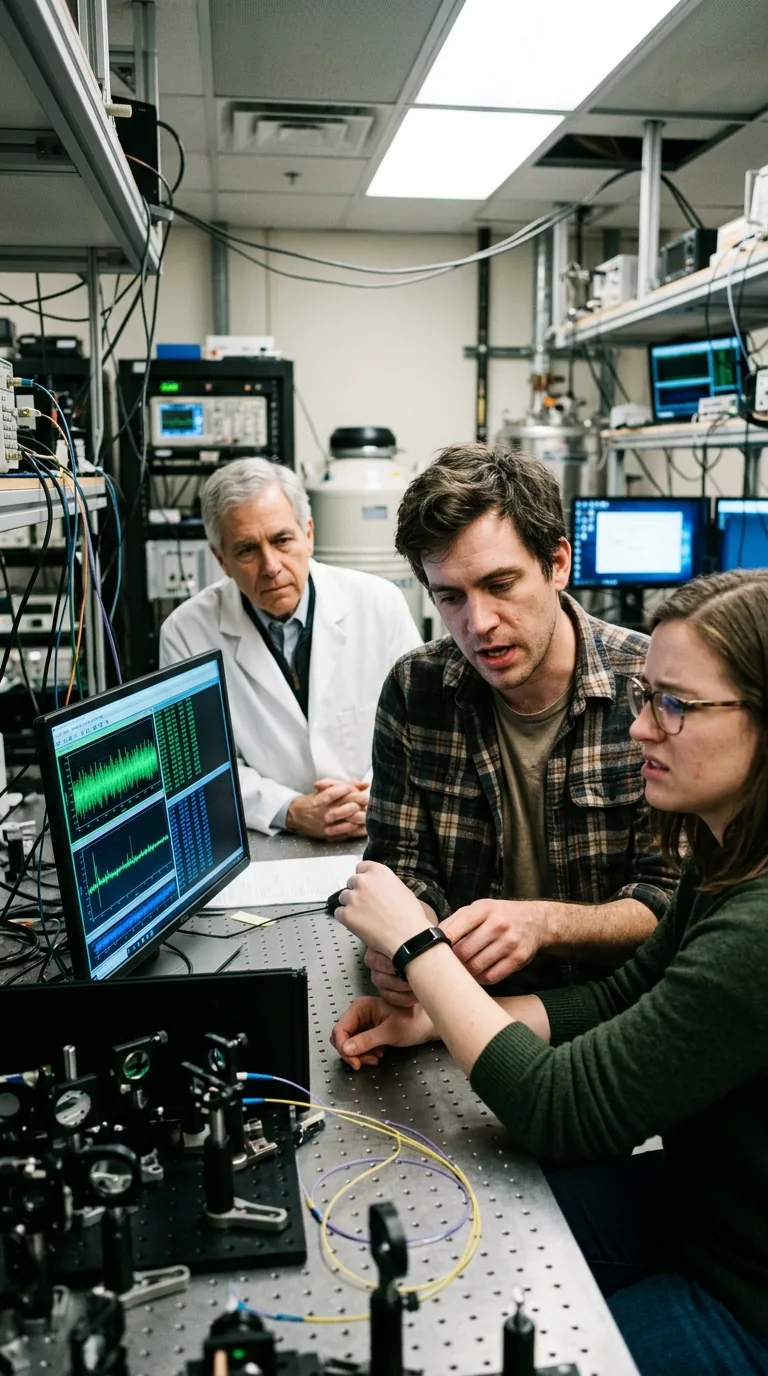
Evan Reed looked straight at his sister’s wrist in the middle of the quantum lab and said, “That bracelet is lying,” while the sensor display was still lit bright enough for everyone at the table to see it. A cooling pump hummed behind them, a laser status bar crawled across the monitor, and in the same breath that denied the reading, he made Maya look like she was the problem for pointing at her own arm.
The bracelet had been part of the entanglement test setup for three weeks. It was ugly in the way most lab equipment was ugly, a matte band with a narrow screen and a line of green numbers that updated every few seconds. The whole point of it was simple enough for undergrads touring the lab to understand: if the linked sensor stream jumped outside the agreed range during a run, the wearer flagged it, the room paused, and the team checked the chain before continuing.
That morning, Maya was stationed at the side bench with her notebook open, copying timestamps the way she always did. Nina Alvarez stood at the instrument cart near the main monitor, reading off the stabilization intervals in a flat voice. Evan moved between the console and the optical table with the easy pace of someone nobody interrupted. Dr. Priya Holt stood farther back, arms folded, watching the run without saying much.
Then the bracelet flashed a sharp amber band across Maya’s wrist.
She looked down, checked the number, and said, controlled and clear, “Hold on. It just spiked. Twelve fourteen and nine seconds.”
Nina’s head turned from the monitor to Maya’s wrist and back again. On the screen, one of the live traces kicked upward and settled. It was quick, but not invisible.
Before Nina said anything, Evan answered for the room.
“No, it didn’t,” he said. He smiled while he said it, but it landed like an interruption, not reassurance. “That wearable has been touchy all week. Keep the run going.”
Maya did not raise her voice. She touched the side button on the bracelet so the number held on screen and lifted her wrist a little higher. “It timestamped it. Nina saw the monitor.”
Nina did not jump in fast enough to stop the shift in the room. She glanced once at Evan, once at the monitor, and said, “I saw a jump on the trace at twelve fourteen and nine.”
Evan was already shaking his head. “A trace wiggle isn’t an event. If we stop every time Maya’s bracelet throws a mood swing, we’ll never finish a clean sequence.”
The sentence changed the air faster than the spike had. One grad student near the sample fridge looked down at his laptop. Another kept typing, though his eyes moved toward Maya and then away. The problem in the room was no longer the reading. It was whether Maya was making too much of it.
She kept her notebook open on the bench and wrote the timestamp anyway. Her handwriting pressed harder into the paper on the second digit. “It’s not a mood swing,” she said. “The band and the trace lined up. That’s why we wear it during live runs.”
Evan gave a short laugh that never became a smile. “We wear it as a support tool, not as a replacement for actual interpretation.”
That was the first trap in the conversation. If the bracelet meant something, then the run needed to pause. If the bracelet meant nothing, then the room had been using a visible prop as reassurance while deciding afterward whether it counted. Either way, Maya had not invented the flash everyone had just seen.
Dr. Holt finally spoke, not loudly. “Mark the timestamp. Continue for thirty seconds.”
The run went on.
Maya kept her eyes on the bracelet. The amber band had cleared, but the frozen number remained in memory mode. She copied it into the notebook again, adding the exact second. Nina, still by the monitor, repeated under her breath, “Twelve fourteen and nine,” as if pinning the number in place before it got argued out of shape.
At the end of the sequence, the room exhaled in small mechanical ways. Someone capped a marker. Someone rolled a stool back. Evan was first to the console export.
“See?” he said. “No collapse. No lost chain. If there had been a real event, this run would look different.”
Maya stayed by the bench instead of following him. “That doesn’t erase the spike.”
He turned from the screen and spread one hand toward her bracelet. “Or it means the bracelet glitched, Maya. That’s the normal explanation.”
She lifted her wrist again. The display still held the event marker. “Then explain why Nina called the same second off the monitor before I said it twice.”
Nina’s mouth opened, then closed. She looked at the trace history, then at Dr. Holt.
Evan stepped in before either woman could say more. “Because everyone in here is primed to see patterns once somebody announces one. That’s exactly why we don’t let side devices drive interpretation.”
He said it smoothly, like he was helping the lab protect itself from bad process. But the room had already watched the order of things: bracelet flash, trace jump, Maya call the time, Nina confirm it. To accept Evan’s version, they had to pretend the visible sequence had happened in a different order.
Dr. Holt walked to the monitor and asked for the run log without comment. Evan tapped through the export screens too quickly the first time and had to back up. Maya stood still enough that the bracelet screen dimmed, then brightened when she touched it again.
On the bench beside her notebook, the sequence had shrunk to one ugly question. If the bracelet was wrong, why had the monitor moved with it at the exact same second before Evan told the room what it had seen?
Evan Reed looked straight at his sister’s wrist in the middle of the quantum lab and said, “That bracelet is lying,” while the sensor display was still lit bright enough for everyone at the table to see it. A cooling pump hummed behind them, a laser status bar crawled across the monitor, and in the same breath that denied the reading, he made Maya look like she was the problem for pointing at her own arm.
The bracelet had been part of the entanglement test setup for three weeks. It was ugly in the way most lab equipment was ugly, a matte band with a narrow screen and a line of green numbers that updated every few seconds. The whole point of it was simple enough for undergrads touring the lab to understand: if the linked sensor stream jumped outside the agreed range during a run, the wearer flagged it, the room paused, and the team checked the chain before continuing.
That morning, Maya was stationed at the side bench with her notebook open, copying timestamps the way she always did. Nina Alvarez stood at the instrument cart near the main monitor, reading off the stabilization intervals in a flat voice. Evan moved between the console and the optical table with the easy pace of someone nobody interrupted. Dr. Priya Holt stood farther back, arms folded, watching the run without saying much.
Then the bracelet flashed a sharp amber band across Maya’s wrist.
She looked down, checked the number, and said, controlled and clear, “Hold on. It just spiked. Twelve fourteen and nine seconds.”
Nina’s head turned from the monitor to Maya’s wrist and back again. On the screen, one of the live traces kicked upward and settled. It was quick, but not invisible.
Before Nina said anything, Evan answered for the room.
“No, it didn’t,” he said. He smiled while he said it, but it landed like an interruption, not reassurance. “That wearable has been touchy all week. Keep the run going.”
Maya did not raise her voice. She touched the side button on the bracelet so the number held on screen and lifted her wrist a little higher. “It timestamped it. Nina saw the monitor.”
Nina did not jump in fast enough to stop the shift in the room. She glanced once at Evan, once at the monitor, and said, “I saw a jump on the trace at twelve fourteen and nine.”
Evan was already shaking his head. “A trace wiggle isn’t an event. If we stop every time Maya’s bracelet throws a mood swing, we’ll never finish a clean sequence.”
The sentence changed the air faster than the spike had. One grad student near the sample fridge looked down at his laptop. Another kept typing, though his eyes moved toward Maya and then away. The problem in the room was no longer the reading. It was whether Maya was making too much of it.
She kept her notebook open on the bench and wrote the timestamp anyway. Her handwriting pressed harder into the paper on the second digit. “It’s not a mood swing,” she said. “The band and the trace lined up. That’s why we wear it during live runs.”
Evan gave a short laugh that never became a smile. “We wear it as a support tool, not as a replacement for actual interpretation.”
That was the first trap in the conversation. If the bracelet meant something, then the run needed to pause. If the bracelet meant nothing, then the room had been using a visible prop as reassurance while deciding afterward whether it counted. Either way, Maya had not invented the flash everyone had just seen.
Dr. Holt finally spoke, not loudly. “Mark the timestamp. Continue for thirty seconds.”
The run went on.
Maya kept her eyes on the bracelet. The amber band had cleared, but the frozen number remained in memory mode. She copied it into the notebook again, adding the exact second. Nina, still by the monitor, repeated under her breath, “Twelve fourteen and nine,” as if pinning the number in place before it got argued out of shape.
At the end of the sequence, the room exhaled in small mechanical ways. Someone capped a marker. Someone rolled a stool back. Evan was first to the console export.
“See?” he said. “No collapse. No lost chain. If there had been a real event, this run would look different.”
Maya stayed by the bench instead of following him. “That doesn’t erase the spike.”
He turned from the screen and spread one hand toward her bracelet. “Or it means the bracelet glitched, Maya. That’s the normal explanation.”
She lifted her wrist again. The display still held the event marker. “Then explain why Nina called the same second off the monitor before I said it twice.”
Nina’s mouth opened, then closed. She looked at the trace history, then at Dr. Holt.
Evan stepped in before either woman could say more. “Because everyone in here is primed to see patterns once somebody announces one. That’s exactly why we don’t let side devices drive interpretation.”
He said it smoothly, like he was helping the lab protect itself from bad process. But the room had already watched the order of things: bracelet flash, trace jump, Maya call the time, Nina confirm it. To accept Evan’s version, they had to pretend the visible sequence had happened in a different order.
Dr. Holt walked to the monitor and asked for the run log without comment. Evan tapped through the export screens too quickly the first time and had to back up. Maya stood still enough that the bracelet screen dimmed, then brightened when she touched it again.
On the bench beside her notebook, the sequence had shrunk to one ugly question. If the bracelet was wrong, why had the monitor moved with it at the exact same second before Evan told the room what it had seen?