Story code: ST-001474
Part 1: The Safe Minds Initiative
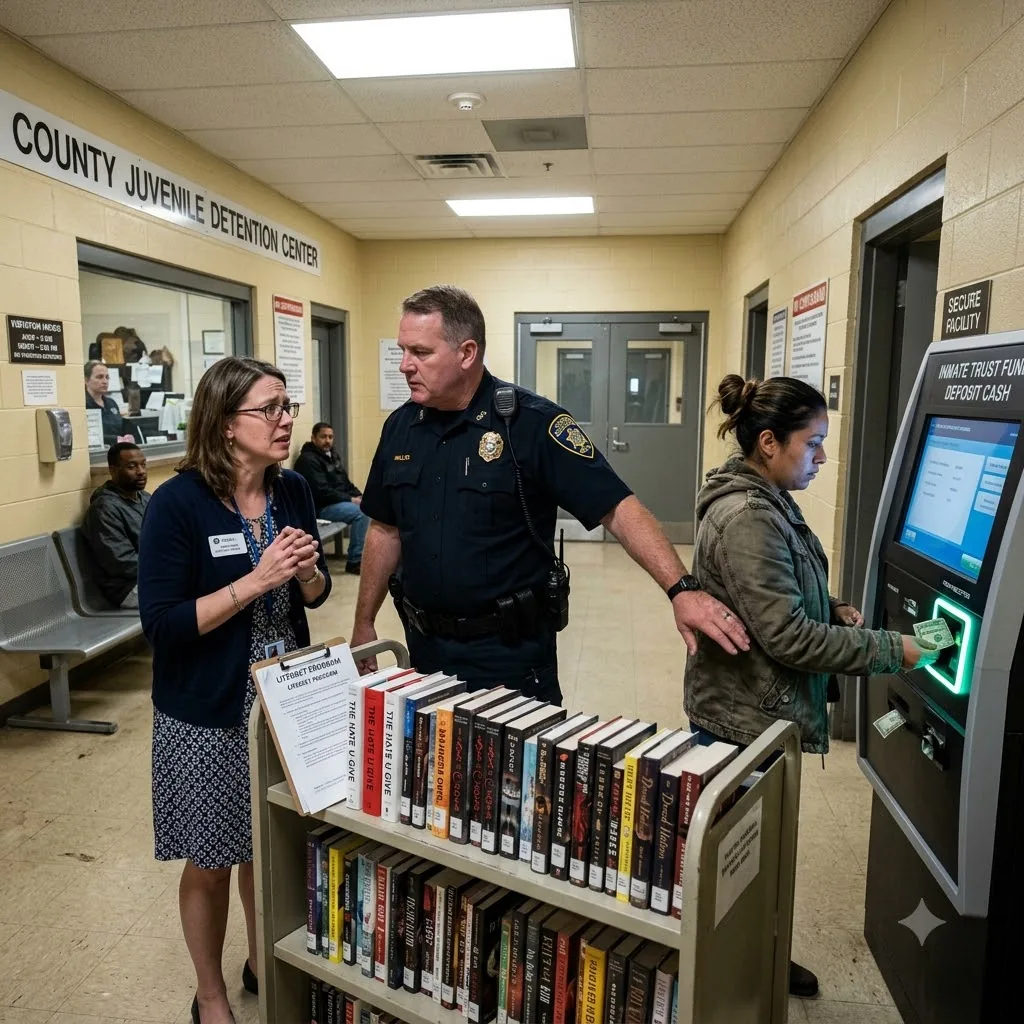
Claire leaned her weight against the handle of her reinforced utility cart, the rubber wheels locking with a harsh squeal just inches from the Oakhaven Juvenile metal detectors. The guard on duty did not reach for his usual inspection wand. Instead, Officer Davis held up a crisp, color-printed memo bearing the gold-embossed logo of the Oak Creek Concerned Parents Coalition.
The cart held eighty pounds of donated paperback novels. Claire had spent her weekends scouring library liquidation sales and thrift stores across three counties to gather them. Every book had been meticulously vetted. She spent hours peeling away foil stickers, removing staples, and ensuring no hardcovers slipped through, adhering strictly to Oakhaven’s rigorous safety protocols. For three years, she had pushed this exact cart through these exact metal detectors every Tuesday afternoon. Today, her carefully curated stack of fantasy and science fiction was officially contraband.
Claire asked Davis to explain the sudden shift in policy. The tired guard simply slid the pristine printout across the scratched polycarbonate of the security counter. He stated he was just following the new directive sent down from the administrative wing.
Claire picked up the heavy stock paper. The document detailed a blanket ban on all unapproved, un-monitored third-party reading materials. The text cited an urgent, moral imperative to protect incarcerated youths from subversive, violent, or morally compromising literature. The Oak Creek Concerned Parents Coalition claimed the donated young adult books were severely damaging to the troubled teens.
Ten feet away from the security desk, the stark reality of Oakhaven presented a sharp contrast to the wealthy suburbanites’ moral panic. The fluorescent lights overhead flickered constantly, casting a sickly green pallor over the scuffed linoleum of the waiting room. A woman in a faded, grease-stained uniform shirt stood before a glowing communication kiosk. The bulky machine served as the only approved conduit for families to contact their children locked inside the cinderblock walls. It demanded exorbitant connection fees for emails and video visits.
Claire watched the woman smooth out a crumpled, torn five-dollar bill against her thigh. The mother’s hands shook slightly as she fed the currency into the glowing green slot. The machine whirred, ground, and spat the bill back out onto the floor. The woman picked it up, smoothed it again, and pressed the corners with her cracked fingernails. She was desperately trying to buy exactly three minutes of digital contact with her child.
Claire looked from the struggling mother back to the crisp, expensive paper of the coalition memo. The parents in Oak Creek lived twenty miles and an entirely different world away from this miserable waiting room. They resided behind wrought-iron gates, surrounded by manicured lawns and private security. They did not have children locked in Cell Block C. They did not spend their Tuesday afternoons navigating metal detectors and strip-search protocols.
Claire informed Davis that the kids inside barely had running water in their communal sinks, let alone the luxury of being corrupted by a dystopian romance novel. She pointed at the worn spine of a taped-up paperback on the top of her stack, stating that it was merely a story about dragons and survival.
Davis shifted his weight and avoided her gaze. He tapped the bottom of the memo with a thick index finger. He told her the coalition had just secured a major strategic partnership with the county corrections board. The memo was not a suggestion or a temporary guideline. It was a strict mandate, tied directly to the facility’s operational funding.
The kiosk in the corner swallowed the mother’s five-dollar bill on the fourth attempt. A cheerful digital chime echoed through the sterile, echoing room. A split-second later, a robotic voice announced that a newly implemented connection surcharge had completely depleted the deposited balance. The mother let out a jagged, breathless sob and dug frantically into a worn plastic coin purse, her fingers scraping against the bare bottom.
Claire looked down at the memo again, tracing the signatures of the coalition board members. A small footer at the bottom of the heavy, wedding-invitation-quality paper caught her attention. It listed a corporate sponsor for the coalition’s brand new “Safe Minds Initiative.” The sponsor was represented by a stylized, interlocking blue hexagon.
Claire stared at the geometric shape. She turned her head slowly toward the waiting room. The exact same interlocking blue hexagon pulsed brightly in the corner of the communication kiosk’s screen as it demanded another five-dollar deposit from the weeping mother in the faded uniform.
Claire gripped the heavy steel handle of her book cart. She told Davis in a low, flat voice that she needed to speak to the warden immediately.
Davis shook his head and unclipped the heavy radio from his duty belt. He instructed Claire to step back from the metal detectors and roll her unapproved materials out to the parking lot. Before Claire could argue or turn the heavy cart around, the reinforced steel security door directly behind the guard desk emitted a loud, sustained buzz. The heavy deadbolts retracted with a mechanical clack, and a man wearing a tailored wool suit-not a gray warden’s uniform-stepped out of the secure corridor and into the harsh fluorescent light of the entry bay.
Claire leaned her weight against the handle of her reinforced utility cart, the rubber wheels locking with a harsh squeal just inches from the Oakhaven Juvenile metal detectors. The guard on duty did not reach for his usual inspection wand. Instead, Officer Davis held up a crisp, color-printed memo bearing the gold-embossed logo of the Oak Creek Concerned Parents Coalition.
The cart held eighty pounds of donated paperback novels. Claire had spent her weekends scouring library liquidation sales and thrift stores across three counties to gather them. Every book had been meticulously vetted. She spent hours peeling away foil stickers, removing staples, and ensuring no hardcovers slipped through, adhering strictly to Oakhaven’s rigorous safety protocols. For three years, she had pushed this exact cart through these exact metal detectors every Tuesday afternoon. Today, her carefully curated stack of fantasy and science fiction was officially contraband.
Claire asked Davis to explain the sudden shift in policy. The tired guard simply slid the pristine printout across the scratched polycarbonate of the security counter. He stated he was just following the new directive sent down from the administrative wing.
Claire picked up the heavy stock paper. The document detailed a blanket ban on all unapproved, un-monitored third-party reading materials. The text cited an urgent, moral imperative to protect incarcerated youths from subversive, violent, or morally compromising literature. The Oak Creek Concerned Parents Coalition claimed the donated young adult books were severely damaging to the troubled teens.
Ten feet away from the security desk, the stark reality of Oakhaven presented a sharp contrast to the wealthy suburbanites’ moral panic. The fluorescent lights overhead flickered constantly, casting a sickly green pallor over the scuffed linoleum of the waiting room. A woman in a faded, grease-stained uniform shirt stood before a glowing communication kiosk. The bulky machine served as the only approved conduit for families to contact their children locked inside the cinderblock walls. It demanded exorbitant connection fees for emails and video visits.
Claire watched the woman smooth out a crumpled, torn five-dollar bill against her thigh. The mother’s hands shook slightly as she fed the currency into the glowing green slot. The machine whirred, ground, and spat the bill back out onto the floor. The woman picked it up, smoothed it again, and pressed the corners with her cracked fingernails. She was desperately trying to buy exactly three minutes of digital contact with her child.
Claire looked from the struggling mother back to the crisp, expensive paper of the coalition memo. The parents in Oak Creek lived twenty miles and an entirely different world away from this miserable waiting room. They resided behind wrought-iron gates, surrounded by manicured lawns and private security. They did not have children locked in Cell Block C. They did not spend their Tuesday afternoons navigating metal detectors and strip-search protocols.
Claire informed Davis that the kids inside barely had running water in their communal sinks, let alone the luxury of being corrupted by a dystopian romance novel. She pointed at the worn spine of a taped-up paperback on the top of her stack, stating that it was merely a story about dragons and survival.
Davis shifted his weight and avoided her gaze. He tapped the bottom of the memo with a thick index finger. He told her the coalition had just secured a major strategic partnership with the county corrections board. The memo was not a suggestion or a temporary guideline. It was a strict mandate, tied directly to the facility’s operational funding.
The kiosk in the corner swallowed the mother’s five-dollar bill on the fourth attempt. A cheerful digital chime echoed through the sterile, echoing room. A split-second later, a robotic voice announced that a newly implemented connection surcharge had completely depleted the deposited balance. The mother let out a jagged, breathless sob and dug frantically into a worn plastic coin purse, her fingers scraping against the bare bottom.
Claire looked down at the memo again, tracing the signatures of the coalition board members. A small footer at the bottom of the heavy, wedding-invitation-quality paper caught her attention. It listed a corporate sponsor for the coalition’s brand new “Safe Minds Initiative.” The sponsor was represented by a stylized, interlocking blue hexagon.
Claire stared at the geometric shape. She turned her head slowly toward the waiting room. The exact same interlocking blue hexagon pulsed brightly in the corner of the communication kiosk’s screen as it demanded another five-dollar deposit from the weeping mother in the faded uniform.
Claire gripped the heavy steel handle of her book cart. She told Davis in a low, flat voice that she needed to speak to the warden immediately.
Davis shook his head and unclipped the heavy radio from his duty belt. He instructed Claire to step back from the metal detectors and roll her unapproved materials out to the parking lot. Before Claire could argue or turn the heavy cart around, the reinforced steel security door directly behind the guard desk emitted a loud, sustained buzz. The heavy deadbolts retracted with a mechanical clack, and a man wearing a tailored wool suit-not a gray warden’s uniform-stepped out of the secure corridor and into the harsh fluorescent light of the entry bay.