Story code: ST-001283
Part 1: The Scripted Sibling
When I reconstructed the audio recording of the Croft family’s suburban living room intervention, the first thing I noticed was how Sarah Croft sat silently while her brother David used a stolen therapy note to accuse her of betraying the family. David repeatedly recited a coached script warning against secular counseling, a tactic designed to halt Sarah’s attempts to explain her clinical anxiety. As an investigator examining the digital logs, I immediately saw the systemic pressure: the Croft family had coordinated this entire confrontation to suppress Sarah’s mental health journey under the guise of sibling concern.
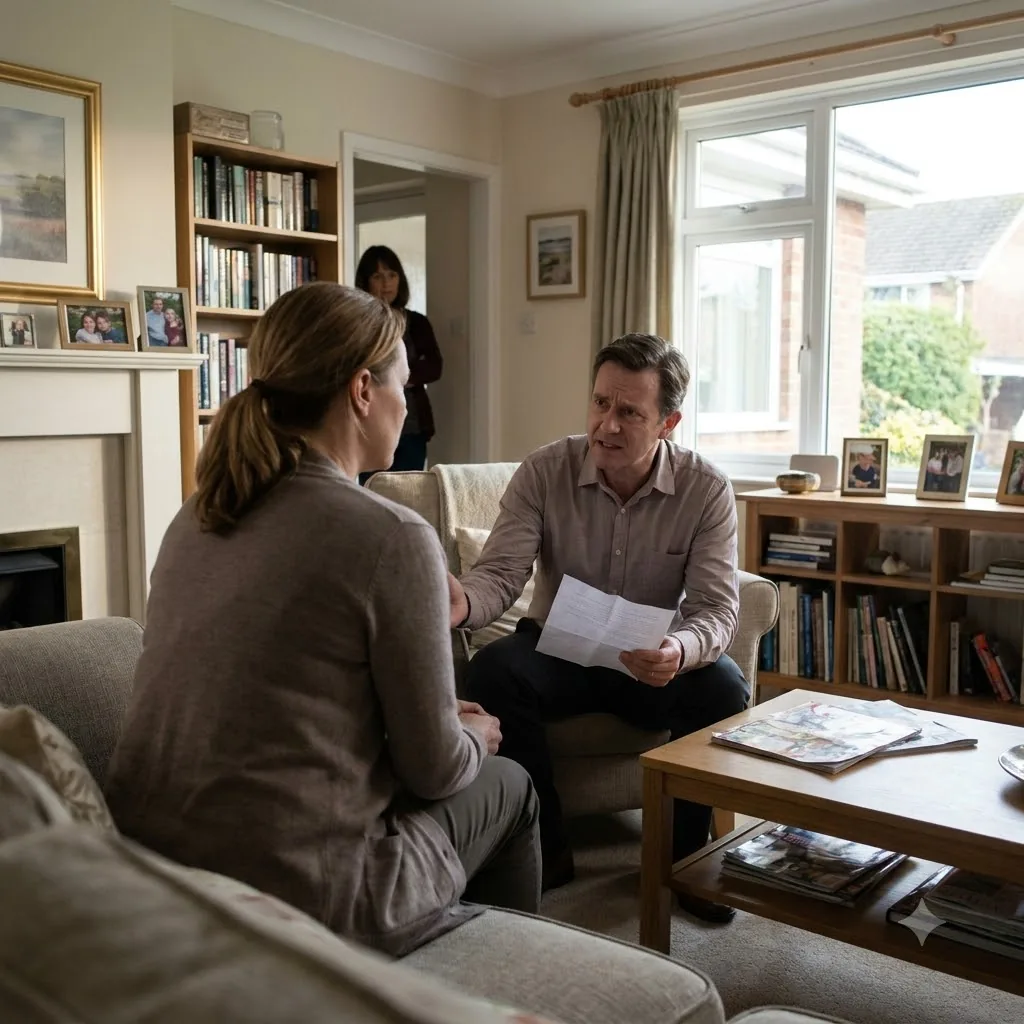
The audio file, extracted from an iPad left running on the side table, began with the clank of a coffee mug against the glass table and the hum of the central heating. Sarah sat on the floral sofa, her hands kept flat on the therapy notebook in her lap, avoiding direct eye contact. David stood near the fireplace, clutching a crumpled piece of paper-the therapy note he had taken from her handbag the previous evening.
‘I just want to manage the panic attacks, David,’ Sarah’s voice was low, barely registering on the decibel meter of the recording. ‘Dr. Hilliard’s note explains that this is a medical necessity.’
David did not look at her. According to the metadata from the smart home camera in the hallway, his eyes remained fixed on the screen of his phone, which he held flat against his palm. ‘Secular counseling is an act of spiritual weakness that compromises our family’s public standing,’ David said. His tone was flat, lacking the natural inflection of a brother speaking to his sister.
Sarah attempted to reply. ‘It’s not about the family’s standing. It’s about my health. The note explains-‘
‘Secular counseling is an act of spiritual weakness that compromises our family’s public standing,’ David repeated, cutting her off. He did not alter his pitch or speed. It was a verbatim repetition.
Sarah stopped speaking. The audio recorded the sound of her shifting on the sofa cushions, her fingers nervously picking at the hem of her sweater. For three minutes, the room fell into a heavy silence, broken only by the ambient hum of the house. Every time Sarah began to argue her case, David delivered the exact same line, using the borrowed authority of their parents’ rigid expectations to silence her.
But at the twelve-minute mark of the recording, the pattern broke. Sarah made one final attempt to explain the therapeutic process, and David stepped forward, raising his voice to override her.
‘Secular counseling is an act of corporate weakness that compromises our family’s public standing,’ David declared.
The slip was subtle, but in the context of the Croft family hierarchy, the substitution of that single word changed everything. The word ‘corporate’ did not belong in a sermon about spiritual purity, but it fit perfectly into the family’s business vocabulary.
When I reconstructed the audio recording of the Croft family’s suburban living room intervention, the first thing I noticed was how Sarah Croft sat silently while her brother David used a stolen therapy note to accuse her of betraying the family. David repeatedly recited a coached script warning against secular counseling, a tactic designed to halt Sarah’s attempts to explain her clinical anxiety. As an investigator examining the digital logs, I immediately saw the systemic pressure: the Croft family had coordinated this entire confrontation to suppress Sarah’s mental health journey under the guise of sibling concern.
The audio file, extracted from an iPad left running on the side table, began with the clank of a coffee mug against the glass table and the hum of the central heating. Sarah sat on the floral sofa, her hands kept flat on the therapy notebook in her lap, avoiding direct eye contact. David stood near the fireplace, clutching a crumpled piece of paper-the therapy note he had taken from her handbag the previous evening.
‘I just want to manage the panic attacks, David,’ Sarah’s voice was low, barely registering on the decibel meter of the recording. ‘Dr. Hilliard’s note explains that this is a medical necessity.’
David did not look at her. According to the metadata from the smart home camera in the hallway, his eyes remained fixed on the screen of his phone, which he held flat against his palm. ‘Secular counseling is an act of spiritual weakness that compromises our family’s public standing,’ David said. His tone was flat, lacking the natural inflection of a brother speaking to his sister.
Sarah attempted to reply. ‘It’s not about the family’s standing. It’s about my health. The note explains-‘
‘Secular counseling is an act of spiritual weakness that compromises our family’s public standing,’ David repeated, cutting her off. He did not alter his pitch or speed. It was a verbatim repetition.
Sarah stopped speaking. The audio recorded the sound of her shifting on the sofa cushions, her fingers nervously picking at the hem of her sweater. For three minutes, the room fell into a heavy silence, broken only by the ambient hum of the house. Every time Sarah began to argue her case, David delivered the exact same line, using the borrowed authority of their parents’ rigid expectations to silence her.
But at the twelve-minute mark of the recording, the pattern broke. Sarah made one final attempt to explain the therapeutic process, and David stepped forward, raising his voice to override her.
‘Secular counseling is an act of corporate weakness that compromises our family’s public standing,’ David declared.
The slip was subtle, but in the context of the Croft family hierarchy, the substitution of that single word changed everything. The word ‘corporate’ did not belong in a sermon about spiritual purity, but it fit perfectly into the family’s business vocabulary.