Story code: ST-001283
Part 3: The Source of the Script
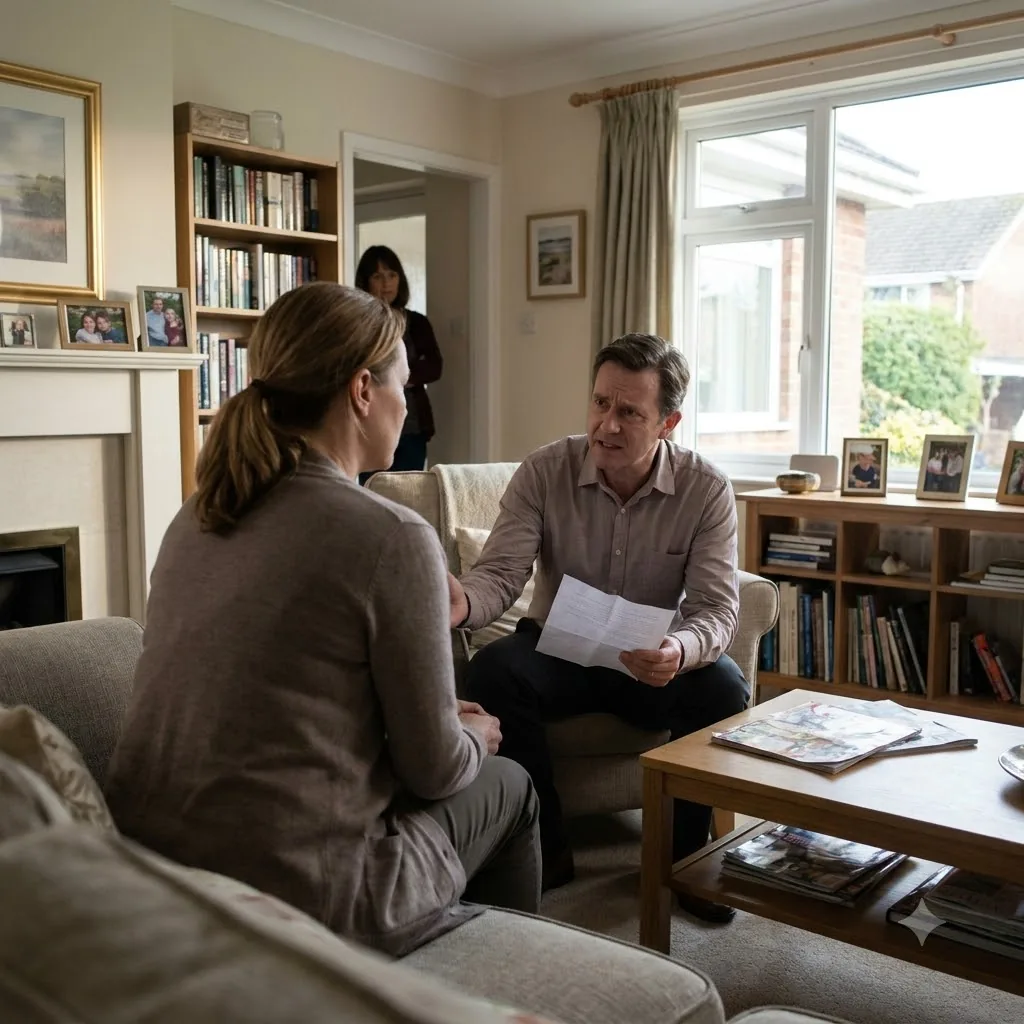
Analyzing the next segment of the audio recording, timestamped at 14:26, the power dynamic in the Croft living room shifted. The wide-angle hallway security camera, which captured a partial reflection in the living room mirror, showed David Croft’s posture stiffening. He stood with his shoulders hunched, his thumb frantically scrolling through his phone screen, a clear behavioral indicator of stress. The network router log shows a spike in data packets received by David’s device at this exact second, indicating active incoming messages.
‘David,’ Sarah said, her hands remaining flat on the therapy notebook in her lap. ‘You said the note proved my instability. Read the diagnosis out loud. Read the actual clinical terms Dr. Hilliard wrote.’
David did not look up from his phone. The audio recorded a sharp intake of breath, followed by the sound of his fingernails tapping against the phone’s plastic case. ‘It’s a medical assessment of your inability to function without secular intervention,’ he said, his voice rising in pitch. ‘That’s all the family needs to know. It’s right here on the page.’
‘You’re reading from your messages,’ Sarah said. The camera log shows her tilting her head, observing his hands. ‘You aren’t reading the note at all. You’re reading what they are telling you to say.’
According to the text logs I recovered from the family network router, at 14:27, David received a text from his father: ‘Do not let her pivot to the medical text. Keep the focus on her duty to the family firm.’ This aligns with the physical delay visible on the hallway camera, where David paused for four seconds before replying.
David cleared his throat, the sound distorted by his close proximity to the iPad’s microphone. ‘This isn’t about texts, Sarah. This is about your recovery. Secular counseling bypasses our values. It is a distraction from what you owe to this family.’
‘Then explain the term SSRIs written on the second line,’ Sarah said. Her voice remained low, measured, and steady. ‘Explain what dosage Dr. Hilliard suggested and why. You held the note. You claimed it was proof.’
David’s fingers tapped rapidly against the side of his phone. On the audio file, a low rustle indicated he was shifting the stolen paper from his left hand to his right. ‘It’s a mind-altering dependency,’ he stammered, repeating a phrase from his mother’s earlier text message. ‘It compromises your cognitive function. It makes you a liability to the business.’
‘What does SSRI stand for, David?’ Sarah asked.
Silence followed. The audio recorded seven seconds of ambient hum. David did not answer. The security camera showed his gaze darting toward the hallway door, behind which the shadow of their father was visible in the reflection.
‘You don’t know,’ Sarah said. ‘You didn’t read it. They read it, wrote a script, and sent you in here to read it for them because they knew I wouldn’t listen to them directly.’
David stepped back, his boot heel clicking sharply on the hardwood floor. His breathing, as captured by the room microphone, was rapid and shallow. ‘Dad wrote the outline, okay?’ His voice cracked, the flat, coached delivery collapsing into defensive irritation. ‘He said if you didn’t drop the therapy sessions, the board would view your anxiety as a corporate risk. He told me exactly what to say to get you to sign the withdrawal form.’
The admission was captured clearly on the recording. The proxy had broken rank, admitting the source of the words under pressure he could not manage. But as the text logs from that exact minute reveal, the parents had already sent a new document to David’s phone. A push notification on David’s phone, timestamped at 14:31, contained a pre-drafted medical release form that would transfer Sarah’s care decisions to a counselor selected by the family firm. The metadata shows David opened the document immediately. He was now instructed to force a signature before Sarah could leave the room, raising the stakes of the confrontation to an irreversible legal threat.