Story code: ST-001247
Part 1: The Disruption Label
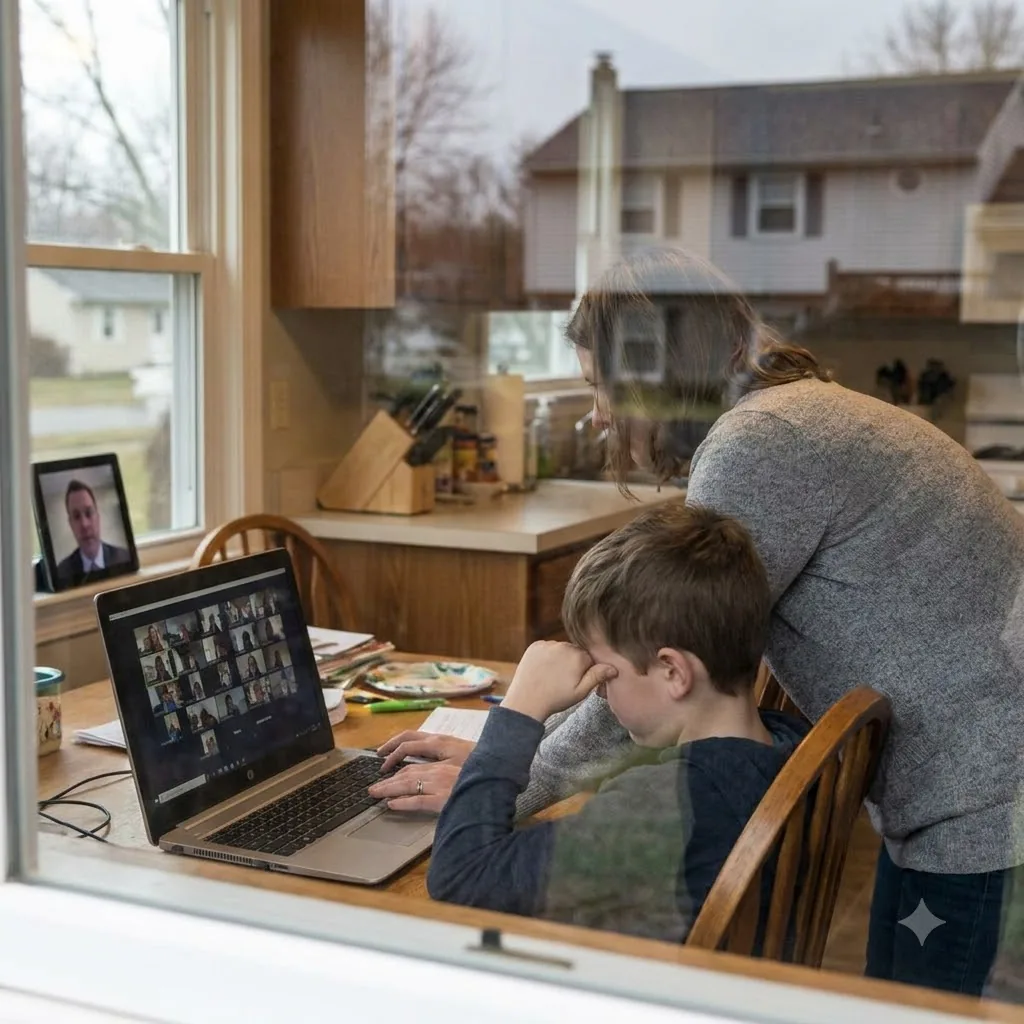
When my seven-year-old son Toby burst into tears at our kitchen table because his microphone wouldn’t unmute during reading circle, I leaned over to adjust his settings. Instead of understanding, a loud, cold voice cut through the computer speaker, and Principal Brenda Vance publicly accused me of distracting the online classroom. It took less than ten seconds for my attempt to help my struggling child to be reframed as a selfish disruption of the school’s digital environment.
“Mrs. Jenkins,” Principal Vance said, her camera feed switching on to show her sitting in a sterile, white-walled office. “Parental interference during live instruction is a direct violation of the district’s remote learning policy. You are actively undermining Mrs. Albright’s lesson structure.”
On screen, Toby’s first-grade teacher, Mrs. Albright, sat frozen. She looked down at her desk, adjusting her headset, her face tight with strain. She did not speak or look at the camera.
“He has been trying to speak for three minutes, Principal Vance,” I said, keeping my voice as even as possible. “His audio driver crashed. I was only reaching across the table to unplug and plug the USB headset back in so he could participate.”
“The rules are clear to ensure an equitable learning environment,” Vance replied, her tone polished and entirely unsympathetic. “If students require technical assistance, they must use the digital help desk. Parents are not permitted to enter the camera frame or speak into the microphone. Your intrusion is distracting the other twenty-three students in this portal.”
Toby shrank back in his chair, pulling his knees up to his chest. The other children’s faces in the Zoom grid stared back at us, some fidgeting, others looking confused. Before I could explain further, Vance clicked a button on her administrator panel. Toby’s screen flashed, displaying a red banner: *Your microphone and camera have been disabled by the host.*
“We will address this behavior offline, Mrs. Jenkins,” Vance said, and then her feed went dark, returning the class to Mrs. Albright’s strained voice trying to resume the reading circle.
By three o’clock that afternoon, an official email from the school administration arrived in my inbox. The subject line read: *Notice of Parental Non-Compliance and Classroom Disruption.* The document, signed by Principal Vance, accused me of multiple instances of unauthorized classroom entry over the past week, claiming my “intrusive behavior” was creating a hostile learning environment and dragging down the class’s engagement metrics. She warned that further disruptions would result in Toby being suspended from the remote learning portal entirely.
My hands shook slightly as I read the accusations. I had done nothing but sit quietly at the kitchen table working my own remote job, only stepping in when Toby began to panic over connection issues.
Hoping to find some objective record of what had actually occurred, I logged into the school’s digital portal and accessed the automated Care and Activity Log. This background utility was designed to track system performance and user interactions for IT troubleshooting. As I scrolled through the logged data for Toby’s account during the reading circle, my eyes caught a series of automated flags. The log did not show a parent disrupting a lesson; instead, it showed seven consecutive system-level hardware dropouts and three automated audio error reports generated by Toby’s device in the minutes leading up to my intervention.
Even more striking was the final entry in the log, timestamped exactly when Vance had muted us. It wasn’t a standard policy block. The automated system had recorded a manual administrative override that directly contradicted the official narrative Vance had just sent to my inbox.
When my seven-year-old son Toby burst into tears at our kitchen table because his microphone wouldn’t unmute during reading circle, I leaned over to adjust his settings. Instead of understanding, a loud, cold voice cut through the computer speaker, and Principal Brenda Vance publicly accused me of distracting the online classroom. It took less than ten seconds for my attempt to help my struggling child to be reframed as a selfish disruption of the school’s digital environment.
“Mrs. Jenkins,” Principal Vance said, her camera feed switching on to show her sitting in a sterile, white-walled office. “Parental interference during live instruction is a direct violation of the district’s remote learning policy. You are actively undermining Mrs. Albright’s lesson structure.”
On screen, Toby’s first-grade teacher, Mrs. Albright, sat frozen. She looked down at her desk, adjusting her headset, her face tight with strain. She did not speak or look at the camera.
“He has been trying to speak for three minutes, Principal Vance,” I said, keeping my voice as even as possible. “His audio driver crashed. I was only reaching across the table to unplug and plug the USB headset back in so he could participate.”
“The rules are clear to ensure an equitable learning environment,” Vance replied, her tone polished and entirely unsympathetic. “If students require technical assistance, they must use the digital help desk. Parents are not permitted to enter the camera frame or speak into the microphone. Your intrusion is distracting the other twenty-three students in this portal.”
Toby shrank back in his chair, pulling his knees up to his chest. The other children’s faces in the Zoom grid stared back at us, some fidgeting, others looking confused. Before I could explain further, Vance clicked a button on her administrator panel. Toby’s screen flashed, displaying a red banner: *Your microphone and camera have been disabled by the host.*
“We will address this behavior offline, Mrs. Jenkins,” Vance said, and then her feed went dark, returning the class to Mrs. Albright’s strained voice trying to resume the reading circle.
By three o’clock that afternoon, an official email from the school administration arrived in my inbox. The subject line read: *Notice of Parental Non-Compliance and Classroom Disruption.* The document, signed by Principal Vance, accused me of multiple instances of unauthorized classroom entry over the past week, claiming my “intrusive behavior” was creating a hostile learning environment and dragging down the class’s engagement metrics. She warned that further disruptions would result in Toby being suspended from the remote learning portal entirely.
My hands shook slightly as I read the accusations. I had done nothing but sit quietly at the kitchen table working my own remote job, only stepping in when Toby began to panic over connection issues.
Hoping to find some objective record of what had actually occurred, I logged into the school’s digital portal and accessed the automated Care and Activity Log. This background utility was designed to track system performance and user interactions for IT troubleshooting. As I scrolled through the logged data for Toby’s account during the reading circle, my eyes caught a series of automated flags. The log did not show a parent disrupting a lesson; instead, it showed seven consecutive system-level hardware dropouts and three automated audio error reports generated by Toby’s device in the minutes leading up to my intervention.
Even more striking was the final entry in the log, timestamped exactly when Vance had muted us. It wasn’t a standard policy block. The automated system had recorded a manual administrative override that directly contradicted the official narrative Vance had just sent to my inbox.