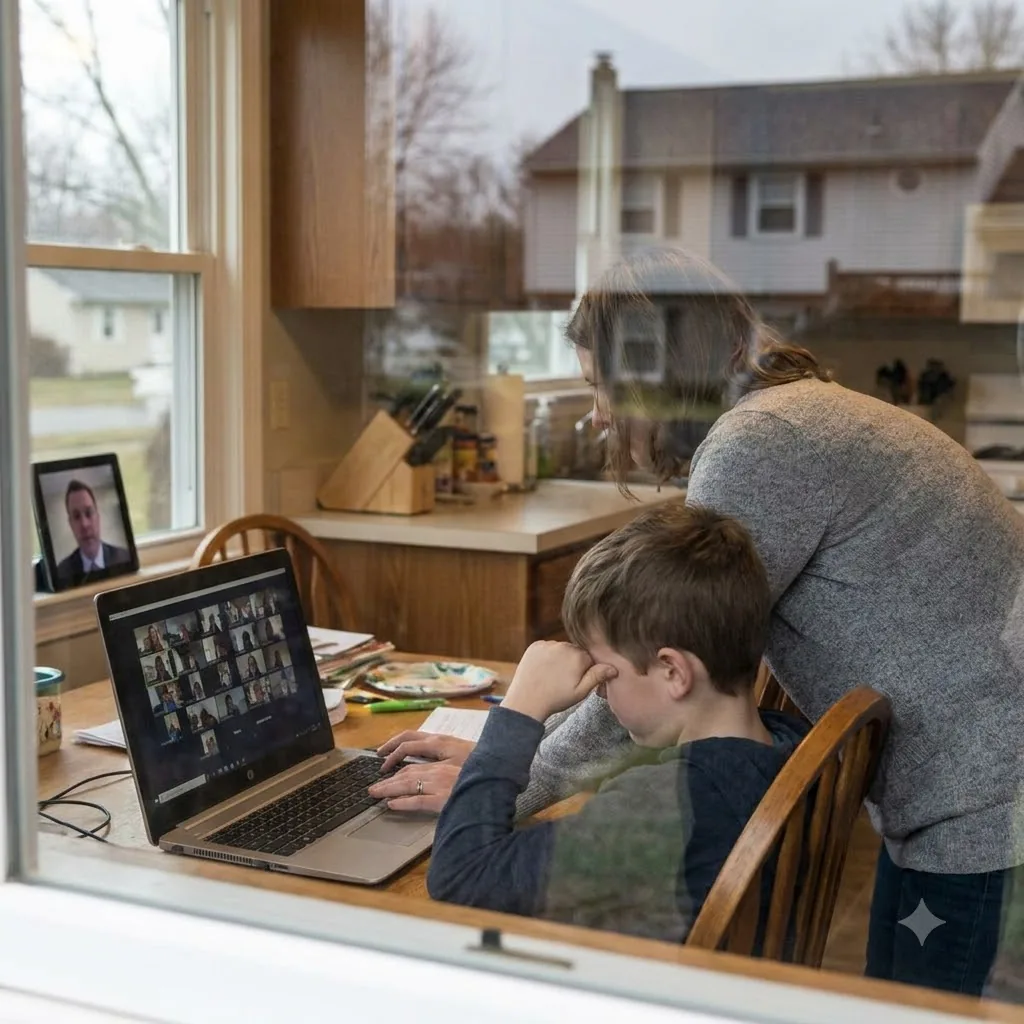
Story code: ST-001247
Part 2: The Paper Trail
The automated log entry was clear: *Audio feed manually suppressed by Administrator prior to parental presence detection.* Principal Vance had disabled Toby’s audio before I ever stepped into the frame, and then used my sudden appearance to justify shutting down his feed entirely.
The next morning, I called Mrs. Albright. When she answered, her voice was hushed, punctuated by long pauses.
“Sarah, I can’t get involved in administrative disputes,” Mrs. Albright said, her voice barely above a whisper. I could hear the rustle of papers in the background, a sign she was likely at her desk at the school. “Principal Vance audits the classrooms very strictly. She is under a lot of pressure from the district office regarding our low participation scores.”
“But you saw what happened,” I said. “Toby was trying to speak. The system was failing him, and I was just trying to help him connect.”
“I have to follow the principal’s directives,” she replied quietly, avoiding any direct confirmation of Vance’s actions. “I’m sorry.” The line went dead.
Realizing I would get no support from the teacher, I requested a formal virtual meeting with Principal Vance to dispute the disciplinary notice. When the video link connected, Vance sat in her office, her posture stiff, a pen poised over a yellow legal pad. She did not smile.
“Mrs. Jenkins,” she began, using the same corporate, defensive tone from the day before. “I received your request. However, the district’s policy on parental interference is non-negotiable. We must maintain professional boundaries to ensure our teachers can manage their classrooms effectively.”
“I have the automated Care and Activity Log from yesterday,” I said, sharing my screen to show the PDF document. “As you can see, Toby’s audio driver had crashed repeatedly. The log shows he was muted by the system before I even touched his headset. I only stepped in to fix a hardware issue after he was already unable to participate.”
Vance barely glanced at the screen. She tapped her pen against the pad. “System logs are automated technical data, Mrs. Jenkins. They do not capture the behavioral context. My observation of the classroom remains the official record. As an administrator with years of experience directing educational compliance, I know when a parent’s presence is compromising the instructional space.”
“But the data proves I didn’t cause the disruption,” I argued, keeping my voice level despite the tightness in my chest. “The system failed, and you penalized my son for it.”
“We are done discussing this,” Vance said, leaning closer to her camera. “The warning stands. If you continue to contest this, I will escalate the matter to the superintendent, which may result in Toby’s placement in an alternative, self-paced program without live teacher access.”
She ended the call before I could respond.
Determined to understand why she was pushing so hard, I spent the afternoon researching Vance’s professional background in the public district archives. What I found was startling. Vance had no classroom teaching credentials; her entire career had been spent in district HR and compliance roles before she was appointed principal to oversee the transition to remote learning. More than that, the archives contained two formal complaints from her previous district, both detailing how she had shifted blame onto families for low student performance to protect her administrative standing.
As I sat at the kitchen table, staring at the screen in the quiet house, I realized Vance was building a paper trail of parental non-compliance to cover up the school’s failing technical infrastructure. Then, I remembered something. Toby’s laptop had a local webcam recording utility running in the background-a tool we had installed to archive his weekly speech therapy sessions. I opened the file manager and located the recording from yesterday morning.