Story code: ST-001615
Part 1: The Refusal
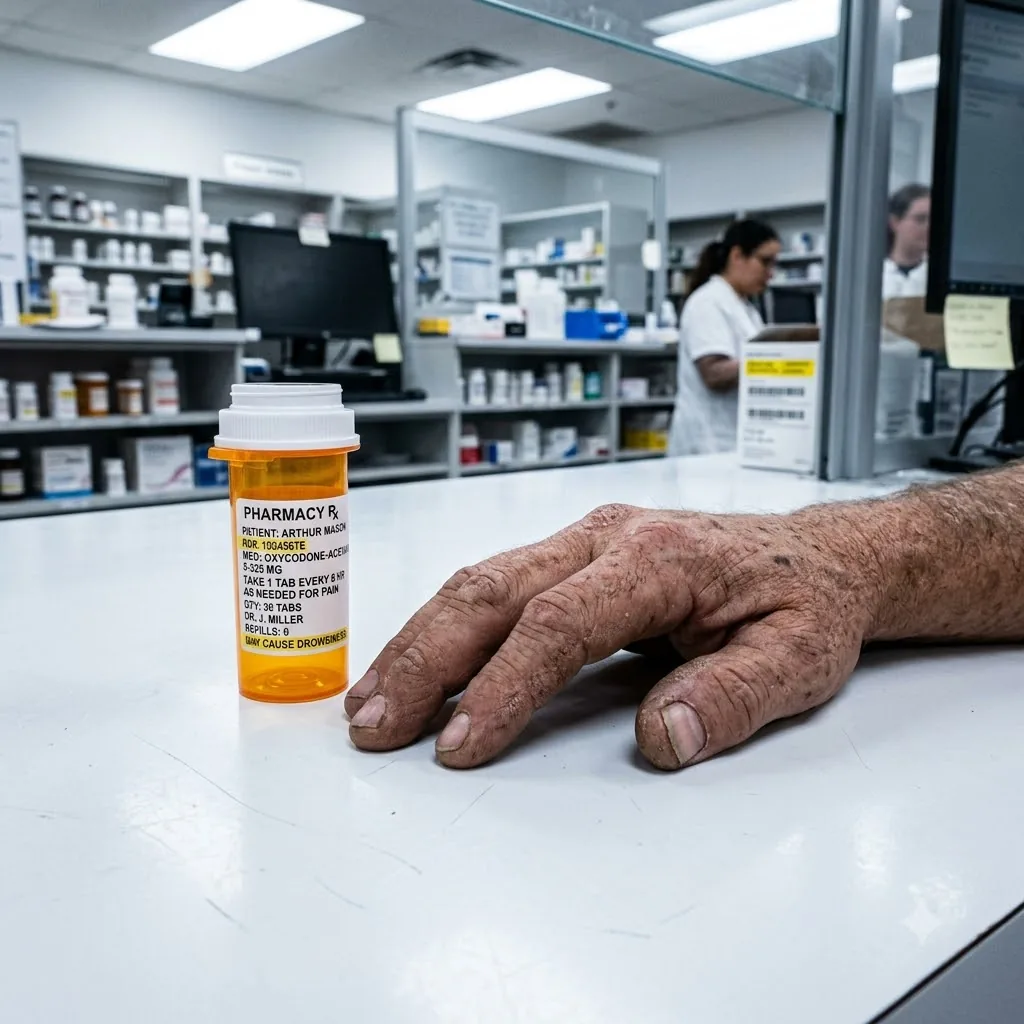
The amber plastic bottle slid across the glass counter, making a faint, hollow scrape before stopping against Arthur’s thick, calloused knuckles. The pharmacy tech did not meet his eyes. She just tapped a manicured fingernail against the red void sticker slapped over his name. The new clinic director had issued a blanket denial, effective immediately. Arthur stared at the empty bottle. Deep in the L4 and L5 vertebrae of his lower back, a familiar, white-hot knot began to tighten. Thirty years standing on concrete at the Henderson Machine Shop had ground his spinal discs into literal dust. The medication was the only thing keeping the jagged bone from grinding directly against the nerve root. Now, the tech was murmuring corporate apologies about updated protocols and the new director’s strict compliance measures. Arthur did not raise his voice. He did not slam his fist on the counter or demand a manager. He simply took the empty bottle, slipped it into his heavy canvas jacket pocket, and turned away.
Every step toward the sliding automatic doors sent a localized shockwave up his spinal column. The current dose circulating in his bloodstream had roughly four hours left in its half-life. After that, the artificial numbness would recede, replaced entirely by the crushing, mechanical pressure that made breathing feel like inhaling broken glass. He walked out into the harsh afternoon glare and made his way to his battered Ford truck. He climbed into the cab, gripping the steering wheel with hands stained permanently gray from industrial cutting fluid and steel dust. He turned the ignition, listening to the engine rattle to life, but he did not pull out into traffic. Instead, he shifted into drive and slowly navigated to the far end of the medical center’s sprawling asphalt footprint. He backed into an empty spot facing the reserved physician parking area, put the truck in park, and turned off the engine.
The afternoon dragged into early evening. The sun dipped below the distant tree line, casting long, angular shadows across the painted white lines of the parking lot. Arthur sat in the suffocating silence of the cab, watching the clinic doors. His left leg began to twitch, the first involuntary sign of the sciatic nerve misfiring as the medication levels dropped. He pressed his heavy steel-toed boot hard into the floorboard to steady the tremor. He knew the new director’s name from the rejection slip handed to him by the pharmacist. Dr. Elias Vance. A man who had arrived exactly three weeks ago from a high-rise hospital system in the city, bringing a corporate mandate to clean up the regional pain management numbers. Arthur watched the clinic’s nurses leave in pairs, pulling their coats tight against the evening chill. He watched the administrative staff lock the front shutters and roll down the metal security grates.
The throbbing in his lower back shifted from a dull ache to a sharp, rhythmic pulse, syncing perfectly with the heavy thud of his heartbeat. He kept his eyes fixed on a sleek, black European sedan parked in the spot explicitly marked for the Chief Medical Director. The vehicle was spotless, devoid of the salt stains and rust that coated every other car in the industrial town. It was an alien object in a place built on manufacturing and exhaust. Arthur calculated the time he had left before the physical collapse became absolute. The window was closing rapidly. A cold sweat broke out across his forehead, stinging his eyes, but he refused to wipe it away. He just stared at the side exit door, waiting for the inevitable appearance of the man who had erased three decades of physical sacrifice with a single keystroke.
At seven-fifteen, the heavy metal side exit finally swung open. A man in a tailored charcoal suit emerged, holding a slim leather briefcase and tapping furiously on a silver phone. He did not look like a man who understood thirty years of standing on a concrete shop floor, wrestling with heavy steel lathing equipment. He looked like a man who operated entirely in the sterile realm of liability spreadsheets and risk management charts. The wind picked up, rattling the dry branches of the decorative oak trees lining the walkway, but the doctor seemed oblivious to the cold. Dr. Vance did not look up from his glowing screen as he walked briskly toward the reserved parking area, his polished dress shoes clicking sharply against the pavement.
Arthur opened his truck door. He stepped out into the cool evening air. The sudden shift in weight caused the pain to flare instantly, a blinding spike that nearly buckled his knees, but he locked his joints and forced his spine into an upright position. He moved silently across the dark asphalt, his heavy boots making surprisingly little sound against the pavement. Dr. Vance reached the black sedan and pressed a button on his key fob. The headlights flashed once, illuminating the empty space around the vehicle. Arthur stepped smoothly out of the shadows, placing his broad, imposing frame directly between the doctor and the driver’s side door. Vance froze, his thumb hovering over the phone screen, as Arthur reached a calloused hand deep into his heavy canvas jacket.
The amber plastic bottle slid across the glass counter, making a faint, hollow scrape before stopping against Arthur’s thick, calloused knuckles. The pharmacy tech did not meet his eyes. She just tapped a manicured fingernail against the red void sticker slapped over his name. The new clinic director had issued a blanket denial, effective immediately. Arthur stared at the empty bottle. Deep in the L4 and L5 vertebrae of his lower back, a familiar, white-hot knot began to tighten. Thirty years standing on concrete at the Henderson Machine Shop had ground his spinal discs into literal dust. The medication was the only thing keeping the jagged bone from grinding directly against the nerve root. Now, the tech was murmuring corporate apologies about updated protocols and the new director’s strict compliance measures. Arthur did not raise his voice. He did not slam his fist on the counter or demand a manager. He simply took the empty bottle, slipped it into his heavy canvas jacket pocket, and turned away.
Every step toward the sliding automatic doors sent a localized shockwave up his spinal column. The current dose circulating in his bloodstream had roughly four hours left in its half-life. After that, the artificial numbness would recede, replaced entirely by the crushing, mechanical pressure that made breathing feel like inhaling broken glass. He walked out into the harsh afternoon glare and made his way to his battered Ford truck. He climbed into the cab, gripping the steering wheel with hands stained permanently gray from industrial cutting fluid and steel dust. He turned the ignition, listening to the engine rattle to life, but he did not pull out into traffic. Instead, he shifted into drive and slowly navigated to the far end of the medical center’s sprawling asphalt footprint. He backed into an empty spot facing the reserved physician parking area, put the truck in park, and turned off the engine.
The afternoon dragged into early evening. The sun dipped below the distant tree line, casting long, angular shadows across the painted white lines of the parking lot. Arthur sat in the suffocating silence of the cab, watching the clinic doors. His left leg began to twitch, the first involuntary sign of the sciatic nerve misfiring as the medication levels dropped. He pressed his heavy steel-toed boot hard into the floorboard to steady the tremor. He knew the new director’s name from the rejection slip handed to him by the pharmacist. Dr. Elias Vance. A man who had arrived exactly three weeks ago from a high-rise hospital system in the city, bringing a corporate mandate to clean up the regional pain management numbers. Arthur watched the clinic’s nurses leave in pairs, pulling their coats tight against the evening chill. He watched the administrative staff lock the front shutters and roll down the metal security grates.
The throbbing in his lower back shifted from a dull ache to a sharp, rhythmic pulse, syncing perfectly with the heavy thud of his heartbeat. He kept his eyes fixed on a sleek, black European sedan parked in the spot explicitly marked for the Chief Medical Director. The vehicle was spotless, devoid of the salt stains and rust that coated every other car in the industrial town. It was an alien object in a place built on manufacturing and exhaust. Arthur calculated the time he had left before the physical collapse became absolute. The window was closing rapidly. A cold sweat broke out across his forehead, stinging his eyes, but he refused to wipe it away. He just stared at the side exit door, waiting for the inevitable appearance of the man who had erased three decades of physical sacrifice with a single keystroke.
At seven-fifteen, the heavy metal side exit finally swung open. A man in a tailored charcoal suit emerged, holding a slim leather briefcase and tapping furiously on a silver phone. He did not look like a man who understood thirty years of standing on a concrete shop floor, wrestling with heavy steel lathing equipment. He looked like a man who operated entirely in the sterile realm of liability spreadsheets and risk management charts. The wind picked up, rattling the dry branches of the decorative oak trees lining the walkway, but the doctor seemed oblivious to the cold. Dr. Vance did not look up from his glowing screen as he walked briskly toward the reserved parking area, his polished dress shoes clicking sharply against the pavement.
Arthur opened his truck door. He stepped out into the cool evening air. The sudden shift in weight caused the pain to flare instantly, a blinding spike that nearly buckled his knees, but he locked his joints and forced his spine into an upright position. He moved silently across the dark asphalt, his heavy boots making surprisingly little sound against the pavement. Dr. Vance reached the black sedan and pressed a button on his key fob. The headlights flashed once, illuminating the empty space around the vehicle. Arthur stepped smoothly out of the shadows, placing his broad, imposing frame directly between the doctor and the driver’s side door. Vance froze, his thumb hovering over the phone screen, as Arthur reached a calloused hand deep into his heavy canvas jacket.