Story code: ST-001320
Part 1: The Sterile Lobby
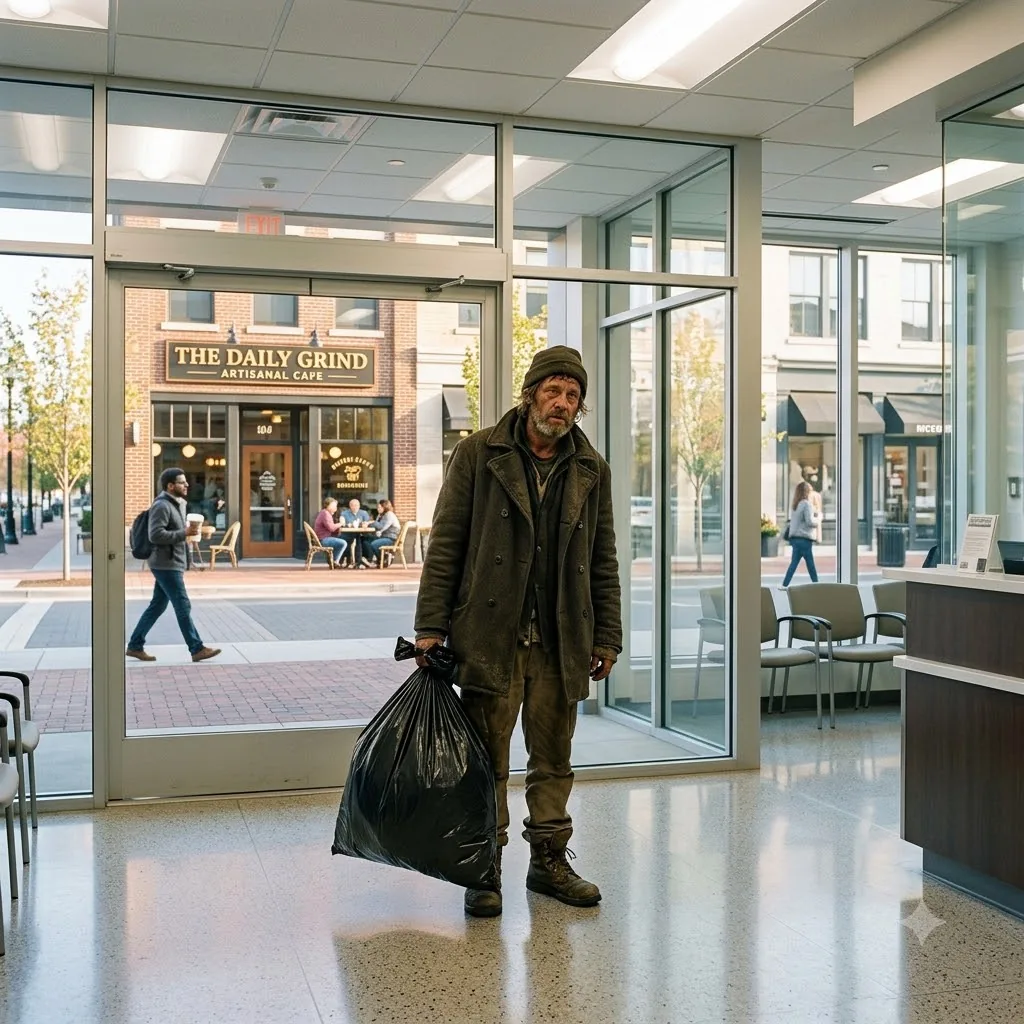
The black plastic stretched white at the seams. He gripped the twisted neck of the plastic, the entirety of Sully’s life stuffed into a single 33-gallon trash bag. The sharp edge of a combat boot poked through the bottom, threatening to tear the thin material and spill his remaining possessions across the floor. The halfway house lobby smelled of floor wax and institutional bleach, a sterile holding pen for men who had run out of time. Behind the security desk, Marcus did not look up, the manager silently sliding discharge paperwork through a plexiglass slot.
Sully stared at the printed forms, the harsh fluorescent lighting glinting off the stark white paper. Ten minutes ago, he had been making his bed, pulling the scratchy wool blanket tight across the mattress corners, smoothing out the wrinkles with the flat of his palm. His locker had been organized, his toothbrush drying on the metal shelf. Now, the heavy metal door at his back was the only exit. Marcus tapped a thick fingernail against the top sheet, right next to the red ink stamp that dictated an immediate vacate order. Sully reached for the papers, his knuckles bone-white around the neck of his heavy trash bag. He tried to catch Marcus’s eye, to find a sliver of negotiation or at least a human explanation in the manager’s flat expression. Marcus simply withdrew his hand, reached up, and pulled the corrugated metal privacy blind down over the window. The metallic rattle echoed off the bare linoleum walls, a final, unarguable period at the end of Sully’s shelter.
Sully turned slowly toward the reinforced glass of the front entrance. Through the wire mesh embedded in the pane, the street outside looked like an alien landscape. Two years ago, when he first arrived, this block had been a predictable gauntlet of shattered asphalt, flickering neon signs, and corner liquor stores. It was rough, but it made sense. Now, a row of vintage-style Edison bulbs hung in the wide, spotless window of an artisanal pour-over coffee shop, sitting exactly where O’Malley’s Dive used to serve three-dollar drafts. A young couple in tailored wool coats walked a pristine goldendoodle past the glass, completely oblivious to the sterile cage where Sully stood. The sidewalk had been power-washed, the crumbling brick facades repointed, the ragged, desperate edges of the neighborhood sanded down into something palatable for a brand new tax bracket.
He shifted the trash bag to his left shoulder, the plastic groaning under the strain of his bundled winter coat, his denim jeans, his few worn paperbacks. His right knee throbbed, a dull, familiar ache that radiated up his thigh, a souvenir from a desert he spent every night trying to forget. He had exactly fourteen dollars and twelve cents in his pocket. The halfway house had been his anchor, a rigid but predictable grid of curfews and chore charts that kept the chaos in his head contained. The sudden severing of that anchor left him adrift, standing in a lobby that no longer belonged to him, holding everything he owned in a bag meant for refuse.
The security guard stationed by the exit, a new kid with a buzzing earpiece and a crisp uniform, stepped forward. He did not speak, merely pointing a thumb toward the heavy glass doors. Sully nodded once, his jaw tight, grinding his molars together. He adjusted his grip on the trash bag, wrapping the slack plastic around his wrist twice to keep it from slipping out of his sweaty palm. He refused to let the bag drag. He refused to leave a trail.
Every step toward the glass door felt like walking through thick mud. The ambient noise of the lobby-the steady hum of the ancient vending machine, the distant clatter of a mop bucket in the hall-faded into a high-pitched, electronic ring in his ears. Sully pushed the heavy metal crash bar with his free hand. The door swung outward, letting in a rush of crisp November air. It tasted of roasted espresso beans and cold vehicle exhaust. The familiar, comforting scent of damp alleyways and old brick was entirely gone, replaced by the sanitized aroma of money and new construction.
He stepped over the metal threshold, his worn work boot coming down on the newly poured concrete sidewalk. The moment his sole made contact with the gentrified street, the decorative string lights overhead seemed to strobe violently. The high-pitched ring in his ears shattered into a deafening roar, a low-altitude scream of a rotary engine cutting through a narrow canyon. The perfectly aligned row of concrete decorative planters blurred, transforming instantly into blast barricades. Sully’s chest seized, the freezing air refusing to fill his lungs. He dropped to one knee, the heavy trash bag hitting the pavement with a dull, sickening thud. His vision tunneled, the artisanal cafe across the street twisting into a blinding, sun-bleached compound. A sudden, sharp crack of a delivery truck backfiring echoed off the pristine brickwork, and Sully threw his hands over his head, his body moving on pure, terrible instinct, diving toward the mercilessly clean curb.
The black plastic stretched white at the seams. He gripped the twisted neck of the plastic, the entirety of Sully’s life stuffed into a single 33-gallon trash bag. The sharp edge of a combat boot poked through the bottom, threatening to tear the thin material and spill his remaining possessions across the floor. The halfway house lobby smelled of floor wax and institutional bleach, a sterile holding pen for men who had run out of time. Behind the security desk, Marcus did not look up, the manager silently sliding discharge paperwork through a plexiglass slot.
Sully stared at the printed forms, the harsh fluorescent lighting glinting off the stark white paper. Ten minutes ago, he had been making his bed, pulling the scratchy wool blanket tight across the mattress corners, smoothing out the wrinkles with the flat of his palm. His locker had been organized, his toothbrush drying on the metal shelf. Now, the heavy metal door at his back was the only exit. Marcus tapped a thick fingernail against the top sheet, right next to the red ink stamp that dictated an immediate vacate order. Sully reached for the papers, his knuckles bone-white around the neck of his heavy trash bag. He tried to catch Marcus’s eye, to find a sliver of negotiation or at least a human explanation in the manager’s flat expression. Marcus simply withdrew his hand, reached up, and pulled the corrugated metal privacy blind down over the window. The metallic rattle echoed off the bare linoleum walls, a final, unarguable period at the end of Sully’s shelter.
Sully turned slowly toward the reinforced glass of the front entrance. Through the wire mesh embedded in the pane, the street outside looked like an alien landscape. Two years ago, when he first arrived, this block had been a predictable gauntlet of shattered asphalt, flickering neon signs, and corner liquor stores. It was rough, but it made sense. Now, a row of vintage-style Edison bulbs hung in the wide, spotless window of an artisanal pour-over coffee shop, sitting exactly where O’Malley’s Dive used to serve three-dollar drafts. A young couple in tailored wool coats walked a pristine goldendoodle past the glass, completely oblivious to the sterile cage where Sully stood. The sidewalk had been power-washed, the crumbling brick facades repointed, the ragged, desperate edges of the neighborhood sanded down into something palatable for a brand new tax bracket.
He shifted the trash bag to his left shoulder, the plastic groaning under the strain of his bundled winter coat, his denim jeans, his few worn paperbacks. His right knee throbbed, a dull, familiar ache that radiated up his thigh, a souvenir from a desert he spent every night trying to forget. He had exactly fourteen dollars and twelve cents in his pocket. The halfway house had been his anchor, a rigid but predictable grid of curfews and chore charts that kept the chaos in his head contained. The sudden severing of that anchor left him adrift, standing in a lobby that no longer belonged to him, holding everything he owned in a bag meant for refuse.
The security guard stationed by the exit, a new kid with a buzzing earpiece and a crisp uniform, stepped forward. He did not speak, merely pointing a thumb toward the heavy glass doors. Sully nodded once, his jaw tight, grinding his molars together. He adjusted his grip on the trash bag, wrapping the slack plastic around his wrist twice to keep it from slipping out of his sweaty palm. He refused to let the bag drag. He refused to leave a trail.
Every step toward the glass door felt like walking through thick mud. The ambient noise of the lobby-the steady hum of the ancient vending machine, the distant clatter of a mop bucket in the hall-faded into a high-pitched, electronic ring in his ears. Sully pushed the heavy metal crash bar with his free hand. The door swung outward, letting in a rush of crisp November air. It tasted of roasted espresso beans and cold vehicle exhaust. The familiar, comforting scent of damp alleyways and old brick was entirely gone, replaced by the sanitized aroma of money and new construction.
He stepped over the metal threshold, his worn work boot coming down on the newly poured concrete sidewalk. The moment his sole made contact with the gentrified street, the decorative string lights overhead seemed to strobe violently. The high-pitched ring in his ears shattered into a deafening roar, a low-altitude scream of a rotary engine cutting through a narrow canyon. The perfectly aligned row of concrete decorative planters blurred, transforming instantly into blast barricades. Sully’s chest seized, the freezing air refusing to fill his lungs. He dropped to one knee, the heavy trash bag hitting the pavement with a dull, sickening thud. His vision tunneled, the artisanal cafe across the street twisting into a blinding, sun-bleached compound. A sudden, sharp crack of a delivery truck backfiring echoed off the pristine brickwork, and Sully threw his hands over his head, his body moving on pure, terrible instinct, diving toward the mercilessly clean curb.