Story code: ST-000734
Part 1: The Fabric
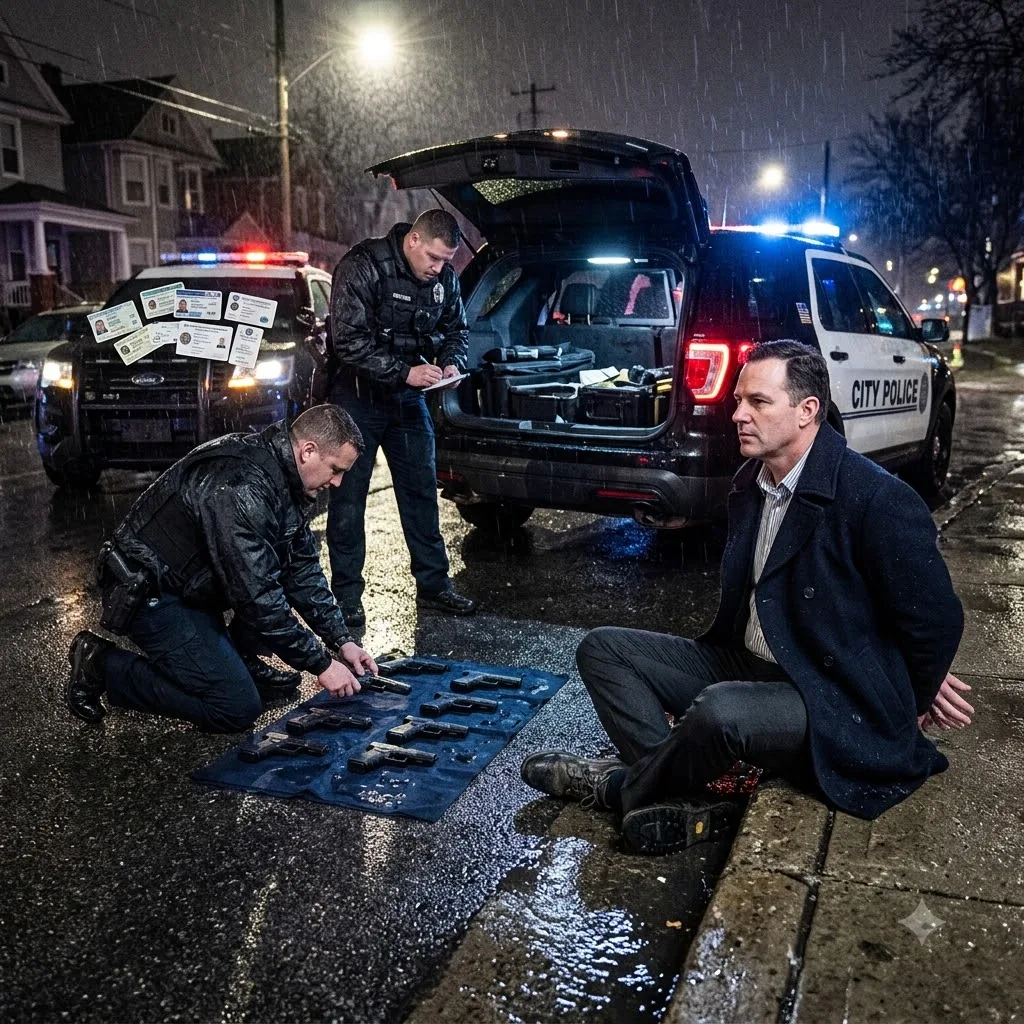
Freezing rain slashed across the flashing red and blue strobes, reflecting off sixteen black handguns arranged in perfectly straight, parallel rows on the slick asphalt. Marcus sat on the concrete curb, his wrists bound tightly behind his back with heavy-duty industrial zip-ties. He kept his breathing slow and measured, forcing a rigid stillness into his shoulders despite the ice water seeping through the seams of his jacket. He knew better than to make any sudden movements or show any agitation to the officers swarming his vehicle.
Ten feet away, his laminated state firearms instructor credentials sat pinned under a heavy wiper blade on the hood of the primary interceptor cruiser. The relentless rain was steadily turning the paper edges into a waterlogged paste, slowly dissolving the gold foil seal of the State Police Academy.
The half-dozen tactical officers tearing through his sedan were completely ignoring the credentials. They were not even looking at the sixteen training weapons on the ground, each one featuring a bright orange safety flag protruding from a locked-back slide to display a visibly empty chamber.
Instead, a rookie patrolman knelt in an oily puddle directly beside the open trunk of Marcus’s vehicle. The young cop had his smartphone out with the flashlight glaring, holding a macro lens attachment less than two inches from the thick black nylon of Marcus’s primary range bag.
Marcus shifted his weight on the freezing concrete. The heavy steel padlocks he used to secure the zippers hung uselessly from the bags, their thick shanks glinting in the harsh tactical lighting. The locks exceeded every state transportation requirement for a mobile firearms training business. He had spent a decade building his reputation on perfect, unquestionable compliance with every bureaucratic mandate the state could invent.
The rookie took another harsh flash photograph of the nylon weave, inching the camera closer to the heavy stitching of the carrying handle.
A long black town car rolled to a stop at the edge of the police perimeter, its tires hissing loudly on the slick road as it blocked the intersection. A man in a dry wool overcoat stepped out into the downpour. He did not wear a badge, a uniform, or a tactical vest. He wore a tailored charcoal suit that marked him as someone senior from the county prosecutor’s office.
The man in the suit walked straight past the line of cruisers. He stepped over the puddles, his leather shoes clicking on the pavement. He ignored the neatly organized training pistols and the orange safety flags. He walked directly to the rookie stationed at the trunk.
The rookie pointed silently at a reinforced seam on the largest range bag. The suit leaned in, squinting against the driving rain, and pulled a small silver penlight from his breast pocket to illuminate a very specific section of the heavy black fabric.
Marcus spoke up clearly over the drumming rain, stating his name, his state business license number, and pointing out that the steel padlocks were fully compliant with the penal code for secure transport of training materials. He projected his voice from the diaphragm, using the same calm, authoritative tone he used on the firing line with nervous beginners.
The man in the suit did not turn his head or acknowledge the statement. He reached out with a single gloved finger and traced a microscopic irregularity in the nylon threading.
He stood up and turned toward the senior patrol sergeant standing by the primary cruiser.
“Impound the vehicle and the entire inventory,” the suit said, his voice flat and commanding over the storm. “Seal it all.”
Marcus stated again that his instructor permits were sitting right there on the cruiser hood. He recited the specific section and paragraph of the state code governing the transport of unloaded professional training aids. He reminded them that they were holding a fully licensed small business owner on a wet curb for perfectly legal equipment.
The suit finally looked down at Marcus on the curb. The man’s expression held no curiosity, no doubt, and absolutely no interest in clarification. It was the flat, decided look of an ambitious man who had already drafted the press release for a major cartel-level bust.
“Bag the nylon carriers separately,” the suit told the evidence technicians, pointing specifically at the reinforced handles of the range bags. “Wrap the fabric in Tyvek. Do not let those zippers rub together or touch the sides of the evidence bins.”
Two officers stepped toward Marcus in unison, grabbing him heavily by the biceps and hauling him upright. The zip-ties cut deep into the skin of his wrists as they dragged his arms backward. They marched him roughly toward the caged back seat of the nearest patrol car, treating him exactly like a high-profile trafficking suspect.
Marcus twisted his neck against the grip of the officers, trying to see what the suit was doing at the trunk.
The man in the overcoat had produced a pair of fine-tipped metal tweezers from a small evidence kit. He was carefully, meticulously extracting something minuscule from the frayed edge of the nylon strap, right next to the heavy steel padlock Marcus had locked himself just an hour ago.
The officers shoved Marcus downward into the hard plastic seat of the cruiser, pushing his head down to clear the doorframe.
Through the rain-streaked polycarbonate window of the patrol car, Marcus watched the suit hold the tweezers up to the blinding glare of the streetlights. The man was studying a tiny, unnatural fiber caught in the steel pincers, smiling thinly as he slid the microscopic speck into a small glass vial just as the patrolman slammed the heavy cruiser door shut.
Freezing rain slashed across the flashing red and blue strobes, reflecting off sixteen black handguns arranged in perfectly straight, parallel rows on the slick asphalt. Marcus sat on the concrete curb, his wrists bound tightly behind his back with heavy-duty industrial zip-ties. He kept his breathing slow and measured, forcing a rigid stillness into his shoulders despite the ice water seeping through the seams of his jacket. He knew better than to make any sudden movements or show any agitation to the officers swarming his vehicle.
Ten feet away, his laminated state firearms instructor credentials sat pinned under a heavy wiper blade on the hood of the primary interceptor cruiser. The relentless rain was steadily turning the paper edges into a waterlogged paste, slowly dissolving the gold foil seal of the State Police Academy.
The half-dozen tactical officers tearing through his sedan were completely ignoring the credentials. They were not even looking at the sixteen training weapons on the ground, each one featuring a bright orange safety flag protruding from a locked-back slide to display a visibly empty chamber.
Instead, a rookie patrolman knelt in an oily puddle directly beside the open trunk of Marcus’s vehicle. The young cop had his smartphone out with the flashlight glaring, holding a macro lens attachment less than two inches from the thick black nylon of Marcus’s primary range bag.
Marcus shifted his weight on the freezing concrete. The heavy steel padlocks he used to secure the zippers hung uselessly from the bags, their thick shanks glinting in the harsh tactical lighting. The locks exceeded every state transportation requirement for a mobile firearms training business. He had spent a decade building his reputation on perfect, unquestionable compliance with every bureaucratic mandate the state could invent.
The rookie took another harsh flash photograph of the nylon weave, inching the camera closer to the heavy stitching of the carrying handle.
A long black town car rolled to a stop at the edge of the police perimeter, its tires hissing loudly on the slick road as it blocked the intersection. A man in a dry wool overcoat stepped out into the downpour. He did not wear a badge, a uniform, or a tactical vest. He wore a tailored charcoal suit that marked him as someone senior from the county prosecutor’s office.
The man in the suit walked straight past the line of cruisers. He stepped over the puddles, his leather shoes clicking on the pavement. He ignored the neatly organized training pistols and the orange safety flags. He walked directly to the rookie stationed at the trunk.
The rookie pointed silently at a reinforced seam on the largest range bag. The suit leaned in, squinting against the driving rain, and pulled a small silver penlight from his breast pocket to illuminate a very specific section of the heavy black fabric.
Marcus spoke up clearly over the drumming rain, stating his name, his state business license number, and pointing out that the steel padlocks were fully compliant with the penal code for secure transport of training materials. He projected his voice from the diaphragm, using the same calm, authoritative tone he used on the firing line with nervous beginners.
The man in the suit did not turn his head or acknowledge the statement. He reached out with a single gloved finger and traced a microscopic irregularity in the nylon threading.
He stood up and turned toward the senior patrol sergeant standing by the primary cruiser.
“Impound the vehicle and the entire inventory,” the suit said, his voice flat and commanding over the storm. “Seal it all.”
Marcus stated again that his instructor permits were sitting right there on the cruiser hood. He recited the specific section and paragraph of the state code governing the transport of unloaded professional training aids. He reminded them that they were holding a fully licensed small business owner on a wet curb for perfectly legal equipment.
The suit finally looked down at Marcus on the curb. The man’s expression held no curiosity, no doubt, and absolutely no interest in clarification. It was the flat, decided look of an ambitious man who had already drafted the press release for a major cartel-level bust.
“Bag the nylon carriers separately,” the suit told the evidence technicians, pointing specifically at the reinforced handles of the range bags. “Wrap the fabric in Tyvek. Do not let those zippers rub together or touch the sides of the evidence bins.”
Two officers stepped toward Marcus in unison, grabbing him heavily by the biceps and hauling him upright. The zip-ties cut deep into the skin of his wrists as they dragged his arms backward. They marched him roughly toward the caged back seat of the nearest patrol car, treating him exactly like a high-profile trafficking suspect.
Marcus twisted his neck against the grip of the officers, trying to see what the suit was doing at the trunk.
The man in the overcoat had produced a pair of fine-tipped metal tweezers from a small evidence kit. He was carefully, meticulously extracting something minuscule from the frayed edge of the nylon strap, right next to the heavy steel padlock Marcus had locked himself just an hour ago.
The officers shoved Marcus downward into the hard plastic seat of the cruiser, pushing his head down to clear the doorframe.
Through the rain-streaked polycarbonate window of the patrol car, Marcus watched the suit hold the tweezers up to the blinding glare of the streetlights. The man was studying a tiny, unnatural fiber caught in the steel pincers, smiling thinly as he slid the microscopic speck into a small glass vial just as the patrolman slammed the heavy cruiser door shut.