Story code: ST-000570
Part 1: The Raw File
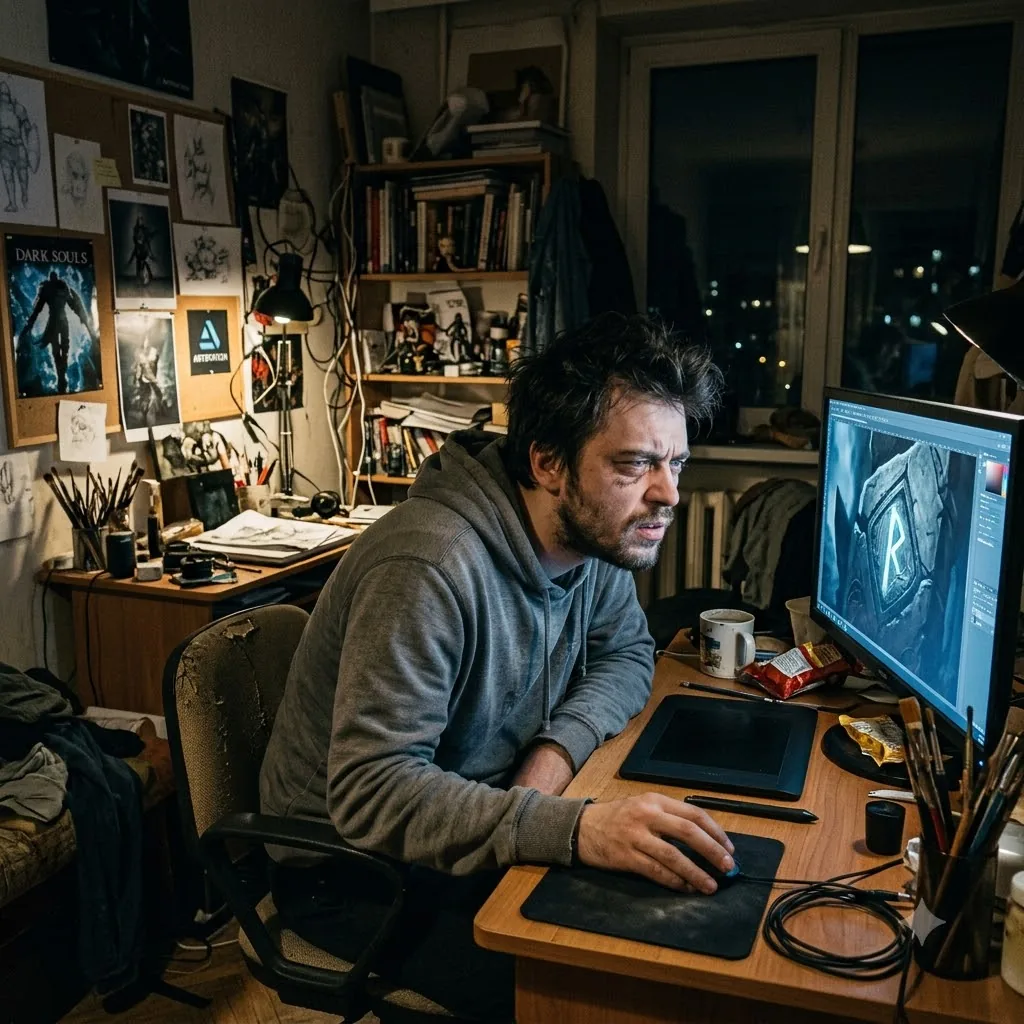
The suffocating heat of the tiny studio apartment pressed against Elias as he dragged the client’s reference file into his workspace. His computer’s cooling fan screamed in protest, a harsh grinding noise that barely cut through the heavy silence of the room. He leaned closer to the scratched monitor, adjusting the contrast on the massive raw image file a fifteen-dollar gig-economy client had just sent over. The instructions were attached in a single, unformatted text document demanding a fast turnaround for a custom avatar. To establish the required mood, the client had generated a reference image using one of the new, ubiquitous algorithmic art engines.
Elias took a slow, deliberate breath, trying to ignore the sharp ache in his lower back radiating from the cheap plastic chair. He had been laid off from his studio job six months prior, right after management realized the new engines could churn out acceptable concept art in seconds. Now, he survived on digital scraps. He clicked the magnification tool, intending to inspect the rough pixel blending the AI usually left around the edges of a subject so he could paint over it.
Instead, the screen filled with an image that made his chest physically tighten. He recognized the brushwork instantly. The algorithmic generation was not just a generic amalgamation of styles or a vague approximation of the current industry trends. It was a flawless, surgical imitation of his own specific technique. He noted the harsh, jagged shadows cutting across the figure’s jawline, the distinct splash of cyan hidden within the deep blacks, and the specific way the simulated light refracted off the metallic armor plating. The machine had clearly ingested his entire public portfolio to spit out this derivative mimicry. He felt a familiar, heavy wave of exhaustion wash over him. Fighting the imitation felt useless now.
He decided to simply trace the core composition, collect his fifteen dollars, and buy groceries for the week. He moved his cursor to the bottom right corner of the canvas to crop out the messy background details. The AI always struggled with peripheral elements, usually rendering them as melted, nonsensical blobs of color. As the magnification hit four hundred percent, the image resolved into sharp, distinct pixels.
Elias stopped moving the mouse. He held his breath.
Hidden deep in the shadows of the character’s rendered boot, barely visible against the dark gray background, was a strange texture. It did not match the chaotic, swirling artifacts typical of machine generation. It possessed a deliberate, human geometry. He duplicated the layer, applied a severe curves adjustment, and crushed the black levels until the hidden texture glowed stark white against the canvas.
He stared at the jagged lines. It was a signature.
It was his signature.
He leaned so far forward his nose almost touched the glass of the monitor. The AI engines were known to hallucinate watermarks, garbling them into unreadable alien text after scraping millions of copyrighted images from the web. But this was not garbled. It was a very specific sequence of strokes. He read the letters etched into the digital shadow.
E. L. A. I. S.
Elias felt the blood drain from his face, leaving his skin cold despite the stifling heat of the room. The apartment suddenly felt entirely too small. He grabbed his stylus with a shaking hand and traced over the glowing white lines on the screen, verifying the exact pivot of the A and the slanted loop of the S. He had only ever written his name like that one single time. It was a deliberate, frustrated misspelling he had scrawled across a failed sketch three years ago.
He never posted that sketch to his public portfolio. He never uploaded it to any forum, social media platform, or cloud storage drive. He had deemed the piece pure garbage, branded it with that misspelled signature in a fit of self-deprecation, and banished it to a deeply nested folder on his offline external hard drive.
He slowly turned his head to look at the physical desk space beside his keyboard. The heavy, blocky external hard drive sat there, a thick layer of dust coating its black plastic casing. It was not connected to the internet. It had never been connected to any network. The little white indicator light on the front of the drive was completely dark.
Elias looked back at the screen. The misspelled signature blazed white in the center of his monitor. The massive tech CEO behind the art algorithm had insulated the company with impenetrable lawyers and claims of public domain scraping. They insisted their black-box training data only came from freely available web sources.
He reached out and placed his bare hand flat on top of the dusty external drive. The plastic casing was vibrating.
A harsh, sharp chime erupted from his desktop speakers, shattering the suffocating silence. A system notification slid into the top corner of his primary monitor. The notification displayed the sleek, minimalist logo of the massive tech company’s desktop client, a program he had been required to install to access his severance package documents six months ago. The progress bar inside the notification window was moving rapidly.
The text below the bar announced a background synchronization of his local storage directories had just completed.
The suffocating heat of the tiny studio apartment pressed against Elias as he dragged the client’s reference file into his workspace. His computer’s cooling fan screamed in protest, a harsh grinding noise that barely cut through the heavy silence of the room. He leaned closer to the scratched monitor, adjusting the contrast on the massive raw image file a fifteen-dollar gig-economy client had just sent over. The instructions were attached in a single, unformatted text document demanding a fast turnaround for a custom avatar. To establish the required mood, the client had generated a reference image using one of the new, ubiquitous algorithmic art engines.
Elias took a slow, deliberate breath, trying to ignore the sharp ache in his lower back radiating from the cheap plastic chair. He had been laid off from his studio job six months prior, right after management realized the new engines could churn out acceptable concept art in seconds. Now, he survived on digital scraps. He clicked the magnification tool, intending to inspect the rough pixel blending the AI usually left around the edges of a subject so he could paint over it.
Instead, the screen filled with an image that made his chest physically tighten. He recognized the brushwork instantly. The algorithmic generation was not just a generic amalgamation of styles or a vague approximation of the current industry trends. It was a flawless, surgical imitation of his own specific technique. He noted the harsh, jagged shadows cutting across the figure’s jawline, the distinct splash of cyan hidden within the deep blacks, and the specific way the simulated light refracted off the metallic armor plating. The machine had clearly ingested his entire public portfolio to spit out this derivative mimicry. He felt a familiar, heavy wave of exhaustion wash over him. Fighting the imitation felt useless now.
He decided to simply trace the core composition, collect his fifteen dollars, and buy groceries for the week. He moved his cursor to the bottom right corner of the canvas to crop out the messy background details. The AI always struggled with peripheral elements, usually rendering them as melted, nonsensical blobs of color. As the magnification hit four hundred percent, the image resolved into sharp, distinct pixels.
Elias stopped moving the mouse. He held his breath.
Hidden deep in the shadows of the character’s rendered boot, barely visible against the dark gray background, was a strange texture. It did not match the chaotic, swirling artifacts typical of machine generation. It possessed a deliberate, human geometry. He duplicated the layer, applied a severe curves adjustment, and crushed the black levels until the hidden texture glowed stark white against the canvas.
He stared at the jagged lines. It was a signature.
It was his signature.
He leaned so far forward his nose almost touched the glass of the monitor. The AI engines were known to hallucinate watermarks, garbling them into unreadable alien text after scraping millions of copyrighted images from the web. But this was not garbled. It was a very specific sequence of strokes. He read the letters etched into the digital shadow.
E. L. A. I. S.
Elias felt the blood drain from his face, leaving his skin cold despite the stifling heat of the room. The apartment suddenly felt entirely too small. He grabbed his stylus with a shaking hand and traced over the glowing white lines on the screen, verifying the exact pivot of the A and the slanted loop of the S. He had only ever written his name like that one single time. It was a deliberate, frustrated misspelling he had scrawled across a failed sketch three years ago.
He never posted that sketch to his public portfolio. He never uploaded it to any forum, social media platform, or cloud storage drive. He had deemed the piece pure garbage, branded it with that misspelled signature in a fit of self-deprecation, and banished it to a deeply nested folder on his offline external hard drive.
He slowly turned his head to look at the physical desk space beside his keyboard. The heavy, blocky external hard drive sat there, a thick layer of dust coating its black plastic casing. It was not connected to the internet. It had never been connected to any network. The little white indicator light on the front of the drive was completely dark.
Elias looked back at the screen. The misspelled signature blazed white in the center of his monitor. The massive tech CEO behind the art algorithm had insulated the company with impenetrable lawyers and claims of public domain scraping. They insisted their black-box training data only came from freely available web sources.
He reached out and placed his bare hand flat on top of the dusty external drive. The plastic casing was vibrating.
A harsh, sharp chime erupted from his desktop speakers, shattering the suffocating silence. A system notification slid into the top corner of his primary monitor. The notification displayed the sleek, minimalist logo of the massive tech company’s desktop client, a program he had been required to install to access his severance package documents six months ago. The progress bar inside the notification window was moving rapidly.
The text below the bar announced a background synchronization of his local storage directories had just completed.