Story code: ST-000590
Part 1: The Radioactive Vest
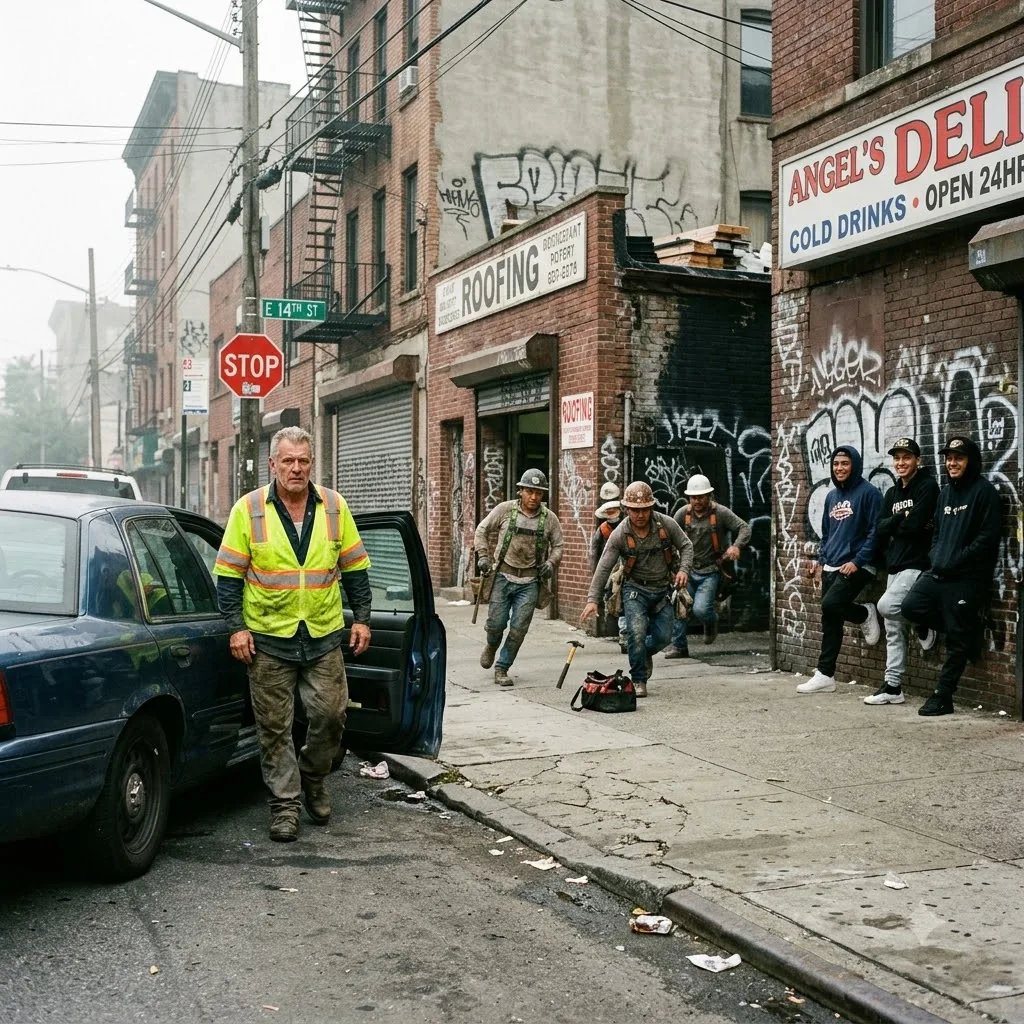
The noise on the corner of 14th and Mercer cut out so fast it felt like a blown speaker. Hector stepped off the curb, adjusting the collar of his neon green Safe Streets vest, anticipating the usual chorus of morning greetings from the shape-up crew. Instead, a dozen undocumented day laborers froze in place. They stared at the bright reflective tape on his chest with a raw, electric panic.
A heavy roofing hammer hit the concrete with a loud clang. That sharp sound acted as a starting gun for the entire block. The men scrambled wildly, shoving each other out of the way to reach the narrow alley behind the hardware store. They abandoned leather tool belts, aluminum ladders, and half-drank coffees on the hoods of parked vans. These were men Hector had known for five years, men he had personally escorted past hostile gang lines just last summer. Now, they were tearing their work jeans on chain-link fences just to put physical distance between themselves and his city-issued uniform.
Hector stopped dead in the middle of the street. He looked over his shoulder. He checked his reflection in the dark, barred window of the hardware store. There were no patrol cars rolling up behind him. There was no tactical police unit stacking up on the corner. There was only him, his scuffed aluminum clipboard, and the laminated city ID swaying on his chest.
Across the cracked pavement, the real source of the morning tension remained entirely stationary. Tito and three of his lieutenants leaned against the quarter panel of a maroon Impala. They had been in a heated argument with the roofers just ninety seconds ago, a territorial dispute Hector had been specifically dispatched to de-escalate. Now, Tito was just smiling. He spat a sunflower seed shell onto the toe of his pristine white sneaker and crossed his arms.
Hector let his hand drop from his collar. He walked forward, letting his heavy boots scuff the pavement to announce his presence, trying to reclaim the space through sheer routine. His neon vest was supposed to be a flag of truce in these neighborhoods. It meant he was there to mediate, to keep the peace without the involvement of actual badges and guns. For three years, it had been his armor. Today, it felt like a radioactive brand.
He scanned the wreckage of the sudden flight. A red thermos lay on its side, spilling dark coffee into the gutter grate. A canvas tool bag had been tipped over, scattering bright yellow tape measures and blue chalk lines across the asphalt. The sheer terror in the eyes of the oldest worker, a man named Mateo, burned in Hector’s mind. Mateo had looked at the official city seal on Hector’s chest as if it were a loaded weapon pointed directly at his face.
Tito finally pushed himself off the Impala. He wore a heavy silver chain over a black t-shirt, his posture loose and entirely unbothered by the violence interrupter’s arrival. He did not run. He walked straight toward Hector, his boots crunching loudly on the spilled blue chalk.
“Look at the big man,” Tito said, his voice loud enough to echo off the brick walls of the empty street. “City payroll looks good on you, Hector. Really clears out the block.”
Hector kept his face entirely neutral. He looked at the alley where the workers had vanished, then back to the gang leader. He noted the heavy, unnatural bulge in the front pocket of Tito’s jeans. He noted the way the other three men fanned out behind Tito, casually blocking the exits to the avenue. This was not a standard dispute over a street corner.
“You got them trained real well,” Tito continued, lifting a hand to tap his own chest right where Hector’s city logo rested. “One flash of the bright green and they scatter like roaches. Saves me a whole lot of breath.”
Hector swallowed the urge to snap back. He needed to understand the mechanics of this specific fear. Tito had never commanded this kind of absolute terror on his own. Tito was a mid-level enforcer, a guy who usually had to throw a punch or flash steel to get a single dollar of extortion money. But today, Tito had not even raised his voice. He had just waited for Hector to walk up in his city uniform.
A rustling sound caught Hector’s attention. Behind a rusted green dumpster in the alley, a stray work boot shifted on the gravel. One of the younger workers had not made it over the chain-link fence. The kid was pinned in the corner, pressing himself so hard against the brick he seemed to be trying to merge with the mortar. His wide, unblinking eyes were locked in a dead stare on Hector’s city ID badge. He was not looking at Tito. He was looking at the lanyard around Hector’s neck.
Hector took a slow step toward the alley to help the kid up. Tito immediately stepped sideways, smoothly cutting off the path. Tito reached into his pocket and pulled out a thick stack of folded yellow papers, identical to the official intake forms Hector carried on his own city clipboard. Tito slapped the papers against his open palm, his smile dropping into a dead, flat line as he pointed a finger straight at the city seal on Hector’s chest.
The noise on the corner of 14th and Mercer cut out so fast it felt like a blown speaker. Hector stepped off the curb, adjusting the collar of his neon green Safe Streets vest, anticipating the usual chorus of morning greetings from the shape-up crew. Instead, a dozen undocumented day laborers froze in place. They stared at the bright reflective tape on his chest with a raw, electric panic.
A heavy roofing hammer hit the concrete with a loud clang. That sharp sound acted as a starting gun for the entire block. The men scrambled wildly, shoving each other out of the way to reach the narrow alley behind the hardware store. They abandoned leather tool belts, aluminum ladders, and half-drank coffees on the hoods of parked vans. These were men Hector had known for five years, men he had personally escorted past hostile gang lines just last summer. Now, they were tearing their work jeans on chain-link fences just to put physical distance between themselves and his city-issued uniform.
Hector stopped dead in the middle of the street. He looked over his shoulder. He checked his reflection in the dark, barred window of the hardware store. There were no patrol cars rolling up behind him. There was no tactical police unit stacking up on the corner. There was only him, his scuffed aluminum clipboard, and the laminated city ID swaying on his chest.
Across the cracked pavement, the real source of the morning tension remained entirely stationary. Tito and three of his lieutenants leaned against the quarter panel of a maroon Impala. They had been in a heated argument with the roofers just ninety seconds ago, a territorial dispute Hector had been specifically dispatched to de-escalate. Now, Tito was just smiling. He spat a sunflower seed shell onto the toe of his pristine white sneaker and crossed his arms.
Hector let his hand drop from his collar. He walked forward, letting his heavy boots scuff the pavement to announce his presence, trying to reclaim the space through sheer routine. His neon vest was supposed to be a flag of truce in these neighborhoods. It meant he was there to mediate, to keep the peace without the involvement of actual badges and guns. For three years, it had been his armor. Today, it felt like a radioactive brand.
He scanned the wreckage of the sudden flight. A red thermos lay on its side, spilling dark coffee into the gutter grate. A canvas tool bag had been tipped over, scattering bright yellow tape measures and blue chalk lines across the asphalt. The sheer terror in the eyes of the oldest worker, a man named Mateo, burned in Hector’s mind. Mateo had looked at the official city seal on Hector’s chest as if it were a loaded weapon pointed directly at his face.
Tito finally pushed himself off the Impala. He wore a heavy silver chain over a black t-shirt, his posture loose and entirely unbothered by the violence interrupter’s arrival. He did not run. He walked straight toward Hector, his boots crunching loudly on the spilled blue chalk.
“Look at the big man,” Tito said, his voice loud enough to echo off the brick walls of the empty street. “City payroll looks good on you, Hector. Really clears out the block.”
Hector kept his face entirely neutral. He looked at the alley where the workers had vanished, then back to the gang leader. He noted the heavy, unnatural bulge in the front pocket of Tito’s jeans. He noted the way the other three men fanned out behind Tito, casually blocking the exits to the avenue. This was not a standard dispute over a street corner.
“You got them trained real well,” Tito continued, lifting a hand to tap his own chest right where Hector’s city logo rested. “One flash of the bright green and they scatter like roaches. Saves me a whole lot of breath.”
Hector swallowed the urge to snap back. He needed to understand the mechanics of this specific fear. Tito had never commanded this kind of absolute terror on his own. Tito was a mid-level enforcer, a guy who usually had to throw a punch or flash steel to get a single dollar of extortion money. But today, Tito had not even raised his voice. He had just waited for Hector to walk up in his city uniform.
A rustling sound caught Hector’s attention. Behind a rusted green dumpster in the alley, a stray work boot shifted on the gravel. One of the younger workers had not made it over the chain-link fence. The kid was pinned in the corner, pressing himself so hard against the brick he seemed to be trying to merge with the mortar. His wide, unblinking eyes were locked in a dead stare on Hector’s city ID badge. He was not looking at Tito. He was looking at the lanyard around Hector’s neck.
Hector took a slow step toward the alley to help the kid up. Tito immediately stepped sideways, smoothly cutting off the path. Tito reached into his pocket and pulled out a thick stack of folded yellow papers, identical to the official intake forms Hector carried on his own city clipboard. Tito slapped the papers against his open palm, his smile dropping into a dead, flat line as he pointed a finger straight at the city seal on Hector’s chest.