Story code: ST-000650
Part 1: The Strobe
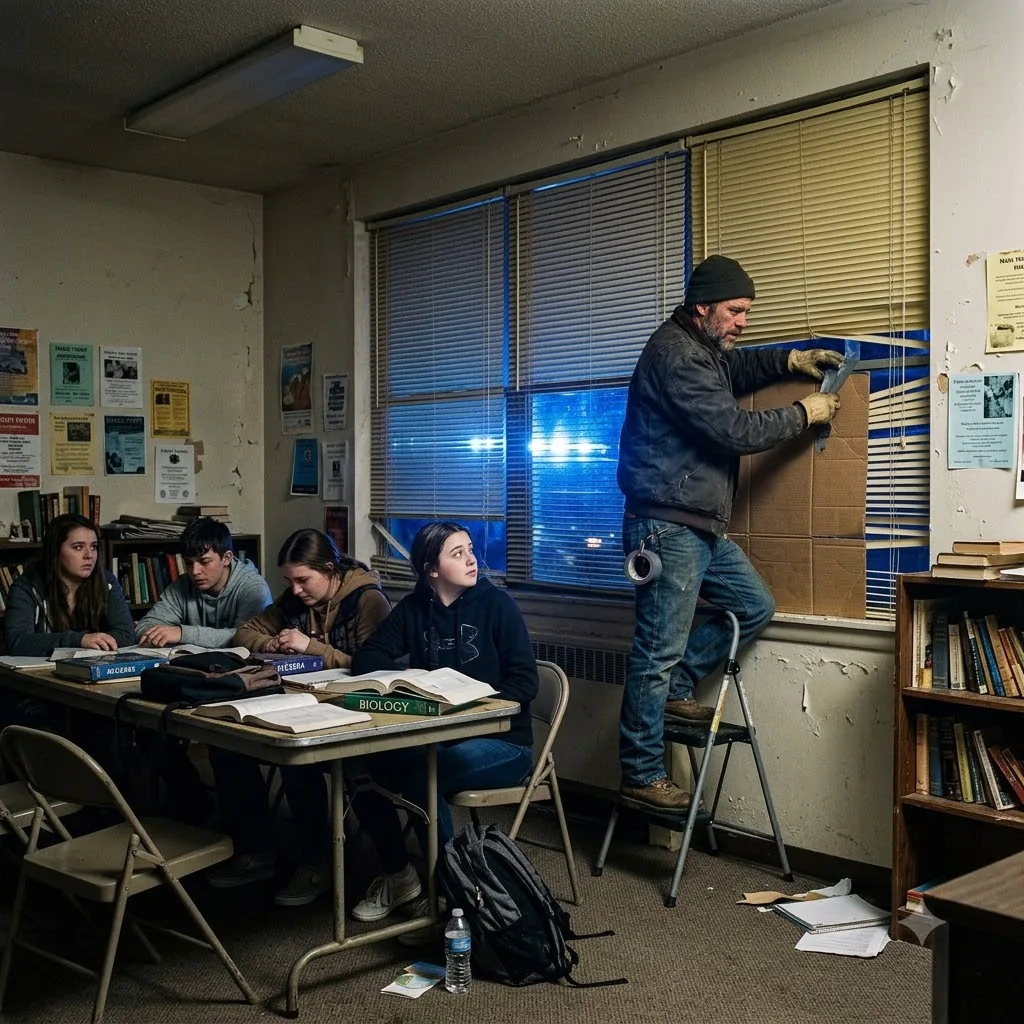
The strobing blue light from the mobile police tower sliced through the plastic blinds, washing the community center’s reading room in a violent, rhythmic glare. Marcus pressed a flattened cardboard box against the window glass, tearing off a strip of duct tape with his teeth to seal the gap. At the center table, six teenagers flinched every time the flash illuminated their paperback novels, their shoulders hunched against the unnatural daylight.
It was a standard intimidation tactic for the neighborhood. The precinct liked to park their portable surveillance trailers on the corner of 43rd and Elm whenever they wanted to flush out the corner boys or break up a block party. The diesel generator would hum all night, vibrating the pavement, and the mast would extend thirty feet into the air, blasting four high-intensity LEDs in a blinding rotation. Usually, they aimed it at the liquor store or the empty lot across the avenue. Tonight, they had angled the beams directly into the windows of Marcus’s after-school reading program.
He slapped another strip of silver tape across the edge of the box. The blue light found a new crack near the sill, shooting across the room to hit a fifteen-year-old named Malik right in the eyes. Malik dropped his heavy history book, sliding his chair back so the metal legs shrieked against the worn linoleum. Two other kids flinched, instinctively pulling their hoods up.
Marcus kept his hands steady, forcing his breathing into a slow, even rhythm. Three years out of a state penitentiary had taught him exactly how to manage his adrenaline around a uniform. A sudden movement, a raised voice, or a single display of temper could cost him his hard-won freedom. His parole officer had made it explicitly clear that community service did not include getting into shouting matches with law enforcement, regardless of the provocation. He just needed to keep the kids calm and finish out the hour.
“Keep reading,” Marcus told the table, grabbing another broken-down refrigerator box from the recycling pile. “They are just making a statement. We ignore it, they get bored and point that rig somewhere else.”
The teenagers did not look convinced. A girl named Sarah kept her head down, but her eyes flicked toward the window every time the blue flash bleached the posters on the walls. The community center was supposed to be the one neutral zone on the block, a place where the street beefs and the squad cars stopped at the front door. Marcus had spent six months scrubbing graffiti off the brickwork and hauling donated bookshelves into the old gymnasium to build this sanctuary. He ripped another piece of tape, sealing a long vertical crack. The room went dim for a second, wrapped in the warm glow of the overhead fluorescents, before the strobe penetrated the thin cardboard itself.
The sheer intensity of the light meant the cops had bypassed the standard wide-beam dispersion settings. They had focused the spotlights into narrow, targeted cones, aiming them exclusively at the front room where the new shipment of donated library books sat stacked on the folding tables.
Marcus walked over to the stack, moving a heavy box of newly arrived hardcovers away from the window’s reach. He assumed the precinct was just doing a show of force. The lieutenant in this sector had a reputation for aggressive posturing, trying to starve the local gangs of any gathering space. If they made the community center unbearable to sit in, the teens would scatter back to their apartments. That was the usual logic.
Then the PA system clicked on.
The electronic squeal of microphone feedback cut through the steady hum of the tower’s generator. The teenagers froze, clutching their books to their chests. Marcus raised a hand, signaling them to stay exactly where they were. He walked past the taped-up glass and pushed the heavy metal front door open, stepping out onto the cold concrete stoop to confront the glare.
The light hit him like a physical weight, forcing him to shield his face with his forearm. The police trailer sat at the edge of the curb, its telescoping neck extended high above the streetlamp. Behind the trailer, an idling cruiser sat entirely in shadow, its exhaust pluming in the night air. Marcus squinted, trying to make out the silhouettes in the front seats of the squad car. He expected a standard dispersal order, a booming voice telling loiterers to clear the sidewalk, or a manufactured warning about a curfew violation. He braced himself to use his most polite, de-escalating tone.
Instead, a bored, metallic voice echoed from the tower’s mounted speakers.
“Nine seven eight,” the amplified voice droned, the sound bouncing off the brick facades of the apartment buildings. “Zero zero six. Two eight three. Four two zero.”
Marcus lowered his arm slightly, letting his eyes adjust to the blinding blue flashes. A second officer was standing outside the cruiser, leaning against the side mirror. He was holding a pair of heavy, military-grade binoculars pressed tightly to his face. The lenses were angled downward, looking straight through the narrow gaps in the blinds Marcus hadn’t yet managed to cover with cardboard. The officer wasn’t scanning the room for gang colors, hidden weapons, or familiar corner boys. He was focused precisely on the display tables near the glass.
“Nine seven eight,” the voice on the PA repeated, logging another string of numbers into the radio channel. “Zero one four. Three one zero. Two three three.”
Marcus looked back through the glass door at the tall stacks of donated hardcovers on the display tables. He recognized the specific thirteen-digit sequences being broadcast over the loudspeakers. The officers were not running a gang deterrence operation at all. They were reading the ISBNs off the spines of the books.
The strobing blue light from the mobile police tower sliced through the plastic blinds, washing the community center’s reading room in a violent, rhythmic glare. Marcus pressed a flattened cardboard box against the window glass, tearing off a strip of duct tape with his teeth to seal the gap. At the center table, six teenagers flinched every time the flash illuminated their paperback novels, their shoulders hunched against the unnatural daylight.
It was a standard intimidation tactic for the neighborhood. The precinct liked to park their portable surveillance trailers on the corner of 43rd and Elm whenever they wanted to flush out the corner boys or break up a block party. The diesel generator would hum all night, vibrating the pavement, and the mast would extend thirty feet into the air, blasting four high-intensity LEDs in a blinding rotation. Usually, they aimed it at the liquor store or the empty lot across the avenue. Tonight, they had angled the beams directly into the windows of Marcus’s after-school reading program.
He slapped another strip of silver tape across the edge of the box. The blue light found a new crack near the sill, shooting across the room to hit a fifteen-year-old named Malik right in the eyes. Malik dropped his heavy history book, sliding his chair back so the metal legs shrieked against the worn linoleum. Two other kids flinched, instinctively pulling their hoods up.
Marcus kept his hands steady, forcing his breathing into a slow, even rhythm. Three years out of a state penitentiary had taught him exactly how to manage his adrenaline around a uniform. A sudden movement, a raised voice, or a single display of temper could cost him his hard-won freedom. His parole officer had made it explicitly clear that community service did not include getting into shouting matches with law enforcement, regardless of the provocation. He just needed to keep the kids calm and finish out the hour.
“Keep reading,” Marcus told the table, grabbing another broken-down refrigerator box from the recycling pile. “They are just making a statement. We ignore it, they get bored and point that rig somewhere else.”
The teenagers did not look convinced. A girl named Sarah kept her head down, but her eyes flicked toward the window every time the blue flash bleached the posters on the walls. The community center was supposed to be the one neutral zone on the block, a place where the street beefs and the squad cars stopped at the front door. Marcus had spent six months scrubbing graffiti off the brickwork and hauling donated bookshelves into the old gymnasium to build this sanctuary. He ripped another piece of tape, sealing a long vertical crack. The room went dim for a second, wrapped in the warm glow of the overhead fluorescents, before the strobe penetrated the thin cardboard itself.
The sheer intensity of the light meant the cops had bypassed the standard wide-beam dispersion settings. They had focused the spotlights into narrow, targeted cones, aiming them exclusively at the front room where the new shipment of donated library books sat stacked on the folding tables.
Marcus walked over to the stack, moving a heavy box of newly arrived hardcovers away from the window’s reach. He assumed the precinct was just doing a show of force. The lieutenant in this sector had a reputation for aggressive posturing, trying to starve the local gangs of any gathering space. If they made the community center unbearable to sit in, the teens would scatter back to their apartments. That was the usual logic.
Then the PA system clicked on.
The electronic squeal of microphone feedback cut through the steady hum of the tower’s generator. The teenagers froze, clutching their books to their chests. Marcus raised a hand, signaling them to stay exactly where they were. He walked past the taped-up glass and pushed the heavy metal front door open, stepping out onto the cold concrete stoop to confront the glare.
The light hit him like a physical weight, forcing him to shield his face with his forearm. The police trailer sat at the edge of the curb, its telescoping neck extended high above the streetlamp. Behind the trailer, an idling cruiser sat entirely in shadow, its exhaust pluming in the night air. Marcus squinted, trying to make out the silhouettes in the front seats of the squad car. He expected a standard dispersal order, a booming voice telling loiterers to clear the sidewalk, or a manufactured warning about a curfew violation. He braced himself to use his most polite, de-escalating tone.
Instead, a bored, metallic voice echoed from the tower’s mounted speakers.
“Nine seven eight,” the amplified voice droned, the sound bouncing off the brick facades of the apartment buildings. “Zero zero six. Two eight three. Four two zero.”
Marcus lowered his arm slightly, letting his eyes adjust to the blinding blue flashes. A second officer was standing outside the cruiser, leaning against the side mirror. He was holding a pair of heavy, military-grade binoculars pressed tightly to his face. The lenses were angled downward, looking straight through the narrow gaps in the blinds Marcus hadn’t yet managed to cover with cardboard. The officer wasn’t scanning the room for gang colors, hidden weapons, or familiar corner boys. He was focused precisely on the display tables near the glass.
“Nine seven eight,” the voice on the PA repeated, logging another string of numbers into the radio channel. “Zero one four. Three one zero. Two three three.”
Marcus looked back through the glass door at the tall stacks of donated hardcovers on the display tables. He recognized the specific thirteen-digit sequences being broadcast over the loudspeakers. The officers were not running a gang deterrence operation at all. They were reading the ISBNs off the spines of the books.