Story code: ST-000732
Part 1: The Cracked Screen
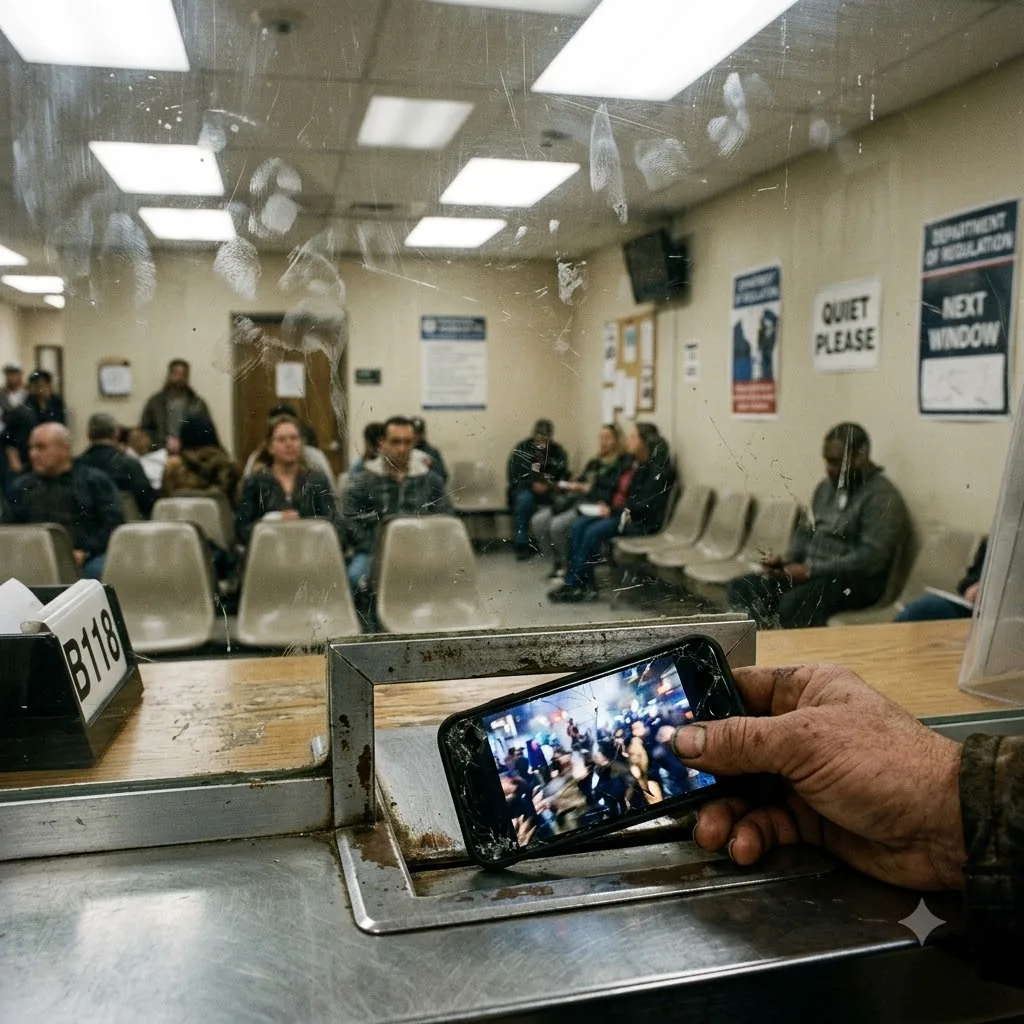
The metal edge of the cracked smartphone scrapes loudly against the steel lip of the ticket slot, wedging itself beneath the two-inch-thick plexiglass. The screen is a spiderweb of shattered glass, radiating outward from a central impact point, yet it blares a chaotic, jittery video at maximum brightness. Donna glares at the obstruction. Her fingers hover in rigid annoyance above her ergonomic keyboard. Protocol dictates that veterans remain in the blue-tiled seating area until their assigned number flashes on the overhead digital board. Shoving personal electronics through the narrow security gap violates multiple safety directives posted in heavy block letters on her side of the partition.
She lets out a sharp, exasperated breath and slides her rolling chair a fraction of an inch to the left to peer through the smudged partition. A man stands on the other side, his posture rigid, his face heavily shadowed by a faded, olive-drab tactical cap pulled low over his brow. His broad shoulders block the harsh fluorescent glare of the lobby lights. Donna points a manicured finger firmly toward the crowded waiting area behind him. She taps her knuckles against the laminated sign taped to her glass that reads “Take a Number and Wait to be Called.”
The man does not retreat. He does not reach to retrieve his phone. He leaves his calloused hand resting heavily on the brushed metal counter, his index finger pressing down on the corner of the device to keep it securely anchored in the narrow slot.
The tinny speaker on the phone emits a shrill cacophony of overlapping, distorted voices. Donna looks down at the bright screen, intending to slide the device right back to the rule-breaker. The video is a shaky, vertical recording of the very same VA lobby she looks out upon every single day. The camera operator is stepping backward, the lens jerking erratically with every footfall. A violent commotion unfolds in the center of the frame. A figure wrapped in an oversized, heavy canvas jacket is on his knees, thrashing wildly against the unyielding linoleum floor. He is surrounded by a loose ring of onlookers holding up their own cell phones to capture the scene.
The audio is a jarring mess of shouting, the aggressive scraping of plastic chairs being dragged across the floor, and the monotone beep of the automated PA system. It is a public breakdown, raw and entirely unfiltered. The man in the footage lashes out, kicking a plastic waiting room chair. The seat skitters across the polished floor and slams into a metal rack of informational brochures. Dozens of glossy pamphlets cascade down around him. He clutches the sides of his head, his face completely obscured by his own erratic movements and the terrible, pixelated resolution of the uploaded clip.
Two security guards in ill-fitting navy uniforms edge into the frame, their hands raised in hesitant pacification. The camera zooms in suddenly, the pixels blooming into blocky, indistinct shapes as it tries to capture the raw desperation of the veteran thrashing on the floor. Donna watches the digital chaos, her initial annoyance tightening into a cold knot in her throat. She recognizes the exact spill of the green PTSD support brochures. She recognizes the black rubber scuff marks left on the tiles by the chair.
She reaches for her intercom console and presses the red transmit button. The microphone crackles to life in the lobby. She states flatly that this is a primary intake service window, not a lost and found desk, and that Federal Protective Services will be summoned if the counter is not cleared immediately.
The man on the other side of the plexiglass ignores the broadcasted warning. He reaches a single finger forward and taps the shattered screen of the phone, scrubbing the video timeline backward by ten seconds. He presses play.
The shaky footage repeats the violent kick. The plastic chair flies backward. This time, however, the camera swings wildly to the right, sweeping past the circle of gawking strangers. For a fleeting second, the lens focuses past the crowd and directly onto Intake Window 4. The image stabilizes just enough to cut through the overhead glare reflecting off the security plexiglass.
Donna stops breathing.
Perfectly framed in the chaotic background footage is her own face. The digital version of Donna sits safely behind the bullet-resistant glass, resting her chin in her palm. She is looking directly at the agonizing breakdown unfolding mere feet away in the lobby. Her expression in the video is entirely blank. Her eyes are glazed over with complete, crushing indifference as she slowly lifts a styrofoam coffee cup to her lips and takes a sip. She watches the man writhe on the floor with the exact same apathy she might give a television playing in a waiting room.
The man at the window taps the screen one last time, freezing the video right on Donna’s apathetic digital face. He slowly lifts his head, letting the harsh fluorescent lights finally catch his features. The heavy, dirt-stained canvas jacket he wears matches the one in the video perfectly. He leans forward until his forehead rests heavily against the thick security glass, his eyes locking onto hers with a hollow, terrifying intensity. Donna scrambles backward in her chair, her hand slapping blindly under the desk for the silent emergency alarm button, just as the man slowly reaches his right hand deep into his coat pocket.
The metal edge of the cracked smartphone scrapes loudly against the steel lip of the ticket slot, wedging itself beneath the two-inch-thick plexiglass. The screen is a spiderweb of shattered glass, radiating outward from a central impact point, yet it blares a chaotic, jittery video at maximum brightness. Donna glares at the obstruction. Her fingers hover in rigid annoyance above her ergonomic keyboard. Protocol dictates that veterans remain in the blue-tiled seating area until their assigned number flashes on the overhead digital board. Shoving personal electronics through the narrow security gap violates multiple safety directives posted in heavy block letters on her side of the partition.
She lets out a sharp, exasperated breath and slides her rolling chair a fraction of an inch to the left to peer through the smudged partition. A man stands on the other side, his posture rigid, his face heavily shadowed by a faded, olive-drab tactical cap pulled low over his brow. His broad shoulders block the harsh fluorescent glare of the lobby lights. Donna points a manicured finger firmly toward the crowded waiting area behind him. She taps her knuckles against the laminated sign taped to her glass that reads “Take a Number and Wait to be Called.”
The man does not retreat. He does not reach to retrieve his phone. He leaves his calloused hand resting heavily on the brushed metal counter, his index finger pressing down on the corner of the device to keep it securely anchored in the narrow slot.
The tinny speaker on the phone emits a shrill cacophony of overlapping, distorted voices. Donna looks down at the bright screen, intending to slide the device right back to the rule-breaker. The video is a shaky, vertical recording of the very same VA lobby she looks out upon every single day. The camera operator is stepping backward, the lens jerking erratically with every footfall. A violent commotion unfolds in the center of the frame. A figure wrapped in an oversized, heavy canvas jacket is on his knees, thrashing wildly against the unyielding linoleum floor. He is surrounded by a loose ring of onlookers holding up their own cell phones to capture the scene.
The audio is a jarring mess of shouting, the aggressive scraping of plastic chairs being dragged across the floor, and the monotone beep of the automated PA system. It is a public breakdown, raw and entirely unfiltered. The man in the footage lashes out, kicking a plastic waiting room chair. The seat skitters across the polished floor and slams into a metal rack of informational brochures. Dozens of glossy pamphlets cascade down around him. He clutches the sides of his head, his face completely obscured by his own erratic movements and the terrible, pixelated resolution of the uploaded clip.
Two security guards in ill-fitting navy uniforms edge into the frame, their hands raised in hesitant pacification. The camera zooms in suddenly, the pixels blooming into blocky, indistinct shapes as it tries to capture the raw desperation of the veteran thrashing on the floor. Donna watches the digital chaos, her initial annoyance tightening into a cold knot in her throat. She recognizes the exact spill of the green PTSD support brochures. She recognizes the black rubber scuff marks left on the tiles by the chair.
She reaches for her intercom console and presses the red transmit button. The microphone crackles to life in the lobby. She states flatly that this is a primary intake service window, not a lost and found desk, and that Federal Protective Services will be summoned if the counter is not cleared immediately.
The man on the other side of the plexiglass ignores the broadcasted warning. He reaches a single finger forward and taps the shattered screen of the phone, scrubbing the video timeline backward by ten seconds. He presses play.
The shaky footage repeats the violent kick. The plastic chair flies backward. This time, however, the camera swings wildly to the right, sweeping past the circle of gawking strangers. For a fleeting second, the lens focuses past the crowd and directly onto Intake Window 4. The image stabilizes just enough to cut through the overhead glare reflecting off the security plexiglass.
Donna stops breathing.
Perfectly framed in the chaotic background footage is her own face. The digital version of Donna sits safely behind the bullet-resistant glass, resting her chin in her palm. She is looking directly at the agonizing breakdown unfolding mere feet away in the lobby. Her expression in the video is entirely blank. Her eyes are glazed over with complete, crushing indifference as she slowly lifts a styrofoam coffee cup to her lips and takes a sip. She watches the man writhe on the floor with the exact same apathy she might give a television playing in a waiting room.
The man at the window taps the screen one last time, freezing the video right on Donna’s apathetic digital face. He slowly lifts his head, letting the harsh fluorescent lights finally catch his features. The heavy, dirt-stained canvas jacket he wears matches the one in the video perfectly. He leans forward until his forehead rests heavily against the thick security glass, his eyes locking onto hers with a hollow, terrifying intensity. Donna scrambles backward in her chair, her hand slapping blindly under the desk for the silent emergency alarm button, just as the man slowly reaches his right hand deep into his coat pocket.