Story code: ST-000732
Part 4: Number Eighty-Four
The mechanized shriek of the fire alarms abruptly cuts out, replaced by a sudden, heavy metallic clack echoing from the east corridor. The magnetic locks on the heavy steel fire doors finally disengage.
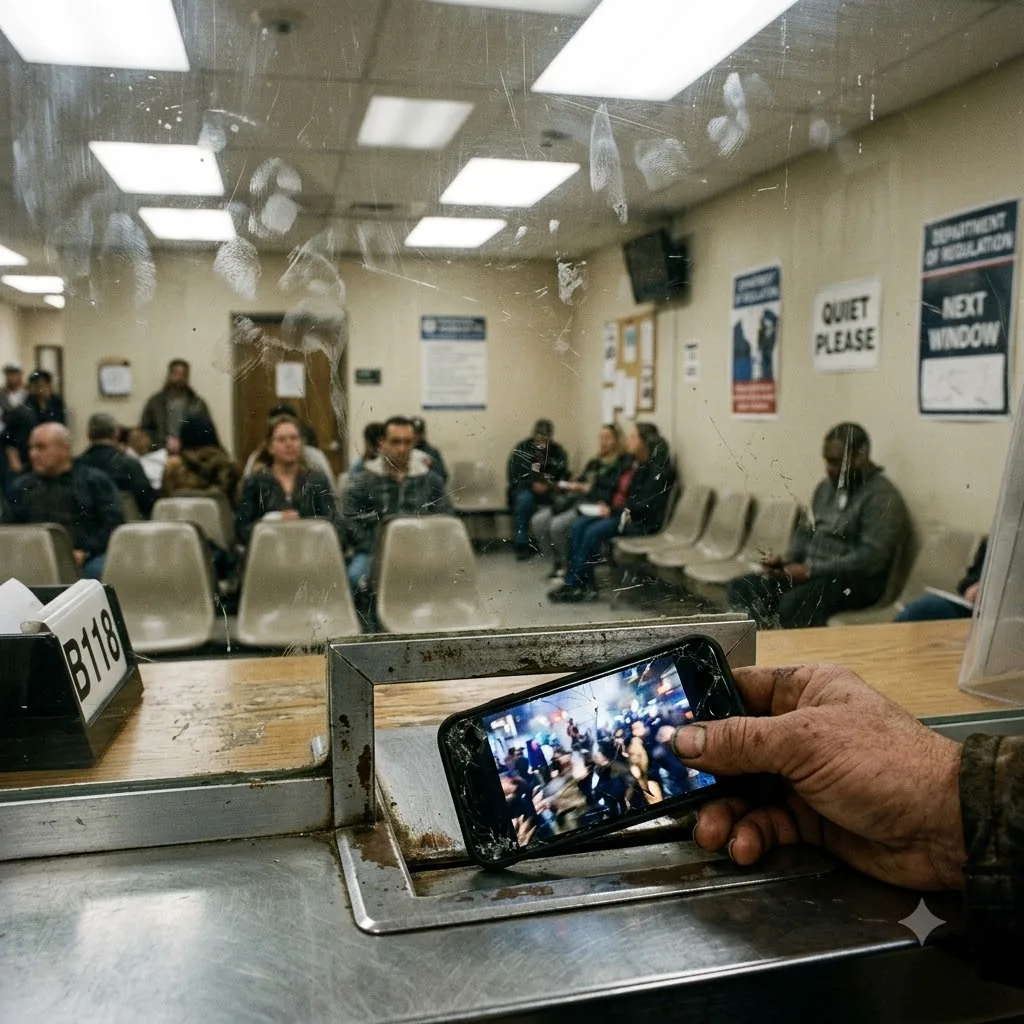
Donna presses her palms flat against the warm, smoke-smudged plexiglass, coughing a wet, ragged breath into her sleeve. Through the grey haze of the booth, she watches six Federal Protective Service officers flood into the lobby. They move with aggressive, practiced speed, their tactical vests shifting heavily as they unclip black batons and draw zip-ties.
Elias does not run. He doesn’t even brace himself. He slowly turns his back to Donna’s window, letting his empty hands rise to shoulder height. He stands perfectly still under the harsh fluorescent lights, a man who has already delivered his message and has nothing left to defend.
The guards do not care about his surrender. They hit him at full sprinting speed.
Donna flinches violently as two officers tackle Elias around the waist, their combined momentum driving him forcefully into the polished linoleum. The sickening crack of his jaw striking the hard floor cuts sharply through the narrow ticket slot. Three more guards pile on top of him, driving heavy black knees into his spine and the back of his neck. They scream overlapping, aggressive commands, demanding he stop resisting, even though his arms are pinned motionless beneath the weight of three grown men.
Donna’s hands tremble against the glass. The air in her booth tastes like bitter ash and burnt plastic, stinging her throat with every shallow gasp. She looks past the chaotic dogpile of navy uniforms crushing Elias against the floor.
Beyond the immediate security perimeter, the waiting room has shifted. The lockdown corralled a fresh wave of newly arrived veterans and their families near the main entrance. Donna watches them. They are not running away. They are not calling for help.
Instead, a dozen glowing smartphones rise into the air.
They stand in a loose, passive semicircle, their arms raised, cameras pointed steadily at the violence unfolding in the center of the room. The cold, bright glare of the overhead lights reflects off the backs of their phones. Nobody intervenes. Nobody asks if the man being crushed to the floor is breathing. They just record.
Donna stares at the sea of digital voyeurs, her stomach twisting into a cold, nauseating knot. She recognizes the exact tilt of their heads, the blank, detached expressions on their faces as they capture another man’s trauma for digital consumption. It is the exact same expression she wore on Tuesday. She is looking at a mirror, multiplied by a dozen.
A heavy, metallic snapping sound wrenches her attention away. A maintenance worker in grey coveralls stands outside her booth, gripping a massive pair of bolt cutters. The galvanized steel chain drops to the floor in two heavy pieces. The rusted padlock clatters uselessly against the baseboard.
The reinforced steel-mesh door to Window 4 is yanked open. A rush of frigid, heavily air-conditioned hallway air floods the small space, instantly washing away the stagnant, toxic cloud of the burning denial forms. Donna slumps back into her ergonomic rolling chair, shivering violently as the cold air hits the nervous sweat soaking through her blouse.
“Are you injured?” a supervisor in a sharp suit asks, leaning into the doorway. His eyes scan the scorch marks on the brushed metal counter, then flick to her face. “Do you need EMS?”
Donna shakes her head slowly. She isn’t bleeding. She doesn’t have a single scratch on her. The bullet-resistant plexiglass did exactly what it was engineered to do. It kept her entirely insulated from the physical violence of the world outside. But the invisible armor she had spent years building-the bureaucratic detachment, the righteous belief that she was just doing her job-is completely shattered.
Out in the lobby, the guards haul Elias to his feet. His canvas jacket is twisted, his hands bound tightly behind his back with thick plastic restraints. A bright smear of crimson blood stains his left cheek, dripping slowly down his chin. As they drag him roughly toward the main exit doors, he does not look back at Window 4. He doesn’t need to.
The supervisor sighs, checking his wristwatch. He looks at the massive, restless line of veterans bottlenecked at the front doors. The disruption has backed up the queue by an hour.
“Security is taking the phone as evidence. Janitorial will wipe the counter,” the supervisor says briskly, already stepping away from her open door. “Take five minutes to catch your breath. Then we need to clear that backlog. The board is dark. Use the manual buzzer.”
The door clicks shut behind him.
Donna sits alone in the quiet hum of her sterile booth. She looks down at her keyboard. Beneath the desk, hidden in the shadows, the red and green buttons sit untouched in their recessed plastic housing. She lifts her head and stares at her own pale, hollow reflection in the thick security glass.
She is perfectly safe. She is morally bankrupt.
With a trembling, manicured finger, Donna reaches out to her intercom console and presses the buzzer.
“Number eighty-four,” she says, her voice flat and dead. “Window four.”