Story code: ST-000732
Part 2: Claim Denied
Donna’s fingers cramp as she mashes the ridged plastic of the silent alarm beneath her desk. She holds it down until her knuckles pull tight and white, her breath catching violently in her throat. She drops instantly, her knees slamming painfully against the cold steel modesty panel of her workstation. She curls into a tight ball, waiting for the deafening, percussive crack of a gunshot. She braces for the terrible sound of bullet-resistant plexiglass splintering under a high-caliber round. Blood pounds in her ears, counting the seconds.
No gunshot comes. Instead, a heavy, metallic clatter echoes sharply through the gap beneath the partition.
Donna lowers her arms, her heart hammering against her ribs. She presses her palms against the floor and inches her head upward, just enough to peer over the edge of the brushed metal counter. The veteran is not holding a weapon. His calloused hands grip a heavy, rusted industrial padlock and a thick length of galvanized steel chain.
He does not look down at her. Methodically, he takes a heavy step to his right. Two feet away from Window 4 sits the reinforced steel-mesh door that serves as the only exit from the protected clerk bullpen into the main lobby. Donna watches in mounting horror as he threads the chain through the door’s vertical pull handle, wrapping it twice around a thick structural support column bolted into the floor. The padlock clicks shut with a heavy, echoing snap. He tests the tension with a sharp yank. The metal groans, but the door is completely immobilized. He has locked himself to her window, and effectively locked security out.
Donna’s eyes dart to the flashing amber LED tucked under her monitor-the indicator that Federal Protective Services received her panic signal. The standard response time is three minutes. In the dead, heavy air of the waiting room, three minutes feels like a death sentence.
The veteran steps back to the center of Window 4. The chaotic waiting room behind him has gone entirely silent. The usual bureaucratic white noise evaporates. The other veterans occupying the rows of plastic chairs are slowly standing up, recognizing the shift in the room’s energy. They begin backing away toward the main exits, moving with the quiet, practiced caution of people who know exactly what an ambush looks like.
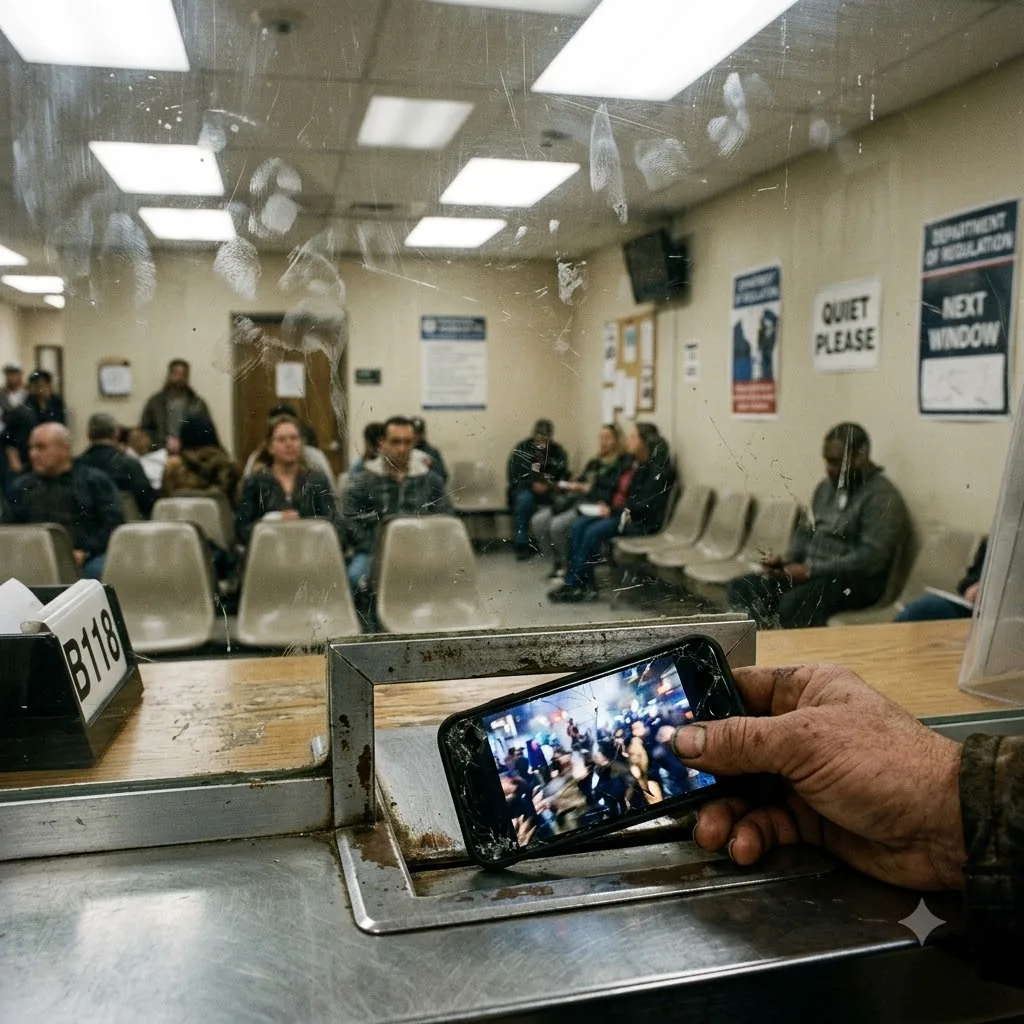
The man reaches forward and grips the cracked smartphone still wedged beneath the glass. He maxes out the volume on the side of the device. The tinny speaker screams to life, broadcasting the audio of his breakdown into the dead quiet of the lobby. The sickening thud of boots kicking chairs. The ragged sobs of a man unspooling. And there, frozen in the background of the footage, sits Donna.
Donna stares at her digitized face radiating from the screen. She remembers that specific Tuesday. The crushing exhaustion of the intake desk, the endless faces of broken people demanding resources she did not possess. It was a necessary survival mechanism to build a wall against the relentless tide of trauma. She hadn’t called the rapid response medical team. She had simply rested her chin in her hand, sipped her lukewarm coffee, and waited for the guards to drag the inconvenience away. Framed by the shattered glass, her administrative apathy looks less like survival and more like quiet, profound cruelty.
“Window four,” a static-laced voice crackles abruptly through the radio base station on Donna’s desk. “This is FPS control. We have eyes on the lobby cameras. Do not engage the subject. Units are entering the east corridor.”
The veteran’s head tilts. He hears the radio bleed through the ticket slot. He glances toward the heavy double doors of the east corridor, knowing exactly how little time he has left.
He reaches into his canvas coat for a second time. Donna flinches backward, her chair rolling hard into the back wall. He pulls out a massive, dog-eared stack of VA medical claim forms. The crumpled pages are heavily redacted with thick black marker, stamped repeatedly with heavy red ink: CLAIM DENIED.
With a violent shove, he forces the thick stack half-way through the narrow ticket slot, pushing the cracked smartphone completely onto Donna’s desk. The device clatters against her keyboard, still looping the damning video. The dense wad of paperwork wedges tightly in the security gap, blocking the primary flow of air into her sealed booth. Donna reaches out, her trembling fingers grabbing the edge of the stack to push it back.
Before she can dislodge it, the man pulls a silver Zippo lighter from his pants pocket. He flips the heavy metal lid open with a sharp clink that cuts through the noise of the video. He strikes the flint. A bright, aggressive orange flame erupts.
He holds the flame directly beneath the paperwork sticking out on his side of the slot. Donna gasps, ripping her hands away as the dry, aged government paper catches fire instantly. Thick, acrid smoke billows up. The negative pressure draft from the booth’s internal HVAC system immediately begins sucking the dark grey smoke through the microscopic gaps around the wedged paper, pulling the toxic cloud directly into Donna’s enclosed, locked space.
The overhead fire alarms shriek to life with an ear-splitting mechanical wail. The automated safety protocols of the federal building engage instantly. Heavy steel fire doors at the far end of the east corridor slam shut with a thunderous boom, sealing the wing. The approaching FPS guards are now trapped on the other side, completely cut off from the lobby. Donna coughs violently as the bitter smoke hits the back of her throat. The veteran stands perfectly still amidst the blaring alarms and flashing strobe lights, watching her choke through the glass as the burning denial letters slowly turn to ash between them.