Story code: ST-000770
Part 1: Fourteen Millimeters
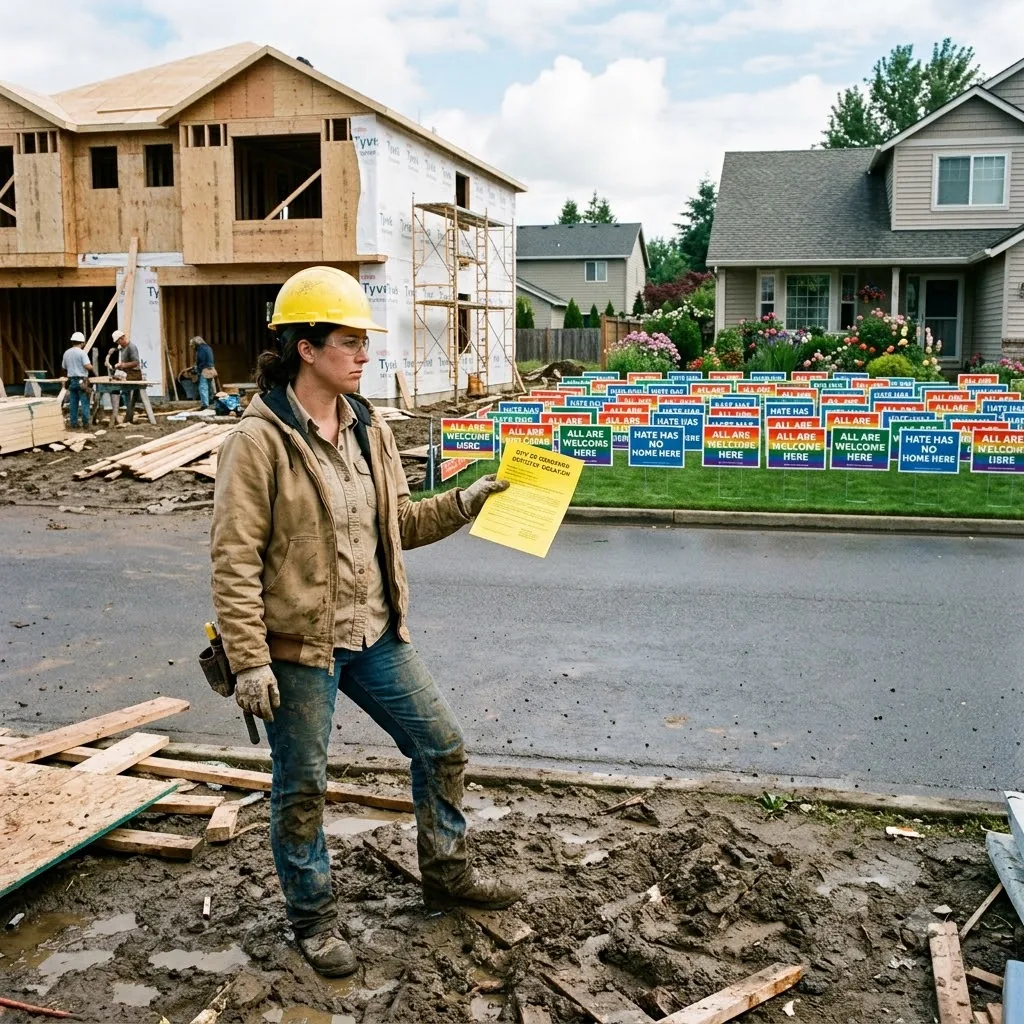
Red and blue lights flashed against the unfinished plywood of the duplex one last time as the police cruiser turned the corner and disappeared. Sarah stood ankle-deep in the churned mud of the front yard, a yellow municipal citation fluttering in her frozen grip. The piece of paper cited a setback violation of exactly fourteen millimeters on the temporary construction fencing, a technicality that had just cost her lead carpenter his parole status.
Marcus was gone. The cruiser had taken him. Sarah stared at the yellow slip, the ink bleeding in the damp air. Fourteen millimeters. Half an inch. She looked from the muddy tracks left by the squad car to the temporary chain-link fence that Marcus had set up yesterday. He had measured it three times.
Directly across the asphalt, Elaine’s yard sat untouched and impossibly green. The neighborhood president’s lawn was a manicured canvas of progressive landscaping, punctuated by a vibrant array of corrugated plastic signs. A massive placard in bold rainbow lettering faced the street to announce that all were welcome. Next to it, a tricolor banner proclaimed radical inclusivity. A wooden plaque near the porch swing advocated for criminal justice reform and second chances. Sarah looked back at the mud where a man working his second chance had just been placed in handcuffs because Elaine had measured a temporary fence with a laser level and called dispatch.
Sarah shoved the citation into her heavy canvas jacket. She needed to secure the site. The remaining crew members, two local kids Marcus had been mentoring, were silently packing up their tools. They kept their heads down. They knew better than to make eye contact with the house across the street. The heavy silence of the neighborhood pressed in on the half-built duplex.
This was the fourth visit from law enforcement this week. Yesterday, it had been a noise complaint at two in the afternoon. The day before, a report of a suspicious vehicle that turned out to be the plumbing inspector’s municipal van. Each time, Elaine stood on her immaculate front porch, sipping tea from a ceramic mug, watching the flashing lights arrive. Sarah walked over to the property line. She looked at the stake in the ground. Someone had moved the surveyor’s string overnight. The neon pink nylon line sagged just a fraction.
Sarah pulled her boots free from the suction of the mud and walked toward the two remaining workers. Leo and Tomas were hastily throwing power tools into the back of their beat-up pickup truck. They moved with a frantic, nervous energy, wrapping cords in tight, aggressive loops.
Sarah told them to leave the heavy generator chained to the foundation. She promised them they would get paid for the full day. Tomas nodded once, staring at his boots, while Leo slammed the tailgate shut. They climbed into the cab and drove off without turning the radio on, leaving Sarah entirely alone on the site.
The silence left behind was heavy. Sarah walked the perimeter of the duplex. She ran her gloved hand over the raw timber framing. This project was supposed to be a model for infill housing, a way to gently increase density in a neighborhood that desperately needed it. The zoning board had approved it. The city council had praised it. But the neighborhood association, led by Elaine, had weaponized the municipal code book.
Sarah stopped at the corner where the disputed temporary fence stood. She crouched down in the dirt. The metal post was driven deep into the soil. Next to it, a small plastic stake marked the official property line. Sarah pulled a tape measure from her belt and extended it. The distance was exactly as Marcus had said. He had been well within the limits. But the citation referenced a secondary sub-clause in the historic preservation overlay district guidelines regarding temporary barriers during active precipitation. It was a rule so obscure even the responding officer had to look it up on his tablet.
Elaine had known it by heart.
Sarah stood up and looked across the street again. The curtains in Elaine’s living room shifted. A shadow moved behind the sheer white fabric. The neighborhood president was still watching.
Sarah crossed her arms against the chill. She thought about Marcus. He had been three months away from completing his parole. He had a family. He had been saving up for a truck of his own. All of that was suspended now, tangled up in a precinct holding cell, because a woman with a yard full of signs demanding justice for the marginalized had decided that a half-inch of chain-link fence was an emergency requiring an armed response.
The sheer volume of calls did not make sense. It went beyond standard resistance. People who did not want a duplex in their neighborhood usually complained at council meetings or posted angry rants on the community forum. They did not memorize millimeter-specific setback ordinances and monitor construction sites with surveying equipment. They did not call the police on the plumbing inspector.
Sarah walked to the makeshift plywood desk set up in what would eventually be the ground-floor living room. She opened the heavy metal lockbox containing the site plans and permits. Everything was in order. Every stamp, every signature, every clearance.
She flipped through the logbook. Monday, police called for a commercial vehicle idling for more than three minutes. Tuesday, police called for construction debris extending into the public right-of-way by an inch. Wednesday, police called for suspicious persons on the roof, who were just the licensed roofers. Thursday, today, the fence alignment.
Sarah ran a finger down the column of dates. A cold realization began to form in her chest. She pulled out her phone and opened the digital property records for the block. She needed to look at something she had ignored during the initial purchasing phase.
Before the screen could load the plat map, the crunch of gravel drew her attention.
A man in a sharp grey suit was stepping carefully over the muddy ruts at the edge of the driveway. He carried a leather folio. He did not look like a building inspector. He did not look like a neighbor.
Sarah stepped out from under the unfinished roof.
The man stopped at the edge of the mud, looking down at his expensive shoes, and then up at Sarah. He opened the folio and pulled out a single sheet of heavy bond paper. He cleared his throat and stepped forward onto the plywood ramp.
Red and blue lights flashed against the unfinished plywood of the duplex one last time as the police cruiser turned the corner and disappeared. Sarah stood ankle-deep in the churned mud of the front yard, a yellow municipal citation fluttering in her frozen grip. The piece of paper cited a setback violation of exactly fourteen millimeters on the temporary construction fencing, a technicality that had just cost her lead carpenter his parole status.
Marcus was gone. The cruiser had taken him. Sarah stared at the yellow slip, the ink bleeding in the damp air. Fourteen millimeters. Half an inch. She looked from the muddy tracks left by the squad car to the temporary chain-link fence that Marcus had set up yesterday. He had measured it three times.
Directly across the asphalt, Elaine’s yard sat untouched and impossibly green. The neighborhood president’s lawn was a manicured canvas of progressive landscaping, punctuated by a vibrant array of corrugated plastic signs. A massive placard in bold rainbow lettering faced the street to announce that all were welcome. Next to it, a tricolor banner proclaimed radical inclusivity. A wooden plaque near the porch swing advocated for criminal justice reform and second chances. Sarah looked back at the mud where a man working his second chance had just been placed in handcuffs because Elaine had measured a temporary fence with a laser level and called dispatch.
Sarah shoved the citation into her heavy canvas jacket. She needed to secure the site. The remaining crew members, two local kids Marcus had been mentoring, were silently packing up their tools. They kept their heads down. They knew better than to make eye contact with the house across the street. The heavy silence of the neighborhood pressed in on the half-built duplex.
This was the fourth visit from law enforcement this week. Yesterday, it had been a noise complaint at two in the afternoon. The day before, a report of a suspicious vehicle that turned out to be the plumbing inspector’s municipal van. Each time, Elaine stood on her immaculate front porch, sipping tea from a ceramic mug, watching the flashing lights arrive. Sarah walked over to the property line. She looked at the stake in the ground. Someone had moved the surveyor’s string overnight. The neon pink nylon line sagged just a fraction.
Sarah pulled her boots free from the suction of the mud and walked toward the two remaining workers. Leo and Tomas were hastily throwing power tools into the back of their beat-up pickup truck. They moved with a frantic, nervous energy, wrapping cords in tight, aggressive loops.
Sarah told them to leave the heavy generator chained to the foundation. She promised them they would get paid for the full day. Tomas nodded once, staring at his boots, while Leo slammed the tailgate shut. They climbed into the cab and drove off without turning the radio on, leaving Sarah entirely alone on the site.
The silence left behind was heavy. Sarah walked the perimeter of the duplex. She ran her gloved hand over the raw timber framing. This project was supposed to be a model for infill housing, a way to gently increase density in a neighborhood that desperately needed it. The zoning board had approved it. The city council had praised it. But the neighborhood association, led by Elaine, had weaponized the municipal code book.
Sarah stopped at the corner where the disputed temporary fence stood. She crouched down in the dirt. The metal post was driven deep into the soil. Next to it, a small plastic stake marked the official property line. Sarah pulled a tape measure from her belt and extended it. The distance was exactly as Marcus had said. He had been well within the limits. But the citation referenced a secondary sub-clause in the historic preservation overlay district guidelines regarding temporary barriers during active precipitation. It was a rule so obscure even the responding officer had to look it up on his tablet.
Elaine had known it by heart.
Sarah stood up and looked across the street again. The curtains in Elaine’s living room shifted. A shadow moved behind the sheer white fabric. The neighborhood president was still watching.
Sarah crossed her arms against the chill. She thought about Marcus. He had been three months away from completing his parole. He had a family. He had been saving up for a truck of his own. All of that was suspended now, tangled up in a precinct holding cell, because a woman with a yard full of signs demanding justice for the marginalized had decided that a half-inch of chain-link fence was an emergency requiring an armed response.
The sheer volume of calls did not make sense. It went beyond standard resistance. People who did not want a duplex in their neighborhood usually complained at council meetings or posted angry rants on the community forum. They did not memorize millimeter-specific setback ordinances and monitor construction sites with surveying equipment. They did not call the police on the plumbing inspector.
Sarah walked to the makeshift plywood desk set up in what would eventually be the ground-floor living room. She opened the heavy metal lockbox containing the site plans and permits. Everything was in order. Every stamp, every signature, every clearance.
She flipped through the logbook. Monday, police called for a commercial vehicle idling for more than three minutes. Tuesday, police called for construction debris extending into the public right-of-way by an inch. Wednesday, police called for suspicious persons on the roof, who were just the licensed roofers. Thursday, today, the fence alignment.
Sarah ran a finger down the column of dates. A cold realization began to form in her chest. She pulled out her phone and opened the digital property records for the block. She needed to look at something she had ignored during the initial purchasing phase.
Before the screen could load the plat map, the crunch of gravel drew her attention.
A man in a sharp grey suit was stepping carefully over the muddy ruts at the edge of the driveway. He carried a leather folio. He did not look like a building inspector. He did not look like a neighbor.
Sarah stepped out from under the unfinished roof.
The man stopped at the edge of the mud, looking down at his expensive shoes, and then up at Sarah. He opened the folio and pulled out a single sheet of heavy bond paper. He cleared his throat and stepped forward onto the plywood ramp.