Story code: ST-000802
Part 1: The Harvest
The roar of the mechanical peach harvesters died mid-chug, leaving only the crushing Georgia heat and the crunch of tires as three unmarked white vans formed a barricade across the orchard’s dirt access road. Julian stepped out into the suffocating humidity, adjusting the tactical vest tight against his chest. Down the neat rows of green leaves and bruised orange fruit, the pickers froze in place.
Julian knew the rhythm of these operations. Keep the face neutral, keep the hands visible but ready, project absolute authority. He unclipped his radio, thumbing the dial to ensure the perimeter channel was locked, though his earpiece remained dead silent. The team leader, a heavy-set guy named Miller who had transferred in from a private sector contract just a month ago, gave the two-finger forward motion. They fanned out into the trees.
The orchard smelled of rotting sugar, damp earth, and diesel exhaust. Ahead of Julian, a young man standing on an aluminum ladder let a perfectly ripe peach slip from his fingers. It hit the dry dirt with a soft, wet thud. The worker climbed down, his movements agonizingly slow, wiping his hands on a stained undershirt before interlacing his fingers and placing them on top of his head. This was the mundane compliance that always settled into Julian’s stomach like a lead weight. There was no running, no shouting, no dramatic chase through the fields. Just the quiet, terrified surrender to the idling vans waiting at the tree line.
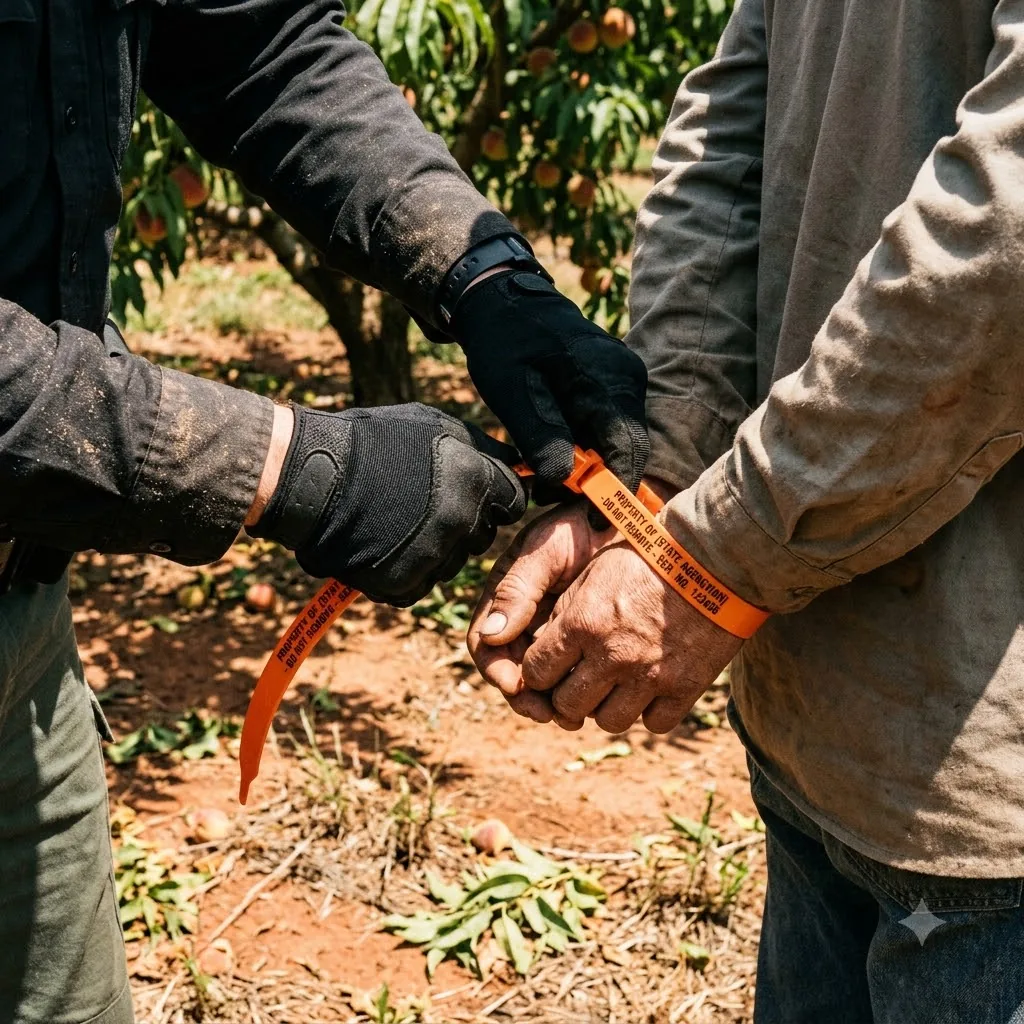
Julian advanced down the row, his heavy boots crushing fallen fruit into paste. The rough leaves scraped against his long sleeves. He reached into his thigh pouch for the thick plastic zip-ties. He assumed they were standard issue, though Miller had handed out a fresh, unmarked cardboard box in the staging area that morning instead of pulling from the armory supply. The plastic felt different in Julian’s grip. It was significantly more rigid, the edges sharper against his calluses, lacking the slight flexibility of government-contracted polymers.
A few rows over, the rest of the squad was herding a group of twenty workers toward the transport vehicles. The absolute silence felt completely wrong. Usually, there was the static crackle of local police radios, the red and blue flashing lights reflecting off the canopy, the official bullhorn announcements echoing in Spanish and English to establish legal presence. Today, there was only the buzzing of cicadas and the heavy breathing of men in Kevlar vests moving through the heat.
Julian approached the young worker who had climbed down from the ladder. The man’s eyes were fixed firmly on the dirt, a bead of sweat dripping from the tip of his nose to spot the dust below. Julian motioned with one hand for the man to turn around and place his arms behind his back. The worker complied instantly, moving with the stiff caution of someone who knew exactly what a sudden gesture might cost him. The wrists offered to Julian were thin, tendons pulled taut, covered in a fine layer of pesticide dust and white peach fuzz.
Julian took a deep breath of the heavy, sweet air. The heat radiating from the ground was enough to distort the horizon, making the white transport vans shimmer like mirages at the end of the row. He focused entirely on the task, shutting out the oppressive temperature and the wrongness of the quiet. He grabbed the first plastic restraint from his bundle. It was a heavy-duty, dual-loop design, meant to secure both wrists with a single, aggressive pull.
He positioned the worker’s left wrist inside the loop, then the right. The man trembled slightly, shifting his weight in the dirt, but kept his head bowed low. Julian could hear the crunch of boots a few rows away as another agent dragged a reluctant, older picker out from under a low-hanging branch. There was a brief scuffle, a muffled grunt, the sound of a body hitting the ground, and then the same heavy silence returned to the orchard.
Miller’s voice finally came through the earpiece, low and flat, entirely devoid of the usual bureaucratic cadence and ten-codes. He issued a blunt order to pack the inventory and roll out.
Julian threaded the thick plastic tail of the cuff through the locking head. He paused for a fraction of a second. The tactile sensation of the tactical gear was ingrained in his muscle memory, but this tie did not slide with the familiar metallic click of standard federal issue. It ratcheted with a heavy, industrial grinding sound, locking tight with a finality that felt strange. The material was thick, jet-black, and slightly glossy under the harsh midday sun.
He pulled the strap tight, leaving just enough room to ensure blood circulation to the hands. As he smoothed his thumb over the locking mechanism to check the tension, his thick glove caught on an embossed protrusion. Standard federal cuffs had a smooth, flat surface on the lock housing, sometimes stamped with a simple alphanumeric serial number for inventory tracking. This lock had a distinct, sharp shape raised heavily in the plastic mold.
Julian stopped his motion entirely. He tilted the worker’s bound hands slightly to catch the sunlight breaking through the peach leaves. The black plastic glinted. There was no Department of Homeland Security crest. There was no federal property stamp or government seal.
Right in the center of the lock, stamped with razor-sharp precision, was a geometric, interlocking corporate logo.
Julian stared at the brand pressed deep into the restraint. He traced the sharp edges of the design with his thumb, the rigid plastic biting through the fabric of his glove. The restrained worker flinched, whispering something rapid and low. Miller barked a command from the tree line, demanding a final headcount. Julian kept his thumb pinned over the embossed shape, pulling the plastic tail one notch tighter.
The roar of the mechanical peach harvesters died mid-chug, leaving only the crushing Georgia heat and the crunch of tires as three unmarked white vans formed a barricade across the orchard’s dirt access road. Julian stepped out into the suffocating humidity, adjusting the tactical vest tight against his chest. Down the neat rows of green leaves and bruised orange fruit, the pickers froze in place.
Julian knew the rhythm of these operations. Keep the face neutral, keep the hands visible but ready, project absolute authority. He unclipped his radio, thumbing the dial to ensure the perimeter channel was locked, though his earpiece remained dead silent. The team leader, a heavy-set guy named Miller who had transferred in from a private sector contract just a month ago, gave the two-finger forward motion. They fanned out into the trees.
The orchard smelled of rotting sugar, damp earth, and diesel exhaust. Ahead of Julian, a young man standing on an aluminum ladder let a perfectly ripe peach slip from his fingers. It hit the dry dirt with a soft, wet thud. The worker climbed down, his movements agonizingly slow, wiping his hands on a stained undershirt before interlacing his fingers and placing them on top of his head. This was the mundane compliance that always settled into Julian’s stomach like a lead weight. There was no running, no shouting, no dramatic chase through the fields. Just the quiet, terrified surrender to the idling vans waiting at the tree line.
Julian advanced down the row, his heavy boots crushing fallen fruit into paste. The rough leaves scraped against his long sleeves. He reached into his thigh pouch for the thick plastic zip-ties. He assumed they were standard issue, though Miller had handed out a fresh, unmarked cardboard box in the staging area that morning instead of pulling from the armory supply. The plastic felt different in Julian’s grip. It was significantly more rigid, the edges sharper against his calluses, lacking the slight flexibility of government-contracted polymers.
A few rows over, the rest of the squad was herding a group of twenty workers toward the transport vehicles. The absolute silence felt completely wrong. Usually, there was the static crackle of local police radios, the red and blue flashing lights reflecting off the canopy, the official bullhorn announcements echoing in Spanish and English to establish legal presence. Today, there was only the buzzing of cicadas and the heavy breathing of men in Kevlar vests moving through the heat.
Julian approached the young worker who had climbed down from the ladder. The man’s eyes were fixed firmly on the dirt, a bead of sweat dripping from the tip of his nose to spot the dust below. Julian motioned with one hand for the man to turn around and place his arms behind his back. The worker complied instantly, moving with the stiff caution of someone who knew exactly what a sudden gesture might cost him. The wrists offered to Julian were thin, tendons pulled taut, covered in a fine layer of pesticide dust and white peach fuzz.
Julian took a deep breath of the heavy, sweet air. The heat radiating from the ground was enough to distort the horizon, making the white transport vans shimmer like mirages at the end of the row. He focused entirely on the task, shutting out the oppressive temperature and the wrongness of the quiet. He grabbed the first plastic restraint from his bundle. It was a heavy-duty, dual-loop design, meant to secure both wrists with a single, aggressive pull.
He positioned the worker’s left wrist inside the loop, then the right. The man trembled slightly, shifting his weight in the dirt, but kept his head bowed low. Julian could hear the crunch of boots a few rows away as another agent dragged a reluctant, older picker out from under a low-hanging branch. There was a brief scuffle, a muffled grunt, the sound of a body hitting the ground, and then the same heavy silence returned to the orchard.
Miller’s voice finally came through the earpiece, low and flat, entirely devoid of the usual bureaucratic cadence and ten-codes. He issued a blunt order to pack the inventory and roll out.
Julian threaded the thick plastic tail of the cuff through the locking head. He paused for a fraction of a second. The tactile sensation of the tactical gear was ingrained in his muscle memory, but this tie did not slide with the familiar metallic click of standard federal issue. It ratcheted with a heavy, industrial grinding sound, locking tight with a finality that felt strange. The material was thick, jet-black, and slightly glossy under the harsh midday sun.
He pulled the strap tight, leaving just enough room to ensure blood circulation to the hands. As he smoothed his thumb over the locking mechanism to check the tension, his thick glove caught on an embossed protrusion. Standard federal cuffs had a smooth, flat surface on the lock housing, sometimes stamped with a simple alphanumeric serial number for inventory tracking. This lock had a distinct, sharp shape raised heavily in the plastic mold.
Julian stopped his motion entirely. He tilted the worker’s bound hands slightly to catch the sunlight breaking through the peach leaves. The black plastic glinted. There was no Department of Homeland Security crest. There was no federal property stamp or government seal.
Right in the center of the lock, stamped with razor-sharp precision, was a geometric, interlocking corporate logo.
Julian stared at the brand pressed deep into the restraint. He traced the sharp edges of the design with his thumb, the rigid plastic biting through the fabric of his glove. The restrained worker flinched, whispering something rapid and low. Miller barked a command from the tree line, demanding a final headcount. Julian kept his thumb pinned over the embossed shape, pulling the plastic tail one notch tighter.