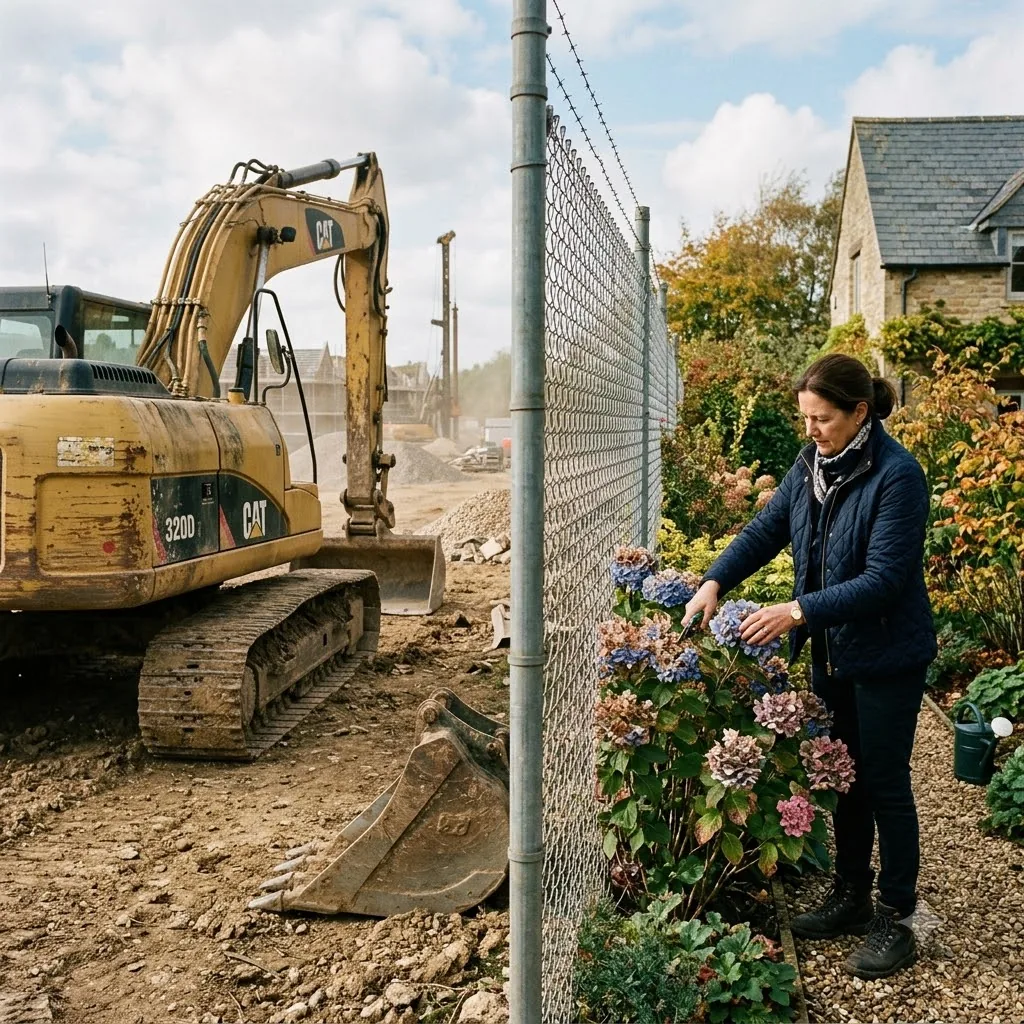
Story code: ST-000807
Part 3: The Anomaly
The fluorescent lights of Municipal Chamber B hummed with a sterile, oppressive energy. Marcus gripped the edges of the heavy mahogany podium, the wood polished smooth by thousands of desperate pleas before his. On the digital clock mounted above the council dais, the red numbers blinked: 9:14 AM.
In exactly seven hours and forty-six minutes, the city’s housing algorithm would permanently purge the allocation vouchers for Maria’s six families.
Dave’s illegal use of the diagnostic spoofer on Friday had barely saved them from financial ruin. By faking the excavator’s telemetry, they had managed to inch the massive machine into a blind spot off-property, dodging the automated impound fines just seconds before the enforcement vehicle snapped its final photos. But spoofing the machine hadn’t unfrozen the municipal permit. The Priority 1 safety flag remained locked in the system, blocking any legal work on the Oak Street site.
“Mr. Hayes,” Councilman Sterling said, his voice amplified by a microphone that crackled with static. He tapped a stack of printouts on his desk. “We understand your frustration, and we sympathize with the families waiting for placement. But the municipal safety algorithm is blind and impartial. A Priority 1 Foundation Compromise flag was registered through the anonymous stakeholder portal. By law, this requires a full geological review. The earliest we can schedule an engineer is three weeks from Thursday.”
“Three weeks means the housing vouchers expire today,” Marcus said, his voice echoing off the paneled walls. “Six families lose their homes. The site is perfectly safe. We submitted the soil compaction reports a month ago.”
“The system flagged an anomaly,” Sterling replied, adjusting his glasses. “We cannot bypass an automated safety protocol just because it is inconvenient.”
In the front row of the gallery, Eleanor sat with her legs crossed at the ankles. She wore the same beige cashmere cardigan from Friday. Her posture was the picture of civic concern. When she had addressed the council ten minutes earlier, she had spoken eloquently about the tragedy of rushed development and her deep, abiding love for the neighborhood’s historic foundation. She was hiding behind the absolute anonymity of the automated portal, letting the machine play the villain.
Marcus looked at Eleanor, then at the council. He reached into his canvas messenger bag and pulled out his heavy, rubber-cased tablet.
“I’m not asking you to bypass the protocol,” Marcus said, his fingers working quickly across the tablet’s screen. He grabbed the HDMI cable resting on the podium. “I’m asking you to look at the anomaly.”
“Mr. Hayes, the evidentiary portion of this hearing is closed,” the council clerk warned from her desk. “You cannot project unapproved materials.”
Marcus ignored her and jammed the cable into the tablet’s port.
Above the council dais, the motorized projector screen unrolled with a mechanized hum. The chamber’s displays flickered, replacing the city’s seal with a dense, scrolling spreadsheet of raw server data.
Eleanor shifted in her seat. The practiced sympathy on her face tightened into a sudden, sharp alertness.
“This is the city’s open-source API log for the automated complaint portal,” Marcus said, tapping his screen to highlight a specific row in glaring yellow. “It records the exact timestamp, down to the millisecond, of every anonymous flag submitted to the zoning system.”
He zoomed in on the data. “Here is the Priority 1 flag that bricked my excavator and froze the Oak Street project on Friday morning. Logged at exactly 10:04:12 AM.”
Councilman Sterling frowned. “The identities of portal users are encrypted, Mr. Hayes. We cannot verify who submitted that.”
“You’re right, the portal is encrypted,” Marcus said. “But the Oak Street Neighborhood Watch app is a public forum. It is completely unencrypted. And it also logs timestamps down to the millisecond.”
Marcus swiped left on his tablet. A split-screen appeared on the massive projection overhead. On the left side, the anonymous municipal server logs. On the right, a bright, cheerful screenshot of Eleanor’s public neighborhood watch profile, complete with her smiling profile picture and the blue *Community First* logo.
“Let’s look at Friday morning,” Marcus said, his voice rising, cutting through the murmurs in the chamber. He pointed to a post on the right side of the screen. “At exactly 10:04:10 AM, Eleanor Vance uploaded a photograph of her potted fern, complaining that the construction dust was ‘ruining the historic character of her porch.’ Two seconds later-literally two thousand milliseconds-an anonymous Priority 1 foundation collapse alert was triggered from the exact same geolocation block.”
Eleanor’s hands clamped onto the arms of her wooden chair. Her knuckles went white. “This is an invasion of privacy! You cannot-”
“Let’s look at last month,” Marcus interrupted, overriding her protest. He swiped again. A cascade of matched data filled the screen. “March 12th, 2:14:05 PM. Eleanor posts about our concrete truck being ‘an eyesore.’ March 12th, 2:14:08 PM. An anonymous Priority 2 noise violation flags our permit and stalls the pour.”
He swiped again, faster this time. Dozens of highlighted rows locked together in perfect, damning synchronization.
“February 8th. Eleanor posts about a shadow over her rosebushes. Three seconds later, an anonymous environmental hazard flag is filed. November 19th. Eleanor posts about property values. Four seconds later, an anonymous traffic disruption alert.”
Marcus slammed his palm flat against the podium. The loud *crack* echoed through the chamber, silencing the room.
“There is no algorithm predicting foundation failures,” Marcus said, staring directly into Eleanor’s wide, panicked eyes. “There is only a homeowner with a smartphone, weaponizing a municipal safety failsafe as a private demolition tool. You didn’t find an anomaly, Councilman. She is the anomaly.”
Councilman Sterling stared at the giant screen, his mouth slightly open, the bureaucratic script completely stripped from him.
Eleanor stood up abruptly, her cashmere cardigan snagging on the wooden armrest. “That-that is circumstantial! It proves nothing! I am a pillar of this community, and I have a right to protect my home from structural dangers!”
“If there was a structural danger, Eleanor,” Marcus said, his voice dangerously low as he advanced one step away from the podium, “why were you watering your fern ten feet away from a supposed foundation collapse?”
Eleanor opened her mouth, but the elegant, practiced words she had used to stall the project for three years abandoned her. She looked at the council, then at the glowing, undeniable data looming above them all. She had no answer.