Story code: ST-000807
Part 4: The Unyielding Code
Eleanor’s face mottled with a flush of dark, furious red. The silence in the chamber was absolute, save for the mechanical hum of the projector fan. She looked at the council members, who were staring down at her with wide, uncomfortable eyes. The perfectly synchronized data glowing on the screen above them left absolutely no room for plausible deniability.
“It’s my home!” Eleanor shouted, the polished cadence of her civic persona shattering completely. She pointed a trembling finger at Marcus, then up at the council dais. “Do you have any idea what this eyesore will do to my property values? Six transient families, endless noise, the sheer density of it-it will ruin Oak Street! I have spent twenty years building equity in that house. I will not let some bleeding-heart zoning variance turn my block into a dumping ground!”
The words echoed harshly off the mahogany panels. In the second row, a woman who had arrived with Eleanor-wearing a matching neighborhood watch pin-slowly shrank back into her seat, a look of profound disgust washing over her face.
Marcus didn’t blink. He just watched Eleanor tear down her own progressive facade piece by piece. The blue *Community First* sign in her yard was officially a joke. Her carefully curated reputation in the historical society and the community board evaporated in a matter of seconds.
“Thank you, Ms. Vance,” Councilman Sterling said, his voice clipped and freezing. “Your… true concerns are noted.”
Marcus turned back to the dais, resting his hands on the podium. “You heard her. It’s a fraudulent claim to protect her equity. The foundation flag is a lie. Clear the permit, Councilman. I need to register the occupancy certificates before the five o’clock deadline.”
Sterling cleared his throat and looked down at his monitor. His mouse clicked once, twice, then a rapid, frustrated series of taps. The councilman’s brow furrowed, and a deep sigh escaped his lips.
“Mr. Hayes,” Sterling said slowly. “I… I can’t.”
“What do you mean, you can’t?” Marcus asked, his heart hammering against his ribs. “You just saw the API logs. You just heard her confess in front of an open microphone.”
“I believe you,” Sterling said, turning his monitor slightly so Marcus could see the screen. It was dominated by the same glaring red lock icon Marcus had seen on his own tablet. “But the algorithm does not accept human testimonies. A Priority 1 Foundation Compromise is hardcoded into the municipal safety grid. It is an automated failsafe. Once triggered, the only input the system will accept to unfreeze the permit is an authorized cryptographic key from a licensed structural engineer.”
“Then give me the key,” Marcus pleaded, gripping the edges of the podium until his knuckles turned white.
“I don’t have it,” Sterling said, his voice dropping into a hollow, bureaucratic apology. “The City Council does not have engineering clearance. The system was designed this way to prevent politicians from overriding safety protocols for developer kickbacks. The code is immutable. Until an engineer logs in on Tuesday morning, the geofence remains active.”
Marcus stared at the red lock on the monitor. The machine didn’t care about perjury. It didn’t care about hypocrisy. It only cared about its rigid, unyielding parameters.
“Tuesday is too late,” Marcus said, his voice cracking. “The vouchers expire today at five. Six families are sitting in a transitional shelter right now with their lives packed in cardboard boxes.”
“I am deeply sorry, Mr. Hayes. But my hands are tied by the system architecture.” Sterling picked up his wooden block and brought his gavel down. “Hearing adjourned.”
Marcus stood frozen at the podium. Eleanor snatched her heavy purse and stormed out of the chamber, her head down, actively avoiding the glaring eyes of her former allies. Marcus had won the moral victory. He had exposed the villain. But the cold, invisible lines of municipal code remained unbroken.
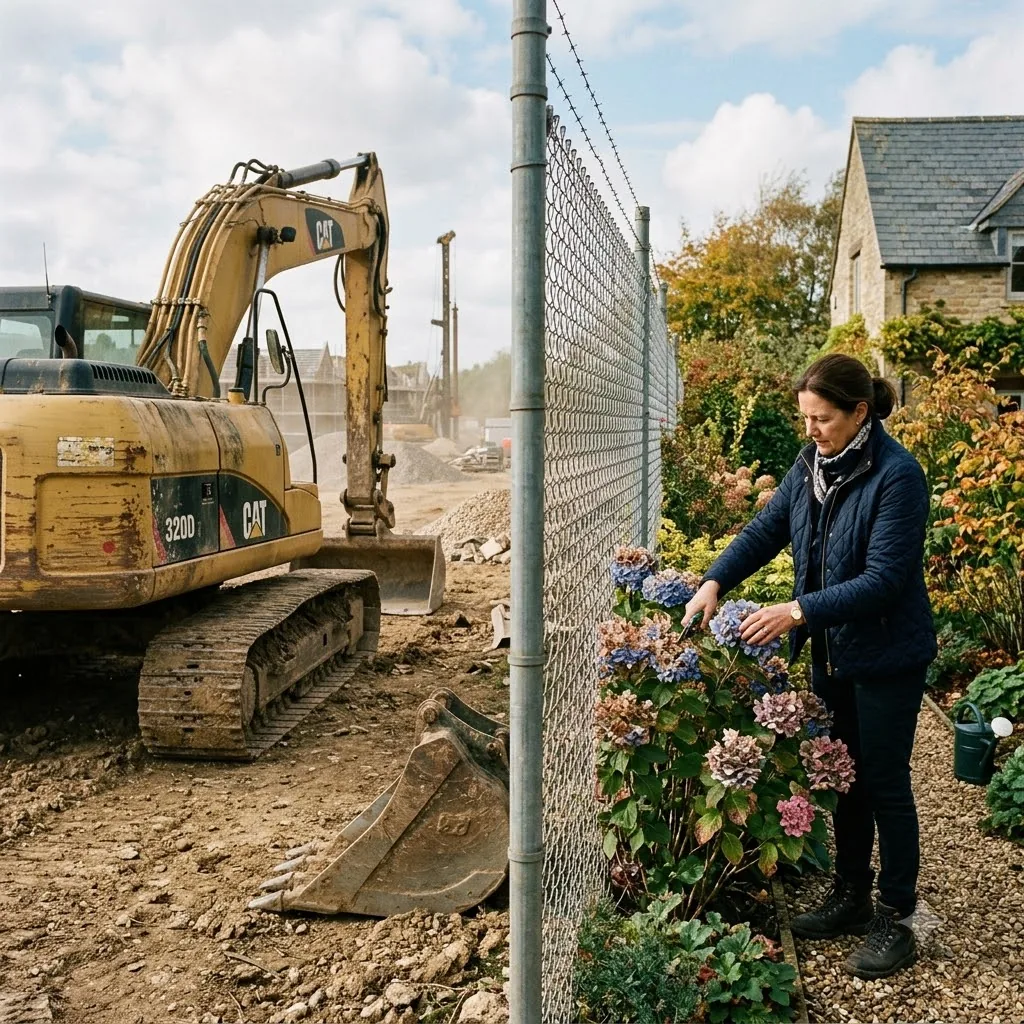
By 4:45 PM, Marcus was back at the Oak Street lot. The sky was an indifferent, cloudless blue. The ten-ton Cat 320 excavator sat exactly where Dave had hidden it, dead and useless. Behind the chain-link fence, the excavated earth was already drying into hard, cracked clay.
Across the street, Eleanor’s front door was firmly shut. Her blinds were drawn tight, sealing her off from the neighborhood she had fought so bitterly to control. A teenager walking a golden retriever paused by her pristine lawn, pulled the *Community First: Housing for All* sign out of the grass, threw it face-down onto the sidewalk, and kept walking. Eleanor had protected her property values, but she would live the rest of her life as a pariah behind drawn shades.
Marcus leaned his heavy frame against the hood of his dusty pickup truck. He pulled his phone from his vest pocket.
*4:58 PM.*
The screen lit up. A new message from Maria.
*Hey Marcus. The automated allocation portal just updated. It says the Oak Street certificates weren’t filed. The system is rescinding the vouchers. The moving trucks are leaving. Please tell me this is a glitch. Sofia is crying. What happened?*
Marcus stared at the words until they blurred together. He looked at the empty dirt lot, then down at the phone in his calloused hands. The municipal algorithm had functioned exactly as designed: perfectly efficient, completely blind, and utterly merciless.
He didn’t know how to type the words. He didn’t know how to tell Maria that they had done everything right, that they had exposed the lie, and that it still hadn’t been enough to beat a wall of code.
The clock on his screen shifted to *5:00 PM*.
Marcus locked the phone, letting the glass go black, and closed his eyes against the heavy, mechanical silence of the lot.