Story code: ST-000016
Part 1: The Card Said Everything
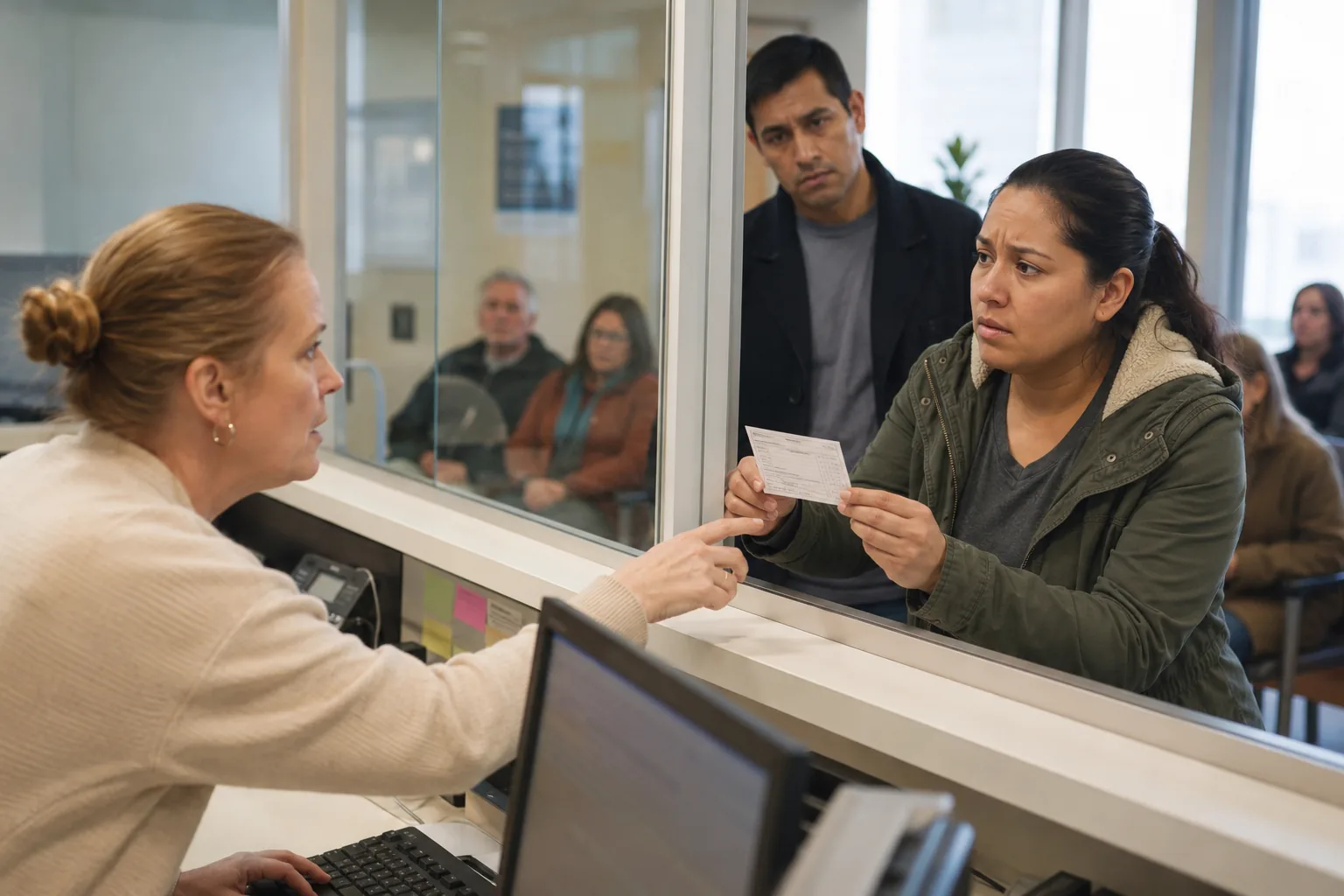
Dana Pell looked straight at Elena Ruiz’s appointment card through the front desk glass and said, for the third time, that she still could not tell what it meant. Elena was already standing at the check-in window in our clinic waiting room with her purse strap sliding off one shoulder, the wall clock pushing toward her slot, printer slips spitting behind me, and somehow the blame was already being arranged to land on the patient instead of the supervisor holding the card. I was two feet away with a pen clipped to my scrub top, watching Dana turn a routine check-in into something Elena was being made to solve herself.
The card was not complicated. It had the clinic name at the top, the provider’s last name, the date, and a time printed in block type. Elena kept flattening it between two fingers and sliding it back under the glass whenever Dana pushed it toward her.
“I was told to be here fifteen minutes early,” Elena said. Her voice stayed even, but she checked the wall clock again. “I’m here. This is the card they gave me.”
Dana gave her that soft front-office smile that never quite reached her eyes. “I understand, but this doesn’t tell me what kind of visit it is. If I can’t tell what this is, I can’t check you in.”
I could tell what it was with one glance. Anyone at our desk could. It used the same abbreviations we saw all day. New patient. Provider initials. Arrival time. The usual.
I reached for the card, but Dana laid two fingers over it first and angled it back toward herself.
“Maybe call whoever scheduled you,” she told Elena. “Because right now this looks incomplete.”
That was the first dump. Not just delay. Work. Dana was making Elena do the desk’s job while standing in front of the desk.
Behind Elena, a man with a clipboard shifted his weight and looked down at his forms. A mother near the corner chairs kept bouncing a toddler on her knee while the TV in the waiting room ran closed captions no one was reading. Ordinary room. Ordinary noise. Dana kept her voice low enough to sound professional and high enough for the next three seats to hear.
“If you were supposed to pre-register, that may be why this is happening,” she said.
Elena’s hand tightened on the card. “No one told me that. They told me to bring this.”
Dana turned her monitor slightly away from the window, clicked twice, and sighed like the problem was spreading under her hands. “Well, I don’t want to mark you late while we’re still trying to figure out what this even is.”
There it was. Late. Fault. A warning dropped into the air before the minute hand even hit her appointment time.
I said, carefully, “I can look up the provider schedule if you want me to cross-check the time.”
Dana did not look at me. “I already did, Marisol. That’s not the issue. The issue is this card doesn’t make sense.”
But she had not looked up the schedule. I had been standing there the whole time, sorting printer slips and putting clipboards back into the rack. She had not touched the schedule tab once since Elena walked up.
Elena repeated the details again, slower this time. Provider name. Time. Date. She pointed to each printed line with her nail as if she were reading it to a child.
Dana nodded through the whole thing and still slid the card back. “I hear you. I just can’t use this.”
Then the phone rang on line two. Dana answered it on the first chirp.
Her voice changed immediately. Crisp. Fast. She confirmed a birth date, corrected the spelling of a last name, pulled up an insurance note, and told a caller exactly which fax number to use, all without pausing. While she did that, she used her free hand to sign for me to keep Elena at the window.
I kept my face still.
Elena waited with the card in her hand. She looked once toward the door to the clinical hall when it opened and a medical assistant called another patient back. Then she looked at the clock again.
Dana ended the call and went right back to sounding puzzled. “Okay. So where exactly did you get this card?”
Elena blinked. “Here. Last time I was here.”
“From who?”
“I don’t know her name. From this desk.”
Dana let out a little breath and spread her hands. “That’s what makes it hard. If I can’t verify the source, I can’t just rely on a handwritten card.”
It was not handwritten. The date and time were printed by our own system. Even the provider stamp was ours. I could see the edge of the standard barcode label on the back where it had folded over.
I said, “If you want, I can scan the barcode.”
This time Dana looked at me, just long enough. “No. We are not guessing.”
Elena’s mouth pressed flat. “So what am I supposed to do?”
Dana tilted the card toward the glass again like it had betrayed her personally. “I’m trying to help you, but I can’t read something that isn’t clear.”
A minute later Nate Holloway pushed through the hall door with chart labels in his hand. He glanced toward our desk, then up at the board over my shoulder.
“Ruiz for Dr. Kessler checked in yet?” he asked.
Dana answered before I could. “No, there’s an issue with her paperwork.”
Nate’s eyes moved to the card in Elena’s fingers, then to the clock, then back to the board. He gave one short nod and disappeared into the hall.
Dana had just called it paperwork, even though she’d spent ten minutes saying she couldn’t tell what the appointment card was.
That was the moment I stopped seeing random confusion and started watching a pattern. Because if she really could not read that card, she should not have known enough to keep Nate from pulling the patient back.
Dana Pell looked straight at Elena Ruiz’s appointment card through the front desk glass and said, for the third time, that she still could not tell what it meant. Elena was already standing at the check-in window in our clinic waiting room with her purse strap sliding off one shoulder, the wall clock pushing toward her slot, printer slips spitting behind me, and somehow the blame was already being arranged to land on the patient instead of the supervisor holding the card. I was two feet away with a pen clipped to my scrub top, watching Dana turn a routine check-in into something Elena was being made to solve herself.
The card was not complicated. It had the clinic name at the top, the provider’s last name, the date, and a time printed in block type. Elena kept flattening it between two fingers and sliding it back under the glass whenever Dana pushed it toward her.
“I was told to be here fifteen minutes early,” Elena said. Her voice stayed even, but she checked the wall clock again. “I’m here. This is the card they gave me.”
Dana gave her that soft front-office smile that never quite reached her eyes. “I understand, but this doesn’t tell me what kind of visit it is. If I can’t tell what this is, I can’t check you in.”
I could tell what it was with one glance. Anyone at our desk could. It used the same abbreviations we saw all day. New patient. Provider initials. Arrival time. The usual.
I reached for the card, but Dana laid two fingers over it first and angled it back toward herself.
“Maybe call whoever scheduled you,” she told Elena. “Because right now this looks incomplete.”
That was the first dump. Not just delay. Work. Dana was making Elena do the desk’s job while standing in front of the desk.
Behind Elena, a man with a clipboard shifted his weight and looked down at his forms. A mother near the corner chairs kept bouncing a toddler on her knee while the TV in the waiting room ran closed captions no one was reading. Ordinary room. Ordinary noise. Dana kept her voice low enough to sound professional and high enough for the next three seats to hear.
“If you were supposed to pre-register, that may be why this is happening,” she said.
Elena’s hand tightened on the card. “No one told me that. They told me to bring this.”
Dana turned her monitor slightly away from the window, clicked twice, and sighed like the problem was spreading under her hands. “Well, I don’t want to mark you late while we’re still trying to figure out what this even is.”
There it was. Late. Fault. A warning dropped into the air before the minute hand even hit her appointment time.
I said, carefully, “I can look up the provider schedule if you want me to cross-check the time.”
Dana did not look at me. “I already did, Marisol. That’s not the issue. The issue is this card doesn’t make sense.”
But she had not looked up the schedule. I had been standing there the whole time, sorting printer slips and putting clipboards back into the rack. She had not touched the schedule tab once since Elena walked up.
Elena repeated the details again, slower this time. Provider name. Time. Date. She pointed to each printed line with her nail as if she were reading it to a child.
Dana nodded through the whole thing and still slid the card back. “I hear you. I just can’t use this.”
Then the phone rang on line two. Dana answered it on the first chirp.
Her voice changed immediately. Crisp. Fast. She confirmed a birth date, corrected the spelling of a last name, pulled up an insurance note, and told a caller exactly which fax number to use, all without pausing. While she did that, she used her free hand to sign for me to keep Elena at the window.
I kept my face still.
Elena waited with the card in her hand. She looked once toward the door to the clinical hall when it opened and a medical assistant called another patient back. Then she looked at the clock again.
Dana ended the call and went right back to sounding puzzled. “Okay. So where exactly did you get this card?”
Elena blinked. “Here. Last time I was here.”
“From who?”
“I don’t know her name. From this desk.”
Dana let out a little breath and spread her hands. “That’s what makes it hard. If I can’t verify the source, I can’t just rely on a handwritten card.”
It was not handwritten. The date and time were printed by our own system. Even the provider stamp was ours. I could see the edge of the standard barcode label on the back where it had folded over.
I said, “If you want, I can scan the barcode.”
This time Dana looked at me, just long enough. “No. We are not guessing.”
Elena’s mouth pressed flat. “So what am I supposed to do?”
Dana tilted the card toward the glass again like it had betrayed her personally. “I’m trying to help you, but I can’t read something that isn’t clear.”
A minute later Nate Holloway pushed through the hall door with chart labels in his hand. He glanced toward our desk, then up at the board over my shoulder.
“Ruiz for Dr. Kessler checked in yet?” he asked.
Dana answered before I could. “No, there’s an issue with her paperwork.”
Nate’s eyes moved to the card in Elena’s fingers, then to the clock, then back to the board. He gave one short nod and disappeared into the hall.
Dana had just called it paperwork, even though she’d spent ten minutes saying she couldn’t tell what the appointment card was.
That was the moment I stopped seeing random confusion and started watching a pattern. Because if she really could not read that card, she should not have known enough to keep Nate from pulling the patient back.