Story code: ST-000839
Part 2: False Positive
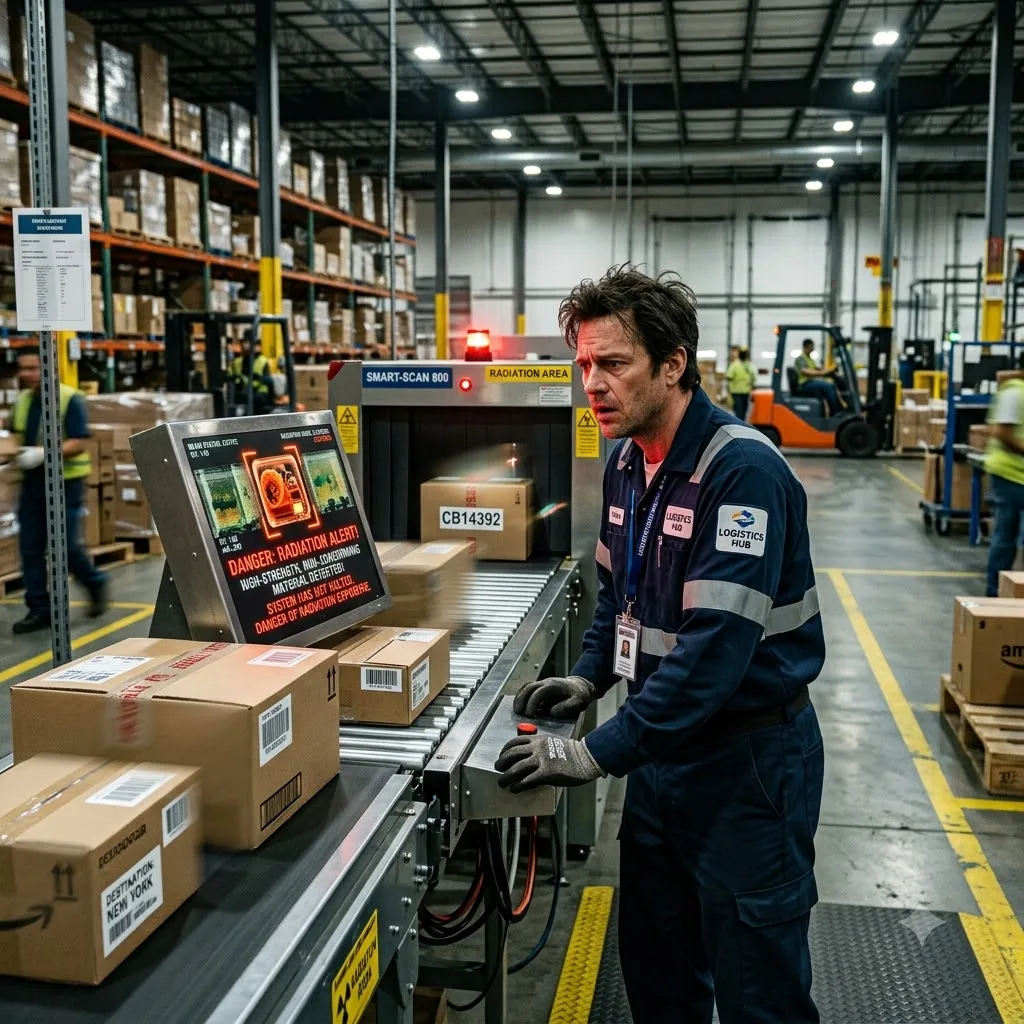
The heavy steel blast doors locked with a concussive thud that vibrated through the metal grating beneath David’s boots. The crimson strobe light above his workstation shifted to a solid, glaring red, bathing Sector 4 in the color of a catastrophic breach. On his primary monitor, the absolute blackness finally broke. It was replaced by a single, pulsing line of text in stark white font.
*CONTRABAND VERIFIED. RECIPIENT: WARD 7, SECTOR 12. AGE: 17.*
The text dissolved, instantly replaced by a flashing biometric prompt.
*ACTION REQUIRED: AUTHORIZE CITIZEN ARREST DISPATCH. PRESS THUMB TO SCANNER.*
David stared at the glowing green thumbprint icon on the glass. The ruthless logic of the algorithm laid itself bare. It had detected the illegal medical supplies, traced the routing label, and autonomously generated a detention order for the teenager. But the central mainframe required a human operator’s physical verification to finalize the dispatch of the automated enforcer units to the residential block. It was a leftover legal mandate from a decade ago-a machine could not formally order an arrest without human confirmation.
A digital timer appeared above the thumbprint icon, counting down from sixty seconds.
If he pressed his thumb to the glass, the heavily armed enforcer drones would breach the teenager’s apartment within four minutes. If he didn’t press his thumb to the glass before the timer hit zero, the algorithm would interpret his inaction as active complicity. It would instantly reduce his daily efficiency score to zero, flag him as an accomplice, and dispatch the facility’s internal security drones to his workstation to arrest him instead.
He had forty-five seconds.
David looked at the box, firmly clamped to the inspection table by the engaged magnetic rails. He couldn’t downgrade the threat on the terminal. The tactile keyboard remained dead, locked out by the system. He couldn’t change the destination address. The only input the system would accept was his biometric signature, or a physical re-scan of the package that contradicted the first one.
To outsmart the algorithm, he had to give it what it wanted: a resolved equation.
Thirty-five seconds.
David dropped to his knees, ignoring the sharp pain radiating through his joints as they struck the steel floor. Beneath the stainless-steel inspection table sat the heavy power junction box for the magnetic rails and the X-ray armature. He bit the fingertips of his thick rubber glove and ripped it off, spitting it onto the floor to expose his bare, sweat-slicked hand. He reached blindly behind the junction box, his fingers scraping against jagged brackets until he found the thick, braided copper grounding wire.
He couldn’t hack the software. The mainframe was an impenetrable fortress of code. But the hardware was built by the lowest corporate bidder, maintained by exhausted men exactly like him.
He wrapped his fingers around the grounding wire and yanked backward with all his body weight. The thick cable snapped free from its terminal block. He shoved the frayed, raw copper end directly into the main power relay of the magnetic lock.
A shower of blue sparks erupted in the cramped space, singing the hairs on his forearm. The acrid smell of ozone and melting plastic filled the air. Above him, the magnetic rails disengaged with a loud, dying mechanical clatter.
Twenty-five seconds.
David scrambled back to his feet. The box was free. He ripped away the heavy-duty fiber tape with his bare hands, ignoring the stiff cardboard edges slicing into his cuticles. He threw open the flaps, pulled out the top textbook, and flipped it open to the hollowed-out cavity.
The glass ampoules of pediatric medicine rested in their neat rows. There were exactly twelve vials.
He didn’t have time to hide them properly. He just needed them out of the scanner’s field of view. He grabbed handfuls of the foil-backed blister packs, his hands shaking, and shoved them deep into the oversized cargo pockets of his work trousers. The glass clinked softly against his thighs.
Now the box was missing roughly two hundred grams of mass. The algorithm would demand a perfect weight match before it would clear any secondary scan.
Fifteen seconds.
David yanked open the top drawer of his workstation. Inside lay his standard-issue calibration tools: heavy, cylindrical tungsten weights used to test the sorting belt’s precision at the start of every twelve-hour shift. He grabbed two hundred-gram cylinders. They were dense, heavy, and completely inert.
He shoved the tungsten cylinders into the empty cavity of the textbook, slammed the cover shut, and stacked it back into the shipping box. He pressed the cardboard flaps down, holding them together with his left forearm.
Ten seconds.
He reached under the table with his right hand and jammed the grounding wire back onto its designated peg. The workstation system surged. The magnetic rails slammed shut again, violently locking the box back into the center of the scanning table.
Five seconds.
David slammed his bare thumb against the glowing green glass of the biometric scanner.
The terminal chimed loudly. The sixty-second timer vanished. The dual-axis X-ray armature automatically whirred to life, descending over the box to verify the physical evidence for the final arrest report.
David held his breath, his heart hammering a frantic, desperate rhythm against his ribs. The secondary terminal screen rendered a brand-new density profile. The enhanced X-ray penetrated the cardboard, the paper, the glue. It hit the tungsten cylinders.
The image on the screen rendered in solid, impenetrable black-the universal AI signature for harmless, dense industrial metal, completely devoid of the distinct, compartmentalized shapes of organic medical compounds.
The terminal froze. The algorithm was processing a paradox. The initial scan showed illegal contraband. The legally required verification scan showed standard calibration tools, likely knocked into the box during a routine belt malfunction. The machine could not reconcile the conflicting physical data.
A new message flashed across the main screen in a bright, non-threatening blue font.
*ERROR: SCAN MISMATCH. CONTRABAND NOT VERIFIED. FALSE POSITIVE DETECTED. ARREST WARRANT VOIDED.*
David exhaled a long, shuddering breath. The teenager was safe. The enforcer drones would not be dispatched to the residential block.
The heavy steel blast doors at the end of the aisle hissed sharply, the pneumatic seals releasing their immense pressure. The doors began to slide apart, grinding along their floor tracks.
But the terminal screen did not return to the standard sorting manifest. Instead, the blue text vanished, replaced by a rapid cascade of aggressive yellow hazard warnings.
*WARNING: UNAUTHORIZED HARDWARE TAMPERING DETECTED AT SECTOR 4 JUNCTION.*
Through the widening gap of the blast doors, David saw them. It wasn’t the automated enforcer drones meant for the teenager. It was the facility’s Internal Audit squad-three heavy, treaded security mechs with their thermal optics glowing a hostile, piercing yellow.
The directional speaker above his shoulder crackled back to life. The synthesized floor supervisor’s voice was gone. In its place was the cold, metallic rasp of the audit algorithm.
“Worker 714,” the voice echoed through the massive steel corridor. “Step away from the console. Prepare for immediate physical search.”
David froze, feeling the distinct, heavy shape of the twelve glass ampoules resting in his pockets. If he stepped away from the console, the mechs’ thermal optics would instantly detect the cold foreign objects concealed against his legs. If he ran, they were authorized to use lethal force.