Story code: ST-000839
Part 1: Level 1 Threat
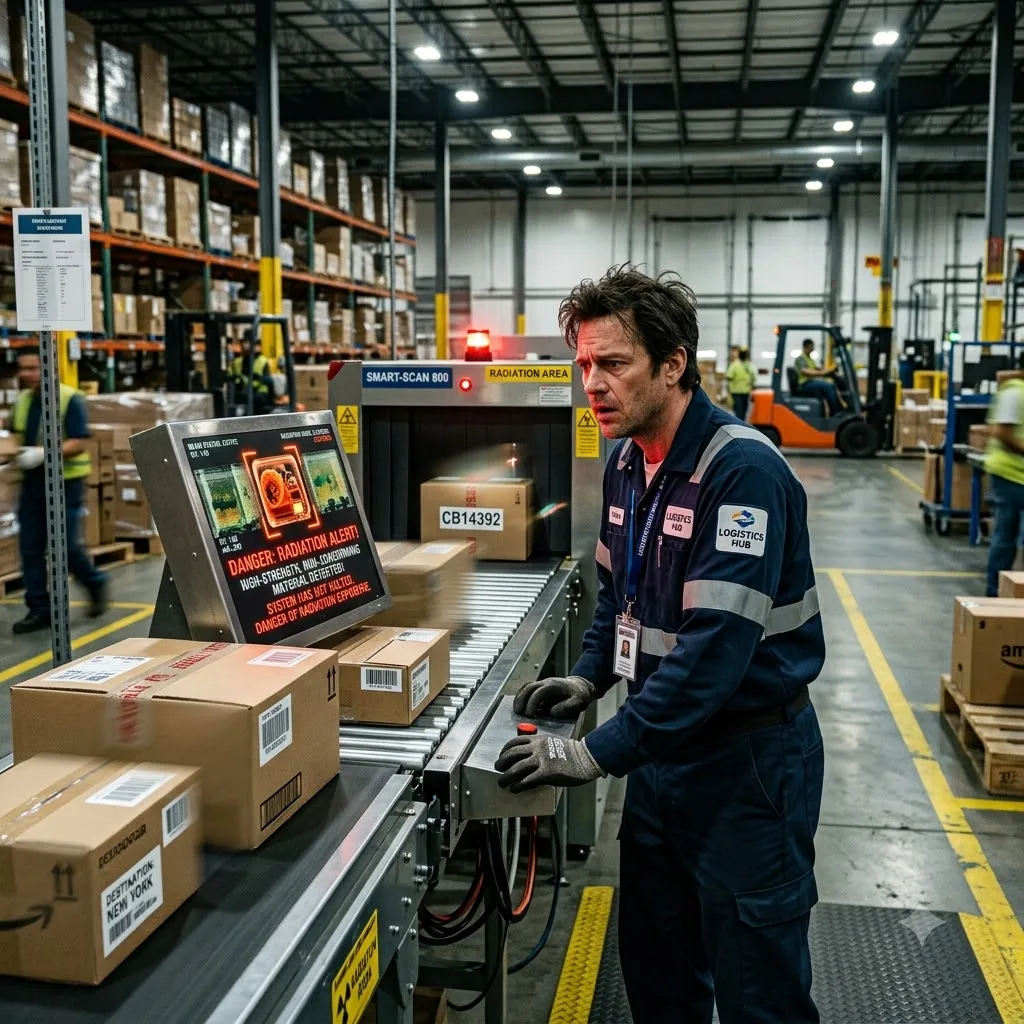
The sorting belt roared with a deafening, relentless grind as the overhead AI scanner suddenly blasted a strobe of pulsing red light across David’s workstation. A Level 1 Threat notification consumed his entire monitor, momentarily blinding him to the endless river of brown cardboard sliding past his heavy gloves. He had exactly three seconds to slam the physical kill switch on his console. Doing so would instantly dock his daily efficiency score by fifteen points. He was already hovering at a precarious seventy-two percent for the week. Dipping below seventy triggered immediate, algorithmic termination, a process handled entirely by the central mainframe. There would be no human resources meeting or final paycheck discussion. A mechanized drone cart would simply arrive at his station within two minutes, carrying an empty plastic tote for his safety gear and a digital slip detailing his severance.
The red strobe flashed faster, throwing harsh crimson shadows against the corrugated steel walls of Sector 4. Level 1 usually meant catastrophic danger. The system reserved that specific alert for improvised explosives, volatile chemical compounds, or high-density narcotics. Fentanyl shipments triggered the exact same alert, often shutting down entire quadrants of the warehouse while the automated hazmat teams rolled in on their treads. David hesitated, his thick rubber glove hovering over the yellow kill switch. The belt kept pulling the packages forward. The suspect box, a reinforced carton wrapped in heavy-duty fiber tape, crept closer to the automated sorting diverter. If the package bypassed his zone without him securing it manually, the AI would dock him a catastrophic fifty points for negligence.
He slammed his palm down on the kill switch.
The massive pneumatic gears beneath the floorboards groaned in protest. The rubber belt shuddered to a violent halt, the screech of stopping rollers echoing through the cavernous hall. A low-frequency siren began to whine in the rafters. On his monitor, the digital counter in the top right corner instantly flashed a bright, unforgiving yellow. His daily score ticked down from seventy-two to fifty-seven percent. The automated voice of the floor supervisor, a synthesized audio overlay designed to sound calm and authoritative, buzzed through the directional speaker mounted just above his right shoulder. It ordered him to secure the flagged package and initiate a deep-penetration density scan immediately.
David wrestled the heavy box off the motionless belt and onto his stainless-steel inspection table. It weighed roughly twenty pounds, the cardboard edges sharp and unyielding. The digital manifest label claimed it contained standard collegiate textbooks destined for a residential address in the lower districts. His hands shook slightly, sending a tremor through his wrists as he adjusted the dual-axis X-ray armature. He pulled the heavy, lead-lined scanning visor down over the package, locking it into the magnetic rails. He needed to verify the exact threat signature before the heavily armored security detail arrived at his sector.
His secondary terminal screen shifted from the basic manifest data to a high-contrast density profile. The image rendered in stark shades of green and black. He braced himself to see the chaotic, tangled wiring of an explosive device or the dense, uniform blocks of compressed powder. The initial pass only showed thick, rectangular slabs. They were just books. The bindings registered as dense glue, the paper tightly packed and uniform. The AI scanner, however, had flagged a severe anomaly buried deep within the center of the stack.
David keyed the physical magnification dial, manually stripping away the digital layers of cardboard and the thick cover of the top textbook. The enhanced X-ray penetrated the dense pages.
There were no wires or detonators. There was no compressed powder.
Perfectly hollowed-out cavities existed inside the textbooks, carefully carved recesses lined with a high-density alloy foil designed to spoof standard low-tier sorting scanners. The facility’s newly upgraded AI algorithm had easily pierced the shielding. Inside the hidden cavities sat neat, identical rows of foil-backed medical blister packs. The distinct shapes were unmistakable on the screen. They were individual glass ampoules, the specific kind used for localized pediatric treatments.
The delivery address on the shipping label flashed again on his monitor. It was a deteriorating residential block, listed under the name of a seventeen-year-old dependent.
David stared at the glowing green outlines of the contraband medicine. The automated system had not flagged the package because it posed a physical danger to the sorting facility. It had flagged the package because the algorithm was recently updated to intercept all unregistered, non-corporate medical supplies moving through the sector. The punishment for smuggling such items was severe, often resulting in immediate detention for the recipient.
A sharp, metallic click echoed from the directional speaker mounted at his shoulder. The synthesized ambient hum of the management channel died completely, leaving behind a heavy, unnatural silence at his workstation. He immediately reached for his tactile keyboard, intending to manually override the classification code and downgrade it to a minor routing error to let the package pass.
The keys remained entirely unresponsive beneath his fingers. The main terminal screen flickered once, the bright density profile vanishing into a solid, absolute black. The physical biometric lock on his workstation engaged with a loud, final clack, trapping the box securely on the magnetic inspection table as the heavy steel blast doors at the end of the aisle began to slide shut.
The sorting belt roared with a deafening, relentless grind as the overhead AI scanner suddenly blasted a strobe of pulsing red light across David’s workstation. A Level 1 Threat notification consumed his entire monitor, momentarily blinding him to the endless river of brown cardboard sliding past his heavy gloves. He had exactly three seconds to slam the physical kill switch on his console. Doing so would instantly dock his daily efficiency score by fifteen points. He was already hovering at a precarious seventy-two percent for the week. Dipping below seventy triggered immediate, algorithmic termination, a process handled entirely by the central mainframe. There would be no human resources meeting or final paycheck discussion. A mechanized drone cart would simply arrive at his station within two minutes, carrying an empty plastic tote for his safety gear and a digital slip detailing his severance.
The red strobe flashed faster, throwing harsh crimson shadows against the corrugated steel walls of Sector 4. Level 1 usually meant catastrophic danger. The system reserved that specific alert for improvised explosives, volatile chemical compounds, or high-density narcotics. Fentanyl shipments triggered the exact same alert, often shutting down entire quadrants of the warehouse while the automated hazmat teams rolled in on their treads. David hesitated, his thick rubber glove hovering over the yellow kill switch. The belt kept pulling the packages forward. The suspect box, a reinforced carton wrapped in heavy-duty fiber tape, crept closer to the automated sorting diverter. If the package bypassed his zone without him securing it manually, the AI would dock him a catastrophic fifty points for negligence.
He slammed his palm down on the kill switch.
The massive pneumatic gears beneath the floorboards groaned in protest. The rubber belt shuddered to a violent halt, the screech of stopping rollers echoing through the cavernous hall. A low-frequency siren began to whine in the rafters. On his monitor, the digital counter in the top right corner instantly flashed a bright, unforgiving yellow. His daily score ticked down from seventy-two to fifty-seven percent. The automated voice of the floor supervisor, a synthesized audio overlay designed to sound calm and authoritative, buzzed through the directional speaker mounted just above his right shoulder. It ordered him to secure the flagged package and initiate a deep-penetration density scan immediately.
David wrestled the heavy box off the motionless belt and onto his stainless-steel inspection table. It weighed roughly twenty pounds, the cardboard edges sharp and unyielding. The digital manifest label claimed it contained standard collegiate textbooks destined for a residential address in the lower districts. His hands shook slightly, sending a tremor through his wrists as he adjusted the dual-axis X-ray armature. He pulled the heavy, lead-lined scanning visor down over the package, locking it into the magnetic rails. He needed to verify the exact threat signature before the heavily armored security detail arrived at his sector.
His secondary terminal screen shifted from the basic manifest data to a high-contrast density profile. The image rendered in stark shades of green and black. He braced himself to see the chaotic, tangled wiring of an explosive device or the dense, uniform blocks of compressed powder. The initial pass only showed thick, rectangular slabs. They were just books. The bindings registered as dense glue, the paper tightly packed and uniform. The AI scanner, however, had flagged a severe anomaly buried deep within the center of the stack.
David keyed the physical magnification dial, manually stripping away the digital layers of cardboard and the thick cover of the top textbook. The enhanced X-ray penetrated the dense pages.
There were no wires or detonators. There was no compressed powder.
Perfectly hollowed-out cavities existed inside the textbooks, carefully carved recesses lined with a high-density alloy foil designed to spoof standard low-tier sorting scanners. The facility’s newly upgraded AI algorithm had easily pierced the shielding. Inside the hidden cavities sat neat, identical rows of foil-backed medical blister packs. The distinct shapes were unmistakable on the screen. They were individual glass ampoules, the specific kind used for localized pediatric treatments.
The delivery address on the shipping label flashed again on his monitor. It was a deteriorating residential block, listed under the name of a seventeen-year-old dependent.
David stared at the glowing green outlines of the contraband medicine. The automated system had not flagged the package because it posed a physical danger to the sorting facility. It had flagged the package because the algorithm was recently updated to intercept all unregistered, non-corporate medical supplies moving through the sector. The punishment for smuggling such items was severe, often resulting in immediate detention for the recipient.
A sharp, metallic click echoed from the directional speaker mounted at his shoulder. The synthesized ambient hum of the management channel died completely, leaving behind a heavy, unnatural silence at his workstation. He immediately reached for his tactile keyboard, intending to manually override the classification code and downgrade it to a minor routing error to let the package pass.
The keys remained entirely unresponsive beneath his fingers. The main terminal screen flickered once, the bright density profile vanishing into a solid, absolute black. The physical biometric lock on his workstation engaged with a loud, final clack, trapping the box securely on the magnetic inspection table as the heavy steel blast doors at the end of the aisle began to slide shut.