Story code: ST-000888
Part 1: The Supply Curve
Wade adjusted his lapel microphone and let the applause wash over the scuffed hardwood of the Oakhaven High School gymnasium. Four hundred jobs. He repeated the number, letting the syllables bounce off the retractable bleachers and the faded championship banners hanging from the rafters. The crowd roared again, a desperate, hungry sound from people who had spent the last five years watching storefronts board up on Main Street. Wade paced the edge of the makeshift stage, flashing a practiced, sympathetic smile that he had perfected in front of hotel bathroom mirrors across three time zones.
He raised a hand, palm flat, the universal gesture for humble restraint. The applause obediently tapered into a low murmur of anticipation. Wade clicked the presentation remote hidden in his palm. The projector screen behind him shifted to a crisp, minimalist slide displaying a single rising graph. He launched into the final movement of his speech, hitting the cadence of a seasoned tech visionary gracing a small-town audience with the gospel of modern logistics. He spoke about optimization, about streamlining the rust-belt inefficiencies, about an algorithmic approach to local manufacturing that guaranteed a flawless supply chain.
The mayor, sitting in the front row of folding chairs, nodded with frantic enthusiasm. The city council members beside her mirrored the motion, their faces glowing in the harsh fluorescent lighting. Wade let his gaze sweep across the faces in the first few rows, soaking in their uncritical adoration. He was their savior in a bespoke charcoal suit, the man who had descended from the coastal tech hubs to breathe life into their dying zip code. He took a slow, theatrical breath, preparing to deliver the closing line about a brighter, data-driven tomorrow.
His eyes continued their sweeping arc, moving past the VIP seating and up the steep incline of the packed wooden bleachers. He tracked the sea of flannel, denim, and hopeful expressions, aiming for a point of connection with the everyman in the cheap seats.
Then his breath caught.
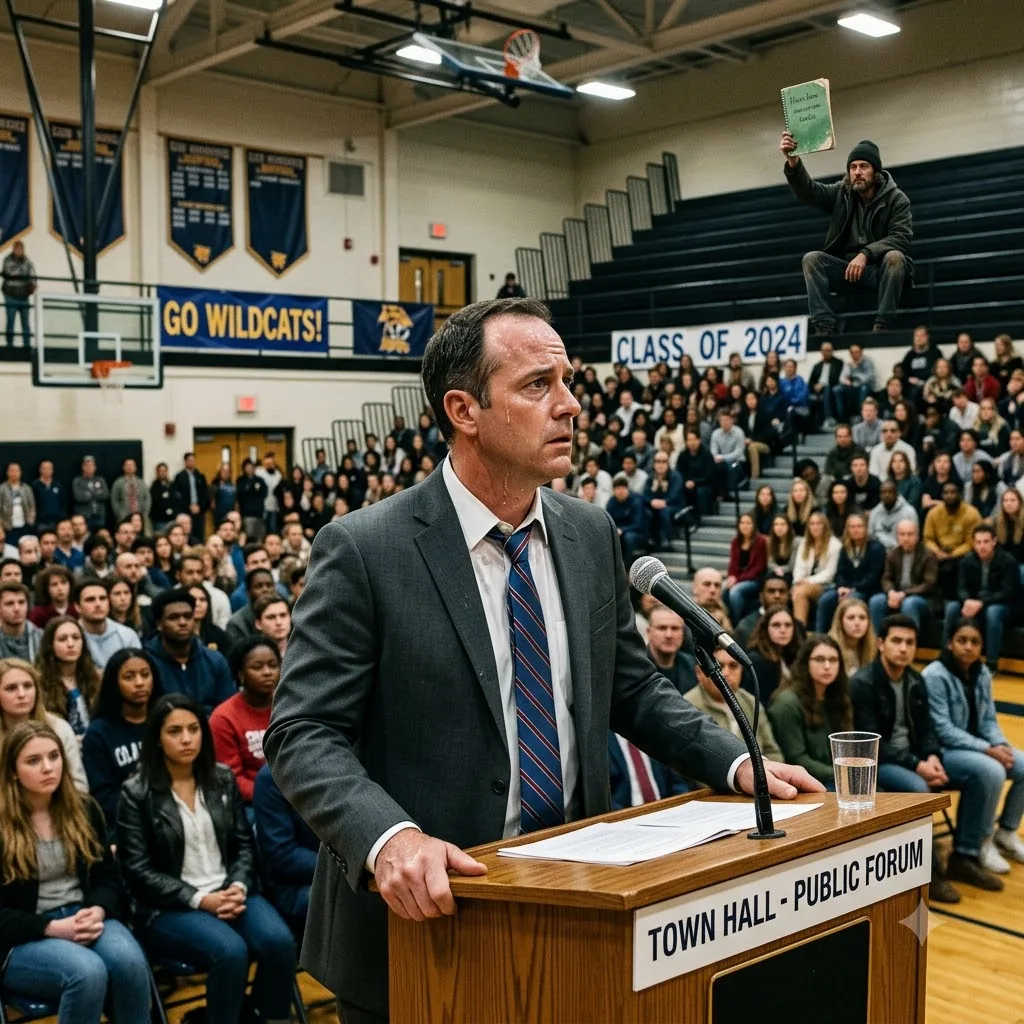
The practiced smile froze on his face, hardening into a tight, unnatural grimace. Near the very top row, partially shadowed by the overhanging track-and-field balcony, a man sat perfectly still. While the rest of the gymnasium leaned forward, rapt and energized, this figure remained rigidly upright. He wore a faded canvas jacket, the olive fabric washed out and frayed at the collar. Wade recognized the slope of those shoulders instantly. It was a posture he had not seen in four years, a posture he had paid a great deal of money to never see again.
Wade’s thumb slipped on the presentation remote. The slide advanced twice, flashing past the contact information and landing on a blank black screen. A ripple of confusion shifted through the front rows, but Wade could not tear his focus away from the top bleacher.
The man in the faded jacket did not clap. He did not smile. He simply raised his right hand, lifting an object into the harsh beam of the overhead utility lights.
It was a ledger. A thick, cloth-bound accounting book, its cover a distinct, sickly shade of mottled green. The corners were battered, the spine held together with a thick strip of silver duct tape.
Wade felt a cold drop of sweat trace a path down his spine. The acoustic dampeners in the gymnasium seemed to fail all at once, replaced by a high-pitched ringing in his ears. That ledger was supposed to be ashes. He had watched the flames consume the metal trash can behind their first cramped office space, standing there until the smoke choked him. He had watched the original deployment logs, the raw data sets, the initial optimization parameters burn until nothing remained but brittle black flakes.
Yet there it was. The green cover was unmistakable, complete with the dark coffee stain in the bottom left corner where a paper cup had leaked during a seventy-two-hour coding sprint.
Wade opened his mouth to deliver his closing line, but his throat felt as though it had been packed with sawdust. The microphone amplified his sharp, ragged intake of air, sending a burst of static through the PA system. The mayor’s frantic nodding stopped. The silence in the gymnasium stretched, transforming from a state of rapt attention into a heavy, suffocating confusion.
Up on the top bleacher, the man in the faded jacket slowly stood. The green ledger remained elevated, held like a beacon above the heads of the whispering crowd. He stepped over the wooden bench, moving with a deliberate, unhurried grace toward the metal stairs that led down to the gym floor.
Wade gripped the edges of his wooden podium, his knuckles turning white. He needed to signal security, but his limbs refused to cooperate. He needed to speak, to pivot back to the script, to wrap the room back in the comforting illusion of his algorithmic salvation.
The man in the canvas jacket reached the first landing of the stairs. He rested his hand on the metal railing, the battered green ledger clamped firmly under his arm. He looked directly at Wade, holding the eye contact across the expanse of the crowded gymnasium. He reached into his jacket pocket and pulled out a single sheet of paper, unfolding it with a slow, methodical snap that echoed loudly against the sudden, absolute silence of the room.
Wade adjusted his lapel microphone and let the applause wash over the scuffed hardwood of the Oakhaven High School gymnasium. Four hundred jobs. He repeated the number, letting the syllables bounce off the retractable bleachers and the faded championship banners hanging from the rafters. The crowd roared again, a desperate, hungry sound from people who had spent the last five years watching storefronts board up on Main Street. Wade paced the edge of the makeshift stage, flashing a practiced, sympathetic smile that he had perfected in front of hotel bathroom mirrors across three time zones.
He raised a hand, palm flat, the universal gesture for humble restraint. The applause obediently tapered into a low murmur of anticipation. Wade clicked the presentation remote hidden in his palm. The projector screen behind him shifted to a crisp, minimalist slide displaying a single rising graph. He launched into the final movement of his speech, hitting the cadence of a seasoned tech visionary gracing a small-town audience with the gospel of modern logistics. He spoke about optimization, about streamlining the rust-belt inefficiencies, about an algorithmic approach to local manufacturing that guaranteed a flawless supply chain.
The mayor, sitting in the front row of folding chairs, nodded with frantic enthusiasm. The city council members beside her mirrored the motion, their faces glowing in the harsh fluorescent lighting. Wade let his gaze sweep across the faces in the first few rows, soaking in their uncritical adoration. He was their savior in a bespoke charcoal suit, the man who had descended from the coastal tech hubs to breathe life into their dying zip code. He took a slow, theatrical breath, preparing to deliver the closing line about a brighter, data-driven tomorrow.
His eyes continued their sweeping arc, moving past the VIP seating and up the steep incline of the packed wooden bleachers. He tracked the sea of flannel, denim, and hopeful expressions, aiming for a point of connection with the everyman in the cheap seats.
Then his breath caught.
The practiced smile froze on his face, hardening into a tight, unnatural grimace. Near the very top row, partially shadowed by the overhanging track-and-field balcony, a man sat perfectly still. While the rest of the gymnasium leaned forward, rapt and energized, this figure remained rigidly upright. He wore a faded canvas jacket, the olive fabric washed out and frayed at the collar. Wade recognized the slope of those shoulders instantly. It was a posture he had not seen in four years, a posture he had paid a great deal of money to never see again.
Wade’s thumb slipped on the presentation remote. The slide advanced twice, flashing past the contact information and landing on a blank black screen. A ripple of confusion shifted through the front rows, but Wade could not tear his focus away from the top bleacher.
The man in the faded jacket did not clap. He did not smile. He simply raised his right hand, lifting an object into the harsh beam of the overhead utility lights.
It was a ledger. A thick, cloth-bound accounting book, its cover a distinct, sickly shade of mottled green. The corners were battered, the spine held together with a thick strip of silver duct tape.
Wade felt a cold drop of sweat trace a path down his spine. The acoustic dampeners in the gymnasium seemed to fail all at once, replaced by a high-pitched ringing in his ears. That ledger was supposed to be ashes. He had watched the flames consume the metal trash can behind their first cramped office space, standing there until the smoke choked him. He had watched the original deployment logs, the raw data sets, the initial optimization parameters burn until nothing remained but brittle black flakes.
Yet there it was. The green cover was unmistakable, complete with the dark coffee stain in the bottom left corner where a paper cup had leaked during a seventy-two-hour coding sprint.
Wade opened his mouth to deliver his closing line, but his throat felt as though it had been packed with sawdust. The microphone amplified his sharp, ragged intake of air, sending a burst of static through the PA system. The mayor’s frantic nodding stopped. The silence in the gymnasium stretched, transforming from a state of rapt attention into a heavy, suffocating confusion.
Up on the top bleacher, the man in the faded jacket slowly stood. The green ledger remained elevated, held like a beacon above the heads of the whispering crowd. He stepped over the wooden bench, moving with a deliberate, unhurried grace toward the metal stairs that led down to the gym floor.
Wade gripped the edges of his wooden podium, his knuckles turning white. He needed to signal security, but his limbs refused to cooperate. He needed to speak, to pivot back to the script, to wrap the room back in the comforting illusion of his algorithmic salvation.
The man in the canvas jacket reached the first landing of the stairs. He rested his hand on the metal railing, the battered green ledger clamped firmly under his arm. He looked directly at Wade, holding the eye contact across the expanse of the crowded gymnasium. He reached into his jacket pocket and pulled out a single sheet of paper, unfolding it with a slow, methodical snap that echoed loudly against the sudden, absolute silence of the room.