Story code: ST-000888
Part 2: The Attrition Threshold
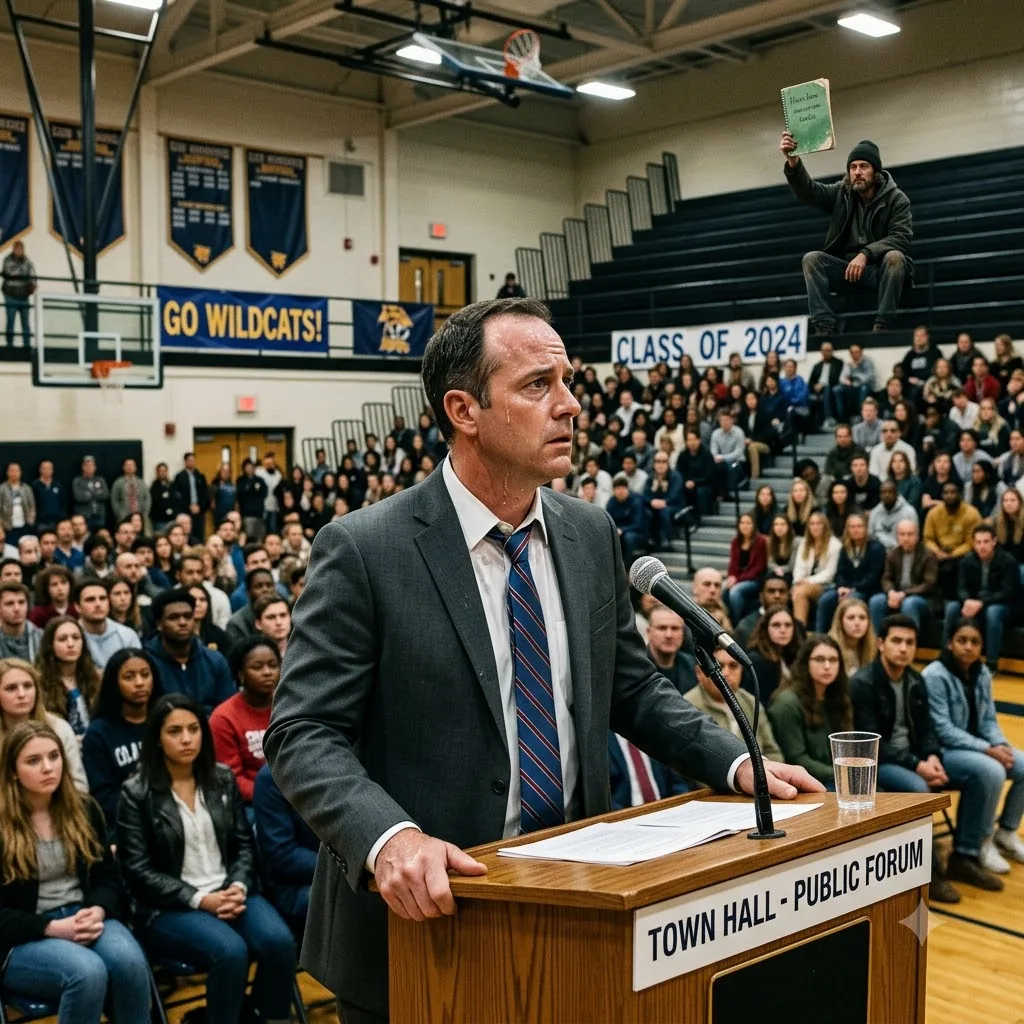
The sharp snap of the unfolding paper echoed like a gunshot in the silent gymnasium. Wade’s practiced smile had completely dissolved, leaving his face feeling numb and stretched under the harsh utility lights. A drop of cold sweat broke past his collar, tracing a glacial path down his spine. He gripped the edges of the wooden podium so tightly his knuckles ached, his mind racing through a frantic inventory of crisis management protocols. None of them covered the resurrection of a dead man holding ashes.
Marcus didn’t yell. He didn’t wave his arms or launch into a theatrical denunciation. He simply bypassed the metal guardrail and began a slow, measured walk down the center aisle of the gym floor. The squeak of his rubber-soled boots against the polished hardwood cut through the suffocating quiet.
Wade knew exactly what was written on that single sheet of paper. It was the only thing it could be. It was the original architecture of the `Attrition_Threshold`-the actual beating heart of the algorithm Wade was currently selling as a miracle of modern logistics.
Four years ago, in a cramped, windowless office smelling of stale coffee and ozone, Marcus had designed a beautiful, balanced supply chain engine. It was meant to route freight equitably, reducing overhead for everyone. But equitable didn’t secure venture capital. Brutal, monopolistic efficiency did. While Marcus slept, Wade had rewritten the core logic. He didn’t optimize the supply chain; he weaponized it. The modified algorithm identified financially vulnerable local businesses and artificially delayed their regional freight. It choked their inventory, starving them of materials until they defaulted on their commercial loans. Only then did Apex Logistics swoop in, purchasing the foreclosed properties for pennies on the dollar and hiring the newly unemployed locals at a severe wage deficit.
The “four hundred jobs” Wade had just promised the cheering crowd weren’t newly created. They were Oakhaven’s own stolen livelihoods, repackaged and sold back to them at a discount.
“Friends,” Wade said, his voice cracking violently as the lapel microphone amplified his dry throat. He forced a strained, condescending chuckle, desperately trying to reassert control over the narrative. “It seems we have a bit of a disruption. Innovation always attracts its detractors, especially those who… couldn’t keep up with the pace of progress.”
Marcus didn’t flinch. He didn’t even look at Wade. He stopped directly in front of the first row of folding chairs, looming over the VIP section. He lowered the unfolded sheet of paper and offered it to Mayor Higgins.
The mayor blinked, her frantic, sycophantic enthusiasm replaced by a profound, deer-in-the-headlights paralysis. She looked up at the stage, desperately seeking Wade’s permission, but Wade was frozen. Reluctantly, her trembling hand reached out and took the paper.
“Look at line four thousand, one hundred and twelve, Mayor,” Marcus said. His voice was rough, unamplified, but in the dead silence of the room, it carried perfectly to the first few rows of the bleachers. “Look at the variable labeled ‘Oakhaven Freight Choke.'”
Wade’s heart slammed against his ribs. The gym suddenly felt ten degrees hotter. The smell of floor wax and old sweat was suddenly overpowering, making him lightheaded.
Mayor Higgins adjusted her glasses, her eyes darting across the dense strings of printed code and data tables. She desperately wanted to hand it back, to laugh it off as technical jargon so they could return to the ribbon-cutting and the promised salvation of her dying town. She needed Wade to be the hero. They all did.
“Mr. Vance,” the mayor stammered, her voice thin and wavering. She looked up at Wade, practically begging him for a lifeline. “This… this says ‘Targeted Liquidation: Oakhaven Auto Parts.’ And there’s a timeline here from eight months ago. They just went into receivership last month.”
A low, uneasy murmur rippled through the front rows. Oakhaven Auto had been a cornerstone of the community for four decades. Its closure had devastated three dozen families.
“That is-that is taken wildly out of context, Mayor,” Wade stammered, leaning into the podium mic. His corporate defense mechanisms kicked in, wrapping the lie in authoritative jargon. “What you’re looking at is standard macro-economic vulnerability forecasting. Our systems analyze thousands of failing businesses to understand market trends. It’s a post-mortem analysis, nothing more. This man is a disgruntled former contractor who was terminated for corporate espionage!”
Marcus finally looked up at Wade. The look in his eyes wasn’t anger; it was a deep, exhausting pity that terrified Wade more than screaming ever could.
Marcus lifted his right arm and dropped the heavy, battered green ledger onto the edge of the stage. It hit the wooden floorboards with a heavy, dusty thud. The sound made the mayor jump.
“Forecasting,” Marcus repeated, his voice echoing off the championship banners. “You want to talk about context, Wade?”
Marcus didn’t wait for an answer. He reached into the deep pocket of his canvas jacket and pulled out a sleek, silver adapter cable.
“The paper in the mayor’s hand is just the summary for Oakhaven,” Marcus said, turning slightly so his voice projected toward the sea of confused faces in the bleachers. “This ledger contains the localized encryption keys for the last six towns Apex Logistics ‘saved.’ And this cable connects directly to the HDMI port on your shiny podium.”
Wade stared at the silver cable dangling from Marcus’s hand. The crowd was holding its collective breath. They hadn’t turned on Wade yet; the desperate hunger for those four hundred jobs was acting as a shield, making them hesitant to believe the stranger in the faded jacket.
“So, Wade,” Marcus said, taking a step closer to the stage, the silver cable swaying like a pendulum. “Are you going to explain to these people how your algorithm intentionally strangled their town’s economy to buy their warehouses on the cheap? Or am I going to plug this in, mirror my drive to your projector, and let the code show them exactly whose businesses are scheduled to be liquidated next week?”