Story code: ST-000891
Part 1: The Blank Canvas
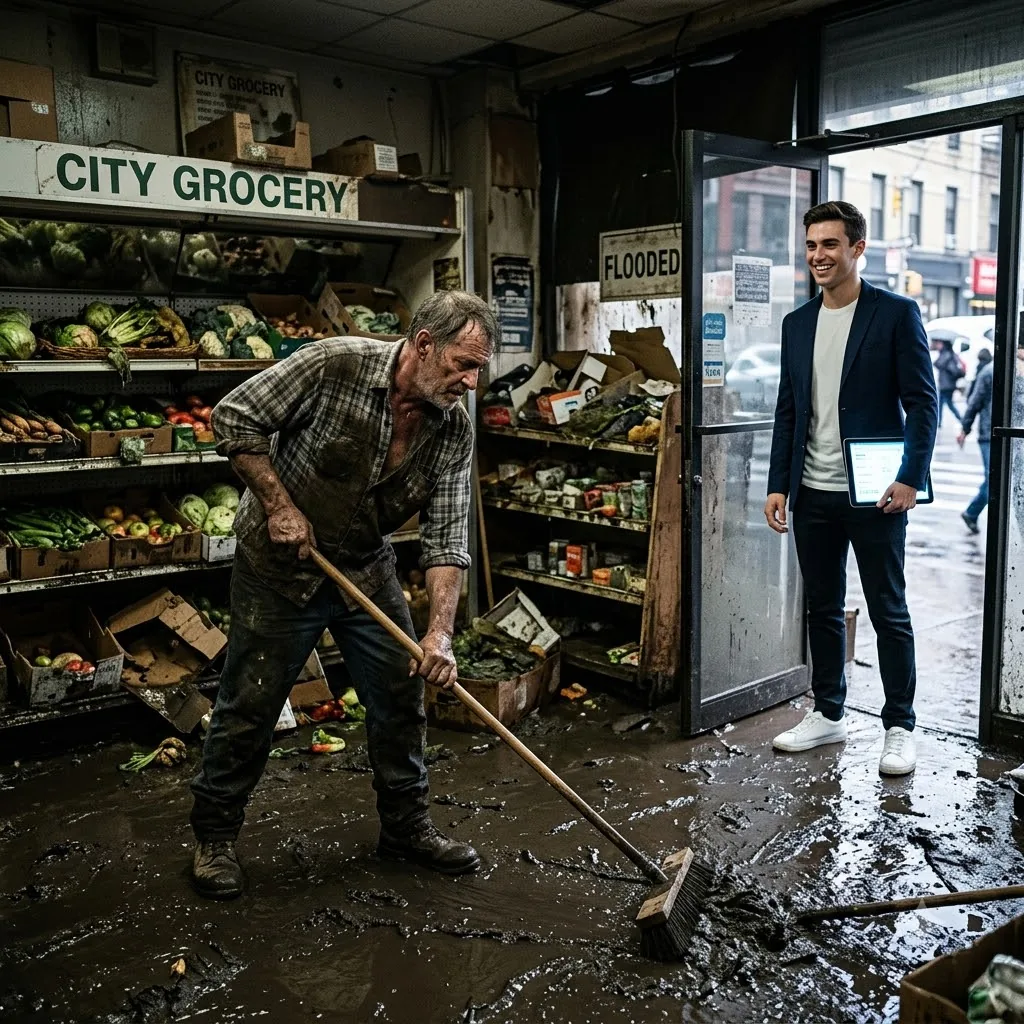
The smell hit the back of Mateo’s throat first, a thick, suffocating combination of rotting cilantro, warm river water, and raw sewage baking in the stagnant afternoon heat. He leaned his entire body weight against the wooden handle of the heavy industrial push-broom, forcing a thick wave of gray, oily sludge toward the shattered glass of the front entrance. His shoulders burned, and his forearms shook from six grueling hours of uninterrupted labor. Behind him, the family bodega was a dark, echoing cavern of complete devastation. The commercial refrigerators sat completely silent along the back wall, their compressors drowned and dead, bleeding dark, foul-smelling fluid onto the cracked linoleum tiles.
Swollen, water-logged cardboard boxes of inventory slumped against the metal shelving units. Cans of soup and beans were buried in a thick layer of toxic river mud. Mateo paused to wipe his forehead with the back of his forearm, leaving a dark streak of black grit across his sweating skin. He inhaled a shaky breath. They desperately needed the insurance money just to afford the commercial dumpsters required to haul away the ruined stock. The adjuster had promised yesterday that their new landlord would personally facilitate the disaster relief paperwork to expedite the payout.
A sharp, rhythmic tapping sound broke the heavy, oppressive silence of the ruined store.
Mateo turned toward the door, leaning his weight onto the broom. A pair of pristine, bright white sustainable knit sneakers stepped delicately over a crushed, water-logged box of tomatoes. The shoes were entirely free of the toxic mud coating the rest of the neighborhood block.
Bryce stood in the doorway, beaming.
The new landlord wore a tailored navy quarter-zip sweater and crisp chinos, holding a sleek silver tablet tucked under his right arm. His smile was impossibly wide, revealing rows of blindingly white teeth that seemed to glow in the dim, powerless storefront. He did not look like a property owner surveying a ruined commercial investment. He looked like a man who had just struck gold.
Mateo forced a polite, exhausted nod, gripping the broom handle tighter. He took a clumsy step backward, making room for Bryce to enter, fully expecting the man’s cheerful expression to instantly fade as the grim reality of the destruction set in. The dark water line on the drywall reached waist-high, leaving a distinct, foul-smelling ring of dried debris and scum across the entire perimeter of the shop.
Bryce did not lose his grin. He stepped inside, his immaculate sneakers finding the only dry, clean patches of tile left in the entryway. He inhaled deeply, completely ignoring the stomach-turning stench of fermented fruit and mud. He looked up at the water-damaged acoustic ceiling tiles, down at the warped, buckling floorboards, and finally over at the shattered glass of the pastry display cases.
He nodded slowly, tapping his fingers in a lively rhythm against the metal back of his tablet.
Mateo pointed a shaking hand toward the back office, mumbling an apology about the horrific mess. He offered to find a folding table and clear a clean space for them to sit and sign the insurance release forms. Those forms were the absolute last lifeline left for his family. Without the emergency relief funds, the bodega his parents had built from a single pavement fruit stand into a neighborhood staple would be permanently finished. Mateo had spent the entire morning mentally rehearsing his immense gratitude for Bryce rushing the critical paperwork over in person rather than mailing it.
Bryce held up a perfectly manicured hand, stopping Mateo mid-sentence. He did not even glance toward the back office. He kept his eyes firmly locked on the empty, ruined space where the long deli counter used to be.
He told Mateo not to worry about the mess at all, stating brightly that the flood had actually done them a massive favor by clearing out all the outdated clutter.
The phrasing twisted strangely in Mateo’s ears, settling like a heavy stone in his gut. He stared down at the thick sludge coating his heavy rubber work boots, trying to reconcile the devastating, life-altering loss of his family’s livelihood with Bryce’s energetic, enthusiastic tone. A favor. The total destruction of thirty years of relentless hard work was a favor. Mateo forcefully swallowed his immediate anger, attributing the incredibly strange comment to a rich man’s awkward, tone-deaf attempt at silver-lining optimism. The wealthy often had bizarre, detached ways of comforting the working class during a crisis.
Bryce stepped closer, gracefully avoiding a floating plastic crate of spoiled milk that bumped gently against his ankle. He unclipped the digital stylus from the side of his silver tablet and woke the screen with a quick tap. The crisp blue light illuminated his smiling, eager face.
He told Mateo the space was finally a perfect blank canvas.
Mateo wiped his filthy, mud-caked hands fiercely on his ruined denim jeans, stepping forward to accept the tablet. He expected to see the familiar blue and white shield logo of the commercial insurance provider they had discussed on the phone yesterday afternoon. He fully expected to see signature lines authorizing the immediate disaster relief disbursement to the tenants.
Bryce confidently turned the glowing screen around.
Mateo squinted at the bright display, his stomach dropping. There was no insurance company logo at the top of the PDF document. The file on the screen was dense with tight legal text, formatted in stark black and white, featuring a bold, heavily underlined header that made Mateo’s chest tighten in sheer panic. Bryce pointed the sharp tip of his stylus directly at the boldest line of text on the glowing screen.
The smell hit the back of Mateo’s throat first, a thick, suffocating combination of rotting cilantro, warm river water, and raw sewage baking in the stagnant afternoon heat. He leaned his entire body weight against the wooden handle of the heavy industrial push-broom, forcing a thick wave of gray, oily sludge toward the shattered glass of the front entrance. His shoulders burned, and his forearms shook from six grueling hours of uninterrupted labor. Behind him, the family bodega was a dark, echoing cavern of complete devastation. The commercial refrigerators sat completely silent along the back wall, their compressors drowned and dead, bleeding dark, foul-smelling fluid onto the cracked linoleum tiles.
Swollen, water-logged cardboard boxes of inventory slumped against the metal shelving units. Cans of soup and beans were buried in a thick layer of toxic river mud. Mateo paused to wipe his forehead with the back of his forearm, leaving a dark streak of black grit across his sweating skin. He inhaled a shaky breath. They desperately needed the insurance money just to afford the commercial dumpsters required to haul away the ruined stock. The adjuster had promised yesterday that their new landlord would personally facilitate the disaster relief paperwork to expedite the payout.
A sharp, rhythmic tapping sound broke the heavy, oppressive silence of the ruined store.
Mateo turned toward the door, leaning his weight onto the broom. A pair of pristine, bright white sustainable knit sneakers stepped delicately over a crushed, water-logged box of tomatoes. The shoes were entirely free of the toxic mud coating the rest of the neighborhood block.
Bryce stood in the doorway, beaming.
The new landlord wore a tailored navy quarter-zip sweater and crisp chinos, holding a sleek silver tablet tucked under his right arm. His smile was impossibly wide, revealing rows of blindingly white teeth that seemed to glow in the dim, powerless storefront. He did not look like a property owner surveying a ruined commercial investment. He looked like a man who had just struck gold.
Mateo forced a polite, exhausted nod, gripping the broom handle tighter. He took a clumsy step backward, making room for Bryce to enter, fully expecting the man’s cheerful expression to instantly fade as the grim reality of the destruction set in. The dark water line on the drywall reached waist-high, leaving a distinct, foul-smelling ring of dried debris and scum across the entire perimeter of the shop.
Bryce did not lose his grin. He stepped inside, his immaculate sneakers finding the only dry, clean patches of tile left in the entryway. He inhaled deeply, completely ignoring the stomach-turning stench of fermented fruit and mud. He looked up at the water-damaged acoustic ceiling tiles, down at the warped, buckling floorboards, and finally over at the shattered glass of the pastry display cases.
He nodded slowly, tapping his fingers in a lively rhythm against the metal back of his tablet.
Mateo pointed a shaking hand toward the back office, mumbling an apology about the horrific mess. He offered to find a folding table and clear a clean space for them to sit and sign the insurance release forms. Those forms were the absolute last lifeline left for his family. Without the emergency relief funds, the bodega his parents had built from a single pavement fruit stand into a neighborhood staple would be permanently finished. Mateo had spent the entire morning mentally rehearsing his immense gratitude for Bryce rushing the critical paperwork over in person rather than mailing it.
Bryce held up a perfectly manicured hand, stopping Mateo mid-sentence. He did not even glance toward the back office. He kept his eyes firmly locked on the empty, ruined space where the long deli counter used to be.
He told Mateo not to worry about the mess at all, stating brightly that the flood had actually done them a massive favor by clearing out all the outdated clutter.
The phrasing twisted strangely in Mateo’s ears, settling like a heavy stone in his gut. He stared down at the thick sludge coating his heavy rubber work boots, trying to reconcile the devastating, life-altering loss of his family’s livelihood with Bryce’s energetic, enthusiastic tone. A favor. The total destruction of thirty years of relentless hard work was a favor. Mateo forcefully swallowed his immediate anger, attributing the incredibly strange comment to a rich man’s awkward, tone-deaf attempt at silver-lining optimism. The wealthy often had bizarre, detached ways of comforting the working class during a crisis.
Bryce stepped closer, gracefully avoiding a floating plastic crate of spoiled milk that bumped gently against his ankle. He unclipped the digital stylus from the side of his silver tablet and woke the screen with a quick tap. The crisp blue light illuminated his smiling, eager face.
He told Mateo the space was finally a perfect blank canvas.
Mateo wiped his filthy, mud-caked hands fiercely on his ruined denim jeans, stepping forward to accept the tablet. He expected to see the familiar blue and white shield logo of the commercial insurance provider they had discussed on the phone yesterday afternoon. He fully expected to see signature lines authorizing the immediate disaster relief disbursement to the tenants.
Bryce confidently turned the glowing screen around.
Mateo squinted at the bright display, his stomach dropping. There was no insurance company logo at the top of the PDF document. The file on the screen was dense with tight legal text, formatted in stark black and white, featuring a bold, heavily underlined header that made Mateo’s chest tighten in sheer panic. Bryce pointed the sharp tip of his stylus directly at the boldest line of text on the glowing screen.