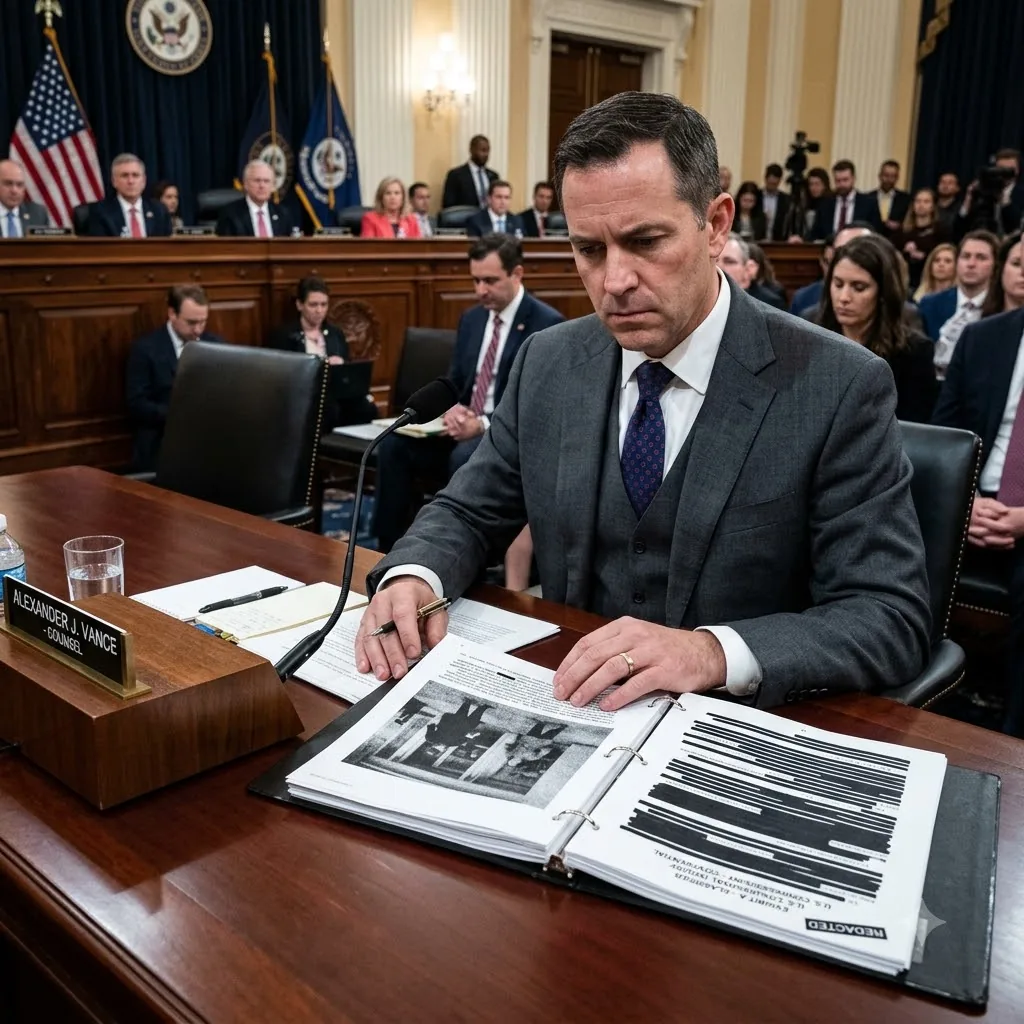
Story code: ST-000889
Part 4: The Root Cause
The Capitol Police holding room smelled of floor wax and stale ozone. It was a stark contrast to the mahogany-paneled suite where Marcus had spent the morning preparing to dismantle a child’s suffering. There were no polished tables here, only a gray metal desk and a humming fluorescent tube that flickered with a steady, irritating rhythm.
The heavy metal door clicked open. David stepped into the room, his face a mask of controlled, absolute fury. He didn’t sit down.
“Jenkins isn’t pressing assault charges,” David said, his voice stripped of its usual theatrical warmth. “She says you having a psychotic break on national television and tanking our entire defense is compensation enough. The committee recessed. The stock for our client is currently in freefall.”
Marcus sat in the rigid plastic chair, his hands resting on his knees. He felt hollowed out, as if the air in his lungs had been replaced by concrete.
“I needed to see the file, David,” Marcus whispered.
“You assaulted opposing counsel. You ripped open a sealed federal exhibit in front of C-SPAN,” David snapped, stepping closer. “The partners convened an emergency call ten minutes ago. You are officially severed from the firm, Marcus. Effective immediately. You will not return to the office. You will not contact the client. The firm is releasing a press statement in five minutes citing a severe, uncharacteristic medical emergency to distance us from the blast radius.”
David held out his hand. “Give me your access card and your firm phone. You’re done.”
Marcus didn’t argue. He reached into his jacket pocket, retrieved the heavy brass keycard and the encrypted black smartphone, and set them on the edge of the metal desk. Fifteen years of relentless, seventy-hour weeks, of defending the indefensible, of climbing to the apex of the legal tech world-all of it gone in a single, silent transaction.
David scooped up the items, shot Marcus a final look of pure disgust, and walked out, letting the heavy door slam shut.
A Capitol Police officer standing by the door cleared his throat. “You’re free to go, Mr. Hayes. But the press pool is swarming the front steps. You might want to wait here for a few minutes until Capitol security clears a path to the garage.”
“Thank you,” Marcus said, his voice entirely devoid of life.
He was alone. No briefcases. No legal pads. No silver pens. He reached into his trousers and pulled out his personal phone, a device he rarely used during business hours. The screen was cracked in the top right corner.
His thumb hovered over the glass. He opened his messages app and tapped on Lily’s contact.
The chat history loaded. Marcus began to scroll upward, reading the digital footprint of his own fatherhood.
*Hey kid. My weekend. Thai food on Friday?*
*Sure.*
*Good week at school?*
*Fine.*
*See you at 6.*
He scrolled higher.
*Happy birthday Lil. Left a gift on the counter for when you get back from Mom’s.*
*Thanks.*
*Everything good?*
*Yeah just tired.*
*Get some sleep. Love you.*
Marcus stared at his own words. The sterile, transactional rhythm of it read like automated customer service dialogue. He was looking at the engagement logs of a father who had optimized his parenting for maximum efficiency and minimum friction. The contrast made him physically sick.
The dossier had contained seventy-two hours of granular, horrifying detail. The algorithm knew Lily’s heart rate, her sleep cycles, the micro-seconds she lingered on videos about isolation and caloric deficits. The machine knew she was drowning. It knew she was awake at three in the morning, terrified and vulnerable in the bedroom down the hall from his office. The machine had mapped her soul to exploit it.
Marcus, meanwhile, had sent her a thumbs-up emoji when she said she was going to skip breakfast.
He had spent years standing in front of judges, arguing that the algorithm possessed no malice, only logic. He realized now that he had operated the exact same way. He had checked the boxes. He provided the Georgetown townhouse, the high-speed Wi-Fi, the weekly allowance. He accepted “Fine” and “just tired” as valid inputs, never pushing deeper, never looking past the privacy shield she had put up, because diving deeper required an emotional bandwidth he was too busy spending on his corporate clients.
David’s voice echoed in his memory, a ghost haunting the sterile room: *Where were the parents? If this girl’s parents were actually paying attention…*
David had been right. It was a flawless legal argument, and it was the absolute truth.
Marcus hadn’t just defended the machine that destroyed his daughter. He had been a machine himself. A cold, negligent system that routed her toward the darkest corners of the internet because he couldn’t be bothered to occupy the empty space in her life. He had built the cage, supplied the electricity, and looked the other way while the locks engaged.
His chest heaved. The polished, unshakeable tech lawyer was entirely dead, leaving only a terrified, broken father sitting in the wreckage of his own design.
Marcus dragged his thumb across the screen and pressed the phone icon at the top of the chat thread. He lifted the cracked glass to his ear and closed his eyes.
The phone rang once. Then twice.
Marcus listened to the hollow, electronic tone, waiting to see if there was anything left of his daughter to answer, knowing he had no defense left to offer if she did.