Story code: ST-000968
Part 1: The Boundary Stake
The sharp crack of the third shot had barely bounced off the granite ridgeline when the sudden crunch of heavy tires on gravel killed the drill dead. Vance lowered his rifle, the brass casing still smoking in the dirt by his boot. He kept the muzzle angled safely down, but his thumb hovered near the selector switch as he scanned the dense tree line. A sheriff’s cruiser broke through the shadow of the pines, its lightbar dark but its pace aggressive, with a white county surveyor truck trailing mere inches from its rear bumper.
For three agonizing seconds, the heavy silence of the valley pressed in on him, bringing a sharp, metallic taste of adrenaline to his mouth. His mind immediately went to a federal raid. He calculated the distance to the tree line, feeling the rigid weight of the ceramic plates in his carrier and the sudden spike of his own pulse. They had rolled in without sirens, the classic hallmark of an operation meant to catch a man off guard before he could barricade. He braced his feet, expecting the worst.
Vance stood perfectly still, letting the dust settle around the black-and-white cruiser.
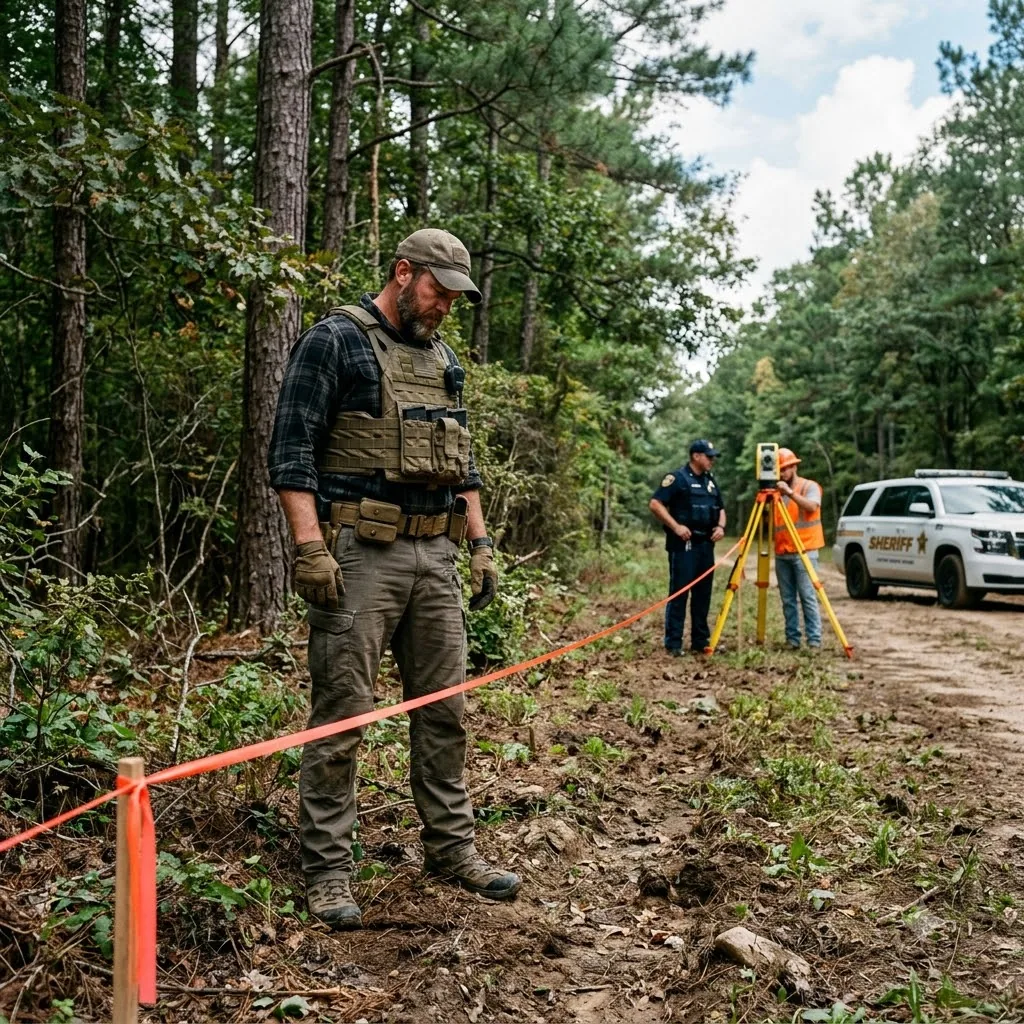
Sheriff Miller stepped out first, adjusting his heavy duty belt, looking far more exhausted than tactical. There were no federal windbreakers. There was no tactical team spilling out of an armored transport. There was only Miller and a lanky man in a high-visibility vest pulling wooden stakes and a long-handled sledgehammer from the bed of the white pickup. The tension in Vance’s shoulders shifted instantly from the terror of an impending gunfight to a cold, creeping dread of a completely different nature.
Miller walked toward the firing line, stepping carefully over the spent 5.56 brass scattered across the dry, packed earth. He held a thick manila folder clamped tightly under his left arm. The surveyor ignored Vance entirely, marching straight toward the eastern property line where Vance’s grandfathers had stacked raw fieldstone a century ago. The first heavy ring of the sledgehammer striking wood echoed across the clearing. The sound felt like a rusted nail being driven directly into Vance’s skull.
Vance slung the rifle across his chest and met the sheriff halfway.
“I told them you were just running standard drills on your own acreage,” Miller said, refusing to make eye contact. “They do not care, Vance.”
“Tell that man to stay off my side of the rock wall.” Vance kept his voice flat, watching the surveyor drive another wooden stake into the earth with mechanical, unfeeling precision. A neon pink ribbon fluttered from the top of the wood. It was a bright, unnatural color against the muted greens and browns of the ancestral timber, a glaring intrusion.
“They are on the line, precisely on the inch.” Miller finally looked up, his weathered face lined with the stress of a man caught between old local loyalties and new corporate money. “You have to case the weapons for the day. I have a court order.”
Vance looked past Miller’s shoulder. Through the break in the old-growth pines, the gleaming slate roof of a massive modern farmhouse caught the late afternoon sun. It was the first of thirty planned for the new development, a sprawling luxury enclave that had replaced the old Miller dairy farm in less than eight months. The new residents had brought their gated-community expectations to the foothills. They had brought noise ordinances and homeowner association mandates to a rugged mountain that had echoed with hunting rifles and chainsaws for four generations.
The sledgehammer rang out again. The surveyor moved ten yards further down the fieldstone wall and positioned another stake, marking the boundary with brutal finality.
“It is a civil noise injunction,” Miller explained, pulling the thick stack of papers from the folder and holding it out in the space between them. “Filed at nine this morning. Ex parte emergency order signed by Judge Harmon. You cannot discharge a firearm on this property until the hearing next month.”
Vance did not take the papers immediately. He looked at the thick stack of legal threats wrapped in expensive vellum binding. This was not a simple neighborly misunderstanding. This was a calculated siege. They were not using armored vehicles or flashbangs to take his land. They were using zoning laws, noise ordinances, and bottomless bank accounts to suffocate him off the mountain. The wealthy new arrivals had decided the local culture was an eyesore, a nuisance to be legislated out of existence so they could enjoy their pristine, silent mountain views.
He snatched the papers from Miller’s hand. The legal jargon was dense, filled with citations of county codes and public nuisance statutes that had never once been enforced in the history of the valley. He flipped past the first two pages of cease-and-desist demands. The surveyor pounded a third stake into the ground, a rhythmic, violent drumbeat marking the slow, administrative death of Vance’s independence.
Vance scanned the complainant section. He expected to see a generic homeowner association name or perhaps a shell corporation designed to hide the wealthy buyers. Instead, his eyes locked onto the signature of the legal counsel representing the subdivision. The ink was fresh, the signature sharp and aggressive, leaping off the page.
Vance stopped breathing. He recognized the name printed cleanly beneath the sweeping signature. It was the exact same corporate lobbyist who had systematically bankrupted his uncle three counties over just a few years prior.
He looked up from the page, gripping the injunction tight enough to crease the thick paper, and took a hard, deliberate step toward the surveyor.
The sharp crack of the third shot had barely bounced off the granite ridgeline when the sudden crunch of heavy tires on gravel killed the drill dead. Vance lowered his rifle, the brass casing still smoking in the dirt by his boot. He kept the muzzle angled safely down, but his thumb hovered near the selector switch as he scanned the dense tree line. A sheriff’s cruiser broke through the shadow of the pines, its lightbar dark but its pace aggressive, with a white county surveyor truck trailing mere inches from its rear bumper.
For three agonizing seconds, the heavy silence of the valley pressed in on him, bringing a sharp, metallic taste of adrenaline to his mouth. His mind immediately went to a federal raid. He calculated the distance to the tree line, feeling the rigid weight of the ceramic plates in his carrier and the sudden spike of his own pulse. They had rolled in without sirens, the classic hallmark of an operation meant to catch a man off guard before he could barricade. He braced his feet, expecting the worst.
Vance stood perfectly still, letting the dust settle around the black-and-white cruiser.
Sheriff Miller stepped out first, adjusting his heavy duty belt, looking far more exhausted than tactical. There were no federal windbreakers. There was no tactical team spilling out of an armored transport. There was only Miller and a lanky man in a high-visibility vest pulling wooden stakes and a long-handled sledgehammer from the bed of the white pickup. The tension in Vance’s shoulders shifted instantly from the terror of an impending gunfight to a cold, creeping dread of a completely different nature.
Miller walked toward the firing line, stepping carefully over the spent 5.56 brass scattered across the dry, packed earth. He held a thick manila folder clamped tightly under his left arm. The surveyor ignored Vance entirely, marching straight toward the eastern property line where Vance’s grandfathers had stacked raw fieldstone a century ago. The first heavy ring of the sledgehammer striking wood echoed across the clearing. The sound felt like a rusted nail being driven directly into Vance’s skull.
Vance slung the rifle across his chest and met the sheriff halfway.
“I told them you were just running standard drills on your own acreage,” Miller said, refusing to make eye contact. “They do not care, Vance.”
“Tell that man to stay off my side of the rock wall.” Vance kept his voice flat, watching the surveyor drive another wooden stake into the earth with mechanical, unfeeling precision. A neon pink ribbon fluttered from the top of the wood. It was a bright, unnatural color against the muted greens and browns of the ancestral timber, a glaring intrusion.
“They are on the line, precisely on the inch.” Miller finally looked up, his weathered face lined with the stress of a man caught between old local loyalties and new corporate money. “You have to case the weapons for the day. I have a court order.”
Vance looked past Miller’s shoulder. Through the break in the old-growth pines, the gleaming slate roof of a massive modern farmhouse caught the late afternoon sun. It was the first of thirty planned for the new development, a sprawling luxury enclave that had replaced the old Miller dairy farm in less than eight months. The new residents had brought their gated-community expectations to the foothills. They had brought noise ordinances and homeowner association mandates to a rugged mountain that had echoed with hunting rifles and chainsaws for four generations.
The sledgehammer rang out again. The surveyor moved ten yards further down the fieldstone wall and positioned another stake, marking the boundary with brutal finality.
“It is a civil noise injunction,” Miller explained, pulling the thick stack of papers from the folder and holding it out in the space between them. “Filed at nine this morning. Ex parte emergency order signed by Judge Harmon. You cannot discharge a firearm on this property until the hearing next month.”
Vance did not take the papers immediately. He looked at the thick stack of legal threats wrapped in expensive vellum binding. This was not a simple neighborly misunderstanding. This was a calculated siege. They were not using armored vehicles or flashbangs to take his land. They were using zoning laws, noise ordinances, and bottomless bank accounts to suffocate him off the mountain. The wealthy new arrivals had decided the local culture was an eyesore, a nuisance to be legislated out of existence so they could enjoy their pristine, silent mountain views.
He snatched the papers from Miller’s hand. The legal jargon was dense, filled with citations of county codes and public nuisance statutes that had never once been enforced in the history of the valley. He flipped past the first two pages of cease-and-desist demands. The surveyor pounded a third stake into the ground, a rhythmic, violent drumbeat marking the slow, administrative death of Vance’s independence.
Vance scanned the complainant section. He expected to see a generic homeowner association name or perhaps a shell corporation designed to hide the wealthy buyers. Instead, his eyes locked onto the signature of the legal counsel representing the subdivision. The ink was fresh, the signature sharp and aggressive, leaping off the page.
Vance stopped breathing. He recognized the name printed cleanly beneath the sweeping signature. It was the exact same corporate lobbyist who had systematically bankrupted his uncle three counties over just a few years prior.
He looked up from the page, gripping the injunction tight enough to crease the thick paper, and took a hard, deliberate step toward the surveyor.