Story code: ST-000968
Part 4: The Rust Line
The harsh glow of the laptop screen cast long, deep shadows across Vance’s kitchen table. It was 3:00 a.m. The county assessor’s portal had just updated its midnight batch-processing, and the numbers glaring back at him confirmed his total defeat.
Elaine hadn’t just filed a noise injunction. She had executed a financial guillotine.
By successfully citing his unpermitted shooting berm as an active public hazard, the HOA’s legal petition had triggered an automatic, immediate suspension of his family’s century-old agricultural exemption. Without a hearing, his acreage was now temporarily reclassified under the newly inflated residential valuation of the luxury subdivision next door. His annual property tax, normally a manageable eight hundred dollars, had instantly skyrocketed to thirty-six thousand. It was an impending, unaffordable tax hike due in full in less than ninety days. The moment he missed the payment, the county would auction the deed to the highest bidder.
Vance sat back in his chair, rubbing his calloused hands over his face. He felt the invisible, crushing weight of institutional money suffocating his roots. Elaine wasn’t going to shoot it out with him. She didn’t need to. She was going to let the county tax collector bleed him out while she sat safely behind her imported river stone and floor-to-ceiling glass. The sheer terror she carried from her past had forged her into an apex predator of the bureaucracy. He couldn’t fight her corporate bank account. He couldn’t fight her weaponized zoning board.
But he could still fight on the dirt.
He picked up his phone. He opened the group text thread he used to coordinate weekend range days with his old squadmates and the local mechanics who came up to his property to run drills. Elaine had called them a rogue militia. For the first time, Vance decided to lean entirely into the title. If she wanted to treat him like an entrenched insurgency, he would give her the defensive perimeter to match.
*I need everything we have,* Vance typed, his thumbs moving with cold, deliberate precision. *Flatbeds, the welder, and every rusted Conex box sitting in Miller’s salvage yard. Be here by 0430.*
The replies started pinging back before he even set the phone down.
By 5:15 a.m., the mountain was no longer quiet. The deep, guttural roar of heavy diesel engines vibrated through the ancient pines. Vance stood in the damp morning chill of his lower pasture, watching as three heavy-duty flatbed trucks backed aggressively toward the edge of the old fieldstone wall.
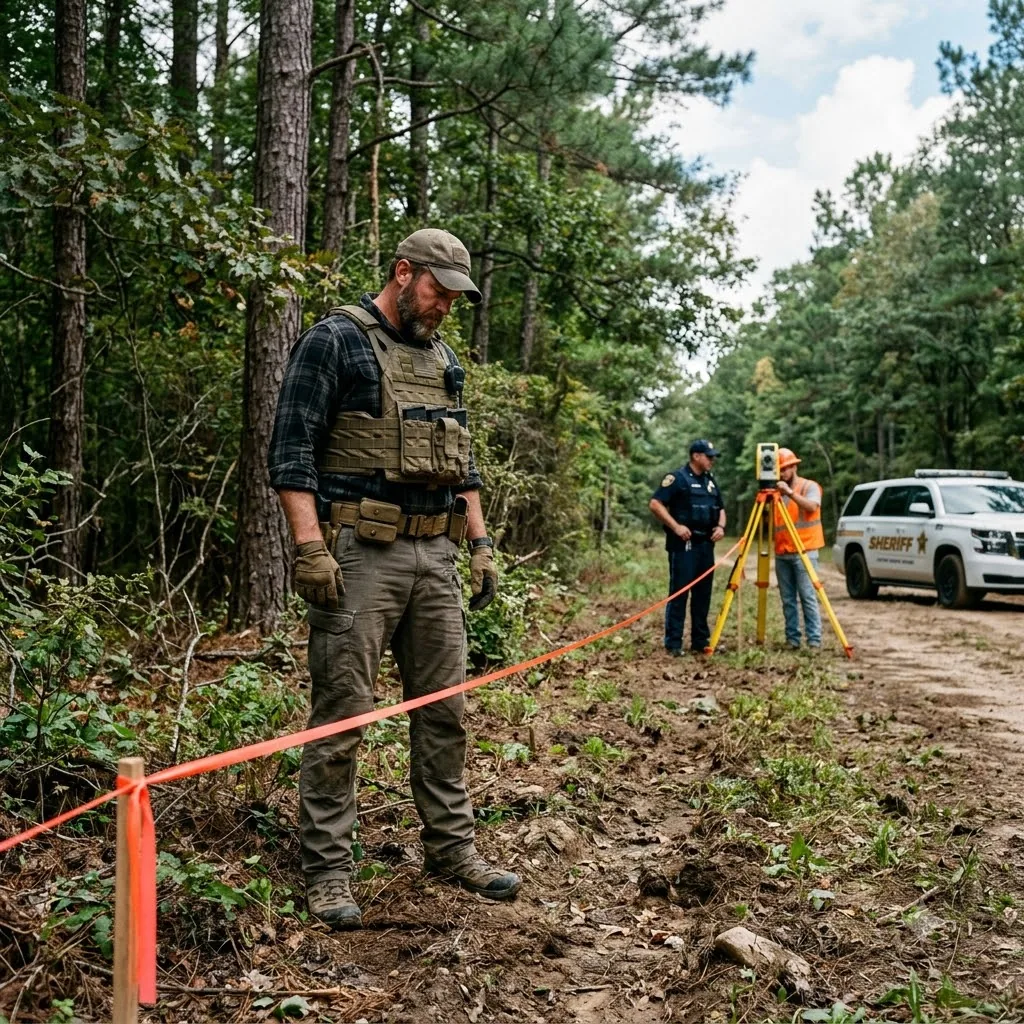
“Drop it right on the stakes!” Vance yelled over the idling engines, pointing to the neon pink ribbons the surveyor had driven into the earth the day before.
The first hydraulic winch groaned, and a forty-foot corrugated steel shipping container-streaked with severe rust and flaking orange paint-slid off the bed. It hit the dirt with a seismic thud that rattled Vance’s teeth. A second flatbed immediately moved into position, aligning another battered container end-to-end with the first.
His friends-the men Elaine was so terrified of-worked with wordless, militaristic efficiency. Sparks showered into the predawn darkness as acetylene torches flared, welding heavy steel plates across the gaps between the massive steel boxes. They weren’t just dropping containers; they were anchoring a permanent, highly visible perimeter wall.
Vance had checked the county code himself. While his agricultural exemption was suspended for tax valuation, the land was still deeded pasture. Shipping containers classified as temporary agricultural storage didn’t require a concrete foundation permit, and there was no height restriction on farm equipment storage. He was legally constructing a wall right on his boundary, perfectly blocking the twenty-foot setback the HOA needed for their pristine, expensive sound mitigation project.
At 5:50 a.m., the headlights of a commercial convoy swept through the trees. Elaine’s contracted excavators, trenchers, and cement mixers rolled to a halt at the edge of the subdivision’s freshly paved road.
Vance stepped out from behind his towering wall of rusted, brutalist steel.
A foreman in a pristine white hardhat climbed out of the lead pickup, clutching a clipboard. He stared up at the twelve-foot-high barricade of industrial scrap metal that now stretched for hundreds of yards across the mountain, completely cutting off the excavators from the staked setback.
Vance walked up to the property line, resting his hand against the freezing, rusted steel of his new fortress. The foreman looked from the massive containers to Vance, then to the half-dozen armed men standing silently behind the welding rigs, their breath pluming in the cold morning air.
“You can’t pour concrete through a steel box,” Vance said flatly. “Tell the HOA their mitigation setback is currently occupied by my agricultural equipment.”
The foreman didn’t argue. He slowly reached for his radio, his eyes wide, realizing the legal blueprint he’d been handed didn’t account for a mechanized physical barricade.
Vance turned his back on the convoy and looked down the long line of rusted steel. It was a massive eyesore. It was an ugly, permanent scar on the beautiful landscape his grandfather had maintained for decades. But it was his. The ruinous tax bill was still coming, and the legal battle would bleed him dry over the next three months. He was entirely boxed in by a multi-million-dollar machine that wanted him eradicated. He pulled his canvas jacket tight against the biting wind, leaning his shoulder against the cold metal wall, bracing for the bitter, grinding economic siege to come.