Story code: ST-000968
Part 2: The Compliance Setback
Miller’s heavy hand hit Vance’s chest before his boot could strike the ground a second time. The sheriff didn’t draw his weapon, but his stance was wide, locking Vance out from closing the final distance to the surveyor.
“Don’t do it, Vance,” Miller said, his voice dropping an octave, entirely abandoning the apologetic tone from a minute ago. “You lay a hand on him, you go in the back of my cruiser. You go in the cruiser, you miss the injunction hearing. You miss the hearing, they win by default.”
Vance stared over the sheriff’s shoulder, his breathing shallow and tight. The surveyor hadn’t even flinched. The man in the high-visibility vest simply pulled another wooden stake from his bundle, lined it up, and brought the sledgehammer down. *Crack.*
“Look at the stakes, Miller,” Vance said, his voice a low, vibrating growl. He pointed a rigid finger at the boundary line. The old fieldstone wall, stacked by his great-grandfather from river rock and sweat, sat to the left of the surveyor. The man was driving the stakes on the *right* side of the rocks. “He’s not on the property line. He’s twenty feet on my side of it.”
“It’s a compliance setback,” the surveyor said. He didn’t bother to look up, just swung the heavy hammer again. *Crack.* “County Code 402.B. Noise abatement and visual buffering.”
Vance’s jaw clenched so hard his teeth ground together. He shoved the crumpled injunction at Miller’s chest, though the sheriff didn’t take it. “They cannot enforce a setback on existing agricultural property. I’m grandfathered in. This land has been in my family since before the county even had a zoning board. It’s deeded pasture.”
“You *were* grandfathered in,” the surveyor corrected, finally pausing to lean on the long handle of his sledgehammer. He adjusted his white hard hat, looking at Vance with the dull, bureaucratic boredom of a man who executed the destruction of desperate people every day. “Until you discharged a high-capacity firearm within a thousand yards of a newly designated residential zone. That triggers an automatic public safety review. The injunction temporarily strips your agricultural exemption until the zoning board rules on it.”
The surveyor reached into his vest pocket and pulled out a smaller, folded piece of neon-yellow paper, holding it out between two fingers.
Vance didn’t move. He felt the cold, familiar shadow of the trap closing around him. It was the exact same legal playbook the lobbyist had used on his uncle in Oakhaven. They didn’t try to buy you out or fight you straight up. They found a microscopic infraction, blew it up into a public hazard, and buried you in mandatory compliance costs until the bank took the deed. His uncle had spent his entire retirement savings fighting them, only to lose his farm to a ‘beautification assessment’ lien. The lobbyist hadn’t just taken the land; he had taken the old man’s dignity, leaving him to die in a rented trailer two years later.
“What is that?” Vance asked, staring at the bright yellow paper.
“Notice of intent to mitigate,” the surveyor said. When Vance refused to take it, the man simply let it drop onto the dry earth, where it fluttered to a rest right next to a smoking 5.56 brass casing. “The HOA is citing you for noise pollution and potential soil contamination. Because you have an active shooting berm on an unpermitted slope, they are legally allowed to construct a twelve-foot sound mitigation and retaining wall to protect their property values.”
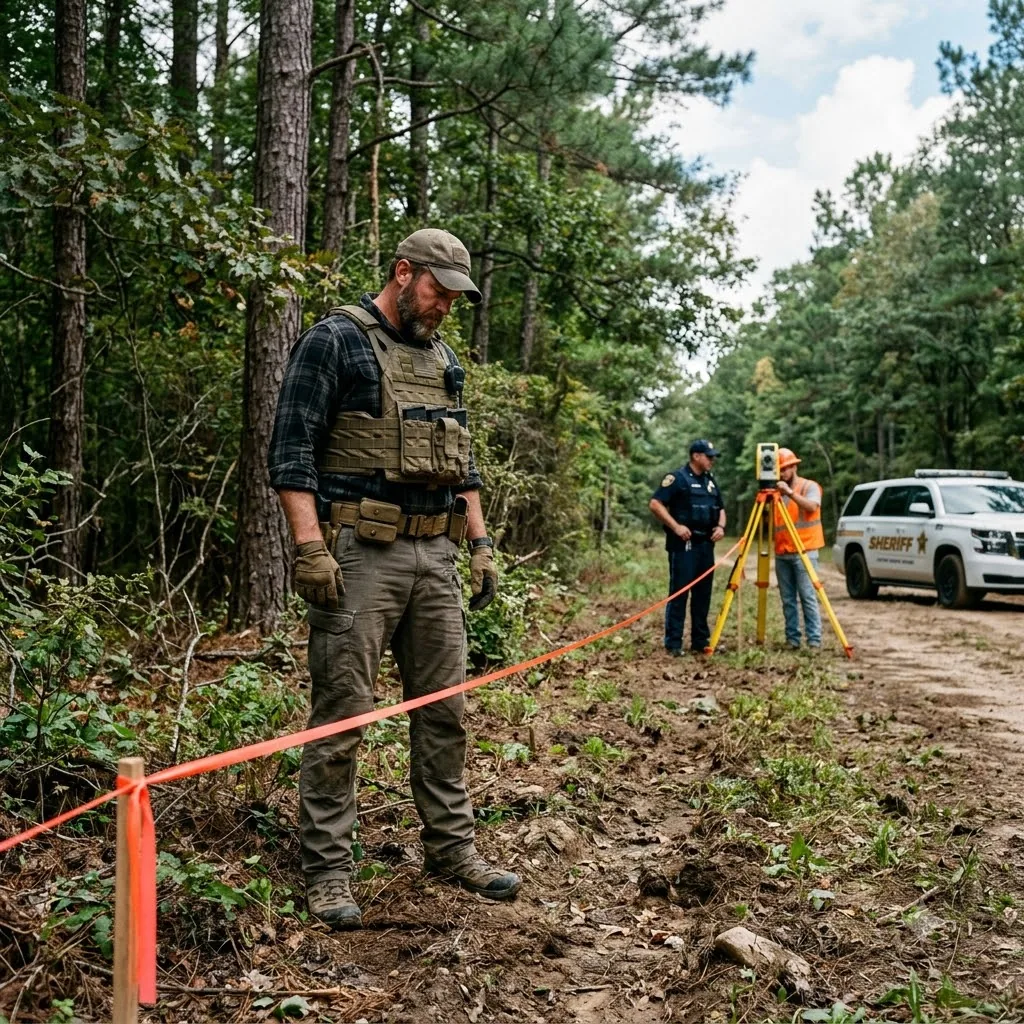
Vance looked at the neon pink ribbons fluttering in the late afternoon breeze. They formed a neat, aggressive line slicing right through his grandmother’s old apple orchard, cutting off the natural spring that fed his lower grazing pasture.
“On my land,” Vance said, the reality of the theft settling like lead in his chest.
“On the setback,” the surveyor replied, turning back to his truck to grab another bundle of stakes. “The HOA is generously covering the construction costs upfront. But per the county nuisance ordinance, they will attach a lien to your deed for the total amount of the mitigation.”
Vance did the math instantly. A twelve-foot reinforced concrete wall running a half-mile along the rugged property line. The engineering, the heavy materials, the union labor. It would easily crack two hundred thousand dollars. A crushing debt he could never pay, attached directly to the land itself. The moment he defaulted, the HOA would foreclose on the lien and seize the acreage for pennies.
“Miller,” Vance said, turning his glare to the sheriff. “You are standing on my property, watching a man steal it with a piece of paper, and you are telling me I have to just take it.”
Miller finally looked down at his boots, the exhaustion returning to his lined face. “I’m telling you I have to enforce the judge’s order, Vance. If you pull up those stakes, it’s a destruction of property charge. If you fire a gun, it’s reckless endangerment. If you block the construction crew, it’s interfering with a court-ordered mitigation. You will go to jail, and they will take the land tomorrow.”
“When is the crew coming?” Vance demanded, his heart hammering against the rigid ceramic plates in his tactical carrier.
The surveyor slammed the tailgate of his truck shut. “Tomorrow morning. Six a.m. sharp. The court granted an emergency expedition to prevent further psychological distress to the residents.”
Vance looked past the surveyor, up through the breaks in the ancient pines. On the ridge, where the massive modern farmhouse sat, he saw a glint of metal reflecting the sun. Two men in crisp golf shirts were standing on a pristine composite deck, looking down at his property through a pair of high-end hunting binoculars. They were watching the show. They were watching him realize he was boxed in.
Vance’s thumb brushed the safety selector on his rifle, a purely involuntary muscle memory born of combat deployments. He forced his hand away, gripping his chest rig instead. Violence was exactly what the lobbyist wanted. A shootout would just fast-track the seizure under civil asset forfeiture.
“Tomorrow at six,” Vance repeated, his voice eerily calm now.
“Don’t do anything stupid, Vance,” Miller warned, tipping his hat down to shield his eyes from the glare. “I mean it. I cannot protect you if you cross the line.”
“You’re not protecting me now, Sheriff.”
Miller grimaced, turned on his heel, and walked back to his cruiser without another word. The surveyor climbed into his white pickup, the diesel engine rumbling to life. Vance stood alone in the settling dust, watching the two vehicles roll back toward the freshly paved roads of the luxury subdivision.
He bent down and picked up the yellow paper. The fine print detailed the earth-moving equipment scheduled for arrival. Excavators. Trenchers. They were going to rip up the soil that held his grandfather’s sweat and blood, and they were going to make him pay for the privilege.
Vance looked back at the pink ribbons slicing through the orchard. He had less than fourteen hours to find a way to stop a fleet of bulldozers legally backed by the county, funded by millions of dollars, and protected by the sheriff. He folded the yellow paper, sliding it behind his armor plates, and turned toward his cabin. He needed to find the flaw in their siege before dawn, or the mountain was gone.