Story code: ST-001167
Part 1: The Queue
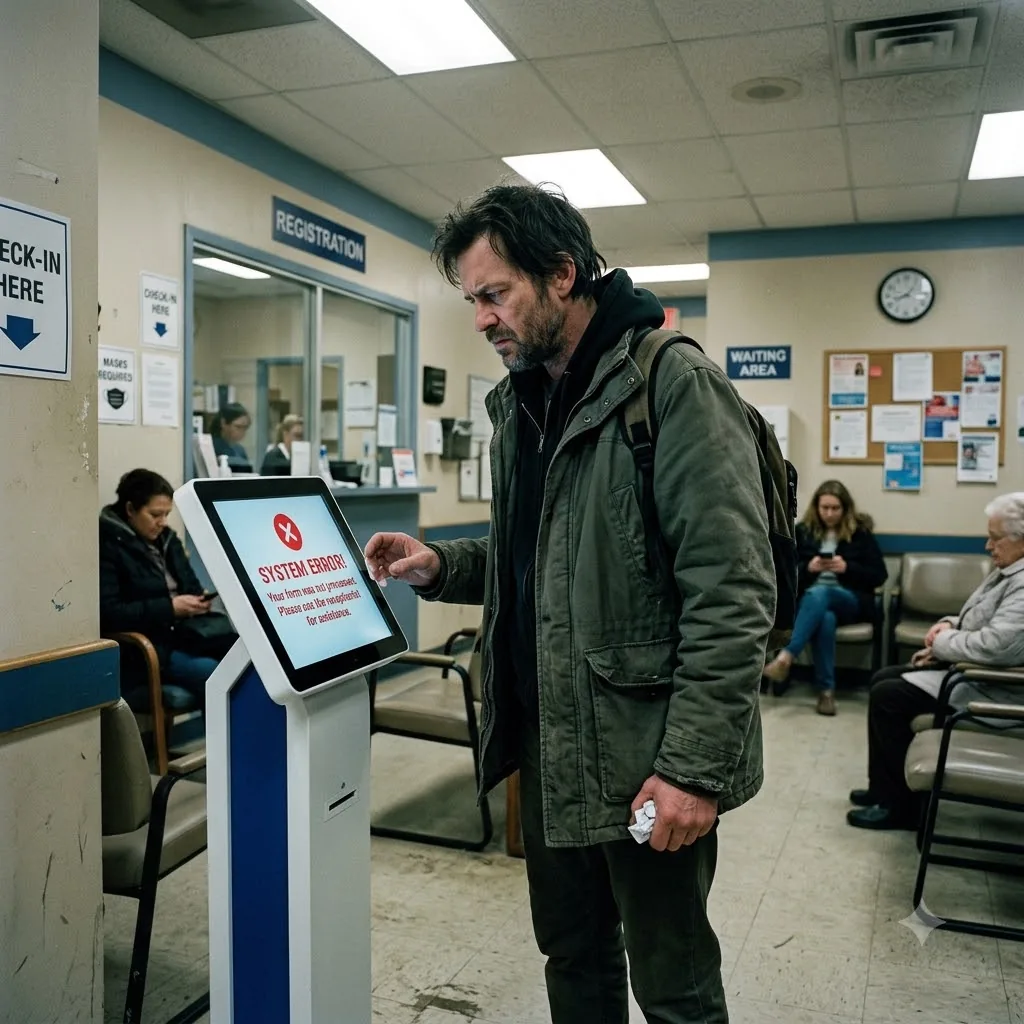
The red text on the smudged touchscreen flared against the fluorescent glare of the strip-mall clinic. ERROR: VETERAN ID NOT RECOGNIZED. Elias wiped the barcode of his plastic card on his jeans and shoved it under the red laser scanner a fourth time. The machine beeped a flat, dead tone. The same red text crawled across the screen, blocking him from the system.
His thumb pressed so hard against the edge of the card it turned white. The eviction notice folded in his back pocket felt like a burning coal against his skin. Friday was exactly three days away. If he did not get the housing voucher appeal physically stamped and entered into the system by five o’clock today, the sheriff would be at his door Friday morning tearing the locks out.
Elias stepped back from the kiosk. The waiting room was entirely empty. Rows of connected plastic chairs, bolted to the scuffed linoleum, sat vacant under the heavy hum of failing light fixtures. The air smelled of stale coffee and industrial lemon cleaner. He looked from the dead screen to the thick pane of bulletproof glass stretching across the far wall.
A woman sat behind the glass, bathed in the blue glow of two oversized monitors. She wore a heavy knit cardigan draped over her shoulders and clicked her mouse with a slow, rhythmic apathy.
Elias approached the window. His work boots squeaked on the recently waxed floor, the harsh sound echoing off the bare walls. He stopped at the metal counter. A small, perforated speaker grill dotted the center of the glass, with a shallow depression carved into the steel beneath it for passing documents back and forth.
He tapped the glass with his knuckles.
The woman did not look up. She raised one hand from her mouse and pointed a single acrylic fingernail toward the corner of the room. Toward the kiosk.
Elias leaned into the speaker grill. His voice came out raspy, completely stripped of its usual volume. He cleared his throat and tried again. He stated that the machine was broken. He stated that it refused to read his card, that it was kicking back an error code.
The woman sighed, a crackling sound of static coming through the cheap intercom. She finally turned her head. Her eyes were blank, scanning him from the frayed collar of his faded utility jacket down to the tight, rigid line of his jaw. She pressed a silver button on her side of the desk.
“I cannot process an intake without a queue ticket,” she said. Her voice was flat, distorted and metallic through the speaker.
Elias pulled his ID card and the folded eviction notice from his pockets. He smoothed the crumpled paper out flat on the steel counter. He pushed both items into the shallow depression beneath the glass, sliding them until they touched the rubber flap on her side.
“My appeal is due today,” Elias said. “The machine says I am not in the system. I have been in the system for six years. I need this stamped before Friday.”
The clerk used the plastic tip of her pen to slide the documents back through the slot. She deliberately avoided touching them with her hands.
“You need a queue ticket,” she repeated. “Take your ID to the kiosk. Select check-in. Bring me the printed number.”
The pulse in Elias’s neck began to throb. A high-pitched whine started deep in his left ear, a familiar warning signal that always made his chest tighten. He looked back at the kiosk. Its screen had reset to a sterile blue logo, waiting patiently for the next victim.
He turned back to the glass. He explained the error code again, forcing his voice to remain level. He pointed out the completely empty room, the absolute lack of any other human being waiting for assistance. He pushed the papers back through the slot.
“Just look at the ID,” Elias said. “Type the number in manually. Please.”
The clerk slid the papers back out with the pen.
“Sir, if you do not have a ticket, you do not exist in my queue. If you do not exist in my queue, I cannot open your file.”
The ringing in his ears grew louder, drowning out the dull hum of the fluorescent lights. The walls of the clinic seemed to contract, the sterile white paint pressing inward against his peripheral vision. His breathing grew shallow and rapid. He felt the familiar rush of adrenaline, the cold sweat prickling across his shoulder blades. The threat response was waking up, entirely out of place in a quiet administrative office but impossible to shut down once it started. The sterile bureaucracy was erasing him, turning him into a ghost before he was even out on the street.
He placed both of his hands flat against the bulletproof glass. The cold surface sapped the heat from his palms. He leaned in until his nose was an inch from the thick pane, staring directly through the smudges on the glass.
The clerk stopped clicking her mouse. She sat up entirely straight. Her eyes widened slightly, shifting from his rigid face to his hands splayed on the glass.
Elias told her he was not leaving the window until she stamped the paper. He spoke in a low, measured tone, fighting the violent tremor building in his vocal cords. He kept his hands pressed against the glass, locking his eyes onto hers, letting the physical mass of his body convey what his words could not.
The clerk slowly rolled her chair backward, away from the counter. She maintained eye contact as she reached her right hand under the edge of her desk, her fingers hovering out of sight, and held it there.
The red text on the smudged touchscreen flared against the fluorescent glare of the strip-mall clinic. ERROR: VETERAN ID NOT RECOGNIZED. Elias wiped the barcode of his plastic card on his jeans and shoved it under the red laser scanner a fourth time. The machine beeped a flat, dead tone. The same red text crawled across the screen, blocking him from the system.
His thumb pressed so hard against the edge of the card it turned white. The eviction notice folded in his back pocket felt like a burning coal against his skin. Friday was exactly three days away. If he did not get the housing voucher appeal physically stamped and entered into the system by five o’clock today, the sheriff would be at his door Friday morning tearing the locks out.
Elias stepped back from the kiosk. The waiting room was entirely empty. Rows of connected plastic chairs, bolted to the scuffed linoleum, sat vacant under the heavy hum of failing light fixtures. The air smelled of stale coffee and industrial lemon cleaner. He looked from the dead screen to the thick pane of bulletproof glass stretching across the far wall.
A woman sat behind the glass, bathed in the blue glow of two oversized monitors. She wore a heavy knit cardigan draped over her shoulders and clicked her mouse with a slow, rhythmic apathy.
Elias approached the window. His work boots squeaked on the recently waxed floor, the harsh sound echoing off the bare walls. He stopped at the metal counter. A small, perforated speaker grill dotted the center of the glass, with a shallow depression carved into the steel beneath it for passing documents back and forth.
He tapped the glass with his knuckles.
The woman did not look up. She raised one hand from her mouse and pointed a single acrylic fingernail toward the corner of the room. Toward the kiosk.
Elias leaned into the speaker grill. His voice came out raspy, completely stripped of its usual volume. He cleared his throat and tried again. He stated that the machine was broken. He stated that it refused to read his card, that it was kicking back an error code.
The woman sighed, a crackling sound of static coming through the cheap intercom. She finally turned her head. Her eyes were blank, scanning him from the frayed collar of his faded utility jacket down to the tight, rigid line of his jaw. She pressed a silver button on her side of the desk.
“I cannot process an intake without a queue ticket,” she said. Her voice was flat, distorted and metallic through the speaker.
Elias pulled his ID card and the folded eviction notice from his pockets. He smoothed the crumpled paper out flat on the steel counter. He pushed both items into the shallow depression beneath the glass, sliding them until they touched the rubber flap on her side.
“My appeal is due today,” Elias said. “The machine says I am not in the system. I have been in the system for six years. I need this stamped before Friday.”
The clerk used the plastic tip of her pen to slide the documents back through the slot. She deliberately avoided touching them with her hands.
“You need a queue ticket,” she repeated. “Take your ID to the kiosk. Select check-in. Bring me the printed number.”
The pulse in Elias’s neck began to throb. A high-pitched whine started deep in his left ear, a familiar warning signal that always made his chest tighten. He looked back at the kiosk. Its screen had reset to a sterile blue logo, waiting patiently for the next victim.
He turned back to the glass. He explained the error code again, forcing his voice to remain level. He pointed out the completely empty room, the absolute lack of any other human being waiting for assistance. He pushed the papers back through the slot.
“Just look at the ID,” Elias said. “Type the number in manually. Please.”
The clerk slid the papers back out with the pen.
“Sir, if you do not have a ticket, you do not exist in my queue. If you do not exist in my queue, I cannot open your file.”
The ringing in his ears grew louder, drowning out the dull hum of the fluorescent lights. The walls of the clinic seemed to contract, the sterile white paint pressing inward against his peripheral vision. His breathing grew shallow and rapid. He felt the familiar rush of adrenaline, the cold sweat prickling across his shoulder blades. The threat response was waking up, entirely out of place in a quiet administrative office but impossible to shut down once it started. The sterile bureaucracy was erasing him, turning him into a ghost before he was even out on the street.
He placed both of his hands flat against the bulletproof glass. The cold surface sapped the heat from his palms. He leaned in until his nose was an inch from the thick pane, staring directly through the smudges on the glass.
The clerk stopped clicking her mouse. She sat up entirely straight. Her eyes widened slightly, shifting from his rigid face to his hands splayed on the glass.
Elias told her he was not leaving the window until she stamped the paper. He spoke in a low, measured tone, fighting the violent tremor building in his vocal cords. He kept his hands pressed against the glass, locking his eyes onto hers, letting the physical mass of his body convey what his words could not.
The clerk slowly rolled her chair backward, away from the counter. She maintained eye contact as she reached her right hand under the edge of her desk, her fingers hovering out of sight, and held it there.