Story code: ST-001245
Part 1: Time Off Task
The cracked liquid crystal display on the five-dollar stopwatch ticked over to four minutes and twelve seconds. Elias sat hunched on the toilet in a windowless, industrial bathroom stall, pressing one hand hard against his lower abdomen to ride out a jagged wave of pain. His blue employee tracking badge was currently three miles away, zip-tied to the rear sensor bracket of an automated fulfillment cart, quietly feeding fake location data to the warehouse servers to keep his Time Off Task metrics in the green.
He forced out a long, ragged exhale through his teeth and stared at the gray metal door of the stall. The medication usually took twenty minutes to dull the internal tearing sensation, but he never had twenty minutes. The algorithm allowed exactly nine minutes of unassigned idle time per ten-hour shift. If he crossed that threshold, a red bar appeared on his supervisor’s tablet. Three red bars in a single quarter meant immediate termination, which meant losing the very health insurance he needed to keep his failing digestive tract from collapsing completely.
Four minutes and forty seconds.
Elias stood up, wincing as the sudden movement pulled at his inflamed tissue. He flushed the unused toilet, washed his hands in freezing water, and pushed through the heavy swinging door into the deafening roar of the fulfillment center.
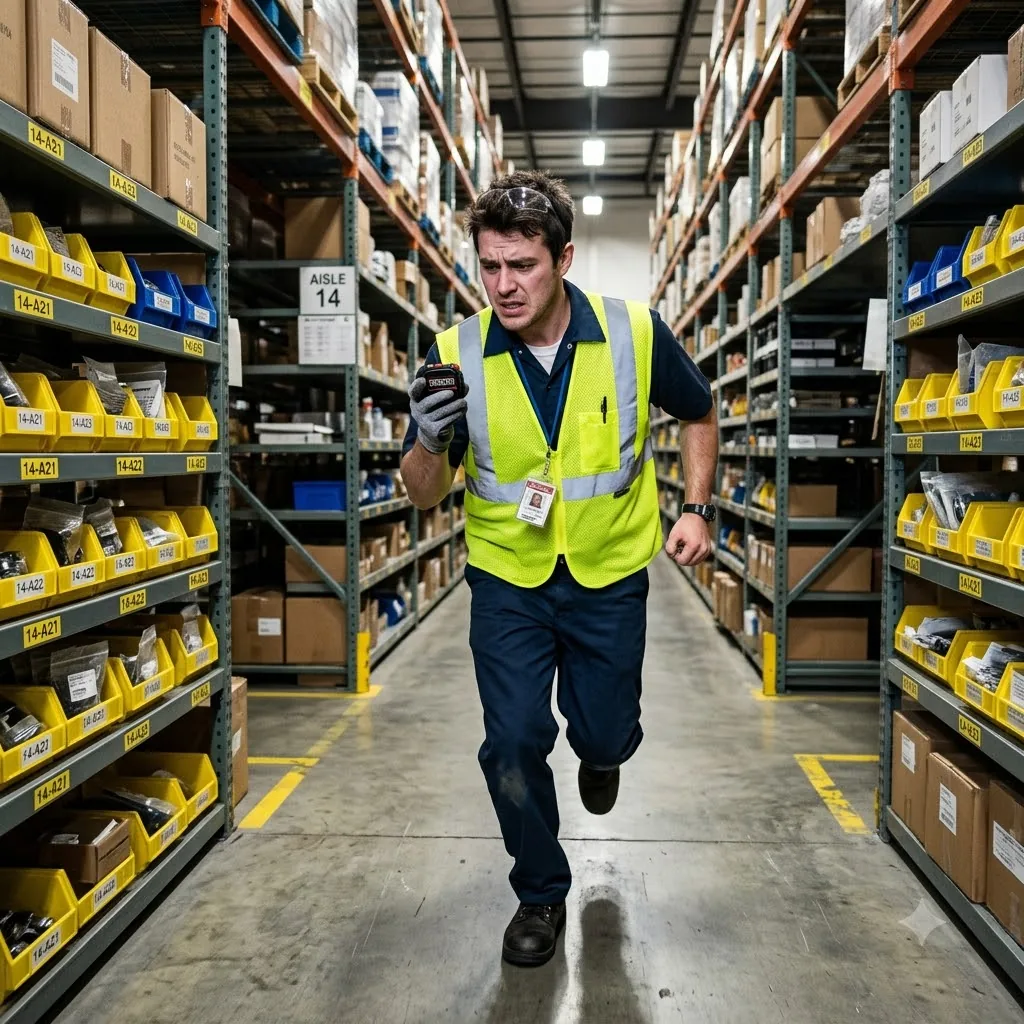
Sector Seven stretched out like a concrete canyon. Fluorescent lights buzzed fifty feet above, casting a harsh, shadowless glare over rows of metal shelving that vanished into the distance. The air smelled of cardboard dust and hot machine oil. Elias checked the digital map on his company-issued handheld terminal. Cart 7-Delta, his robotic proxy, was completing a circuit through the heavy-goods section in Sector Four.
He had precisely three minutes to cross the warehouse and intercept it.
Running was out of the question. The ceiling-mounted optical sensors would detect a high-velocity human anomaly and automatically issue a safety violation. He adopted a stiff, frantic speed-walk, keeping his arms pinned to his sides. He merged into the designated pedestrian walkway, staying strictly between the yellow painted lines. Forklifts hummed past him, their tires squealing against the polished floor. Other pickers passed in the opposite direction, their faces hollow and exhausted, none of them making eye contact.
Elias kept his eyes glued to the map on his terminal. The blue dot representing Cart 7-Delta moved at a steady, relentless clip. It was carrying a load of industrial pet food and heading directly for the primary packing scanners. That was the deadline. If the cart crossed the scanner array with his badge still attached, the central system would calculate that Elias had just transported two hundred pounds of dog food at a sustained speed of eight miles per hour. The algorithm would flag the physical impossibility immediately. They would review the security footage, find the badge zip-tied to the robot, and escort him off the property before his shift ended.
A sharp spasm ripped through his stomach. He stumbled, catching his balance against a structural steel column. The cold metal grounded him. He pressed his fist into his gut, took a shallow breath, and pushed off the column.
Two minutes left.
He picked up his pace, taking wide, sweeping strides. He navigated the labyrinth of automated conveyor belts, ducking under the safety bars and emerging into Sector Four. The shelving units here were taller, packed with bulk items wrapped in thick plastic. The lighting was dimmer, the aisles narrower.
He tracked the blue dot. Cart 7-Delta was turning down Aisle 401. He was currently at the end of Aisle 398.
He calculated the interception geometry in his head. The carts operated on a rigid, predictable track. It would travel down 401, turn left on the main crossway, and head up Aisle 404. All Elias had to do was stand at the entrance of 404, pretend to drop his box cutter, and snatch the lanyard off the cart’s rear bumper as it rolled past. He had practiced the maneuver three times last week. It required split-second timing, but it was entirely possible.
He reached the end of Aisle 400. The mechanical whir of electric motors echoed from the next row over. That was his cart. He could hear the familiar rhythmic clicking of its slightly misaligned front left wheel.
Elias hurried to the intersection and turned sharply toward Aisle 404. He unclipped his safety cutter, ready to toss it onto the concrete.
He stepped into the mouth of the aisle and froze.
Cart 7-Delta was not moving. It sat dead in the center of the lane, its amber hazard lights pulsing in a silent, methodical warning pattern. The rhythmic clicking of the wheel was gone, replaced by the heavy, suffocating silence of an interrupted automated process.
Someone had triggered the emergency physical stop button on the cart’s control panel.
A figure stood in the shadows cast by a towering pallet of bottled water. Elias felt the blood drain from his face as the person stepped out into the harsh fluorescent light.
It was Sarah, the shift manager. She held her electronic clipboard tucked under her left arm. In her right hand, dangling by its black breakaway lanyard, was his blue employee tracking badge.
She looked down at the plastic card, then slowly raised her eyes to meet his.
The cracked liquid crystal display on the five-dollar stopwatch ticked over to four minutes and twelve seconds. Elias sat hunched on the toilet in a windowless, industrial bathroom stall, pressing one hand hard against his lower abdomen to ride out a jagged wave of pain. His blue employee tracking badge was currently three miles away, zip-tied to the rear sensor bracket of an automated fulfillment cart, quietly feeding fake location data to the warehouse servers to keep his Time Off Task metrics in the green.
He forced out a long, ragged exhale through his teeth and stared at the gray metal door of the stall. The medication usually took twenty minutes to dull the internal tearing sensation, but he never had twenty minutes. The algorithm allowed exactly nine minutes of unassigned idle time per ten-hour shift. If he crossed that threshold, a red bar appeared on his supervisor’s tablet. Three red bars in a single quarter meant immediate termination, which meant losing the very health insurance he needed to keep his failing digestive tract from collapsing completely.
Four minutes and forty seconds.
Elias stood up, wincing as the sudden movement pulled at his inflamed tissue. He flushed the unused toilet, washed his hands in freezing water, and pushed through the heavy swinging door into the deafening roar of the fulfillment center.
Sector Seven stretched out like a concrete canyon. Fluorescent lights buzzed fifty feet above, casting a harsh, shadowless glare over rows of metal shelving that vanished into the distance. The air smelled of cardboard dust and hot machine oil. Elias checked the digital map on his company-issued handheld terminal. Cart 7-Delta, his robotic proxy, was completing a circuit through the heavy-goods section in Sector Four.
He had precisely three minutes to cross the warehouse and intercept it.
Running was out of the question. The ceiling-mounted optical sensors would detect a high-velocity human anomaly and automatically issue a safety violation. He adopted a stiff, frantic speed-walk, keeping his arms pinned to his sides. He merged into the designated pedestrian walkway, staying strictly between the yellow painted lines. Forklifts hummed past him, their tires squealing against the polished floor. Other pickers passed in the opposite direction, their faces hollow and exhausted, none of them making eye contact.
Elias kept his eyes glued to the map on his terminal. The blue dot representing Cart 7-Delta moved at a steady, relentless clip. It was carrying a load of industrial pet food and heading directly for the primary packing scanners. That was the deadline. If the cart crossed the scanner array with his badge still attached, the central system would calculate that Elias had just transported two hundred pounds of dog food at a sustained speed of eight miles per hour. The algorithm would flag the physical impossibility immediately. They would review the security footage, find the badge zip-tied to the robot, and escort him off the property before his shift ended.
A sharp spasm ripped through his stomach. He stumbled, catching his balance against a structural steel column. The cold metal grounded him. He pressed his fist into his gut, took a shallow breath, and pushed off the column.
Two minutes left.
He picked up his pace, taking wide, sweeping strides. He navigated the labyrinth of automated conveyor belts, ducking under the safety bars and emerging into Sector Four. The shelving units here were taller, packed with bulk items wrapped in thick plastic. The lighting was dimmer, the aisles narrower.
He tracked the blue dot. Cart 7-Delta was turning down Aisle 401. He was currently at the end of Aisle 398.
He calculated the interception geometry in his head. The carts operated on a rigid, predictable track. It would travel down 401, turn left on the main crossway, and head up Aisle 404. All Elias had to do was stand at the entrance of 404, pretend to drop his box cutter, and snatch the lanyard off the cart’s rear bumper as it rolled past. He had practiced the maneuver three times last week. It required split-second timing, but it was entirely possible.
He reached the end of Aisle 400. The mechanical whir of electric motors echoed from the next row over. That was his cart. He could hear the familiar rhythmic clicking of its slightly misaligned front left wheel.
Elias hurried to the intersection and turned sharply toward Aisle 404. He unclipped his safety cutter, ready to toss it onto the concrete.
He stepped into the mouth of the aisle and froze.
Cart 7-Delta was not moving. It sat dead in the center of the lane, its amber hazard lights pulsing in a silent, methodical warning pattern. The rhythmic clicking of the wheel was gone, replaced by the heavy, suffocating silence of an interrupted automated process.
Someone had triggered the emergency physical stop button on the cart’s control panel.
A figure stood in the shadows cast by a towering pallet of bottled water. Elias felt the blood drain from his face as the person stepped out into the harsh fluorescent light.
It was Sarah, the shift manager. She held her electronic clipboard tucked under her left arm. In her right hand, dangling by its black breakaway lanyard, was his blue employee tracking badge.
She looked down at the plastic card, then slowly raised her eyes to meet his.