Story code: ST-001248
Part 1: The Shadow in the Aisle
Squeak. Pause. Squeak. The heavy tread of rubber-soled work boots echoed through the thin metal pegboard on Marcus’s right, matching his pace exactly down the length of aisle four. He stopped his cart beside a bin of oxidized brass screws, and the footsteps in aisle three halted a fraction of a second later. The silence stretched, thick and expectant, broken only by the rattle of a loose ventilation fan somewhere in the corrugated steel ceiling.
The claustrophobia of the narrow aisle pressed in on Marcus. The shelves on either side were packed too high, leaning slightly inward under the weight of oversized inventory. He took a deliberate step forward. The boots stepped forward. He took two quick steps back. The boots mirrored the retreat flawlessly. It was a precise, intimidating dance meant to convey absolute control over the territory. Marcus had been shadowed in retail environments before, but the blatant hostility here was entirely stripped of the usual corporate subtlety.
Marcus shifted his weight, and a warped floorboard groaned under the scuffed linoleum. In the next aisle over, the unseen boots shifted in perfect, mirroring calibration. This was the third time Marcus had looped through the electrical department of the damp, dust-coated hardware store. He picked up a specialized NEMA 14-50 receptacle, turning the heavy industrial plastic over in his hands to check the amperage rating. The fluorescent lights overhead flickered with a persistent, low-frequency hum that did nothing to mask the sound of his shadow. Dust motes drifted lazily through the harsh white beams, settling onto boxes that looked like they had not been moved since the late nineties.
A voice cut through the gaps in the pegboard displays, loud and dripping with artificial cheer. “Just let me know if you need help finding anything, chief. We like to keep a real close eye on our inventory.”
The words were technically polite, but the cadence was a flat, aggressive warning. The voice carried a rough, unpolished edge, the kind earned from decades of shouting over heavy machinery. This hardware store was the last operational business on a dying commercial strip. The windows facing the street were barred, and the inventory was aggressively utilitarian. Marcus set the receptacle back into its cardboard display box. He moved ten feet further down the aisle, scanning the lower shelves for three-gauge copper wire. The boots followed instantly. Squeak. Squeak. Squeak. Stop. They were close enough now that Marcus could hear the faint jingle of a key ring clipped to a belt loop with every step, along with the sound of heavy denim rubbing together.
The air in the store smelled heavily of chemical fertilizer, old sawdust, and pervasive rust. It was a classic fixture of this declining manufacturing town, the kind of local establishment that had survived three economic downturns by slashing overhead, turning off half the lights, and trusting its regulars on a handshake. Marcus distinctly did not look like a regular. His tailored charcoal wool coat and polished leather oxfords were severely out of place among the display pallets of rock salt, discounted snow shovels, and stacked bags of concrete mix.
He pulled a small leather-bound notebook from his inner pocket to check the specifications for the main breaker panel he was outfitting. The movement of his hand slipping inside his coat was met with an immediate reaction from the other side of the pegboard. A heavy hand slapped flat against the metal backing of the shelves, rattling a row of hanging wire strippers.
“Lot of high-end merchandise in that section,” the voice boomed again, closer this time, speaking directly to the metal divide. “Stuff a guy might want to slip right into a nice, big coat pocket. Just pointing it out as a courtesy so nobody makes a mistake.”
Marcus ignored the taunt, tracing his finger down the row of high-voltage fuses. He needed six of the two-hundred-amp commercial cartridges for the grid work ahead. He found only four sitting loose in a cracked, dust-lined plastic bin. He gathered them into the crook of his left arm, the cold metal and ceramic surprisingly heavy against his sleeve. The moment he lifted the merchandise, the shadow in the next aisle began moving toward the front of the store. The boots struck the linoleum with deliberate, stomping force that seemed designed to corner him at the choke point ahead.
Marcus turned to head toward the main checkout counter to ask about their backroom stock. The aisle was incredibly narrow, hemmed in by towering shelves stacked haphazardly with thick extension cords, halogen floodlights, and heavy spools of braided wire. The air felt stale and hot the closer he got to the main intersection. He took five slow steps toward the brightly lit front register, listening to the boots match him, accelerating their pace to intercept him at the juncture.
The squeaking boots rounded the endcap with aggressive speed. A tall, broad-shouldered man in a faded flannel shirt and a grease-stained canvas apron stepped directly into the center of the aisle, blocking the only exit. The physical blockage of the space was absolute. To the left stood a wall of discounted pressure washers. To the right sat a solid display of heavy chains on giant wooden spools. Directly in front, the clerk stood like a sentry refusing passage.
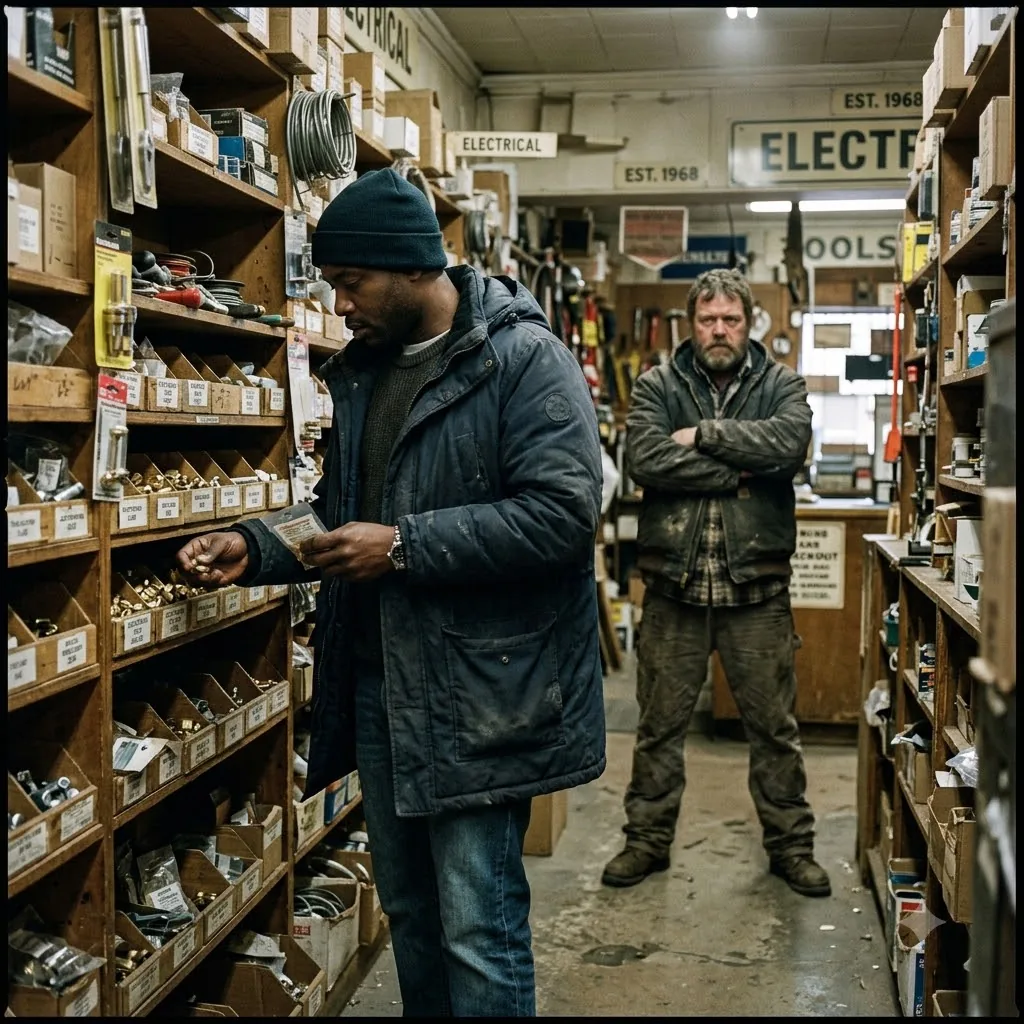
The clerk crossed his thick arms over his chest, widening his stance in his scuffed steel-toed boots so that passing him would require a physical altercation. He stared at the four heavy fuses resting against Marcus’s expensive coat, his jaw set in a hard, uncompromising line. His eyes darted from the merchandise to the slight bulge of the notebook resting in Marcus’s inner pocket. The ambient noise of the store seemed to drop away entirely, leaving only the buzzing of the overhead lights and the heavy, measured breathing of the man in the apron.
“I think it is about time you empty out those pockets for me, pal. Right now.”
Marcus held the heavy industrial fuses steady and looked calmly at the brass name tag pinned haphazardly to the canvas apron. The clerk did not wait for a response, taking a sudden, aggressive half-step forward and reaching a thick, calloused hand directly toward the inner lapel of Marcus’s coat.
Squeak. Pause. Squeak. The heavy tread of rubber-soled work boots echoed through the thin metal pegboard on Marcus’s right, matching his pace exactly down the length of aisle four. He stopped his cart beside a bin of oxidized brass screws, and the footsteps in aisle three halted a fraction of a second later. The silence stretched, thick and expectant, broken only by the rattle of a loose ventilation fan somewhere in the corrugated steel ceiling.
The claustrophobia of the narrow aisle pressed in on Marcus. The shelves on either side were packed too high, leaning slightly inward under the weight of oversized inventory. He took a deliberate step forward. The boots stepped forward. He took two quick steps back. The boots mirrored the retreat flawlessly. It was a precise, intimidating dance meant to convey absolute control over the territory. Marcus had been shadowed in retail environments before, but the blatant hostility here was entirely stripped of the usual corporate subtlety.
Marcus shifted his weight, and a warped floorboard groaned under the scuffed linoleum. In the next aisle over, the unseen boots shifted in perfect, mirroring calibration. This was the third time Marcus had looped through the electrical department of the damp, dust-coated hardware store. He picked up a specialized NEMA 14-50 receptacle, turning the heavy industrial plastic over in his hands to check the amperage rating. The fluorescent lights overhead flickered with a persistent, low-frequency hum that did nothing to mask the sound of his shadow. Dust motes drifted lazily through the harsh white beams, settling onto boxes that looked like they had not been moved since the late nineties.
A voice cut through the gaps in the pegboard displays, loud and dripping with artificial cheer. “Just let me know if you need help finding anything, chief. We like to keep a real close eye on our inventory.”
The words were technically polite, but the cadence was a flat, aggressive warning. The voice carried a rough, unpolished edge, the kind earned from decades of shouting over heavy machinery. This hardware store was the last operational business on a dying commercial strip. The windows facing the street were barred, and the inventory was aggressively utilitarian. Marcus set the receptacle back into its cardboard display box. He moved ten feet further down the aisle, scanning the lower shelves for three-gauge copper wire. The boots followed instantly. Squeak. Squeak. Squeak. Stop. They were close enough now that Marcus could hear the faint jingle of a key ring clipped to a belt loop with every step, along with the sound of heavy denim rubbing together.
The air in the store smelled heavily of chemical fertilizer, old sawdust, and pervasive rust. It was a classic fixture of this declining manufacturing town, the kind of local establishment that had survived three economic downturns by slashing overhead, turning off half the lights, and trusting its regulars on a handshake. Marcus distinctly did not look like a regular. His tailored charcoal wool coat and polished leather oxfords were severely out of place among the display pallets of rock salt, discounted snow shovels, and stacked bags of concrete mix.
He pulled a small leather-bound notebook from his inner pocket to check the specifications for the main breaker panel he was outfitting. The movement of his hand slipping inside his coat was met with an immediate reaction from the other side of the pegboard. A heavy hand slapped flat against the metal backing of the shelves, rattling a row of hanging wire strippers.
“Lot of high-end merchandise in that section,” the voice boomed again, closer this time, speaking directly to the metal divide. “Stuff a guy might want to slip right into a nice, big coat pocket. Just pointing it out as a courtesy so nobody makes a mistake.”
Marcus ignored the taunt, tracing his finger down the row of high-voltage fuses. He needed six of the two-hundred-amp commercial cartridges for the grid work ahead. He found only four sitting loose in a cracked, dust-lined plastic bin. He gathered them into the crook of his left arm, the cold metal and ceramic surprisingly heavy against his sleeve. The moment he lifted the merchandise, the shadow in the next aisle began moving toward the front of the store. The boots struck the linoleum with deliberate, stomping force that seemed designed to corner him at the choke point ahead.
Marcus turned to head toward the main checkout counter to ask about their backroom stock. The aisle was incredibly narrow, hemmed in by towering shelves stacked haphazardly with thick extension cords, halogen floodlights, and heavy spools of braided wire. The air felt stale and hot the closer he got to the main intersection. He took five slow steps toward the brightly lit front register, listening to the boots match him, accelerating their pace to intercept him at the juncture.
The squeaking boots rounded the endcap with aggressive speed. A tall, broad-shouldered man in a faded flannel shirt and a grease-stained canvas apron stepped directly into the center of the aisle, blocking the only exit. The physical blockage of the space was absolute. To the left stood a wall of discounted pressure washers. To the right sat a solid display of heavy chains on giant wooden spools. Directly in front, the clerk stood like a sentry refusing passage.
The clerk crossed his thick arms over his chest, widening his stance in his scuffed steel-toed boots so that passing him would require a physical altercation. He stared at the four heavy fuses resting against Marcus’s expensive coat, his jaw set in a hard, uncompromising line. His eyes darted from the merchandise to the slight bulge of the notebook resting in Marcus’s inner pocket. The ambient noise of the store seemed to drop away entirely, leaving only the buzzing of the overhead lights and the heavy, measured breathing of the man in the apron.
“I think it is about time you empty out those pockets for me, pal. Right now.”
Marcus held the heavy industrial fuses steady and looked calmly at the brass name tag pinned haphazardly to the canvas apron. The clerk did not wait for a response, taking a sudden, aggressive half-step forward and reaching a thick, calloused hand directly toward the inner lapel of Marcus’s coat.