Story code: ST-001264
Part 1: The Erasure
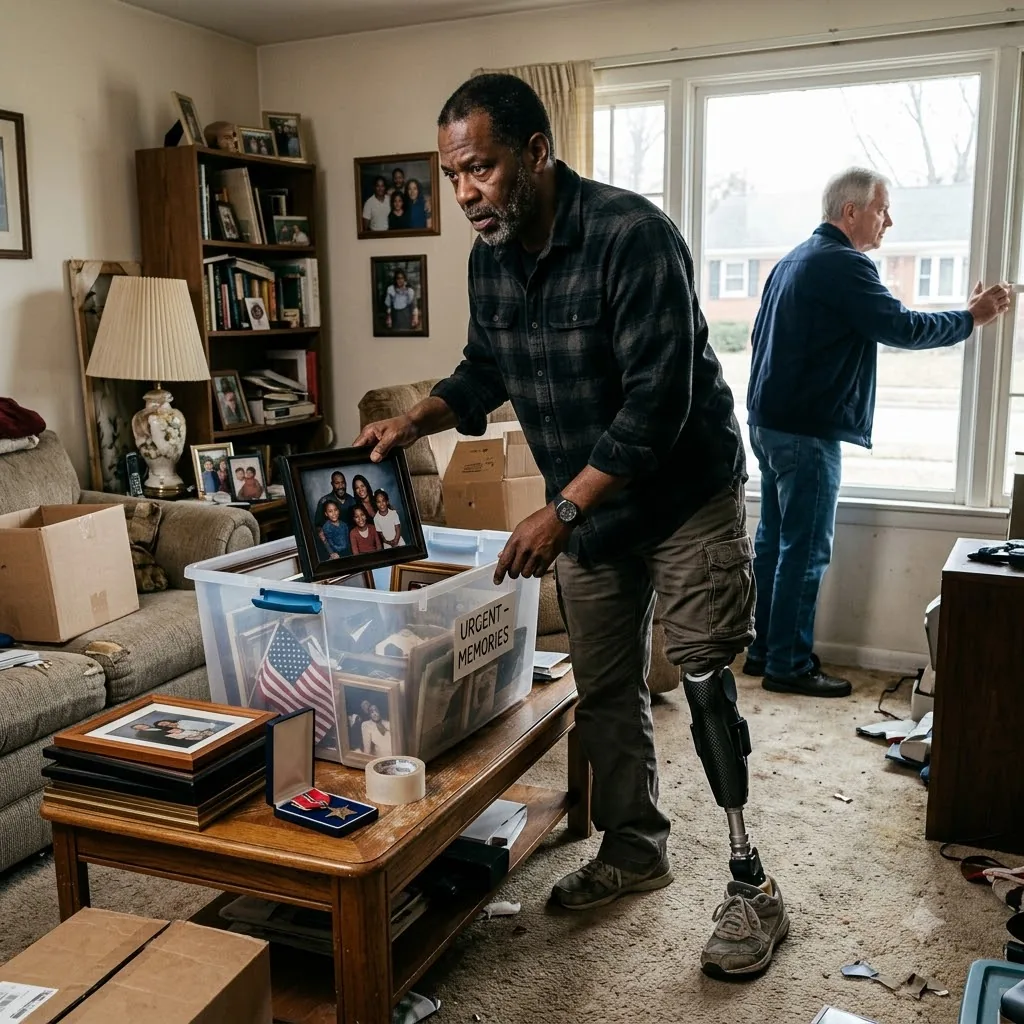
Marcus leaned his entire left side against the aluminum forearm crutch, his breath whistling through his teeth as he reached for the mahogany frame above the fireplace. His shoulder flared with a dull, radiating heat. He ignored the muscle spasm, hooking his fingers over the polished wood and lowering the photograph of his twin daughters. The glass felt cold against his calloused skin. He traced the edge of the frame for a fraction of a second, his thumb ghosting over their smiling faces, before burying the picture beneath a pile of folded neutral-colored blankets inside the heavy plastic tote at his feet.
He shifted his weight, dragging the rubber tip of the crutch across the hardwood floor. The sound sent a dull vibration up his arm. Next was the shadow box hanging between the tall windows. This one was far heavier, packed with tightly folded flags, thick brass medals, and his Bronze Star resting on dark velvet. His fingers slipped on the smooth glass casing. The frame tilted dangerously, threatening to crash onto the brick hearth and shatter, but another hand caught the bottom edge just in time.
Thomas guided the heavy shadow box down to the coffee table. Thomas wore a crisp, generic navy polo shirt and neatly pressed khaki slacks. He did not look at the medals. He did not comment on the framed citations bearing Marcus’s name. He simply stepped back, folding his arms and watching the street through the gap in the front blinds.
Marcus offered a tight nod of acknowledgment and wrapped the shadow box in a thick bath towel. He placed it carefully into the blue tote. The plastic container was getting heavy, nearly impossible for him to maneuver on his own. He pushed it with the side of his good foot, sliding it inch by inch across the floorboards toward the hall closet. Every scrape of the plastic sounded unnaturally loud in the quiet house, a harsh rasp that grated against his nerves.
The living room walls now bore pale, rectangular ghosts where ten years of his family’s life had hung.
He moved to the built-in bookshelf next. He swept three volumes of African American history, a framed program from his daughters’ piano recital, and a small decorative mask into a cardboard box. He had to bend at an awkward, twisted angle to reach the lower shelves, sending a sharp, familiar spike of agony down his sciatic nerve. He clamped his jaw shut, grinding his teeth to keep from groaning. A cold sweat broke out across his forehead. His leg brace squeaked as he forced himself back upright.
Thomas walked into the kitchen, his footsteps casual and light on the tile. He opened a cabinet, took out a ceramic mug, and filled it with tap water. He leaned against the granite island, projecting the relaxed, comfortable aura of a man who owned the space. He ran a hand through his straight blonde hair, checking his reflection in the dark glass of the microwave door, adjusting his posture to look entirely at ease.
Marcus kept working. Time was running out. There was a stack of mail on the entryway console. Envelopes bearing his name, his medical bills, his property tax assessments. He swept the entire pile into the trash can, tying off the white plastic bag and carrying it out the back door to the garage. By the time he returned to the living room, his bad leg was trembling violently under his weight. He had to lock his knee joint backward just to stay upright.
He dragged the blue tote the rest of the way into the coat closet, shoving it deep into the back corner behind a row of heavy winter coats. He threw a spare vacuum cleaner hose and an old mop over the lid. It looked like forgotten junk storage now. Nothing to draw the eye. Nothing to see.
He walked back to the center of the living room and turned in a slow, painful circle. The space looked utterly sterile. The vibrant geometric rugs were rolled up and strapped down in the garage. The embroidered throw pillows were stuffed into black garbage bags. The colorful artwork had been replaced by a generic landscape print Thomas had brought in from the trunk of his sedan an hour earlier. There was no trace of Marcus left in the house. There was no trace of his children, his military service, or his decade of sweat maintaining the property.
The erasure was absolute. The house looked like a staged model home, completely devoid of its true history.
Thomas set his mug down on a cork coaster. He rolled his shoulders, taking a deep breath, physically settling into the character he was about to play.
Marcus wiped his forehead with the back of his sleeve. His chest tightened with a heavy, suffocating pressure. He felt like a ghost haunting his own living room, an intruder in the space he had built with his own two hands. He retreated to the short hallway leading to the back bedrooms, positioning himself in the shadows just out of sight of the front door but close enough to hear everything that was about to happen.
He leaned his shoulder against the drywall, taking his weight off the crutch to silence any metallic clinking. The silence in the house stretched tight, vibrating with unspoken tension.
Outside, heavy tires crunched slowly over the gravel driveway. A large vehicle idled for a long moment before the engine abruptly cut off.
Thomas straightened his posture. He gave Marcus one final, tight nod toward the dark hallway, stepping purposefully toward the center of the brightly lit foyer.
A car door slammed shut. Heavy, deliberate footsteps echoed up the concrete walkway, followed by the sharp, authoritative rap of knuckles against the front door.
Thomas reached for the brass handle, pulling the heavy wood door wide open to reveal the stranger standing on the porch.
Marcus leaned his entire left side against the aluminum forearm crutch, his breath whistling through his teeth as he reached for the mahogany frame above the fireplace. His shoulder flared with a dull, radiating heat. He ignored the muscle spasm, hooking his fingers over the polished wood and lowering the photograph of his twin daughters. The glass felt cold against his calloused skin. He traced the edge of the frame for a fraction of a second, his thumb ghosting over their smiling faces, before burying the picture beneath a pile of folded neutral-colored blankets inside the heavy plastic tote at his feet.
He shifted his weight, dragging the rubber tip of the crutch across the hardwood floor. The sound sent a dull vibration up his arm. Next was the shadow box hanging between the tall windows. This one was far heavier, packed with tightly folded flags, thick brass medals, and his Bronze Star resting on dark velvet. His fingers slipped on the smooth glass casing. The frame tilted dangerously, threatening to crash onto the brick hearth and shatter, but another hand caught the bottom edge just in time.
Thomas guided the heavy shadow box down to the coffee table. Thomas wore a crisp, generic navy polo shirt and neatly pressed khaki slacks. He did not look at the medals. He did not comment on the framed citations bearing Marcus’s name. He simply stepped back, folding his arms and watching the street through the gap in the front blinds.
Marcus offered a tight nod of acknowledgment and wrapped the shadow box in a thick bath towel. He placed it carefully into the blue tote. The plastic container was getting heavy, nearly impossible for him to maneuver on his own. He pushed it with the side of his good foot, sliding it inch by inch across the floorboards toward the hall closet. Every scrape of the plastic sounded unnaturally loud in the quiet house, a harsh rasp that grated against his nerves.
The living room walls now bore pale, rectangular ghosts where ten years of his family’s life had hung.
He moved to the built-in bookshelf next. He swept three volumes of African American history, a framed program from his daughters’ piano recital, and a small decorative mask into a cardboard box. He had to bend at an awkward, twisted angle to reach the lower shelves, sending a sharp, familiar spike of agony down his sciatic nerve. He clamped his jaw shut, grinding his teeth to keep from groaning. A cold sweat broke out across his forehead. His leg brace squeaked as he forced himself back upright.
Thomas walked into the kitchen, his footsteps casual and light on the tile. He opened a cabinet, took out a ceramic mug, and filled it with tap water. He leaned against the granite island, projecting the relaxed, comfortable aura of a man who owned the space. He ran a hand through his straight blonde hair, checking his reflection in the dark glass of the microwave door, adjusting his posture to look entirely at ease.
Marcus kept working. Time was running out. There was a stack of mail on the entryway console. Envelopes bearing his name, his medical bills, his property tax assessments. He swept the entire pile into the trash can, tying off the white plastic bag and carrying it out the back door to the garage. By the time he returned to the living room, his bad leg was trembling violently under his weight. He had to lock his knee joint backward just to stay upright.
He dragged the blue tote the rest of the way into the coat closet, shoving it deep into the back corner behind a row of heavy winter coats. He threw a spare vacuum cleaner hose and an old mop over the lid. It looked like forgotten junk storage now. Nothing to draw the eye. Nothing to see.
He walked back to the center of the living room and turned in a slow, painful circle. The space looked utterly sterile. The vibrant geometric rugs were rolled up and strapped down in the garage. The embroidered throw pillows were stuffed into black garbage bags. The colorful artwork had been replaced by a generic landscape print Thomas had brought in from the trunk of his sedan an hour earlier. There was no trace of Marcus left in the house. There was no trace of his children, his military service, or his decade of sweat maintaining the property.
The erasure was absolute. The house looked like a staged model home, completely devoid of its true history.
Thomas set his mug down on a cork coaster. He rolled his shoulders, taking a deep breath, physically settling into the character he was about to play.
Marcus wiped his forehead with the back of his sleeve. His chest tightened with a heavy, suffocating pressure. He felt like a ghost haunting his own living room, an intruder in the space he had built with his own two hands. He retreated to the short hallway leading to the back bedrooms, positioning himself in the shadows just out of sight of the front door but close enough to hear everything that was about to happen.
He leaned his shoulder against the drywall, taking his weight off the crutch to silence any metallic clinking. The silence in the house stretched tight, vibrating with unspoken tension.
Outside, heavy tires crunched slowly over the gravel driveway. A large vehicle idled for a long moment before the engine abruptly cut off.
Thomas straightened his posture. He gave Marcus one final, tight nod toward the dark hallway, stepping purposefully toward the center of the brightly lit foyer.
A car door slammed shut. Heavy, deliberate footsteps echoed up the concrete walkway, followed by the sharp, authoritative rap of knuckles against the front door.
Thomas reached for the brass handle, pulling the heavy wood door wide open to reveal the stranger standing on the porch.