Story code: ST-001269
Part 1: Patient Financial Success
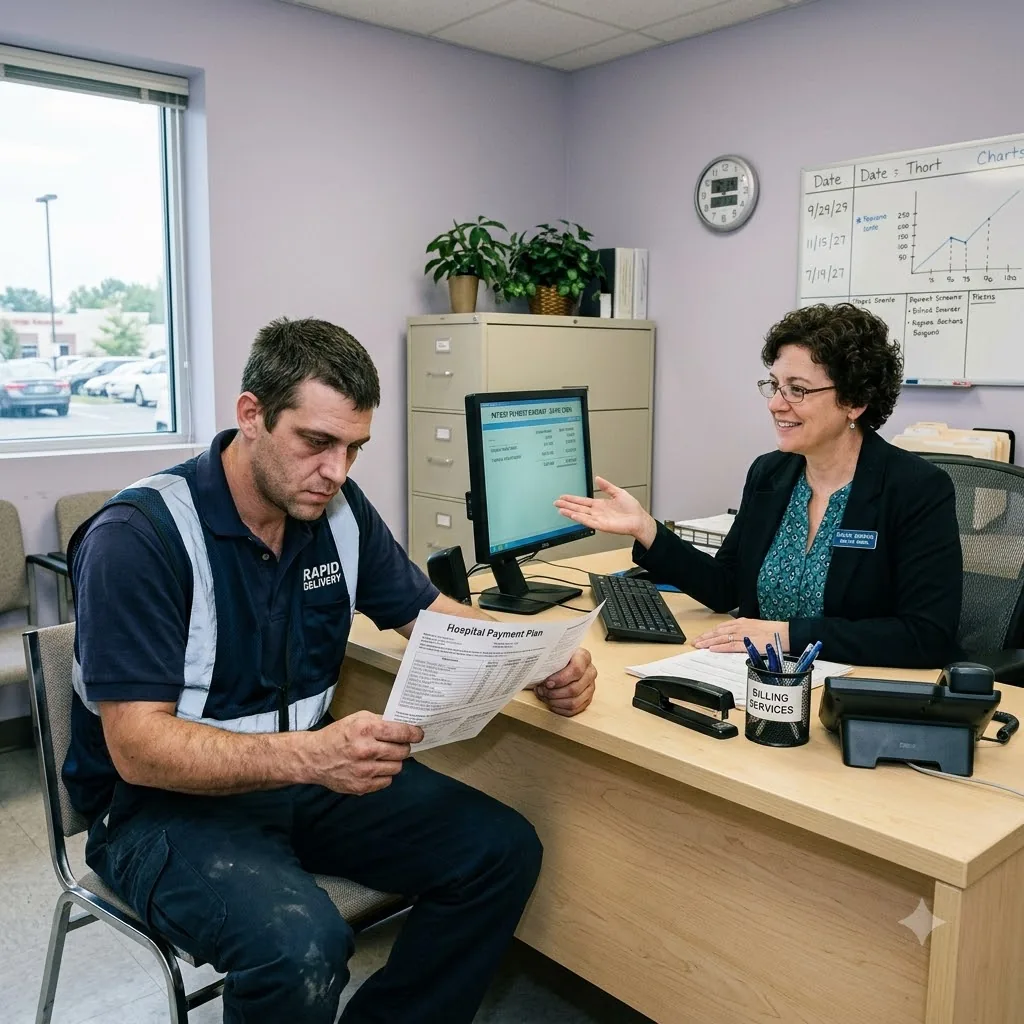
Elena smiled with exactly the degree of warmth mandated by the hospital corporate handbook, sliding a color-coded spreadsheet across her faux-maple desk. The document sitting between them required Marcus to pay three hundred dollars on the first of every month, an amount that would leave his checking account exactly forty-two dollars short of purchasing the insulin keeping him alive.
The office smelled of lavender air freshener and sanitized paper, a room entirely designed to soothe patients into signing away their futures. A framed poster on the wall declared this the Patient Financial Success center, complete with a stock photo of a laughing family.
Marcus pressed his palms against his thighs to stop his hands from shaking. He looked from the bottom line of the spreadsheet to Elena. Her nametag caught the fluorescent light, identifying her as a Senior Wellness Coordinator.
“We want to partner with you on this healing journey, Marcus,” Elena said. Her voice possessed the smooth cadence of a meditation tape. “This payment pathway ensures your account remains in good standing, allowing us to continue providing your vital endocrine treatments.”
Marcus leaned forward. He tapped his index finger against the three-hundred-dollar figure printed in bold black ink.
“My take-home pay is two thousand a month,” Marcus stated, keeping his voice deliberately flat to prevent his rising panic from spilling over. “Rent is twelve hundred. Basic groceries and utilities are three hundred. My baseline insulin copay is two hundred. That leaves exactly three hundred dollars.”
Elena nodded slowly, deploying her active listening face.
“If I sign this paper to pay you three hundred dollars,” Marcus continued, “I will have zero dollars left for gas to get to work. If I miss work, I lose my insurance. If I lose the insurance, the insulin costs eight hundred. The math on this page dictates that I stop buying the medication I need to breathe.”
“I hear your frustration,” Elena said. She did not blink. She simply clasped her hands together over her keyboard. “Medical expenses can feel overwhelming. However, our financial wellness pathways are designed to create a sustainable habit of repayment. The algorithm determined this tier based on your verified income.”
Marcus stared at her perfectly manicured nails. The sheer absurdity of the situation threatened to crush his chest. She was using the language of self-care to mandate his slow execution.
Marcus reached into his worn leather jacket and pulled out a stack of crinkled receipts. He spread them out over the clean space on her desk, right next to her neat organizer.
“Look at these,” Marcus demanded, his voice thick with a desperation he could no longer hide. “These are my grocery bills. Rice, beans, frozen vegetables. I have already cut out everything that brings me any joy. I walk the last two miles to my shift to save on bus fare.”
Elena did not look at the receipts. Her gaze remained fixed somewhere near the bridge of his nose, maintaining the eye contact mandated by her training module on conflict de-escalation.
“Marcus, I need to ask you to clear the desk,” Elena said. Her tone remained flawlessly even. “We find that visual clutter can distract from the healing process. Let us focus on the solution in front of us.”
He stared at her, horrified by the absolute lack of recognition in her eyes. She did not see a human being fighting for his life. She saw a data point resisting its designated column.
“This isn’t a healing process,” Marcus said, his voice dropping to a harsh whisper. “It is an eviction notice from my own body.”
“I assure you, our billing coordinators are here to empower you,” Elena recited. She tapped a key on her computer. “In fact, by committing to this tier today, you avoid the secondary collection phase, which includes wage garnishment. Garnishment would take twenty-five percent of your gross income, which is significantly more than three hundred dollars. We are offering you the gentler option.”
The mathematical cruelty hit him like a physical blow. They had calculated his breaking point and positioned their offer just below the threshold of immediate ruin. If he signed, he slowly starved his bank account until he couldn’t afford the medication. If he refused to sign, they sent him to collections and ruined him faster. The system had neatly boxed him into a corner where his death was simply a byproduct of an accounting equation.
Marcus looked around the suffocatingly calm room. The pastel blue walls felt like the interior of a very clean, very polite slaughterhouse. He looked back at the pen resting beside the signature line.
“There must be a hardship waiver,” Marcus said. “A secondary review process.”
“You have already been evaluated for all available pathways,” Elena said. She nudged the heavy brass pen a fraction of an inch closer to him. “This is the optimal route for your financial health. We just need your initials at the bottom left, and your full signature on the back page.”
A cold, vibrating energy started in Marcus’s chest and began spreading down his arms. The polite, sanitized violence of it all stripped away the last remaining layers of his social conditioning. He was sitting across from a predator wearing a pastel cardigan. The realization brought a strange, terrifying clarity.
He picked up the pen. It felt heavy in his grip, substantial and cold. Elena’s smile widened just a fraction, a micro-expression of victory that seemed entirely disconnected from her words of empathy.
Marcus did not touch the pen to the paper. Instead, he clamped his left hand onto the edge of the faux-maple desk. His knuckles turned white. The sudden, violent screech of metal chair legs scraping across the linoleum shattered the carefully engineered tranquility of the office as Marcus lunged out of his seat.
Elena smiled with exactly the degree of warmth mandated by the hospital corporate handbook, sliding a color-coded spreadsheet across her faux-maple desk. The document sitting between them required Marcus to pay three hundred dollars on the first of every month, an amount that would leave his checking account exactly forty-two dollars short of purchasing the insulin keeping him alive.
The office smelled of lavender air freshener and sanitized paper, a room entirely designed to soothe patients into signing away their futures. A framed poster on the wall declared this the Patient Financial Success center, complete with a stock photo of a laughing family.
Marcus pressed his palms against his thighs to stop his hands from shaking. He looked from the bottom line of the spreadsheet to Elena. Her nametag caught the fluorescent light, identifying her as a Senior Wellness Coordinator.
“We want to partner with you on this healing journey, Marcus,” Elena said. Her voice possessed the smooth cadence of a meditation tape. “This payment pathway ensures your account remains in good standing, allowing us to continue providing your vital endocrine treatments.”
Marcus leaned forward. He tapped his index finger against the three-hundred-dollar figure printed in bold black ink.
“My take-home pay is two thousand a month,” Marcus stated, keeping his voice deliberately flat to prevent his rising panic from spilling over. “Rent is twelve hundred. Basic groceries and utilities are three hundred. My baseline insulin copay is two hundred. That leaves exactly three hundred dollars.”
Elena nodded slowly, deploying her active listening face.
“If I sign this paper to pay you three hundred dollars,” Marcus continued, “I will have zero dollars left for gas to get to work. If I miss work, I lose my insurance. If I lose the insurance, the insulin costs eight hundred. The math on this page dictates that I stop buying the medication I need to breathe.”
“I hear your frustration,” Elena said. She did not blink. She simply clasped her hands together over her keyboard. “Medical expenses can feel overwhelming. However, our financial wellness pathways are designed to create a sustainable habit of repayment. The algorithm determined this tier based on your verified income.”
Marcus stared at her perfectly manicured nails. The sheer absurdity of the situation threatened to crush his chest. She was using the language of self-care to mandate his slow execution.
Marcus reached into his worn leather jacket and pulled out a stack of crinkled receipts. He spread them out over the clean space on her desk, right next to her neat organizer.
“Look at these,” Marcus demanded, his voice thick with a desperation he could no longer hide. “These are my grocery bills. Rice, beans, frozen vegetables. I have already cut out everything that brings me any joy. I walk the last two miles to my shift to save on bus fare.”
Elena did not look at the receipts. Her gaze remained fixed somewhere near the bridge of his nose, maintaining the eye contact mandated by her training module on conflict de-escalation.
“Marcus, I need to ask you to clear the desk,” Elena said. Her tone remained flawlessly even. “We find that visual clutter can distract from the healing process. Let us focus on the solution in front of us.”
He stared at her, horrified by the absolute lack of recognition in her eyes. She did not see a human being fighting for his life. She saw a data point resisting its designated column.
“This isn’t a healing process,” Marcus said, his voice dropping to a harsh whisper. “It is an eviction notice from my own body.”
“I assure you, our billing coordinators are here to empower you,” Elena recited. She tapped a key on her computer. “In fact, by committing to this tier today, you avoid the secondary collection phase, which includes wage garnishment. Garnishment would take twenty-five percent of your gross income, which is significantly more than three hundred dollars. We are offering you the gentler option.”
The mathematical cruelty hit him like a physical blow. They had calculated his breaking point and positioned their offer just below the threshold of immediate ruin. If he signed, he slowly starved his bank account until he couldn’t afford the medication. If he refused to sign, they sent him to collections and ruined him faster. The system had neatly boxed him into a corner where his death was simply a byproduct of an accounting equation.
Marcus looked around the suffocatingly calm room. The pastel blue walls felt like the interior of a very clean, very polite slaughterhouse. He looked back at the pen resting beside the signature line.
“There must be a hardship waiver,” Marcus said. “A secondary review process.”
“You have already been evaluated for all available pathways,” Elena said. She nudged the heavy brass pen a fraction of an inch closer to him. “This is the optimal route for your financial health. We just need your initials at the bottom left, and your full signature on the back page.”
A cold, vibrating energy started in Marcus’s chest and began spreading down his arms. The polite, sanitized violence of it all stripped away the last remaining layers of his social conditioning. He was sitting across from a predator wearing a pastel cardigan. The realization brought a strange, terrifying clarity.
He picked up the pen. It felt heavy in his grip, substantial and cold. Elena’s smile widened just a fraction, a micro-expression of victory that seemed entirely disconnected from her words of empathy.
Marcus did not touch the pen to the paper. Instead, he clamped his left hand onto the edge of the faux-maple desk. His knuckles turned white. The sudden, violent screech of metal chair legs scraping across the linoleum shattered the carefully engineered tranquility of the office as Marcus lunged out of his seat.