Story code: ST-000053
Part 1: The Pastel Eviction
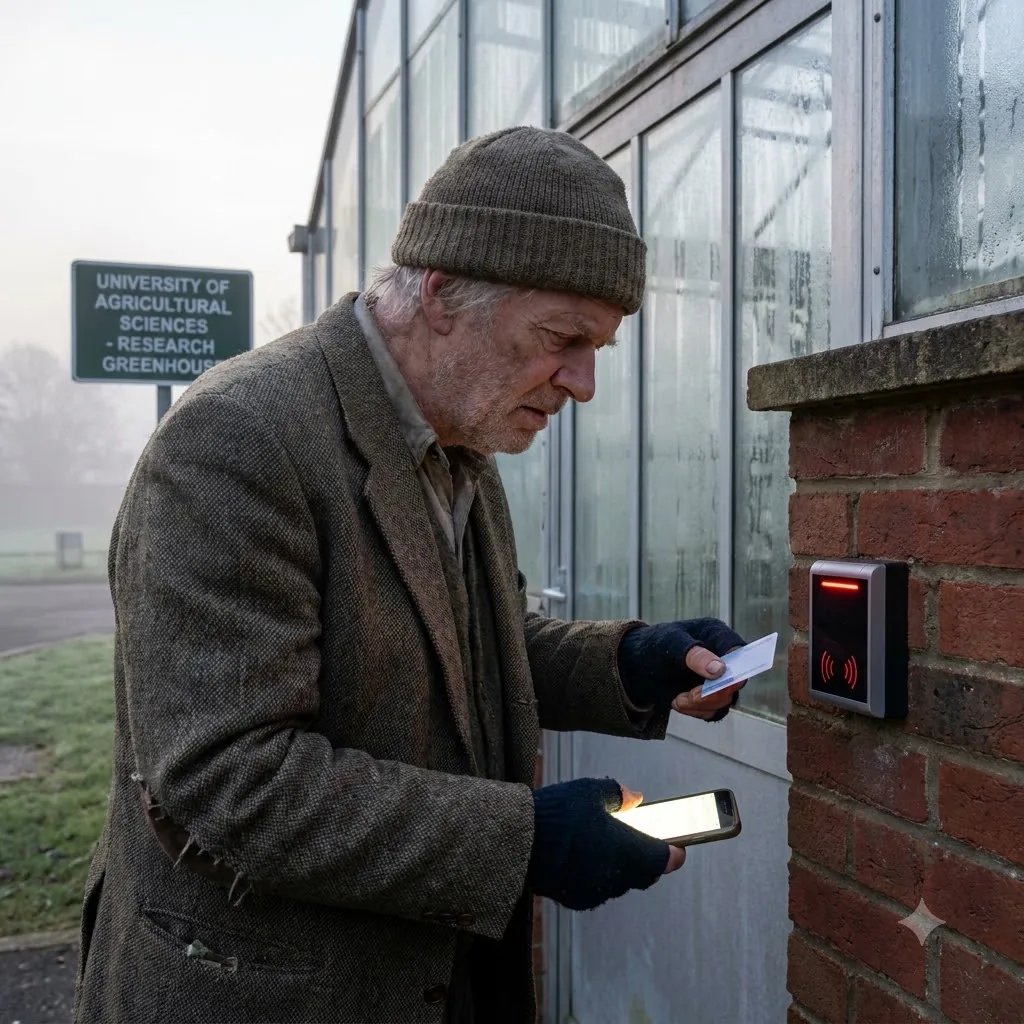
The plastic housing of the card reader on the biology department’s greenhouse door flashed a hard, rapid red. Arthur swiped his faculty ID again, pressing the magnetic strip flat against the sensor, but the heavy deadbolt remained firmly engaged with a dull metallic thud. It was six in the morning, and the sprawling glass structure hummed with the ambient sound of climate control, keeping twenty years of his rare perennial crossbreeds alive in the artificial warmth. Arthur stood on the frost-bitten concrete outside, shivering in his wool coat, and pulled his phone from his pocket to open the campus security app. The screen refreshed, buffering for a second before kicking him back to the main login page. He typed in his credentials with numb fingers. The system returned a stark, gray text box stating his user account was deactivated.
A deep, uncomfortable tightness bloomed in his chest. He switched to his personal email app, which automatically forwarded his institutional inbox. The feed had stopped syncing at exactly two in the morning. The final message sat at the top of the queue, sent from an address he had never seen before. The sender was listed as the Office of Community Wellness. He tapped the screen with his thumb. The text was formatted in a soft, rounded font, accompanied by a pastel university letterhead that clashed violently with the administrative weight of a suspension.
The email addressed him by his first name, stripping away his academic title. It stated that in their ongoing commitment to fostering spaces of profound emotional safety and generative healing, the administration had initiated a pause on his physical and digital campus access. The second paragraph claimed this decision reflected an urgent need to prioritize student well-being following recent concerns regarding classroom dynamics. He was mandated to attend a Restorative Alignment and Accountability Session at nine o’clock that morning. The message concluded by instructing him to refrain from attempting to contact students, faculty, or staff during this period of reflection and unlearning, noting that his silent cooperation was a vital step toward community restoration.
There was no mention of an incident. No date, no specific class, no name, and no formal charges. Just the heavy, suffocating jargon of weaponized empathy wrapped in a digital eviction notice. Arthur read the paragraphs three times. His thumb hovered over the reply button, but the institutional server had already severed his connection. The message was a one-way directive, demanding compliance without offering the basic dignity of an accusation.
He turned back to the greenhouse door and pressed his palms against the cold glass. Inside, the automated sprinkler system hissed to life, misting the terraced rows of experimental orchids he had spent the last decade cultivating. They required manual nutrient adjustments every morning to survive the delicate transition to the winter blooming phase. He was locked out of his own life’s work by a pastel-colored email.
Arthur stepped back from the glass, his breath pluming in the early morning air. He needed to get to his main office in the science building to retrieve his hard drives and physically confront someone in the department. If they had locked him out of the greenhouse, his lab would be next. He walked briskly down the brick-paved path, his dress shoes echoing loudly in the quiet. The campus remained shrouded in the blue light of dawn, entirely empty. The physical impossibility of the situation grated against his nerves. A suspension of a tenured professor required a formal hearing, a union representative, and a documented paper trail. A vague email about restorative alignment bypassed every established protocol in the faculty handbook.
As he rounded the corner of the student union, a white electric golf cart with flashing amber lights silently rolled onto the intersecting path. Arthur slowed his pace. The cart bore the insignia of Campus Safety. It did not pass him. Instead, the driver swerved deliberately onto the pedestrian walkway, blocking his route to the science building.
Two officers stepped out into the freezing air. One was a young man with a tight, uncomfortable expression, while the other, an older woman with a heavy duty belt, held a tablet in her left hand. She approached Arthur, stopping exactly six feet away to maintain a rigidly enforced distance. She did not reach for her radio or offer a morning greeting. She just looked at him with a practiced, flat expression. She held up the tablet, which displayed a photograph of Arthur’s face alongside a bright red banner.
She told him he was currently trespassing on university property and needed to leave the premises immediately. Arthur opened his mouth to explain about the greenhouse, about the email, about his tenure and his thirty years of service to the institution. The young officer placed a hand on his radio and unclipped a set of heavy steel zip-ties from his belt.
The plastic housing of the card reader on the biology department’s greenhouse door flashed a hard, rapid red. Arthur swiped his faculty ID again, pressing the magnetic strip flat against the sensor, but the heavy deadbolt remained firmly engaged with a dull metallic thud. It was six in the morning, and the sprawling glass structure hummed with the ambient sound of climate control, keeping twenty years of his rare perennial crossbreeds alive in the artificial warmth. Arthur stood on the frost-bitten concrete outside, shivering in his wool coat, and pulled his phone from his pocket to open the campus security app. The screen refreshed, buffering for a second before kicking him back to the main login page. He typed in his credentials with numb fingers. The system returned a stark, gray text box stating his user account was deactivated.
A deep, uncomfortable tightness bloomed in his chest. He switched to his personal email app, which automatically forwarded his institutional inbox. The feed had stopped syncing at exactly two in the morning. The final message sat at the top of the queue, sent from an address he had never seen before. The sender was listed as the Office of Community Wellness. He tapped the screen with his thumb. The text was formatted in a soft, rounded font, accompanied by a pastel university letterhead that clashed violently with the administrative weight of a suspension.
The email addressed him by his first name, stripping away his academic title. It stated that in their ongoing commitment to fostering spaces of profound emotional safety and generative healing, the administration had initiated a pause on his physical and digital campus access. The second paragraph claimed this decision reflected an urgent need to prioritize student well-being following recent concerns regarding classroom dynamics. He was mandated to attend a Restorative Alignment and Accountability Session at nine o’clock that morning. The message concluded by instructing him to refrain from attempting to contact students, faculty, or staff during this period of reflection and unlearning, noting that his silent cooperation was a vital step toward community restoration.
There was no mention of an incident. No date, no specific class, no name, and no formal charges. Just the heavy, suffocating jargon of weaponized empathy wrapped in a digital eviction notice. Arthur read the paragraphs three times. His thumb hovered over the reply button, but the institutional server had already severed his connection. The message was a one-way directive, demanding compliance without offering the basic dignity of an accusation.
He turned back to the greenhouse door and pressed his palms against the cold glass. Inside, the automated sprinkler system hissed to life, misting the terraced rows of experimental orchids he had spent the last decade cultivating. They required manual nutrient adjustments every morning to survive the delicate transition to the winter blooming phase. He was locked out of his own life’s work by a pastel-colored email.
Arthur stepped back from the glass, his breath pluming in the early morning air. He needed to get to his main office in the science building to retrieve his hard drives and physically confront someone in the department. If they had locked him out of the greenhouse, his lab would be next. He walked briskly down the brick-paved path, his dress shoes echoing loudly in the quiet. The campus remained shrouded in the blue light of dawn, entirely empty. The physical impossibility of the situation grated against his nerves. A suspension of a tenured professor required a formal hearing, a union representative, and a documented paper trail. A vague email about restorative alignment bypassed every established protocol in the faculty handbook.
As he rounded the corner of the student union, a white electric golf cart with flashing amber lights silently rolled onto the intersecting path. Arthur slowed his pace. The cart bore the insignia of Campus Safety. It did not pass him. Instead, the driver swerved deliberately onto the pedestrian walkway, blocking his route to the science building.
Two officers stepped out into the freezing air. One was a young man with a tight, uncomfortable expression, while the other, an older woman with a heavy duty belt, held a tablet in her left hand. She approached Arthur, stopping exactly six feet away to maintain a rigidly enforced distance. She did not reach for her radio or offer a morning greeting. She just looked at him with a practiced, flat expression. She held up the tablet, which displayed a photograph of Arthur’s face alongside a bright red banner.
She told him he was currently trespassing on university property and needed to leave the premises immediately. Arthur opened his mouth to explain about the greenhouse, about the email, about his tenure and his thirty years of service to the institution. The young officer placed a hand on his radio and unclipped a set of heavy steel zip-ties from his belt.