Story code: ST-001269
Part 2: The Healing Pathway
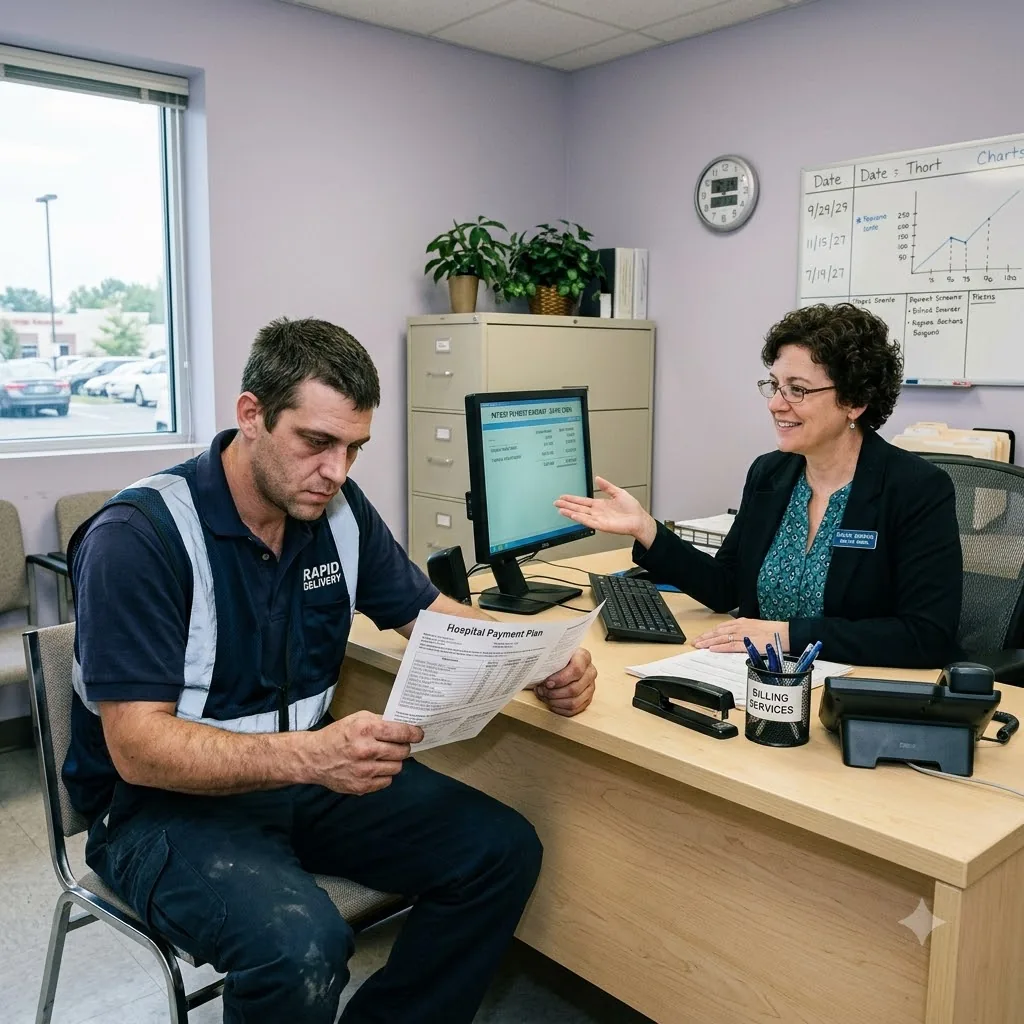
He did not lunge at Elena. He brought the heavy brass pen down in a vicious, overhead arc, driving it like a railroad spike directly into the center of the faux-maple desk.
The heavy pen punched through the color-coded spreadsheet, sheared through the laminated veneer, and buried its point deep into the compressed particleboard beneath. The loud crack echoed off the pastel blue walls like a gunshot. The vibration stung Marcus’s palm, shooting sharp needles of pain up his forearm. He stepped back, leaving the pen standing straight up, pinning the math that condemned him to the desk.
Elena’s rolling chair slammed against the filing cabinet behind her. For one fleeting second, the Senior Wellness Coordinator vanished. A genuinely terrified woman stared back at him, eyes wide, breath caught in her throat.
“I am not a column on a spreadsheet,” Marcus said. His voice was loud, vibrating with a raw frequency that did not belong in the lavender-scented room. “I am a man. And you are killing me.”
Elena’s hand scrambled beneath the rim of her desk. Marcus heard a dull, mechanical click.
Instantly, Elena took a deep, shaky breath and smoothed the front of her pastel cardigan. The mask slid back into place, though her cheeks remained pale. “Marcus, I am registering that you are in a state of crisis,” she recited. Her voice trembled slightly on the first few words before finding its manufactured, hypnotic rhythm. “We have protocols to ensure a safe environment for both staff and patients.”
Marcus backed away from the desk, raising his hands open and empty. He hadn’t touched her. He would never touch her. But the air in the room had irrevocably changed. The polite veneer was cracking, revealing the cold steel cage underneath. He realized with a sickening drop in his stomach that this room was designed for this exact scenario. The heavy desk bolted to the floor. The panic button. The soothing colors. They knew their math pushed people to the edge of violence. They were prepared for it.
“Cancel the payment plan,” Marcus said, his chest heaving. “Give me the hardship waiver.”
“I cannot override the algorithm’s determination,” Elena said. She kept her eyes fixed on the collar of his worn leather jacket, avoiding his face entirely.
The door behind Marcus burst open. The heavy thud of tactical boots slammed against the linoleum.
Marcus flinched and half-turned. Two hospital security guards crowded into the small office. They weren’t standard security; they wore reinforced tactical vests, heavy utility belts, and radios crackling with static. The sheer mass of them made the small room feel instantly suffocating.
“Step back from the desk,” the lead guard barked, his hand dropping to rest on a bright yellow taser strapped to his thigh.
“I’m not doing anything,” Marcus said, immediately stepping backward until his shoulder blades hit the cold drywall. His heart hammered furiously against his ribs. The math in his head instantly recalculated. *Taser deployment. Ambulance ride. ER admission. Five thousand dollars. Ten thousand dollars.* A single twitch could bankrupt him ten times over.
He raised his hands higher, pressing his palms flat against the wall.
“Is he getting violent, Elena?” the second guard asked, stepping seamlessly between Marcus and the desk to form a physical barricade.
Elena stood up. She looked at the brass pen, still sticking straight up out of the ruined spreadsheet. “The patient is experiencing severe financial distress and exhibited destructive behavior,” she said, her voice completely smooth now, bolstered by the presence of armed men. “He damaged hospital property.”
“Do you want us to call Metro PD?” the lead guard asked, unclipping his radio from his vest. “Property damage, intimidation. They can have a cruiser here in three minutes.”
Marcus felt the blood drain from his face, leaving his extremities freezing cold. *Metro PD. Arrest. Jail.* If he missed his shift at the warehouse tonight, he’d be fired. If he was fired, his health insurance vanished at midnight. Without insurance, his insulin jumped to eight hundred dollars a vial. An arrest wasn’t just a legal problem; it was an immediate, unappealable death sentence. The system had layered traps upon traps.
“No,” Marcus choked out, staring at Elena. The synthetic lavender scent of the room suddenly made him fiercely nauseous. “Please. No police. I’ll lose my job.”
Elena tilted her head. She looked at the guards, then back at Marcus. The micro-expression of victory returned to her face, colder and more absolute than before.
“As a healthcare institution, our primary goal is your overall wellbeing, Marcus,” Elena said smoothly. She reached out and grasped the heavy brass pen. She gave it a sharp yank, pulling it free from the wood. The spreadsheet, now sporting a jagged hole in its center, fluttered slightly. “Involving law enforcement rarely aligns with our healing pathways. I am authorized to classify this as a momentary medical episode, which would remain entirely internal.”
Marcus swallowed hard. His mouth tasted like copper and dust. “Internal,” he repeated.
“Yes,” Elena said. She laid the pen flat on the paper. She tapped it once with her manicured fingernail. “Provided you demonstrate a commitment to your financial health. By initializing the payment pathway. Right now.”
The trap snapped shut with a deafening silence. It was no longer just a passive threat of starvation or collections. It was active extortion. Sign away the money he needed to survive, or go to jail and lose his insurance immediately. Either way, the institution ensured it got its signature, and the algorithm got its compliance.
The lead guard unclasped the retaining strap on his taser. A loud, deliberate snap of heavy plastic filled the room. “Listen to the lady, buddy. It’s the best deal you’re gonna get.”
Marcus looked at the two large men blocking the only exit. He looked at Elena, waiting patiently behind her desk, completely insulated by the corporate machinery that protected her while crushing him.
His hands were shaking so violently against the drywall that he could hear his knuckles tapping the paint. He was out of moves. He was out of money. And if he didn’t walk back to that desk and pick up that pen, he was out of time.