Story code: ST-001359
Part 2: Emergency Remediation
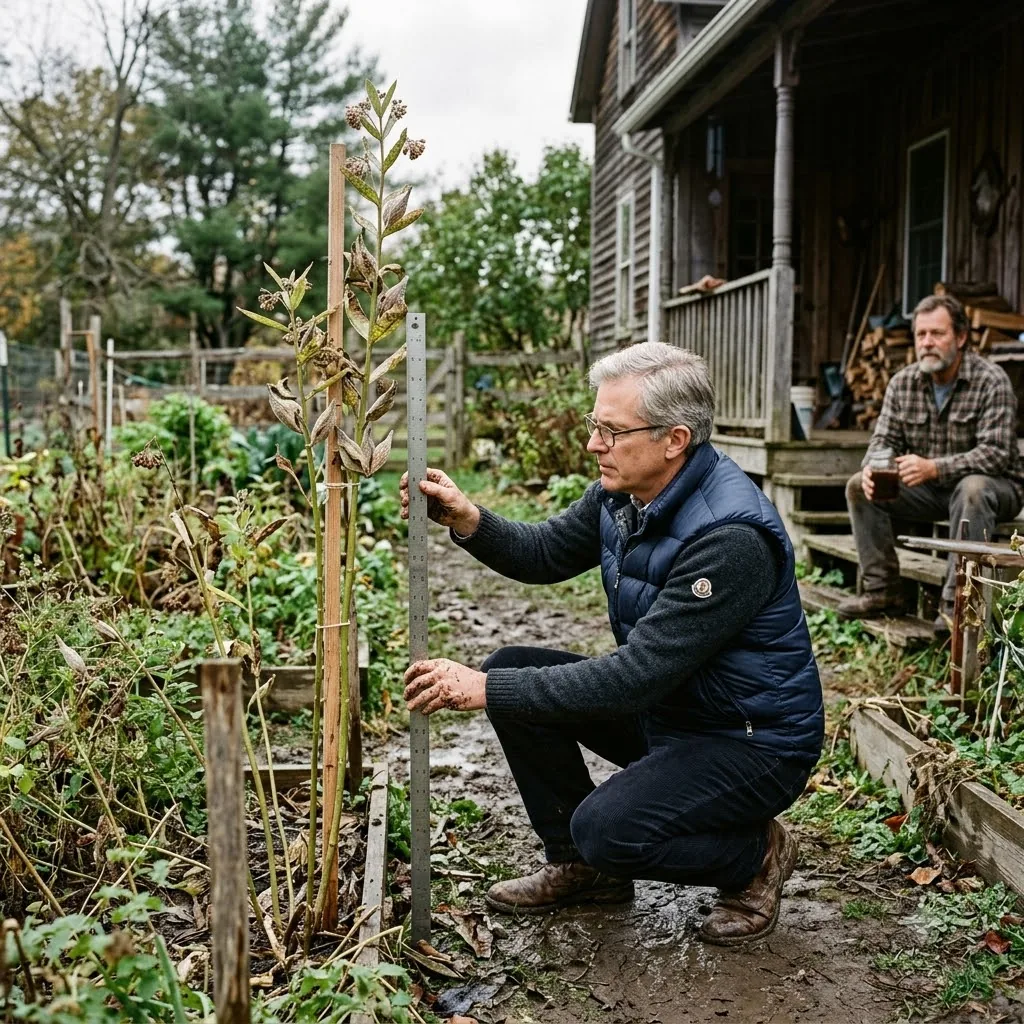
Elias tilted the mason jar, gently working his fingers inside to extract the first papery lump. The praying mantis egg case felt like hardened, ribbed foam. He wedged it carefully into the deep fork of a thick swamp milkweed stem, securing it with unbleached cotton twine from his flannel pocket. He repeated the process five more times, distributing the oothecae strategically through the waist-high sea of vegetation. He placed them deep in the purple ironweed and near the goldenrod buzzing with drowsy bumblebees. This wasn’t just a yard; it was a calibrated engine. The aphids Bryce viewed as a blight were a vital food source. When the mantis nymphs emerged, they would find a feast. The milkweed was also currently hosting three plump monarch caterpillars, aggressively chewing the toxic leaves.
Elias stepped back, staring at the pink citation glaring from his front door. Five hundred dollars. The threat of fifty dollars a day. His chest tightened, a familiar panic rising in his throat. He ripped the pink paper from the wood, taking a sliver of white paint with it, and retreated inside.
His grandmother’s house smelled of dust and dried lavender. Elias opened his scuffed laptop, the cooling fan whining instantly. He bypassed the HOA portal and navigated directly to the State Department of Natural Resources. There was a new state statute designed to protect critical pollinator corridors. Any property officially certified as a Native Wildlife Habitat superseded local HOA aesthetic ordinances. A registered habitat couldn’t be fined for weed height.
He clicked the application portal. The form required a detailed species inventory, photographic evidence, and a certification fee of seventy-five dollars. Elias opened his banking app. His available balance was eighty-nine dollars and twelve cents. The property taxes were looming, the kitchen roof was leaking, but the pink citation demanded a small fortune he simply didn’t have.
He swallowed hard, transferred the funds, and submitted the application. When the confirmation page finally rendered, a bold red banner appeared at the top of the screen: *Thank you for your submission. Due to high seasonal volume, please allow 14 to 21 business days for application review.*
Elias slumped back. Fourteen days. Bryce had given him until the weekend before the daily fines kicked in. The math was a death sentence. By the time the state even looked at his application, the HOA fines would rack up to over a thousand dollars, giving the board leverage to place a lien on the house.
He spent the next two days in a state of hyper-vigilant dread, photographing every inch of the yard to catalog the native bees and caterpillars. He printed the pending state application receipt, carrying the flimsy paper in his back pocket like a shield that hadn’t yet been forged.
On Friday morning, a guttural roar rattled the kitchen windowpanes. It wasn’t the squeak of expensive hiking boots. It was a commercial diesel engine.
Elias bolted to the front window. A massive yellow flatbed truck was idling directly in front of his house. The logo read *Apex Precision Landscaping*. Two men in neon high-visibility shirts were unlatching the heavy metal ramp. Sitting on the trailer were industrial-sized brush hogs and heavy-duty gas weed trimmers.
Bryce stepped out of the passenger side, wearing his navy-blue puffer vest and clutching his aluminum clipboard.
Elias threw open his front door and sprinted down the porch steps. “What is this?” he shouted over the engine noise. “You said I had until the weekend!”
Bryce smiled, a thin, satisfied line across his face. “Good morning, Elias. The HOA board held an emergency closed-session meeting last night. We reviewed the photographic evidence of your property.”
Bryce unclipped a new, bright blue piece of paper from his board. “Given the visual confirmation of severe pest infestations-specifically, the swarms of aphids and unidentifiable egg sacs on your weeds-the board voted to bypass the grace period, citing an immediate health and safety hazard to adjoining properties.”
Elias didn’t take the blue paper. “You can’t do that. I have a pending application with the state. This is a protected pollinator habitat.” He pulled out his folded, crumpled receipt.
Bryce didn’t glance at it. “Pending means nothing to the Oakridge charter. Section seven allows for emergency aesthetic remediation at the homeowner’s expense.” Bryce tapped the blue paper against Elias’s chest, forcing him to take it. “The contractors charge twelve hundred dollars for a hazard-level clear-cutting. That amount, plus your initial fine, has been levied against your property. If it isn’t paid in thirty days, the HOA files a lien against the deed.”
Elias looked at the invoice. Seventeen hundred dollars. A tax lien meant foreclosure. It meant losing his grandmother’s house.
Behind Bryce, the landscapers pulled the starter cords on their commercial trimmers. The two-stroke engines shrieked to life, emitting clouds of blue exhaust. The men stepped onto the edge of Elias’s property, the spinning nylon lines instantly and violently shredding the first row of goldenrod into a mist of green pulp. They were ten feet away from the milkweed stalk holding the mantis eggs and the monarch caterpillars, and they were moving fast.