Story code: ST-001359
Part 1: The Architect’s Scale
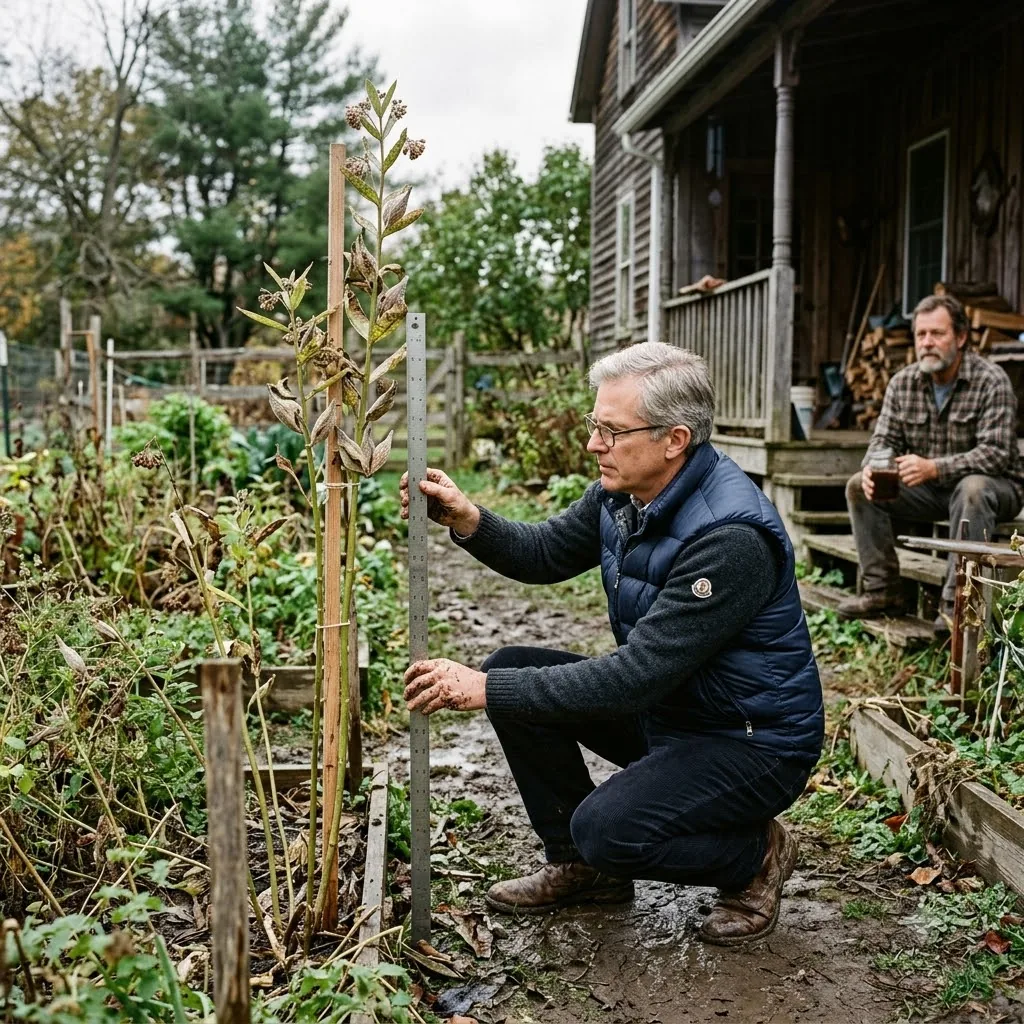
Elias watched through the mesh of the screen door as a man in a spotless, navy-blue puffer vest crouched in the morning mud. The man held a triangular, stainless steel architect’s scale flat against a thick green stalk of milkweed. Bryce, the newly elected president of the Oakridge Homeowners Association, pinched the top of the plant to hold it steady against the etched metal increments. Elias remained completely still in the foyer shadow. His thumb traced the embossed lettering on a heavy glass mason jar. Inside the glass, six papery, walnut-sized lumps clustered together. They were praying mantis egg cases, harvested carefully from the back fence line. He gripped the jar tight enough to turn his knuckles white, tracking Bryce’s every movement as the steel ruler slipped a half-inch in the wet soil.
Bryce pulled a tablet from the oversized pocket of his vest. He tapped the screen, aligning the camera to capture the exact height of the stalk against the architect’s scale. He positioned the lens to ensure the thirty-four-inch mark was clearly visible. The community guidelines dictated a strict maximum of eight inches for uncultivated ground cover. Bryce muttered the measurements aloud, his breath pluming in the damp, early morning air. He wore expensive waterproof hiking boots that had clearly never seen a wilderness trail. The deep treads were currently gathering thick clumps of Elias’s carefully cultivated loam, compressing the aerated soil with every shift of his weight.
The sheer absurdity of the stainless steel ruler pressed against the wild, fibrous stalk held Elias frozen for another long moment. His front yard was a dense, waist-high sea of goldenrod, ironweed, and swamp milkweed. It stood in stark contrast to the manicured, chemically treated, neon-green lawns stretching down the rest of the suburban street. To Elias, it was a functioning, breathing engine. To Bryce, it was a violation of section four, paragraph B.
Elias pushed the screen door open. The rusted hinge squealed, a sharp metallic sound that made Bryce flinch and drop the steel scale into the dirt. Bryce retrieved the tool instantly, wiping the mud frantically against the side of his khaki trousers with a grimace of absolute disgust.
Bryce did not bother with a greeting. He held up the mud-streaked metal ruler like a drawn sword. He declared the plant to be thirty-four inches tall, thirty-four inches of blatant disregard for the neighborhood covenant. He recited the rules regarding unkempt foliage, invasive weeds, and blighted vegetation from memory. Elias stepped down onto the porch boards, keeping the mason jar tucked close to his hip. The egg cases rattled faintly against the glass. He looked at the milkweed, then at the aluminum clipboard Bryce produced from under his arm.
The pink triplicate form was already filled out. Bryce clicked a heavy silver pen. He scribbled a hard, aggressive signature at the bottom of the page. The sound of the ballpoint tearing slightly into the paper echoed across the small front yard, cutting through the morning stillness. Bryce marched up the two wooden porch steps, his boots leaving thick, black clods of earth on the painted boards. He bypassed Elias completely. Instead of handing the paper over, Bryce pulled a roll of heavy-duty packing tape from his pocket, ripped off a jagged strip with his teeth, and slapped the pink citation directly onto the center of the wooden front door.
The bold black ink at the top of the form demanded five hundred dollars. The numbers glared out from the pink paper, framed by the harsh strips of clear tape. Five hundred. Elias stared at the zeroes. He felt a sudden, heavy pressure in his chest, a tightness that gripped his ribs and squeezed. The property taxes were due in three weeks. The roof over his grandmother’s old kitchen needed patching before the autumn storms arrived. The zeroes on the paper seemed to vibrate, mocking the fragile, razor-thin balance of his checking account. If he had to pay this today, the cascade of overdrafts would swallow his month’s wages whole. He shifted his grip on the mason jar, letting the cold glass anchor his hands, forcing his breathing to remain steady and shallow.
Bryce pointed a rigid finger at the taped paper. He stated that the fine was payable to the HOA board within ten business days. He added a strict warning that if the entire yard was not razed to the bare soil by the weekend, the daily fines would kick in immediately. Fifty dollars a day until total compliance was met.
Elias looked past the accusing finger, past the puffer vest, and focused entirely on a single orange aphid crawling up the milkweed stalk Bryce had just measured. The local ecosystem was perfectly balanced, a web of predators and prey waiting to activate. Bryce saw only weeds. Bryce saw only a mechanism to force a neighbor out.
Bryce turned on his heel, his boots squeaking slightly as he descended the stairs. He paused at the edge of the property line, raising his tablet one more time to take a wide-angle shot of the condemned yard.
Elias looked down at the mason jar in his hand. He unscrewed the metal ring. The lid popped with a soft, decisive metallic click. He stepped off the porch, bypassing the devastating pink paper on his door, and walked directly toward the measured stalk, tilting the open mouth of the jar toward the waiting leaves.
Elias watched through the mesh of the screen door as a man in a spotless, navy-blue puffer vest crouched in the morning mud. The man held a triangular, stainless steel architect’s scale flat against a thick green stalk of milkweed. Bryce, the newly elected president of the Oakridge Homeowners Association, pinched the top of the plant to hold it steady against the etched metal increments. Elias remained completely still in the foyer shadow. His thumb traced the embossed lettering on a heavy glass mason jar. Inside the glass, six papery, walnut-sized lumps clustered together. They were praying mantis egg cases, harvested carefully from the back fence line. He gripped the jar tight enough to turn his knuckles white, tracking Bryce’s every movement as the steel ruler slipped a half-inch in the wet soil.
Bryce pulled a tablet from the oversized pocket of his vest. He tapped the screen, aligning the camera to capture the exact height of the stalk against the architect’s scale. He positioned the lens to ensure the thirty-four-inch mark was clearly visible. The community guidelines dictated a strict maximum of eight inches for uncultivated ground cover. Bryce muttered the measurements aloud, his breath pluming in the damp, early morning air. He wore expensive waterproof hiking boots that had clearly never seen a wilderness trail. The deep treads were currently gathering thick clumps of Elias’s carefully cultivated loam, compressing the aerated soil with every shift of his weight.
The sheer absurdity of the stainless steel ruler pressed against the wild, fibrous stalk held Elias frozen for another long moment. His front yard was a dense, waist-high sea of goldenrod, ironweed, and swamp milkweed. It stood in stark contrast to the manicured, chemically treated, neon-green lawns stretching down the rest of the suburban street. To Elias, it was a functioning, breathing engine. To Bryce, it was a violation of section four, paragraph B.
Elias pushed the screen door open. The rusted hinge squealed, a sharp metallic sound that made Bryce flinch and drop the steel scale into the dirt. Bryce retrieved the tool instantly, wiping the mud frantically against the side of his khaki trousers with a grimace of absolute disgust.
Bryce did not bother with a greeting. He held up the mud-streaked metal ruler like a drawn sword. He declared the plant to be thirty-four inches tall, thirty-four inches of blatant disregard for the neighborhood covenant. He recited the rules regarding unkempt foliage, invasive weeds, and blighted vegetation from memory. Elias stepped down onto the porch boards, keeping the mason jar tucked close to his hip. The egg cases rattled faintly against the glass. He looked at the milkweed, then at the aluminum clipboard Bryce produced from under his arm.
The pink triplicate form was already filled out. Bryce clicked a heavy silver pen. He scribbled a hard, aggressive signature at the bottom of the page. The sound of the ballpoint tearing slightly into the paper echoed across the small front yard, cutting through the morning stillness. Bryce marched up the two wooden porch steps, his boots leaving thick, black clods of earth on the painted boards. He bypassed Elias completely. Instead of handing the paper over, Bryce pulled a roll of heavy-duty packing tape from his pocket, ripped off a jagged strip with his teeth, and slapped the pink citation directly onto the center of the wooden front door.
The bold black ink at the top of the form demanded five hundred dollars. The numbers glared out from the pink paper, framed by the harsh strips of clear tape. Five hundred. Elias stared at the zeroes. He felt a sudden, heavy pressure in his chest, a tightness that gripped his ribs and squeezed. The property taxes were due in three weeks. The roof over his grandmother’s old kitchen needed patching before the autumn storms arrived. The zeroes on the paper seemed to vibrate, mocking the fragile, razor-thin balance of his checking account. If he had to pay this today, the cascade of overdrafts would swallow his month’s wages whole. He shifted his grip on the mason jar, letting the cold glass anchor his hands, forcing his breathing to remain steady and shallow.
Bryce pointed a rigid finger at the taped paper. He stated that the fine was payable to the HOA board within ten business days. He added a strict warning that if the entire yard was not razed to the bare soil by the weekend, the daily fines would kick in immediately. Fifty dollars a day until total compliance was met.
Elias looked past the accusing finger, past the puffer vest, and focused entirely on a single orange aphid crawling up the milkweed stalk Bryce had just measured. The local ecosystem was perfectly balanced, a web of predators and prey waiting to activate. Bryce saw only weeds. Bryce saw only a mechanism to force a neighbor out.
Bryce turned on his heel, his boots squeaking slightly as he descended the stairs. He paused at the edge of the property line, raising his tablet one more time to take a wide-angle shot of the condemned yard.
Elias looked down at the mason jar in his hand. He unscrewed the metal ring. The lid popped with a soft, decisive metallic click. He stepped off the porch, bypassing the devastating pink paper on his door, and walked directly toward the measured stalk, tilting the open mouth of the jar toward the waiting leaves.