Story code: ST-001359
Part 4: Root Systems
The two-stroke engine coughed. A thick plume of white smoke sputtered from the exhaust before the motor finally choked and died, out of gas. The sudden silence in the yard was heavy, ringing harshly in Elias’s ears.
Bryce stood in the center of the devastation. His pristine navy-blue puffer vest was speckled with dark mud and the neon-green, toxic sap of the pulverized swamp milkweed. He was chest-heaving, his grip on the commercial weed trimmer white-knuckled. Around his expensive hiking boots lay the shredded remnants of Elias’s carefully calibrated ecosystem. The goldenrod was reduced to damp pulp. The ironweed was decimated.
Elias had not moved from the edge of the driveway. His arms were raised slightly, his elbows tucked against his ribs. His thumbs rested lightly on the edges of his smartphone. The red recording circle had been pulsing steadily on the screen for four uninterrupted minutes. Elias tapped the glass once, saving the high-definition video to his local storage and instantly syncing it to his cloud drive.
“Fifty thousand dollars,” Elias said. His voice was low, carrying easily across the quiet, ruined yard. “That was the baseline fine for a contracted operator.”
Bryce blinked, the manic glaze slowly receding from his eyes as the adrenaline drained away. He stared at Elias, his chest still heaving in the cool morning air.
“But you aren’t a contracted operator,” Elias continued, stepping off the concrete and onto the freshly mutilated soil. “You performed this destruction yourself, acting in your official capacity as the president of the Oakridge Homeowners Association. You executed an emergency remediation against an active federal monitoring zone. The EPA doesn’t just fine the individual in these cases, Bryce. They fine the entity.”
Bryce looked down at the heavy gas trimmer in his hands, as if just realizing he was holding it.
“I have the board’s operating budget from the last open meeting,” Elias said, stopping a few feet from where the tallest milkweed stalk used to stand. “The reserve fund has, what? Thirty-two thousand dollars in it? The EPA will place a federal lien on the HOA’s master insurance policy. They will drain your operating budget entirely. When the rest of the board sees this video, they won’t stand behind you. They’ll sue you for breach of fiduciary duty just to save their own homes from the resulting special assessments.”
Bryce’s mouth opened, but no sound came out. The commercial trimmer slipped from his slick fingers, hitting the soft earth with a dull thud. He looked at the plastic-sleeved federal document still lying in the mud, right next to his dropped aluminum clipboard. The embossed gold seal caught the morning light, smeared with wet dirt.
“The seventeen-hundred-dollar lien you threatened me with is meaningless now,” Elias said calmly. “Your authority here is gone. If you ever step foot on my property again, or if I receive another pink citation for the height of my native vegetation, I will email this video to the Region 5 EPA enforcement office.”
Bryce stared at the pulverized milkweed. The reality of his tantrum was settling into his shoulders, visibly crushing his posture. He had traded a five-hundred-dollar aesthetic fine for the complete financial ruin of the organization that gave him his power. Without a word, without picking up his clipboard or the heavy machinery he had commandeered from the fleeing landscapers, Bryce turned. He stumbled slightly over the curb, his mud-caked boots dragging across the asphalt as he walked slowly back toward his own pristine, heavily mortgaged property.
Elias watched him go until Bryce disappeared around the bend of the suburban street.
Then, Elias turned his attention to the ground.
The destruction was absolute. The surface of his yard looked like a war zone. The waist-high sea of life had been violently leveled. He knelt in the damp soil, his jeans soaking up the moisture. The scent of raw, shredded vegetation was overwhelmingly sharp. He reached out, his fingers brushing against the jagged, splintered stalk of the primary swamp milkweed. The monarch caterpillars were gone, vaporized by the spinning nylon. He spotted a piece of ribbed, foam-like material half-buried in the mud-a fragment of a mantis egg case. It was irreparably crushed.
Elias closed his eyes for a moment, letting the grief wash over him. He had spent months cultivating this micro-habitat, nursing the fragile balance of predator and prey. Bryce had destroyed a season’s worth of careful work in under five minutes.
But as Elias opened his eyes and dug his bare hands into the cool, damp earth, the grief gave way to a quiet, enduring resolve.
Bryce did not understand how native ecosystems functioned. He only understood surfaces. He only saw the visible stalks, the leaves, the immediate aesthetic. He didn’t understand that the true strength of a prairie habitat wasn’t in the fragile above-ground foliage.
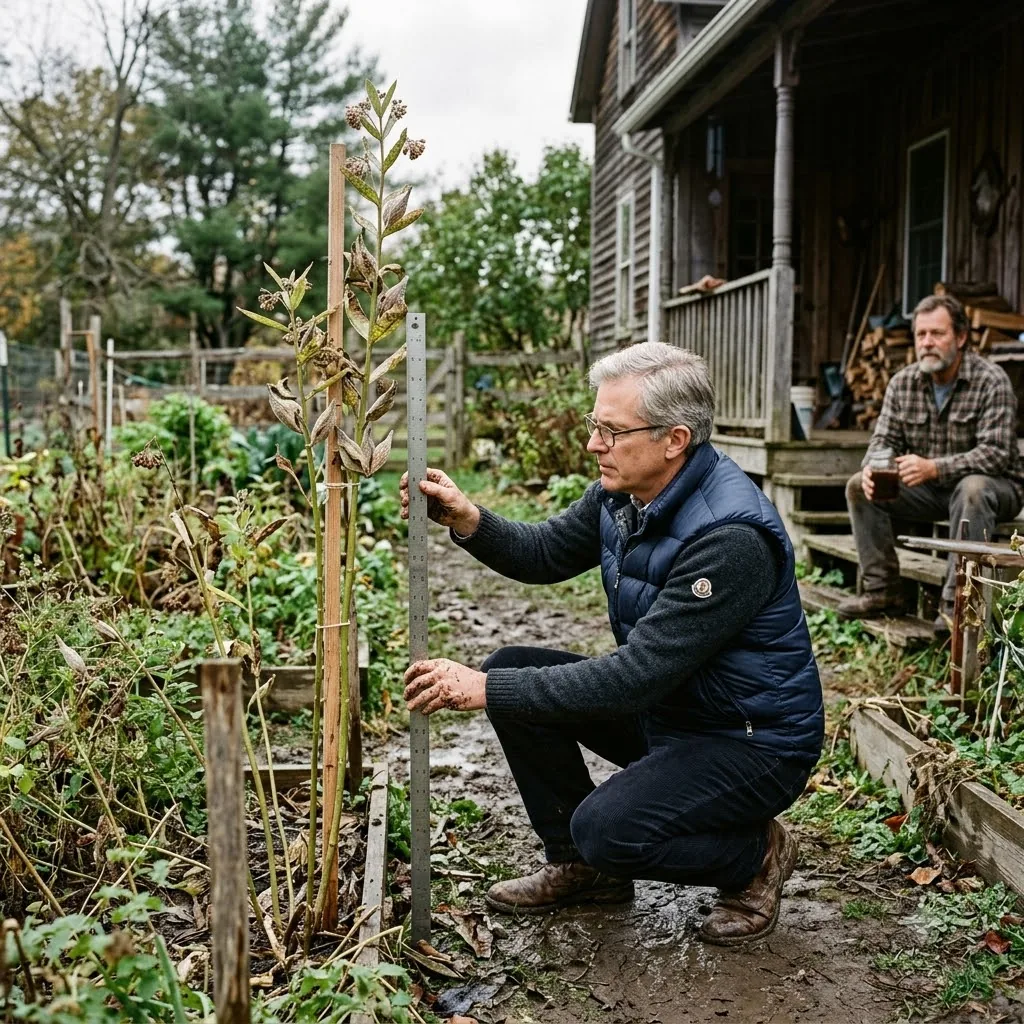
Elias’s fingers traced the thick, unbroken taproot of the milkweed beneath the topsoil. It was massive, plunging deep into the earth, anchoring itself far beyond the reach of any spinning blade or petty tyrant. The goldenrod, the ironweed, the asters-their complex root systems were entirely intact, woven together in a vast, subterranean network of stored energy and resilience.
They had been cut down, but they were far from dead.
Elias began to clear away the neon plastic debris left behind by the trimmer line. He worked methodically, sorting the artificial garbage from the organic matter. The chopped leaves and stalks would serve as a natural mulch, feeding the very soil Bryce had tried to conquer. The federal protection remained active. The HOA’s reign over his land was permanently broken. And beneath the surface, safe in the dark, the roots were already preparing to push new life up through the mud.