Story code: ST-001366
Part 1: The Price of the Pedestal
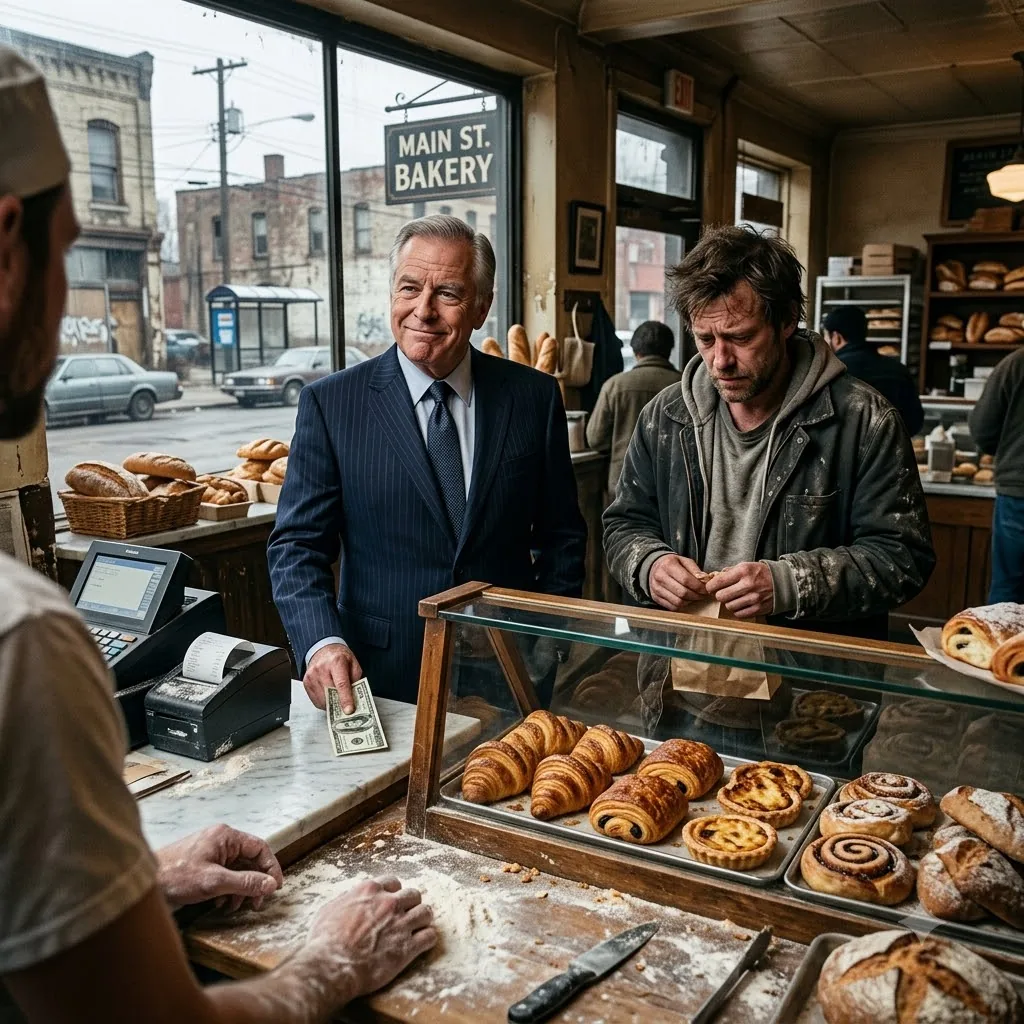
The chime above the door did not merely ring. It screamed against the brass frame. I barely had time to wipe the fine dusting of rye flour from my dark apron before Silas shoved Greg through the threshold. Greg stumbled hard. His worn, salt-stained sneakers squeaked violently on my freshly mopped Italian tile. He threw out his arms, his shaking hands slapping against the edge of the pastry case to stop his fall. Silas strode in right behind him, a wall of tailored wool and expensive cologne, blocking the only exit.
Silas did not look at me. He pointed a manicured finger straight at my chest, keeping his cold eyes fixed on Greg.
“Look at him, Greg,” Silas barked, his voice echoing sharply off the subway tile walls. “Look at David. Up before dawn every single day. It is that inherent cultural work ethic. They just know how to hustle, unlike the trash we breed around here.”
My jaw locked tight. I drew in a breath, preparing to tell Silas to get out of my shop, to tell him to keep his hands off people in my space. Before the first sound could leave my throat, Silas slammed a crisp hundred-dollar bill flat against the glass display right over my artisan eclairs. The sharp smack made Greg flinch violently. The green bill sat there, a bright and immediate gag order. It was meant to buy my silence, my complicity, and my space all in one swift motion.
I stared at the money, then at Greg. Greg kept his bloodshot eyes glued to his own muddy shoelaces. He was vibrating with a deep, bone-rattling tremor. Sweat beaded on his pale forehead despite the bitter December wind howling outside. I recognized that specific shake. I knew the agonizing sensation of your skeleton buzzing while the rest of the world looked down on you in disgust. Silas had absolutely no idea about my past. To him and the rest of the town council, I was the ultimate model minority, the shiny new fixture on Main Street who baked flawless sourdough and single-handedly kept the commercial property values high.
“A large black coffee for my friend here,” Silas commanded, tapping the glass directly above a delicate pear tart. “And a croissant. The expensive kind. He needs to physically taste what honest, unrelenting labor feels like.”
I stood frozen behind the register. My hands gripped the edge of the stainless steel counter so hard my knuckles burned with the effort. My bakery smelled of browned butter and caramelized sugar. It was a warm, pristine sanctuary I had built from absolute nothing, scrubbing ovens until my fingers bled, smiling at endless chamber of commerce meetings, burying every trace of my old life. Now Silas was polluting my safe room. He was weaponizing my careful survival to beat down a man who was currently drowning in the exact same ocean I had barely escaped.
Silas leaned against the counter, perfectly at ease. He treated my shop like a classroom and me like a visual aid. He went on a tirade about bootstraps and discipline, making sure to highlight my flawless floors and the precise rows of my baked goods. He contrasted my pristine shelves with Greg’s torn jacket and twitching hands. The words were a torrent of casual cruelty wrapped in praise for my heritage. Silas loved me because I was a convenient bludgeon. I was the living, breathing proof that anyone could make it, which gave him full permission to despise the locals who struggled.
Greg let out a low, ragged breath that sounded like a sob. He leaned his forehead against the cold glass of the display case, completely defeated, taking the verbal beating because he was too sick to walk back out into the cold. The sight of him crumbling under Silas’s words made my chest tight. Every instinct screamed at me to throw the money back, to kick Silas to the curb, to offer Greg the back room where he could ride out the shakes in peace. But doing that meant breaking the illusion. It meant showing Silas that I was much closer to Greg than I was to the wealthy businessmen who funded my expansion.
I reached out and took the hundred-dollar bill.
Silas smirked, victorious, assuming the money had secured the exact subservient performance he expected. I turned my back to them and walked over to the espresso machine. Every hiss of the steam wand felt like pressure building behind my ribs. I poured the shot and filled the cup, my movements mechanical and precise, exactly the way the town expected their favorite local success story to behave.
I walked back to the register and set the hot cup on the counter in front of Greg. He did not reach for it. He just kept shaking, his eyes darting desperately toward the street outside. Silas stepped closer to Greg, raising his hand to clap the fragile man on the shoulder for another round of humiliation.
I reached under the counter and wrapped my fingers tightly around the heavy steel handle of my ice mallet.
The chime above the door did not merely ring. It screamed against the brass frame. I barely had time to wipe the fine dusting of rye flour from my dark apron before Silas shoved Greg through the threshold. Greg stumbled hard. His worn, salt-stained sneakers squeaked violently on my freshly mopped Italian tile. He threw out his arms, his shaking hands slapping against the edge of the pastry case to stop his fall. Silas strode in right behind him, a wall of tailored wool and expensive cologne, blocking the only exit.
Silas did not look at me. He pointed a manicured finger straight at my chest, keeping his cold eyes fixed on Greg.
“Look at him, Greg,” Silas barked, his voice echoing sharply off the subway tile walls. “Look at David. Up before dawn every single day. It is that inherent cultural work ethic. They just know how to hustle, unlike the trash we breed around here.”
My jaw locked tight. I drew in a breath, preparing to tell Silas to get out of my shop, to tell him to keep his hands off people in my space. Before the first sound could leave my throat, Silas slammed a crisp hundred-dollar bill flat against the glass display right over my artisan eclairs. The sharp smack made Greg flinch violently. The green bill sat there, a bright and immediate gag order. It was meant to buy my silence, my complicity, and my space all in one swift motion.
I stared at the money, then at Greg. Greg kept his bloodshot eyes glued to his own muddy shoelaces. He was vibrating with a deep, bone-rattling tremor. Sweat beaded on his pale forehead despite the bitter December wind howling outside. I recognized that specific shake. I knew the agonizing sensation of your skeleton buzzing while the rest of the world looked down on you in disgust. Silas had absolutely no idea about my past. To him and the rest of the town council, I was the ultimate model minority, the shiny new fixture on Main Street who baked flawless sourdough and single-handedly kept the commercial property values high.
“A large black coffee for my friend here,” Silas commanded, tapping the glass directly above a delicate pear tart. “And a croissant. The expensive kind. He needs to physically taste what honest, unrelenting labor feels like.”
I stood frozen behind the register. My hands gripped the edge of the stainless steel counter so hard my knuckles burned with the effort. My bakery smelled of browned butter and caramelized sugar. It was a warm, pristine sanctuary I had built from absolute nothing, scrubbing ovens until my fingers bled, smiling at endless chamber of commerce meetings, burying every trace of my old life. Now Silas was polluting my safe room. He was weaponizing my careful survival to beat down a man who was currently drowning in the exact same ocean I had barely escaped.
Silas leaned against the counter, perfectly at ease. He treated my shop like a classroom and me like a visual aid. He went on a tirade about bootstraps and discipline, making sure to highlight my flawless floors and the precise rows of my baked goods. He contrasted my pristine shelves with Greg’s torn jacket and twitching hands. The words were a torrent of casual cruelty wrapped in praise for my heritage. Silas loved me because I was a convenient bludgeon. I was the living, breathing proof that anyone could make it, which gave him full permission to despise the locals who struggled.
Greg let out a low, ragged breath that sounded like a sob. He leaned his forehead against the cold glass of the display case, completely defeated, taking the verbal beating because he was too sick to walk back out into the cold. The sight of him crumbling under Silas’s words made my chest tight. Every instinct screamed at me to throw the money back, to kick Silas to the curb, to offer Greg the back room where he could ride out the shakes in peace. But doing that meant breaking the illusion. It meant showing Silas that I was much closer to Greg than I was to the wealthy businessmen who funded my expansion.
I reached out and took the hundred-dollar bill.
Silas smirked, victorious, assuming the money had secured the exact subservient performance he expected. I turned my back to them and walked over to the espresso machine. Every hiss of the steam wand felt like pressure building behind my ribs. I poured the shot and filled the cup, my movements mechanical and precise, exactly the way the town expected their favorite local success story to behave.
I walked back to the register and set the hot cup on the counter in front of Greg. He did not reach for it. He just kept shaking, his eyes darting desperately toward the street outside. Silas stepped closer to Greg, raising his hand to clap the fragile man on the shoulder for another round of humiliation.
I reached under the counter and wrapped my fingers tightly around the heavy steel handle of my ice mallet.