Story code: ST-001529
Part 1: The Glass Cliff
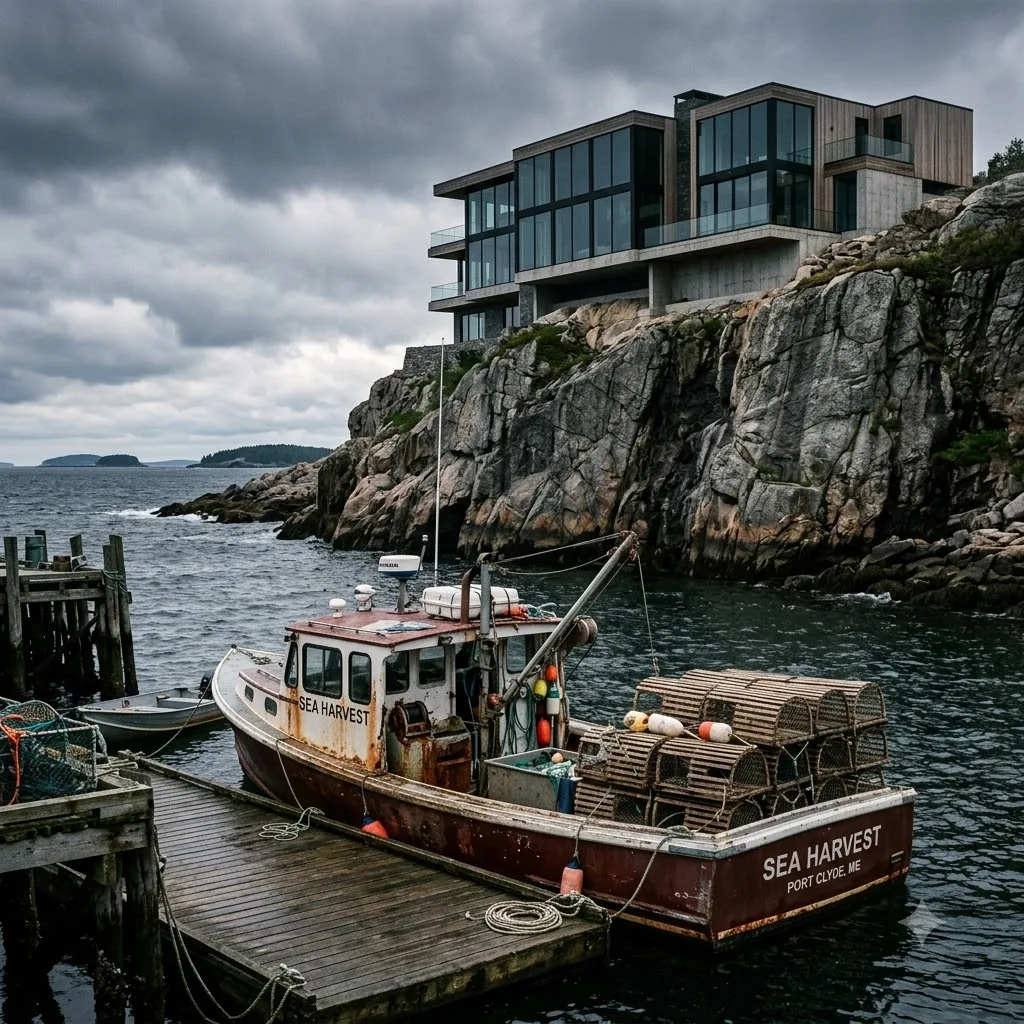
The winch groaned, spitting rusty water as Tommy hauled the eightieth trap over the gunwale. He slammed the wire cage onto the wet deck, staring at the tangled brown kelp and absolutely nothing else inside. The coastal water felt like tepid bathwater splashing against his rubber boots, eighty degrees of stagnant heat suffocating the shoreline. He wiped a thick layer of sweat and salt from his forehead with the back of a canvas glove, his eyes drifting up the sheer granite face of the bluff. A massive house sat anchored to the cliff edge, three stories of seamless glass and steel glaring down at the bay. The estate was perfectly silent, its dark windows reflecting the empty horizon.
Tommy kicked the empty trap toward the stern, sliding it into the graveyard of seventy-nine other barren cages. The engine hummed a low, unsteady rhythm beneath the deck plates. The fuel gauge on the console dipped dangerously close to the red line, and the ledger sitting in his truck at the harbor was already bleeding red. He grabbed the heavy throttle lever and pushed it forward, turning the bow back toward the mainland.
The harbor was dead calm when he maneuvered into the commercial slip. He expected the usual chaotic hum of refrigerated trucks and the clatter of unloading crates, but the loading zone was eerily quiet. Town Deputy Miller stood next to the wooden pilings, his tan uniform shirt sticking to his chest in the oppressive humidity. Miller did not meet Tommy’s eyes as the fiberglass hull bumped against the rubber dock bumpers. He simply reached out and held a thick, legal-sized envelope over the water, the flap already torn open.
Tommy cut the engine, grabbed the mooring line, and stepped up onto the sun-bleached planks. He tied a fast cleat hitch and took the envelope. Miller finally looked up, pointing a thick thumb back toward the paved parking lot.
The paperwork inside was dense, heavily stamped with the county clerk’s blue seal and a court injunction order. The bold headers spelled out a complete freeze on all commercial dock access, effective immediately. The plaintiff listed at the top was a political action committee Tommy recognized from the glossy, oversized mailers stuffed in his mailbox last month. It was the same PAC funded entirely by the man living behind the glass walls up on the cliff.
“They chained the primary loading ramp an hour ago,” Miller said, his voice flat. “Sheriff says nobody loads out, nobody docks a commercial vessel until the preliminary hearing next month.”
Tommy looked past the deputy. A heavy galvanized chain was wrapped tightly around the steel stanchions at the top of the ramp. A brand new brass master lock hung from the thickest link. He looked back at the envelope, tracing the printed name of the PAC with a calloused thumb. He calculated the fuel cost of the wasted trip, the upcoming boat payment, and the stack of empty traps rotting on his deck. He folded the thick stack of paper in half, shoved it deep into his back pocket, and walked past the deputy without another word.
His rusted pickup truck started with a violent shudder in the gravel lot. He threw it into drive and took the coastal highway north, pushing the heavy engine until the needle buried itself past sixty. The road narrowed, winding through dense stands of pitch pine before hooking sharply toward the sea. He turned onto the private drive marked by a modest, unlit stone pillar. The heavy iron security gates were wide open, a pair of landscaping trucks parked just inside the perimeter line. Tommy ignored the digital call box. He drove his truck straight past the idling commercial mowers, kicking up a massive rooster tail of white crushed shell on the pristine driveway.
He parked diagonally across the stamped concrete turnaround, deliberately cutting off a sleek black town car. The sheer scale of the house was dizzying up close. The glass walls offered a straight sightline completely through the building, revealing a minimalist living room and a panoramic, unobstructed view of the ocean on the other side. Tommy killed the engine and stepped out into the heat. He pulled the folded injunction from his pocket and walked up the wide, perfectly leveled slate steps.
The front door was solid oak, standing ten feet tall and resting slightly ajar. Cool, aggressively air-conditioned air spilled out onto the hot stone patio, smelling of ozone and expensive citrus wood polish. Tommy pushed the heavy door open with his shoulder, his wet rubber boots squeaking loudly against the polished marble floor of the grand foyer.
Rapid footsteps clicked against the stone flooring from a hallway to his left. A man in a tailored charcoal suit rounded the corner, stopping dead when he saw Tommy standing in the entryway. The man’s eyes darted from Tommy’s salt-stained canvas jacket to the heavy boots tracking seawater onto the imported marble. Tommy unfolded the injunction and took a deliberate step forward, gripping the thick paper until his knuckles turned white.
The man in the suit raised a hand, his mouth opening to shout an order. Tommy slammed the legal document down onto the delicate glass entryway table, the heavy crack of paper and fist against the surface echoing sharply up into the vaulted ceiling.
“You have five seconds to explain the chains on the dock,” Tommy said.
The man stared down at the crumpled document, then looked slowly back up at Tommy, his expression tightening into a cold, practiced mask as a second, heavier set of footsteps echoed down the sweeping glass staircase.
The winch groaned, spitting rusty water as Tommy hauled the eightieth trap over the gunwale. He slammed the wire cage onto the wet deck, staring at the tangled brown kelp and absolutely nothing else inside. The coastal water felt like tepid bathwater splashing against his rubber boots, eighty degrees of stagnant heat suffocating the shoreline. He wiped a thick layer of sweat and salt from his forehead with the back of a canvas glove, his eyes drifting up the sheer granite face of the bluff. A massive house sat anchored to the cliff edge, three stories of seamless glass and steel glaring down at the bay. The estate was perfectly silent, its dark windows reflecting the empty horizon.
Tommy kicked the empty trap toward the stern, sliding it into the graveyard of seventy-nine other barren cages. The engine hummed a low, unsteady rhythm beneath the deck plates. The fuel gauge on the console dipped dangerously close to the red line, and the ledger sitting in his truck at the harbor was already bleeding red. He grabbed the heavy throttle lever and pushed it forward, turning the bow back toward the mainland.
The harbor was dead calm when he maneuvered into the commercial slip. He expected the usual chaotic hum of refrigerated trucks and the clatter of unloading crates, but the loading zone was eerily quiet. Town Deputy Miller stood next to the wooden pilings, his tan uniform shirt sticking to his chest in the oppressive humidity. Miller did not meet Tommy’s eyes as the fiberglass hull bumped against the rubber dock bumpers. He simply reached out and held a thick, legal-sized envelope over the water, the flap already torn open.
Tommy cut the engine, grabbed the mooring line, and stepped up onto the sun-bleached planks. He tied a fast cleat hitch and took the envelope. Miller finally looked up, pointing a thick thumb back toward the paved parking lot.
The paperwork inside was dense, heavily stamped with the county clerk’s blue seal and a court injunction order. The bold headers spelled out a complete freeze on all commercial dock access, effective immediately. The plaintiff listed at the top was a political action committee Tommy recognized from the glossy, oversized mailers stuffed in his mailbox last month. It was the same PAC funded entirely by the man living behind the glass walls up on the cliff.
“They chained the primary loading ramp an hour ago,” Miller said, his voice flat. “Sheriff says nobody loads out, nobody docks a commercial vessel until the preliminary hearing next month.”
Tommy looked past the deputy. A heavy galvanized chain was wrapped tightly around the steel stanchions at the top of the ramp. A brand new brass master lock hung from the thickest link. He looked back at the envelope, tracing the printed name of the PAC with a calloused thumb. He calculated the fuel cost of the wasted trip, the upcoming boat payment, and the stack of empty traps rotting on his deck. He folded the thick stack of paper in half, shoved it deep into his back pocket, and walked past the deputy without another word.
His rusted pickup truck started with a violent shudder in the gravel lot. He threw it into drive and took the coastal highway north, pushing the heavy engine until the needle buried itself past sixty. The road narrowed, winding through dense stands of pitch pine before hooking sharply toward the sea. He turned onto the private drive marked by a modest, unlit stone pillar. The heavy iron security gates were wide open, a pair of landscaping trucks parked just inside the perimeter line. Tommy ignored the digital call box. He drove his truck straight past the idling commercial mowers, kicking up a massive rooster tail of white crushed shell on the pristine driveway.
He parked diagonally across the stamped concrete turnaround, deliberately cutting off a sleek black town car. The sheer scale of the house was dizzying up close. The glass walls offered a straight sightline completely through the building, revealing a minimalist living room and a panoramic, unobstructed view of the ocean on the other side. Tommy killed the engine and stepped out into the heat. He pulled the folded injunction from his pocket and walked up the wide, perfectly leveled slate steps.
The front door was solid oak, standing ten feet tall and resting slightly ajar. Cool, aggressively air-conditioned air spilled out onto the hot stone patio, smelling of ozone and expensive citrus wood polish. Tommy pushed the heavy door open with his shoulder, his wet rubber boots squeaking loudly against the polished marble floor of the grand foyer.
Rapid footsteps clicked against the stone flooring from a hallway to his left. A man in a tailored charcoal suit rounded the corner, stopping dead when he saw Tommy standing in the entryway. The man’s eyes darted from Tommy’s salt-stained canvas jacket to the heavy boots tracking seawater onto the imported marble. Tommy unfolded the injunction and took a deliberate step forward, gripping the thick paper until his knuckles turned white.
The man in the suit raised a hand, his mouth opening to shout an order. Tommy slammed the legal document down onto the delicate glass entryway table, the heavy crack of paper and fist against the surface echoing sharply up into the vaulted ceiling.
“You have five seconds to explain the chains on the dock,” Tommy said.
The man stared down at the crumpled document, then looked slowly back up at Tommy, his expression tightening into a cold, practiced mask as a second, heavier set of footsteps echoed down the sweeping glass staircase.