Story code: ST-001587
Part 1: When the Orchard Went Silent
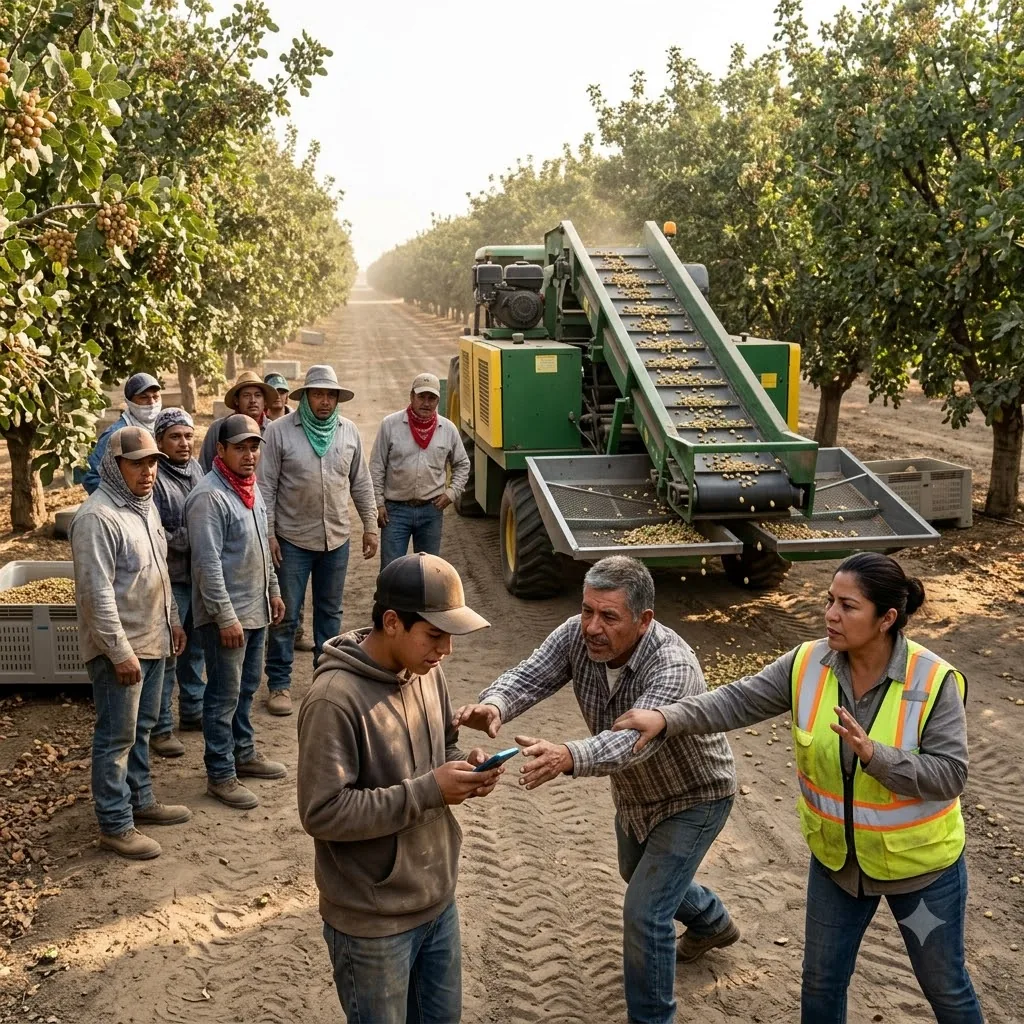
The shaker died so suddenly the last pistachios hit the metal catch frame one by one, small hard ticks in a silence too big for the row. Mateo heard each one. Then he heard nothing at all.
Men stood where they had stopped, gloves half raised, shoulders locked. Dust hung in the lane between the trees. Near the machine, something bright lay crooked against the dull steel, and nobody stepped close enough to make sense of it. Nobody except Emiliano, whose phone began buzzing in his back pocket so hard Mateo could hear it from three men away.
Mateo moved before he looked again.
“Give me that,” he said, already reaching for his son.
Emiliano jerked around, eyes wide, face gone pale under the dirt. He was nineteen but in that second looked much younger, frozen in the middle of deciding whether to run toward the machine or away from it. The phone buzzed again. A blue-white light flashed through the thin cotton of his shirt.
“Apa,” Emiliano said.
“No. Hand it here.”
The others started talking all at once then stopped just as fast when Rick came down the row at a half run, boots slipping in husks. Rick was broad through the chest, radio clipped high, hat pulled low, the kind of man who always seemed to arrive already angry. He took in the cluster around the machine, the men looking anywhere but at each other, Emiliano with his phone half out, and lifted both hands like he was pushing the whole orchard back.
“Nobody move,” Rick said. “Nobody touch anything. Nobody calls anybody till we get straight what happened here.”
Mateo got to Emiliano first and closed his hand over the phone in his son’s pocket. The buzzing stopped under his palm. He felt Emiliano tense, not fighting him, just shocked enough to be still.
Behind them, someone said a name Mateo did not catch. Another voice, shaky and too loud, said they needed help now. A third told him to shut up.
Mateo kept his body between Emiliano and Rick. “Let me see it.”
Emiliano pulled the phone free but did not let go. The screen lit both their hands. Three missed calls from a number Mateo did not know. Then the screen shifted as another call pushed in, vibrating against Mateo’s fingers.
Rick was there before Mateo could turn the phone facedown.
“I said no phones.” Rick’s voice carried down the row, flat and sharp. “Put it away. Every one of you.”
No one answered. Men dropped their eyes. One older picker crossed himself with a shaking thumb and then shoved his hand under his opposite arm like he was ashamed to be seen doing it.
Mateo could smell hydraulic fluid, hot metal, and the green bitter smell of split hulls under the sweeter dust of the nuts. The machine’s engine ticked as it cooled. From where he stood he could see only a boot near the rear wheel, turned at an angle that made his own knee go weak.
He tightened his grip on the phone.
“He needs an ambulance,” Mateo said.
Rick looked at him, then at Emiliano, and the pause was small but hard. “And he’ll get one when I make the call I need to make. Not before.”
“What call is that.”
“The right one. The company. Safety. You want to make this worse, Mateo.”
Mateo heard the shift in it. Not just an order. A warning set out where everyone could hear. He knew that voice. Rick used it when someone asked about missing hours, when a man wanted water brought closer to the far rows, when the younger workers got loud at lunch and forgot who signed the sheets.
Emiliano’s thumb twitched on the edge of the phone. He was staring past Rick now, toward the machine, like if he looked long enough the shape on the ground might change into something less terrible.
“Don’t look,” Mateo said quietly.
His son did not answer.
Rick took another step in. “You especially,” he said to Emiliano. “You keep that thing in your pocket. No pictures. No calls. No messages. You hear me.”
That landed on the row differently than the rest. Heads lifted. Not much. Just enough for Mateo to feel every eye trying not to watch his son.
Emiliano swallowed. “I wasn’t taking pictures.”
“Then prove it by locking the screen and standing still.”
Mateo saw the pulse jumping in Emiliano’s neck. The phone buzzed once more, this time from inside a text thread, a quick angry stutter. Emiliano glanced down by reflex. Rick saw it too.
“Give it here,” Rick said.
“No,” Mateo said.
The word surprised even him. It came out low, almost calm. A few men shifted their weight in the dirt. Somewhere farther down the block, a sprinkler valve clicked, then nothing followed. No water. The whole place felt as if it had taken a breath and forgotten how to let it out.
Rick’s jaw set. “You want the sheriff showing up before we know what story they walk into. You want everybody here tied up all day. You want names written down, addresses checked, cars searched on the road out. Is that what you want.”
Mateo did not answer. He did not need to. Rick had widened the circle on purpose. Not just the hurt man by the machine now. Not just work. Streets. Papers. Sons. Houses people drove home to after dark. He could feel the trap taking shape because Rick was building it out loud, board by board, and laying it at Emiliano’s feet for the others to see.
The injured man made a sound then, not a word, more air than voice. Every head snapped toward the machine. Even Rick turned.
In that sliver of distraction, Mateo took the phone fully from Emiliano’s hand. His thumb shook once as he woke the screen. Emergency call. The numbers glowed huge and simple. He pressed 9, then 1, then started for the last number.
Rick’s hand clamped over the phone so hard the bones in Mateo’s fingers ground together.
“Don’t,” Rick said.
The shaker died so suddenly the last pistachios hit the metal catch frame one by one, small hard ticks in a silence too big for the row. Mateo heard each one. Then he heard nothing at all.
Men stood where they had stopped, gloves half raised, shoulders locked. Dust hung in the lane between the trees. Near the machine, something bright lay crooked against the dull steel, and nobody stepped close enough to make sense of it. Nobody except Emiliano, whose phone began buzzing in his back pocket so hard Mateo could hear it from three men away.
Mateo moved before he looked again.
“Give me that,” he said, already reaching for his son.
Emiliano jerked around, eyes wide, face gone pale under the dirt. He was nineteen but in that second looked much younger, frozen in the middle of deciding whether to run toward the machine or away from it. The phone buzzed again. A blue-white light flashed through the thin cotton of his shirt.
“Apa,” Emiliano said.
“No. Hand it here.”
The others started talking all at once then stopped just as fast when Rick came down the row at a half run, boots slipping in husks. Rick was broad through the chest, radio clipped high, hat pulled low, the kind of man who always seemed to arrive already angry. He took in the cluster around the machine, the men looking anywhere but at each other, Emiliano with his phone half out, and lifted both hands like he was pushing the whole orchard back.
“Nobody move,” Rick said. “Nobody touch anything. Nobody calls anybody till we get straight what happened here.”
Mateo got to Emiliano first and closed his hand over the phone in his son’s pocket. The buzzing stopped under his palm. He felt Emiliano tense, not fighting him, just shocked enough to be still.
Behind them, someone said a name Mateo did not catch. Another voice, shaky and too loud, said they needed help now. A third told him to shut up.
Mateo kept his body between Emiliano and Rick. “Let me see it.”
Emiliano pulled the phone free but did not let go. The screen lit both their hands. Three missed calls from a number Mateo did not know. Then the screen shifted as another call pushed in, vibrating against Mateo’s fingers.
Rick was there before Mateo could turn the phone facedown.
“I said no phones.” Rick’s voice carried down the row, flat and sharp. “Put it away. Every one of you.”
No one answered. Men dropped their eyes. One older picker crossed himself with a shaking thumb and then shoved his hand under his opposite arm like he was ashamed to be seen doing it.
Mateo could smell hydraulic fluid, hot metal, and the green bitter smell of split hulls under the sweeter dust of the nuts. The machine’s engine ticked as it cooled. From where he stood he could see only a boot near the rear wheel, turned at an angle that made his own knee go weak.
He tightened his grip on the phone.
“He needs an ambulance,” Mateo said.
Rick looked at him, then at Emiliano, and the pause was small but hard. “And he’ll get one when I make the call I need to make. Not before.”
“What call is that.”
“The right one. The company. Safety. You want to make this worse, Mateo.”
Mateo heard the shift in it. Not just an order. A warning set out where everyone could hear. He knew that voice. Rick used it when someone asked about missing hours, when a man wanted water brought closer to the far rows, when the younger workers got loud at lunch and forgot who signed the sheets.
Emiliano’s thumb twitched on the edge of the phone. He was staring past Rick now, toward the machine, like if he looked long enough the shape on the ground might change into something less terrible.
“Don’t look,” Mateo said quietly.
His son did not answer.
Rick took another step in. “You especially,” he said to Emiliano. “You keep that thing in your pocket. No pictures. No calls. No messages. You hear me.”
That landed on the row differently than the rest. Heads lifted. Not much. Just enough for Mateo to feel every eye trying not to watch his son.
Emiliano swallowed. “I wasn’t taking pictures.”
“Then prove it by locking the screen and standing still.”
Mateo saw the pulse jumping in Emiliano’s neck. The phone buzzed once more, this time from inside a text thread, a quick angry stutter. Emiliano glanced down by reflex. Rick saw it too.
“Give it here,” Rick said.
“No,” Mateo said.
The word surprised even him. It came out low, almost calm. A few men shifted their weight in the dirt. Somewhere farther down the block, a sprinkler valve clicked, then nothing followed. No water. The whole place felt as if it had taken a breath and forgotten how to let it out.
Rick’s jaw set. “You want the sheriff showing up before we know what story they walk into. You want everybody here tied up all day. You want names written down, addresses checked, cars searched on the road out. Is that what you want.”
Mateo did not answer. He did not need to. Rick had widened the circle on purpose. Not just the hurt man by the machine now. Not just work. Streets. Papers. Sons. Houses people drove home to after dark. He could feel the trap taking shape because Rick was building it out loud, board by board, and laying it at Emiliano’s feet for the others to see.
The injured man made a sound then, not a word, more air than voice. Every head snapped toward the machine. Even Rick turned.
In that sliver of distraction, Mateo took the phone fully from Emiliano’s hand. His thumb shook once as he woke the screen. Emergency call. The numbers glowed huge and simple. He pressed 9, then 1, then started for the last number.
Rick’s hand clamped over the phone so hard the bones in Mateo’s fingers ground together.
“Don’t,” Rick said.