Story code: ST-001714
Part 1: The Cul-de-Sac Trap
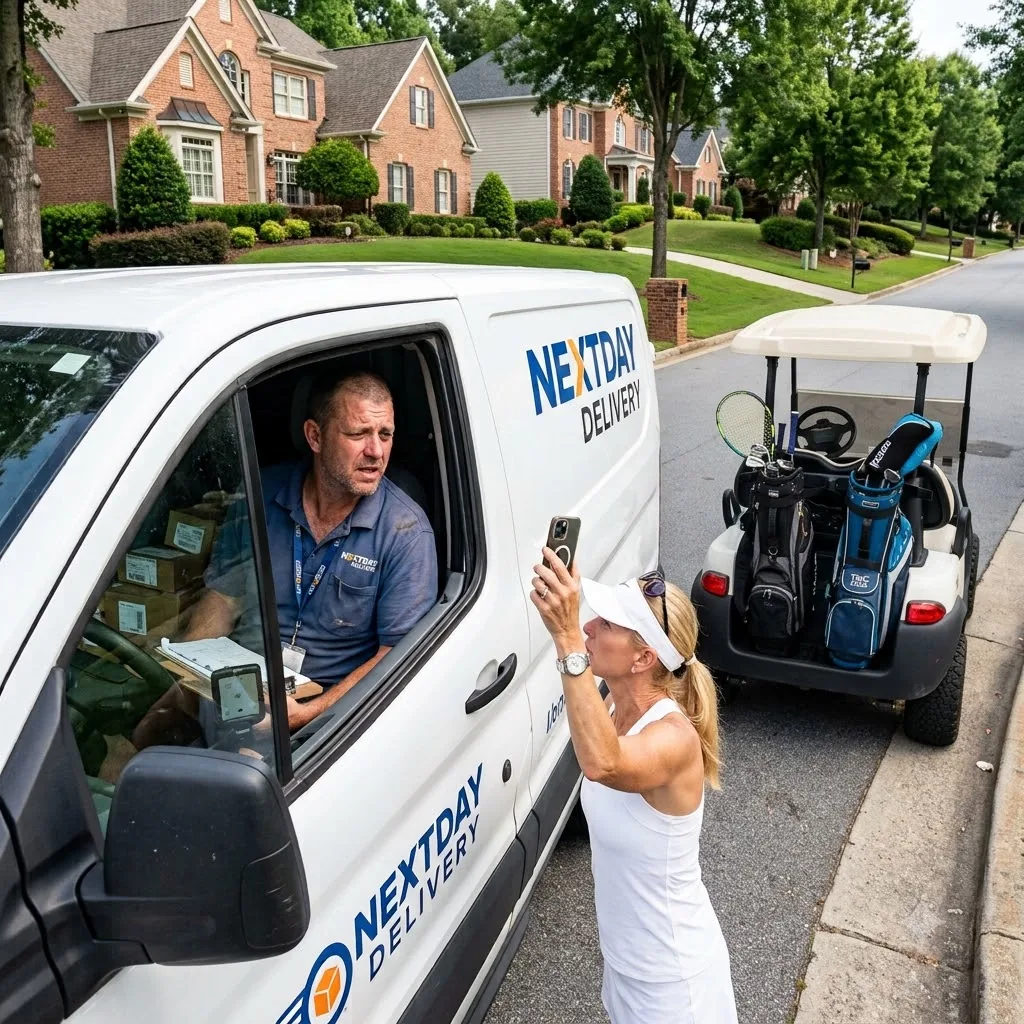
Mateo slammed on the brakes as a lifted, candy-apple-red golf cart swerved sideways across the cul-de-sac, pinning his delivery van perfectly against the curb. Before the dust even settled on the windshield, the automated dispatch tablet on his dashboard shrieked a high-pitched idle warning, logging a critical route delay. A woman in pristine tennis whites was already marching up to his driver-side window, the dark lenses of her smartphone aimed directly at his face.
The tablet beeped again, a sharp metallic chirp that meant his delivery-per-hour metric had just dropped into the red zone. Mateo reached over and swiped at the screen to silence the alarm, but the software required a reason code for the unscheduled stop. There was no drop-down option for a vehicular barricade.
He rolled down the manual window just halfway, keeping a barrier between himself and the phone lens hovering inches from his nose. The woman stepped closer, pressing her hip against the door panel of the van. The glare of the afternoon sun caught the gold hardware on her visor, casting a sharp shadow over eyes that were fixed firmly on her phone screen rather than on him.
“State your full name and employee identification number,” she commanded. Her voice was flat, practiced, and loud enough to ensure the phone microphone picked up every syllable. “You are operating a commercial vehicle in a gated residential zone, and you are currently being recorded for my safety and the safety of this community.”
Mateo looked past her shoulder. The customized golf cart was parked diagonally across the narrow throat of the cul-de-sac. Its oversized knobby tires rested half on the asphalt and half on the manicured bermuda grass, effectively boxing him in. Behind him, the dead-end loop offered no exit. Backing up a twenty-foot step van in this space without a spotter was an instant termination offense, a rule hammered into every driver during orientation. He was entirely trapped.
“Ma’am, I just need to complete my route,” Mateo said, keeping his tone carefully neutral. “If you could move your cart, I will be out of your neighborhood in less than two minutes.”
The woman leaned in closer, the phone nearly touching the glass of the half-rolled window. Mateo leaned back against the headrest, creating as much distance as the cramped cabin allowed. The heat radiating off the asphalt was already creeping into the un-air-conditioned cab, mixing with the sharp scent of cardboard and diesel exhaust.
“I gave you a direct instruction,” she said, tapping the back of her phone with a manicured fingernail. “You do not dictate terms in this neighborhood. I am documenting your refusal to identify yourself after a clear violation of neighborhood protocols.”
The delivery tablet on the dashboard chirped again. Idle time exceeding three minutes. Dispatch notified.
Mateo glanced at the screen, watching his daily bonus evaporate into thin air. If the delay hit five minutes, the regional supervisor would be alerted. If it hit ten, he would be suspended pending an investigation. The company policy was absolute regarding confrontations. De-escalate, retreat, and call dispatch. But retreating required a reverse gear, and the golf cart was positioned exactly in his blind spot’s widest margin.
“I have three packages left for this street,” Mateo said, gesturing vaguely toward the cargo bulkhead behind him. “That is my only business here. I am happy to leave immediately after I drop them off.”
“You are not dropping anything off,” she snapped, stepping back just enough to capture the company logo on the side of the van. “I have already contacted the regional manager of your logistics hub. I have the direct number. I am streaming this live to the community board.”
Mateo rested his hands on the steering wheel at ten and two, exactly as the defensive driving manual prescribed. He watched the blinking red indicator on her screen. The claustrophobia of the hot metal box was intensifying, his uniform shirt sticking to the vinyl seat. He calculated the distance between his bumper and the golf cart. It was a matter of inches.
“Move the cart,” Mateo said, stripping the customer-service cadence from his voice entirely.
The woman lowered the phone a fraction of an inch, her eyes finally meeting his over the top of the device. The sudden drop in his deference seemed to catch her off guard, causing her posture to stiffen. She thrust the phone back up, redoubling her grip on the device.
“That sounds like a threat,” she announced to her digital audience. “The driver is now issuing threats of vehicular violence. I am standing my ground.”
She reached behind her, gripping the steering wheel of her customized cart, and yanked a heavy metal locking bar across the column, snapping a padlock into place with a definitive click. She tossed the key into the thick ivy bordering the nearest driveway.
Mateo stared at the spot where the key had vanished, then slowly turned his gaze back to the woman. The tablet on the dash erupted into a continuous, blaring klaxon.
Critical delay threshold breached. Communication channel opened.
A burst of static crackled through the cabin speakers.
“Car thirty-four, this is dispatch,” a gruff voice echoed through the van. “We have a severe metric deviation and a priority call from a residential…”
Mateo reached out and slammed his palm against the power button.
Mateo slammed on the brakes as a lifted, candy-apple-red golf cart swerved sideways across the cul-de-sac, pinning his delivery van perfectly against the curb. Before the dust even settled on the windshield, the automated dispatch tablet on his dashboard shrieked a high-pitched idle warning, logging a critical route delay. A woman in pristine tennis whites was already marching up to his driver-side window, the dark lenses of her smartphone aimed directly at his face.
The tablet beeped again, a sharp metallic chirp that meant his delivery-per-hour metric had just dropped into the red zone. Mateo reached over and swiped at the screen to silence the alarm, but the software required a reason code for the unscheduled stop. There was no drop-down option for a vehicular barricade.
He rolled down the manual window just halfway, keeping a barrier between himself and the phone lens hovering inches from his nose. The woman stepped closer, pressing her hip against the door panel of the van. The glare of the afternoon sun caught the gold hardware on her visor, casting a sharp shadow over eyes that were fixed firmly on her phone screen rather than on him.
“State your full name and employee identification number,” she commanded. Her voice was flat, practiced, and loud enough to ensure the phone microphone picked up every syllable. “You are operating a commercial vehicle in a gated residential zone, and you are currently being recorded for my safety and the safety of this community.”
Mateo looked past her shoulder. The customized golf cart was parked diagonally across the narrow throat of the cul-de-sac. Its oversized knobby tires rested half on the asphalt and half on the manicured bermuda grass, effectively boxing him in. Behind him, the dead-end loop offered no exit. Backing up a twenty-foot step van in this space without a spotter was an instant termination offense, a rule hammered into every driver during orientation. He was entirely trapped.
“Ma’am, I just need to complete my route,” Mateo said, keeping his tone carefully neutral. “If you could move your cart, I will be out of your neighborhood in less than two minutes.”
The woman leaned in closer, the phone nearly touching the glass of the half-rolled window. Mateo leaned back against the headrest, creating as much distance as the cramped cabin allowed. The heat radiating off the asphalt was already creeping into the un-air-conditioned cab, mixing with the sharp scent of cardboard and diesel exhaust.
“I gave you a direct instruction,” she said, tapping the back of her phone with a manicured fingernail. “You do not dictate terms in this neighborhood. I am documenting your refusal to identify yourself after a clear violation of neighborhood protocols.”
The delivery tablet on the dashboard chirped again. Idle time exceeding three minutes. Dispatch notified.
Mateo glanced at the screen, watching his daily bonus evaporate into thin air. If the delay hit five minutes, the regional supervisor would be alerted. If it hit ten, he would be suspended pending an investigation. The company policy was absolute regarding confrontations. De-escalate, retreat, and call dispatch. But retreating required a reverse gear, and the golf cart was positioned exactly in his blind spot’s widest margin.
“I have three packages left for this street,” Mateo said, gesturing vaguely toward the cargo bulkhead behind him. “That is my only business here. I am happy to leave immediately after I drop them off.”
“You are not dropping anything off,” she snapped, stepping back just enough to capture the company logo on the side of the van. “I have already contacted the regional manager of your logistics hub. I have the direct number. I am streaming this live to the community board.”
Mateo rested his hands on the steering wheel at ten and two, exactly as the defensive driving manual prescribed. He watched the blinking red indicator on her screen. The claustrophobia of the hot metal box was intensifying, his uniform shirt sticking to the vinyl seat. He calculated the distance between his bumper and the golf cart. It was a matter of inches.
“Move the cart,” Mateo said, stripping the customer-service cadence from his voice entirely.
The woman lowered the phone a fraction of an inch, her eyes finally meeting his over the top of the device. The sudden drop in his deference seemed to catch her off guard, causing her posture to stiffen. She thrust the phone back up, redoubling her grip on the device.
“That sounds like a threat,” she announced to her digital audience. “The driver is now issuing threats of vehicular violence. I am standing my ground.”
She reached behind her, gripping the steering wheel of her customized cart, and yanked a heavy metal locking bar across the column, snapping a padlock into place with a definitive click. She tossed the key into the thick ivy bordering the nearest driveway.
Mateo stared at the spot where the key had vanished, then slowly turned his gaze back to the woman. The tablet on the dash erupted into a continuous, blaring klaxon.
Critical delay threshold breached. Communication channel opened.
A burst of static crackled through the cabin speakers.
“Car thirty-four, this is dispatch,” a gruff voice echoed through the van. “We have a severe metric deviation and a priority call from a residential…”
Mateo reached out and slammed his palm against the power button.