Story code: ST-001834
Part 1: The Cinderblock and the Suit
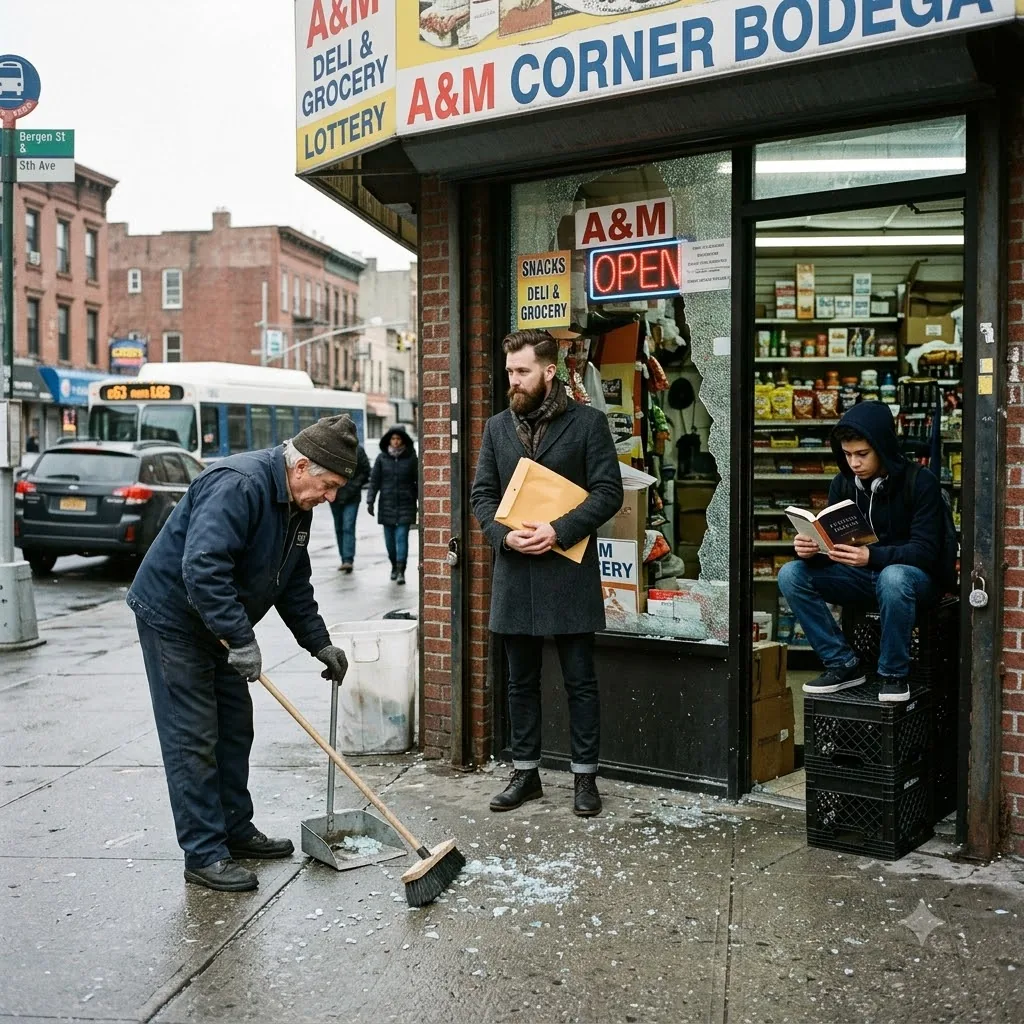
The broom bristles scraped against the cracked sidewalk, pushing a river of shattered safety glass into a glittering, jagged pile. Hector swept with heavy, methodical strokes, pausing only to stare at the gaping hole where his storefront window used to be. The morning air pushed through the empty frame, carrying the sharp scent of exhaust fumes and cold concrete into the warm, spice-heavy air of the bodega.
Inside, safely behind the counter, Diego sat perched on a red plastic milk crate. The teenager had his hood pulled up, a worn paperback resting on his knees. By all rights, Diego should have been in second-period history, but a three-day suspension for a hallway fight had turned the cramped aisle next to the scratch-off machine into his temporary classroom. Hector preferred it that way. It kept the kid off the avenue, away from the older boys who hung around the corner store two blocks down. Diego turned a page, deliberately ignoring the rhythmic, harsh scrape of the broom outside.
Hector nudged a stubborn, fist-sized chunk of glass with the steel toe of his work boot. The cinderblock that had done the damage still sat heavily on the scuffed linoleum by the canned goods, a violent intrusion covered in pale dust. He gathered the debris into a wide metal dustpan, his muscles tight with a familiar, weary anger. He tipped the pan into a heavy-duty contractor bag. The glass cascaded downward with a loud, chaotic clatter. Diego flinched at the noise, his shoulders tensing under his oversized hoodie.
A sleek black town car pulled up to the curb, its tires rolling smoothly over a discarded crushed soda can. The engine purred with a quiet, expensive hum that stood out against the usual rumble of delivery trucks and rattling exhaust pipes on this stretch of the block. The rear passenger door swung open. A man stepped out onto the uneven pavement.
Hector stopped sweeping. He rested his hands on the top of the wooden broom handle.
The man wore a tailored charcoal suit that fit perfectly across his shoulders, the fabric absorbing the dull morning light. He adjusted his cuffs, his movements precise and unhurried. He did not glance up at the peeling paint of the apartments above. He did not look at the fading, hand-painted sign that bore Hector’s name. His gaze locked directly onto the man holding the broom.
This was Silas. Hector knew the face from the glossy, heavy-stock introductory pamphlet that had been shoved under his security gate three weeks ago. The pamphlet had announced the building’s transition to a new management group, complete with corporate buzzwords about revitalization and community partnerships.
Silas approached the bodega with a brisk, confident stride. His polished leather shoes clicked sharply against the pavement. He reached the perimeter of the sweeping zone. Hector braced himself, expecting the man to pause, to feign shock at the vandalism, or perhaps offer a superficial word of sympathy regarding the destruction.
Instead, Silas simply lifted his expensive shoe and stepped directly over the pile of shattered glass.
He stopped a foot away from Hector. A bright, practiced smile spread across his face. His teeth were perfectly straight, glaringly white.
“Good morning, Hector,” Silas said. His voice was smooth and leveled, carrying the practiced warmth of a late-night television host.
Hector said nothing. He kept his grip firm on the broom. The cold wind blew between them, lifting the lapels of Silas’s jacket.
Silas looked past Hector’s shoulder, peering through the jagged edges of the broken window frame. He took in the sight of Diego on the crate, the aged deli slicer, the flickering fluorescent bulb hanging over the rear coolers. His smile never wavered, completely detached from the reality of the cinderblock resting on the floor inside.
“Quite a mess,” Silas noted.
He did not ask if anyone had been hurt. He did not ask if the police had been called. He merely acknowledged the violence as if he were pointing out a minor scuff mark on a baseboard.
Silas reached into the inner breast pocket of his suit jacket. He withdrew a thick manila envelope. The paper was crisp, completely uncreased, and bore no return address. He extended his arm, holding the envelope out over the swept concrete.
Hector looked at the outstretched hand. The envelope looked heavy. It felt like a different kind of weapon, far more precise and devastating than a piece of concrete thrown in the dead of night.
“This is for you,” Silas said, pushing the envelope an inch closer.
Hector slowly reached out, his calloused fingers brushing against the smooth paper just as a police cruiser rounded the corner with its siren blaring a short, sharp burst to clear the intersection.
The broom bristles scraped against the cracked sidewalk, pushing a river of shattered safety glass into a glittering, jagged pile. Hector swept with heavy, methodical strokes, pausing only to stare at the gaping hole where his storefront window used to be. The morning air pushed through the empty frame, carrying the sharp scent of exhaust fumes and cold concrete into the warm, spice-heavy air of the bodega.
Inside, safely behind the counter, Diego sat perched on a red plastic milk crate. The teenager had his hood pulled up, a worn paperback resting on his knees. By all rights, Diego should have been in second-period history, but a three-day suspension for a hallway fight had turned the cramped aisle next to the scratch-off machine into his temporary classroom. Hector preferred it that way. It kept the kid off the avenue, away from the older boys who hung around the corner store two blocks down. Diego turned a page, deliberately ignoring the rhythmic, harsh scrape of the broom outside.
Hector nudged a stubborn, fist-sized chunk of glass with the steel toe of his work boot. The cinderblock that had done the damage still sat heavily on the scuffed linoleum by the canned goods, a violent intrusion covered in pale dust. He gathered the debris into a wide metal dustpan, his muscles tight with a familiar, weary anger. He tipped the pan into a heavy-duty contractor bag. The glass cascaded downward with a loud, chaotic clatter. Diego flinched at the noise, his shoulders tensing under his oversized hoodie.
A sleek black town car pulled up to the curb, its tires rolling smoothly over a discarded crushed soda can. The engine purred with a quiet, expensive hum that stood out against the usual rumble of delivery trucks and rattling exhaust pipes on this stretch of the block. The rear passenger door swung open. A man stepped out onto the uneven pavement.
Hector stopped sweeping. He rested his hands on the top of the wooden broom handle.
The man wore a tailored charcoal suit that fit perfectly across his shoulders, the fabric absorbing the dull morning light. He adjusted his cuffs, his movements precise and unhurried. He did not glance up at the peeling paint of the apartments above. He did not look at the fading, hand-painted sign that bore Hector’s name. His gaze locked directly onto the man holding the broom.
This was Silas. Hector knew the face from the glossy, heavy-stock introductory pamphlet that had been shoved under his security gate three weeks ago. The pamphlet had announced the building’s transition to a new management group, complete with corporate buzzwords about revitalization and community partnerships.
Silas approached the bodega with a brisk, confident stride. His polished leather shoes clicked sharply against the pavement. He reached the perimeter of the sweeping zone. Hector braced himself, expecting the man to pause, to feign shock at the vandalism, or perhaps offer a superficial word of sympathy regarding the destruction.
Instead, Silas simply lifted his expensive shoe and stepped directly over the pile of shattered glass.
He stopped a foot away from Hector. A bright, practiced smile spread across his face. His teeth were perfectly straight, glaringly white.
“Good morning, Hector,” Silas said. His voice was smooth and leveled, carrying the practiced warmth of a late-night television host.
Hector said nothing. He kept his grip firm on the broom. The cold wind blew between them, lifting the lapels of Silas’s jacket.
Silas looked past Hector’s shoulder, peering through the jagged edges of the broken window frame. He took in the sight of Diego on the crate, the aged deli slicer, the flickering fluorescent bulb hanging over the rear coolers. His smile never wavered, completely detached from the reality of the cinderblock resting on the floor inside.
“Quite a mess,” Silas noted.
He did not ask if anyone had been hurt. He did not ask if the police had been called. He merely acknowledged the violence as if he were pointing out a minor scuff mark on a baseboard.
Silas reached into the inner breast pocket of his suit jacket. He withdrew a thick manila envelope. The paper was crisp, completely uncreased, and bore no return address. He extended his arm, holding the envelope out over the swept concrete.
Hector looked at the outstretched hand. The envelope looked heavy. It felt like a different kind of weapon, far more precise and devastating than a piece of concrete thrown in the dead of night.
“This is for you,” Silas said, pushing the envelope an inch closer.
Hector slowly reached out, his calloused fingers brushing against the smooth paper just as a police cruiser rounded the corner with its siren blaring a short, sharp burst to clear the intersection.