Story code: ST-001858
Part 3: The Burden of Proof
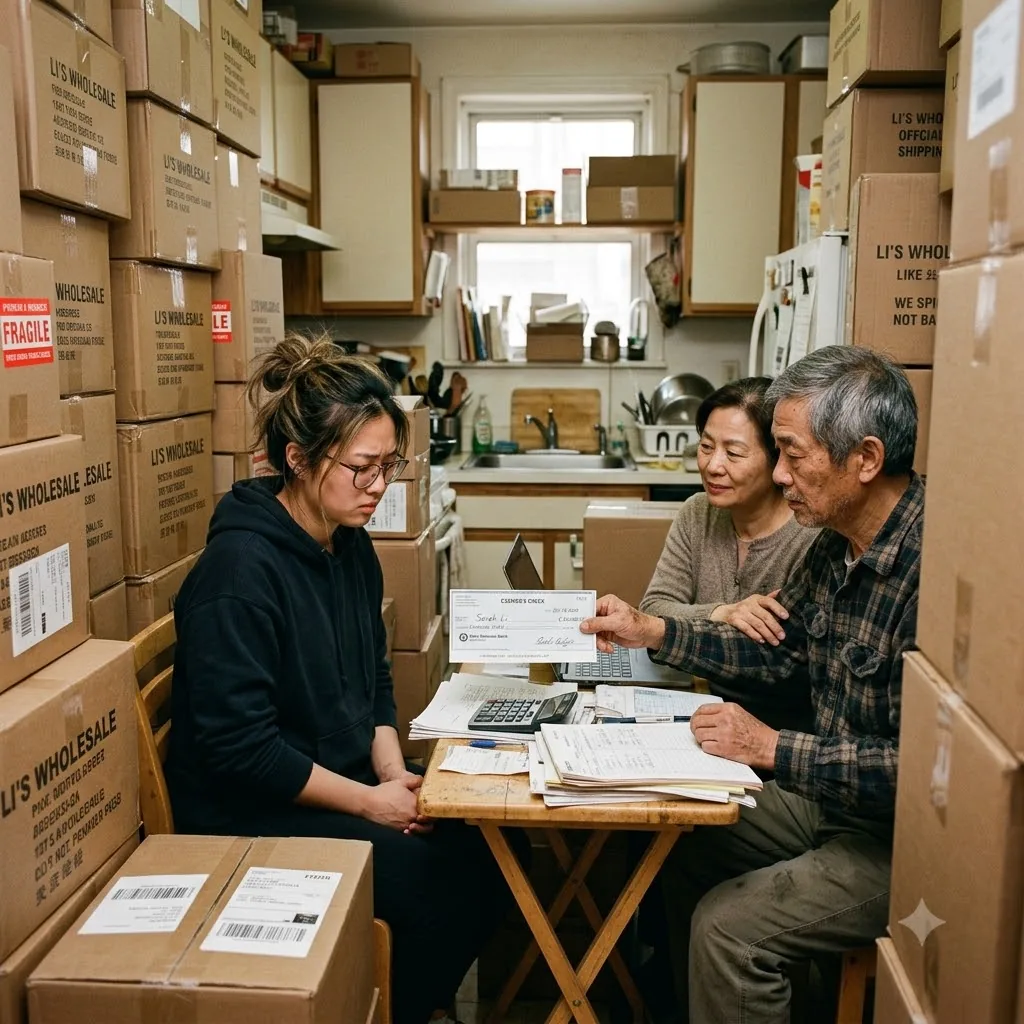
My phone vibrated a second time against my hip. A third. The automated system was unrelenting. The digital files were waiting on my laptop, and the server deadline was closing in. But the digital files felt entirely abstract in this cramped room, suffocated by the towering walls of corrugated cardboard that had turned our apartment into a makeshift warehouse-the inventory that was supposed to pay for my entire life.
I looked at my father. He was slumped in his chair, seemingly hollowed out by his own confession about the second mortgage. The $34,000 cashier’s check sat between us, a terrifying monument to his sacrifice. The guilt was a heavy, physical weight pressing against my throat, urging me to just apologize, to delete the files, to take the check and march to the bursar’s office in the morning.
But beneath that guilt burned the fierce, undeniable reality of what I had documented over the past year. I couldn’t let it end with his defense. I couldn’t let the excuse of our survival erase the reality of theirs.
I reached deeper into my oversized canvas bag, pushing past the heavy black body of my digital camera. My fingers found the cold, industrial zipper of my presentation portfolio. It was a massive, unwieldy black case, holding the 16×20 matted and glass-framed exhibition prints I was scheduled to hang in the campus gallery next week. I gripped the handles and hauled it up. It hit the edge of the kitchen table, knocking over a stack of miniature soap bars.
“You think the mortgage justifies it?” I asked, my voice shaking as I rested the heavy case across my knees. “You think because we are struggling, it makes it acceptable to bleed them dry?”
“Jia, please,” Mom whispered, her taped fingers gripping the edges of her faded apron. “We did what we had to do. Don’t do this.”
I ignored her. I yanked the zipper around the edge of the case. The smell of fresh mat board, mounting adhesive, and glass cleaner poured out, mingling sickeningly with the overpowering scent of the mint toothpaste. I reached in and pulled out the centerpiece of my exhibition. It was heavy, bordered in rigid black aluminum and protected by a thick pane of glass. I hoisted it up and slammed it down flat onto the vinyl tablecloth, right over the cashier’s check.
It wasn’t just Maria’s face on a small, backlit LCD screen anymore. This was a massive, high-resolution physical print. A wide shot taken inside a decaying, unheated apartment in the South Bronx. The subject was a grandmother, bundled in three layers of frayed sweaters, sitting at a kitchen table that looked agonizingly similar to ours. On her table, illuminated by the harsh glare of a single bare bulb, was a pile of final notice utility bills. Next to them, carefully arranged like precious jewels on a velvet cloth, were three miniature bars of lye soap and two cheap plastic razors.
Our soap. Our razors.
“I didn’t just investigate the broader prison system, Baba,” I said, my voice dropping to a harsh, trembling whisper. “I investigated us. I pulled the state vendor ID off one of your shipping manifests in the trash. I tracked down the specific commissaries we supply. And then I waited outside those specific prisons for visiting hours.”
Mom let out a wounded, suffocated noise, turning her face away from the table.
Dad stared down at the photograph. His chest rose and fell in rapid, erratic jerks. He didn’t look at the grandmother’s hollowed eyes. He was looking at the soap.
I reached out and tapped the glass, my fingernail clicking sharply right over the grandmother’s weathered face. “Her name is Elena. Her grandson is doing five years for a drug possession charge. She hasn’t paid her heating bill in three months because she sends every spare dollar she has to his commissary account. Do you know why? So he doesn’t have to share a bloody, rusted razor with other inmates. So he can wash his hands after using a shared toilet. She is freezing in the dark, Baba, so we can pay our second mortgage.”
Dad’s gaze remained locked on the image. The identical, undersized soap bars. The identical, flimsy razors. The undeniable reflection of our kitchen assembly line sitting on her table. The cognitive dissonance was a physical presence in the room, pressing down on him, fracturing the foundation of the righteous, immigrant sacrifice he had built his entire identity upon. He had spent his life believing he was the exploited underdog, clawing his way up. I had just shown him he was the boot on someone else’s neck.
He didn’t argue. He didn’t yell. He stood up, his movements stiff and mechanical, like a man whose nervous system was misfiring. He reached across the table toward the half-finished assembly line of hygiene kits. His thick, yellowed fingers, calloused from years of relentless labor, wrapped around the handle of the industrial steel tape gun.
It was his tool of the trade. The heavy, iron-and-plastic device he used to seal the boxes, the instrument of our family’s survival.
It happened in a blur of terrifying, violent motion. He raised the heavy steel tool high above his head. For a fraction of a second, the fluorescent kitchen light caught the jagged metal teeth of the cutting blade. Then, he brought it down with the full, devastating force of his exhausted, aching shoulders.
The steel base of the tape gun struck the dead center of the framed photograph.
The glass exploded. A sharp, deafening crack echoed off the walls of corrugated cardboard, sounding like a gunshot in the cramped apartment. Shards of glass sprayed across the vinyl tablecloth, raining down onto the floor, embedding themselves in the open plastic bags of mint toothpaste and scratching my forearms.
The serrated metal teeth of the tape gun bit deeply through the photographic paper and into the thick mat board beneath, tearing a jagged, violent gash right through Elena’s face.
Dad didn’t pull back. He kept his weight pressed down on the handle of the tape gun, his knuckles white, his shoulders trembling. He was breathing heavily through his nose, staring blankly at the ruined, shattered image trapped beneath the steel.
A thick drop of blood began to well on his knuckles where a piece of flying glass had grazed him, mixing slowly with the pale cardboard dust on his skin. He didn’t seem to feel it. I sat frozen in my chair, staring at the shattered centerpiece of my truth, my phone vibrating relentlessly in my pocket, as the silence in our kitchen became sharper and more dangerous than the broken glass between us.