Story code: ST-001858
Part 2: Collateral Damage
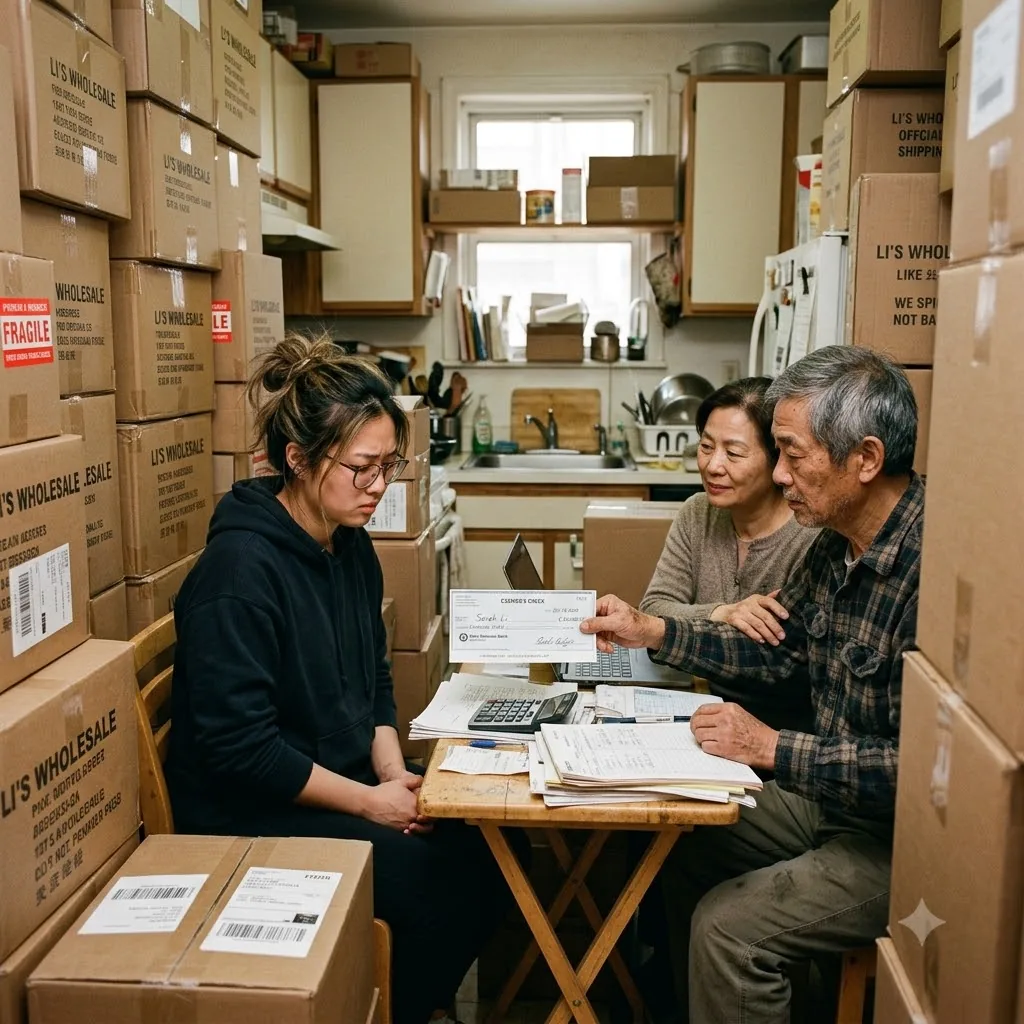
The heavy, black metal of the camera hit the vinyl tablecloth with a dull thud. The sound seemed to swallow the hum of the refrigerator. For a long moment, nobody moved. Dad’s tired eyes shifted from the wide lens to my face, his brow furrowing in deep, uncomprehending grooves.
“What is this, Jia?” he asked, his voice losing its celebratory buzz. He gestured at the camera, then pushed the cashier’s check a fraction of an inch closer to me. “You want to take a picture of the check? To remember?”
“No, Baba,” I whispered. My throat felt like it was lined with sandpaper. “I want to show you what I’ve been doing. For the last year.”
I reached out and flicked the power switch. The LCD screen on the back of the camera flared to life, casting a cold, bluish glow over the stacks of mint toothpaste and cheap plastic razors. I pressed the playback button and turned the camera so it faced my parents.
The first image on the screen was a portrait of a woman named Maria. I had met her outside the chain-link gates of the state penitentiary during visiting hours. In the photograph, her face was gaunt with exhaustion, her eyes hollow as she held up a crumpled commissary receipt. The receipt showed a three-dollar charge for a single, miniature bar of lye soap. It was the exact same brand of soap currently sitting in a cardboard box by my mother’s feet.
Dad squinted at the small screen. “Who is this woman? Why are you showing us this now? The bursar’s office opens at eight tomorrow.”
“I’m not going to the bursar’s office, Baba. I haven’t been in a pre-med class since last winter.” The words rushed out of me in a single, terrifying exhale. “I changed my major. I’m in the journalism program now. Documentary photography. I’ve been spending the last six months investigating the prison commissary supply chains. The price gouging. The exploitation of families who have to choose between paying rent and buying their incarcerated loved ones basic hygiene supplies.”
Mom dropped the roll of packing tape she had been holding. It hit the floor and rolled under the stove, leaving a sticky trail of silence in its wake. She looked at her taped, bruised fingers, and then up at me. The devastation in her eyes was immediate and absolute. It wasn’t the ethics of the supply chain that broke her in that moment; it was the death of the dream.
“You are not going to be a doctor?” she asked, her voice trembling. “All of this… the late nights, the blisters… you threw it away for pictures?”
“I didn’t throw it away!” I pleaded, my chest tightening. “I’m trying to do something that matters! Mom, look at the boxes around you. Look at the margins Dad was just bragging about. We are making our living off people who have nothing. We are the ones draining them!”
Dad slammed his hand down on the table. The salt shaker jumped, and the state department of corrections letter fluttered to the floor.
“We are draining them?” Dad roared, the veins in his neck bulging. “We came to this country with nothing, Jia! We worked in kitchens, we cleaned toilets, we broke our backs so you would never have to! The state puts out a contract. I bid on it. If we do not pack this soap, another family packs this soap. The inmates still pay three dollars. The only difference is whether my daughter becomes a doctor or whether we starve!”
“It’s wrong, Baba!” I yelled back, tears finally spilling hot down my cheeks. “And I can’t let my life be funded by it anymore. I’m publishing this photo essay. My advisor is pitching it to a major state news outlet on Monday. They are going to expose the vendors profiting from this system.”
The color drained from Dad’s face so fast he looked as though he might faint. He slowly sank back into his chair, the vinyl groaning under his weight. He looked past me, staring at the sheer volume of cardboard boxes stacked floor-to-ceiling in our tiny living room.
“You are publishing a story about the vendors,” he repeated, his voice suddenly hollow, stripped of all its former rage.
“I kept our family name out of the draft,” I said quickly, trying to soften the blow. “I focused on the system. The state. But the vendor lists are public record. People will figure it out eventually. That’s why I’m giving the money back. I can’t take it.”
Mom let out a sound that was half sob, half gasp. She covered her mouth with her taped hands, rocking back and forth in her chair.
Dad looked down at the $34,000 cashier’s check. He didn’t reach for it. Instead, he looked at me with an expression of utter, devastating defeat.
“You think this money just appeared, Jia?” he whispered. “You think the state just gave us thirty-four thousand dollars because they like us?”
I froze. “You said it was a contract advance.”
“It is,” Dad said, his voice cracking. “An advance against the inventory. To secure a three-year penitentiary contract, you have to prove you can fulfill the first six months of orders immediately. We had to buy thirty thousand units of raw materials up front.”
He pointed a shaking, calloused finger at the towering walls of boxes surrounding us.
“We didn’t have the cash for that kind of inventory, Jia. So we used the only thing we had left. Two weeks ago, I signed the papers. We took out a second mortgage on this apartment to buy the soap and the razors. The advance from the state just barely covers your tuition and the interest payments.”
The smell of mint toothpaste suddenly felt toxic, suffocating me.
“If you publish a story that causes a public scandal,” Dad continued, his eyes locked on mine, “the state will invoke the morality clause. They will cancel the contract. They will demand the advance back. And when we cannot pay it… the bank will take our home.”
My phone, sitting in my pocket, vibrated sharply against my hip. I knew exactly what it was. It was an automated text from my journalism professor, a final reminder that the digital files for the upcoming publication had to be uploaded to the server by midnight tonight for the final editorial review.
I looked at the cashier’s check, bearing my name and the price of my parents’ ruined hands. I looked at the heavy black camera, holding the digital proof of an undeniable injustice. And then I looked at the walls of our cramped kitchen, the only home I had ever known, which I was about to burn to the ground.