Story code: ST-000038
Part 1: He Started Using the Sign Like a Pointer
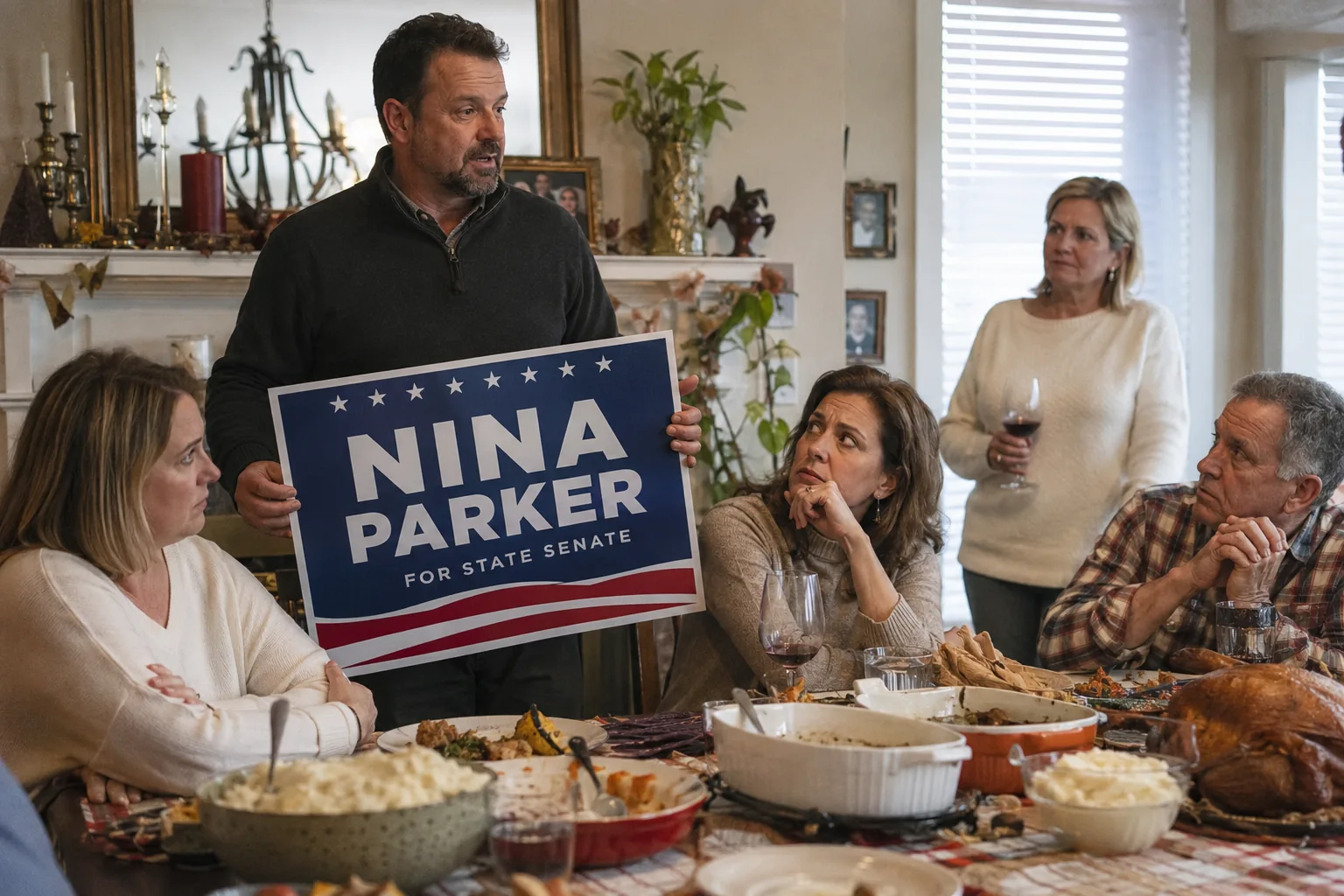
Mark Dalton used Nina’s campaign yard sign like a lecture prop before anybody had finished the potatoes. He tapped the edge of it with his fork in Aunt Denise’s dining room, talked right over Nina, and told the whole table she was “too behind on basic precinct inversion theory” to understand what her own sign was doing in the house. I was standing in the kitchen doorway with the gravy boat in my hand, and the worst part was how confident he sounded saying a term nobody else at that table had ever used before.
The sign was leaned against the sideboard two chairs down from Grandpa Ron. Blue block letters, white border, the metal stake folded under and tucked behind it so it would not scratch the wall. Nina had brought it in from her car because rain had started and Denise didn’t want “politics cluttering up the porch” where guests were still coming through. That should have been the end of it.
Instead Mark kept one hand on the back of his chair and used the other to point at the sign every time Nina tried to answer. He never said her name like he was talking to her. He said it like he was introducing a bad example.
“I’m not arguing feelings,” he said, cutting his turkey and not eating it. “I’m saying the sign itself tells the story if you know how to read campaign objects. That’s just precinct inversion theory. Basic stuff. Basic.”
Nina had one hand around her water glass. She let him finish, then said, “Okay. Define that in plain English.”
Mark smiled without showing teeth. “You don’t even know the term and you’re asking me to simplify it for you. That’s kind of my point.”
Denise came around with the green beans and said, “Let’s eat while it’s hot. Please.”
Nobody moved toward the bowl until she set it down.
Nina looked at the sign, then back at Mark. “You said my sign proves your point. So say what point you’re making.”
“That you don’t understand coded distribution,” he said, louder this time. “Yard signs are not neutral. Placement, angle, district bleed, inversion. That’s politics 101 now. If you’re going to advertise a candidate, at least know the mechanics.”
He said mechanics like he was correcting a student in front of a class. He kept going in long runs, stacking one niche-sounding phrase on top of another so fast nobody could get in without cutting across him. Every time Nina opened her mouth, he raised his voice half a notch and added another term.
“District bleed. Inversion banding. Curb-line signal mapping.”
I had been setting down dishes in that room all afternoon. I knew the rhythm of people interrupting and letting each other finish. This was different. Mark wasn’t arguing in turns. He was building speed.
Grandpa Ron had been working carefully through his ham, knife and fork close together, but when Mark said, “This is why people who don’t know the vocabulary shouldn’t posture,” Ron set both utensils down side by side on the plate. He didn’t speak. He just looked at the sign for a second, then at Nina.
That was the first moment the room got thin.
Nina did not raise her voice. “I know why I put the sign out,” she said.
Mark gave a short laugh and pointed at the sideboard. “Intent isn’t the issue. Structure is the issue. That’s exactly what people miss when they don’t understand inversion.”
“You keep saying inversion like it’s a thing everybody knows,” Nina said. “I’ve worked campaigns. I’ve never heard anybody say precinct inversion theory.”
“Then you worked with amateurs.”
Denise said, sharper now, “Mark.”
He spread one hand like he had been invited to present. “What? She’s making a public statement in a family home and then acting shocked when somebody with actual experience explains what it signals.”
Nina’s fingers stayed on her glass. She paused long enough for him to either stop or keep going. He kept going.
“The sign placement alone is embarrassing,” he said. “Inside the house? Near the dining room? During a holiday? That creates inversion pressure on every guest. It’s manipulative if you know what you’re looking at.”
I saw Denise fill an already half-full water glass just to have something to do with her hands.
Nina said, “It was raining.”
Mark turned to the rest of the table instead of answering her. “This is how it works now. People do political theater, then hide behind innocence when they get called on the technical side of it.”
No one backed him up out loud, but no one stopped him either. The sign had become the center of the room without moving an inch.
Then he leaned back, folded his napkin once, and delivered it like a final ruling.
“Fine. Here it is plain English. Her sign creates a reverse precinct cue because the candidate name sits above the county line in a domestic display field. That’s textbook inversion. Anybody who knows election mechanics can see it.”
He said it slowly this time, like he wanted every word to land.
Nina looked straight at him and asked, “Where is the county line on the sign, Mark?”
For the first time all night, he did not answer right away.
Mark Dalton used Nina’s campaign yard sign like a lecture prop before anybody had finished the potatoes. He tapped the edge of it with his fork in Aunt Denise’s dining room, talked right over Nina, and told the whole table she was “too behind on basic precinct inversion theory” to understand what her own sign was doing in the house. I was standing in the kitchen doorway with the gravy boat in my hand, and the worst part was how confident he sounded saying a term nobody else at that table had ever used before.
The sign was leaned against the sideboard two chairs down from Grandpa Ron. Blue block letters, white border, the metal stake folded under and tucked behind it so it would not scratch the wall. Nina had brought it in from her car because rain had started and Denise didn’t want “politics cluttering up the porch” where guests were still coming through. That should have been the end of it.
Instead Mark kept one hand on the back of his chair and used the other to point at the sign every time Nina tried to answer. He never said her name like he was talking to her. He said it like he was introducing a bad example.
“I’m not arguing feelings,” he said, cutting his turkey and not eating it. “I’m saying the sign itself tells the story if you know how to read campaign objects. That’s just precinct inversion theory. Basic stuff. Basic.”
Nina had one hand around her water glass. She let him finish, then said, “Okay. Define that in plain English.”
Mark smiled without showing teeth. “You don’t even know the term and you’re asking me to simplify it for you. That’s kind of my point.”
Denise came around with the green beans and said, “Let’s eat while it’s hot. Please.”
Nobody moved toward the bowl until she set it down.
Nina looked at the sign, then back at Mark. “You said my sign proves your point. So say what point you’re making.”
“That you don’t understand coded distribution,” he said, louder this time. “Yard signs are not neutral. Placement, angle, district bleed, inversion. That’s politics 101 now. If you’re going to advertise a candidate, at least know the mechanics.”
He said mechanics like he was correcting a student in front of a class. He kept going in long runs, stacking one niche-sounding phrase on top of another so fast nobody could get in without cutting across him. Every time Nina opened her mouth, he raised his voice half a notch and added another term.
“District bleed. Inversion banding. Curb-line signal mapping.”
I had been setting down dishes in that room all afternoon. I knew the rhythm of people interrupting and letting each other finish. This was different. Mark wasn’t arguing in turns. He was building speed.
Grandpa Ron had been working carefully through his ham, knife and fork close together, but when Mark said, “This is why people who don’t know the vocabulary shouldn’t posture,” Ron set both utensils down side by side on the plate. He didn’t speak. He just looked at the sign for a second, then at Nina.
That was the first moment the room got thin.
Nina did not raise her voice. “I know why I put the sign out,” she said.
Mark gave a short laugh and pointed at the sideboard. “Intent isn’t the issue. Structure is the issue. That’s exactly what people miss when they don’t understand inversion.”
“You keep saying inversion like it’s a thing everybody knows,” Nina said. “I’ve worked campaigns. I’ve never heard anybody say precinct inversion theory.”
“Then you worked with amateurs.”
Denise said, sharper now, “Mark.”
He spread one hand like he had been invited to present. “What? She’s making a public statement in a family home and then acting shocked when somebody with actual experience explains what it signals.”
Nina’s fingers stayed on her glass. She paused long enough for him to either stop or keep going. He kept going.
“The sign placement alone is embarrassing,” he said. “Inside the house? Near the dining room? During a holiday? That creates inversion pressure on every guest. It’s manipulative if you know what you’re looking at.”
I saw Denise fill an already half-full water glass just to have something to do with her hands.
Nina said, “It was raining.”
Mark turned to the rest of the table instead of answering her. “This is how it works now. People do political theater, then hide behind innocence when they get called on the technical side of it.”
No one backed him up out loud, but no one stopped him either. The sign had become the center of the room without moving an inch.
Then he leaned back, folded his napkin once, and delivered it like a final ruling.
“Fine. Here it is plain English. Her sign creates a reverse precinct cue because the candidate name sits above the county line in a domestic display field. That’s textbook inversion. Anybody who knows election mechanics can see it.”
He said it slowly this time, like he wanted every word to land.
Nina looked straight at him and asked, “Where is the county line on the sign, Mark?”
For the first time all night, he did not answer right away.