Story code: ST-000122
Part 2: Inverse Correlation
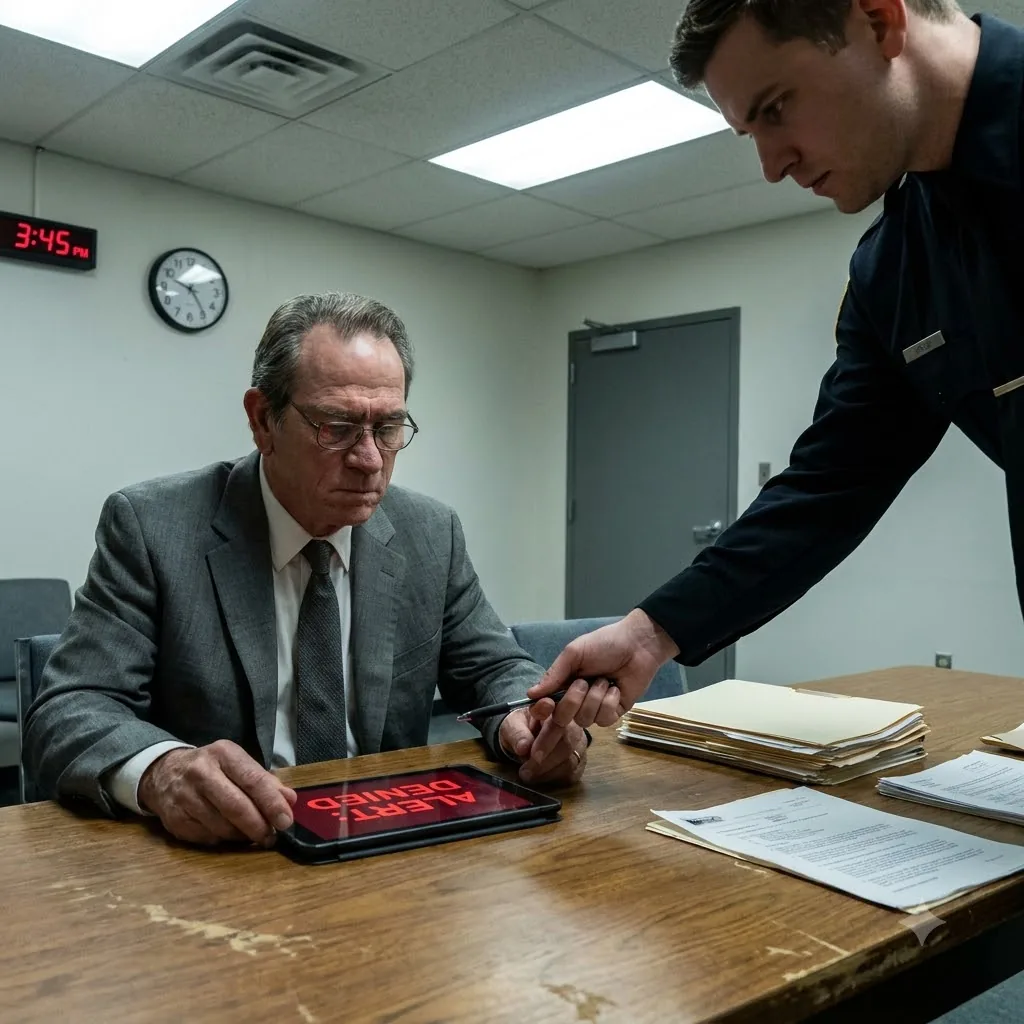
Arthur stared at the streak of vivid blue ink bleeding into the fibers of the manila folder. The suddenness of his supervisor’s intervention left a ringing silence in Hearing Room B. The weight of Caldwell’s hand dug into Arthur’s shoulder, the tailored wool of his suit brushing against Arthur’s collar.
“The transition period is over, Arthur,” Caldwell said, his voice barely louder than the hum of the overhead fluorescent lights. “Paper overrides circumvent the new analytics. They are entirely non-compliant.”
Arthur shifted his gaze from the ruined legal document to Caldwell’s impassive face. “The analytics are fundamentally broken, Caldwell. Look at the man. Vance has a spotless disciplinary record. The tablet is throwing a ninety-eight percent recidivism probability for a man who spends his days training rescue dogs.”
“The algorithm sees data points we cannot,” Caldwell replied, his grip tightening just enough to send a dull, warning ache down Arthur’s collarbone. “It factors in variables across thousands of case studies. You are trusting an outdated gut instinct. The state trusts the software. We do not deviate.”
Before Arthur could reach out to block his path, Caldwell leaned across the scarred laminate table. He extended a manicured index finger and firmly pressed the large, pulsing red box at the bottom right corner of the tablet screen.
The sleek brushed-aluminum device emitted a cheerful, synthetic chime-a stark, insulting contrast to the harsh buzz of its previous rejections. The screen flashed a vibrant, unforgiving red. *Docket Closed. Parole Denied. Mandated Wait Period: 24 Months.*
Across the table, Marcus Vance seemed to physically shrink. The air left his lungs in a ragged, trembling hiss. He didn’t yell. He didn’t bang his heavy fists against the wood. He simply stared at the red glow illuminating the tablet’s glass, his carefully rehearsed speech dying in his throat. The two correctional officers stationed by the heavy oak door immediately stepped forward. Their heavy boots scuffed loudly against the linoleum as they grabbed Vance by the elbows and escorted the devastated inmate out of the room.
Arthur sat frozen as the heavy door clicked shut, sealing the room. Caldwell released his shoulder, straightened his silk tie, and offered a tight, professional smile. “You have twenty more hearings on your docket today, Arthur. Trust the system. Keep the queue moving.”
Caldwell turned on his heel and walked out, leaving Arthur alone with the glowing tablet.
Arthur spent the next two hours in his cramped administrative cubicle on the third floor of the facility. The space smelled faintly of stale coffee and ozone from the overworked server towers located down the hall. He booted up his desktop terminal, bypassing the flashy, restricted tablet interface to directly access the raw state database. He needed to understand the scope of the glitch before his afternoon session began.
He pulled up the completed dockets for the entire facility over the past three days. The governor’s office had publicly boasted about a four-hundred-percent increase in cleared cases, attributing the bureaucratic miracle to the smart-docket system. Arthur began rapidly cross-referencing the tablet’s approved paroles against the physical behavioral logs digitized in the legacy system.
The pattern emerged within ten minutes, and it made Arthur’s stomach churn.
He opened the profile for an inmate named Hollis. Hollis possessed three violent infractions in the last year alone, a documented history of smuggling contraband, and absolutely zero employment prospects on the outside. The smart-docket had scored him at a forty-two percent risk and flashed the green approval banner. Hollis was going home.
Arthur pulled up another case, a woman named Diaz. Diaz possessed an advanced plumbing certification, had flawlessly led the prison’s internal maintenance crew for five years, and had written commendations from the warden. The tablet had scored her at a ninety-nine percent risk. Auto-denied.
Arthur clicked rapidly through dozens of files, his mouse clattering loudly in the quiet cubicle. It wasn’t a random glitch. It was a precise, systematic inverse correlation. Every single inmate with a pristine record, guaranteed outside employment, or highly specialized vocational training was being slapped with a maximum-security threat level. Meanwhile, the most unstable, unprepared individuals were sliding through the system with passing scores. The more an inmate had demonstrably rehabilitated themselves, the harder the automated system slammed the door in their face.
Arthur opened the network’s internal messaging client, intending to immediately alert the IT director, but his fingers hovered over the keyboard. Caldwell’s words echoed in his head: *The algorithm sees data points we cannot.* Caldwell hadn’t seemed surprised by Vance’s denial. He had seemed fiercely determined to enforce it.
Arthur right-clicked on Diaz’s file, attempting to inspect the underlying metadata. He managed to pry open a basic diagnostic window that displayed the raw score calculations. The text was mostly encrypted alphanumeric strings, but one line of plain text stood out at the bottom of the calculation tree: `Flag: Vocation_Tier_1 -> Action: Retain`.
Before Arthur could screenshot the suspicious code, his desktop monitor violently flickered. A gray dialog box popped up in the dead center of the screen: *Unauthorized Access. Diagnostic privileges restricted by Regional Supervisor.*
The diagnostic window instantly vanished, replaced by the spinning state seal.
A heavy knock on the cubicle partition made Arthur jump. Caldwell stood in the doorway, his eyes fixed firmly on Arthur’s desktop monitor. He held a massive stack of fresh inmate files tucked securely under his arm.
“Your afternoon session starts in five minutes, Arthur,” Caldwell said, his tone perfectly even, betraying no hint of emotion. He stepped forward and dropped the heavy files onto Arthur’s desk with a thud. “You have fifteen model inmates queued up. The governor’s office is monitoring our clearance rate today. I expect a perfectly streamlined docket.”
Arthur looked down at the top file. It belonged to Elias Thorne, a master carpenter with a flawless twelve-year record. Arthur glanced at the tablet resting next to the file. Its screen was already awake, pre-loading Thorne’s profile. The violent recidivism score was calculating in real-time, ticking rapidly upward toward ninety-nine percent.