Story code: ST-000122
Part 1: The Auto-Denial
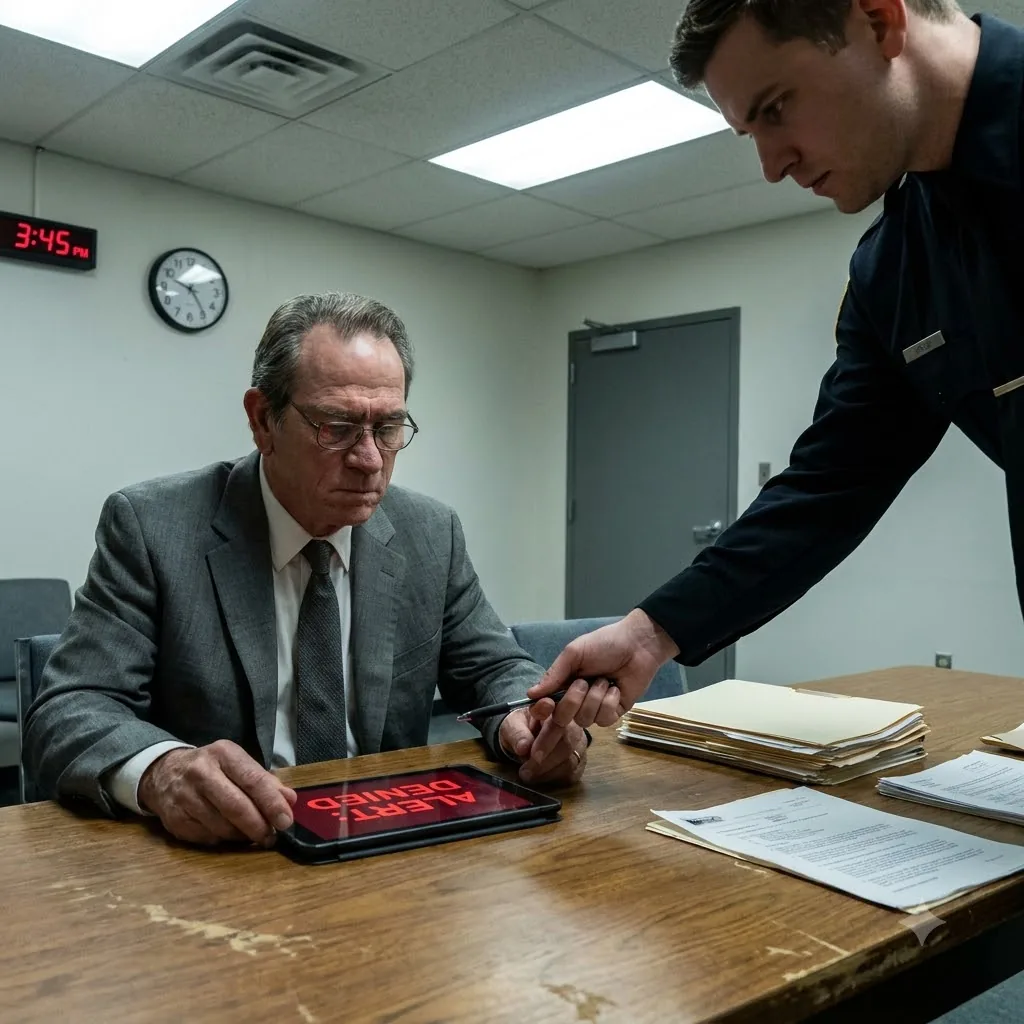
Arthur pressed his index finger firmly against the glowing green ‘Approve Parole’ button on the state’s newly issued smart-docket tablet. Instead of the gentle chime that signaled a completed docket, the screen seized, flashed a blinding crimson, and plastered a ‘High-Risk: Auto-Denial’ banner across the inmate’s profile. Arthur wiped the glass with his sleeve and tapped the green button a second time. The tablet vibrated with a harsh, metallic buzz, rejecting the input. The noise was jarring in the silence of Hearing Room B.
Across the scarred laminate table, Marcus Vance shifted in his orange jumpsuit. The man had twenty years served on a twenty-five-year sentence for a robbery he committed at nineteen. In those two decades, Vance had fundamentally rebuilt himself. He possessed two vocational degrees in electrical engineering, a spotless disciplinary record spanning over a decade, and three letters of guaranteed employment waiting for him on the outside. He trained rescue dogs in the yard. He was the absolute definition of a slam-dunk release. Arthur had reviewed the physical file the night before, highlighting the glowing psychological evaluations, and marked him for an immediate pass. Now, Vance’s eyes darted between Arthur’s stoic face and the flashing red light reflecting off the table.
Arthur exhaled a heavy breath, tapping the reboot icon in the top right corner of the application. The administration had rolled out the mandatory risk-assessment software three days prior, promising the governor it would eradicate the state’s parole backlog. The sleek, brushed-aluminum devices felt utterly out of place in the damp, cinderblock confines of the penitentiary. So far, the upgrade had only generated locked screens, endless loading circles, and frozen modules. The system booted back up with the state seal spinning on a black background. Arthur navigated through the sluggish interface to Vance’s file, scrolled past the immaculate behavioral logs, and hit the approve button for a third time.
The tablet vibrated again, louder this time. The crimson ‘High-Risk: Auto-Denial’ banner slammed over the text, locking out the entire page.
Arthur stared at the numeric score generated at the bottom of the screen. The software evaluated Vance at a ninety-eight percent likelihood of violent recidivism. That number contradicted every evaluation in the state database. It defied the warden’s personal recommendation sitting in the physical folder resting beside the tablet. Arthur slid his finger over the screen to view the underlying metrics, searching for the glitch, but the system had grayed out the drop-down menus. The tablet permitted only one action. A large, pulsing red box at the bottom right corner required Arthur to finalize the denial. There was no back button. There was no text field to enter notes.
Vance gripped the edge of the table, his knuckles turning white. The inmate had prepared for this day for ten years, practicing his speech, gathering his documents. The flashing red light cast an ominous glow on his face.
Arthur held up a hand, offering a calm, flat expression. He told Vance to sit tight while he sorted out the system error. He explained that the state’s new servers were having a rough morning and that it was merely an IT issue. Vance nodded slowly, though his shoulders remained rigid, bracing for a blow.
Arthur reached into the battered leather briefcase at his feet. If the digital interface refused to process a routine command, state bylaws dictated that a board member could rely on the analog fallback. He rummaged past his lunch and a stack of memos, pulling out a manila folder filled with pale blue sheets. The analog override forms were relics, rarely used since the initial digitization efforts five years ago, but they remained completely valid under the current charter. Arthur smoothed the heavy blue paper over the laminate surface and uncapped his silver fountain pen. The familiar weight of the metal barrel was a comfort after battling the glass screen.
He filled in the date and the facility code with precise strokes. He wrote Vance’s inmate identification number in the designated boxes. He checked the box for ‘Rehabilitated Release’ and began to write his justification in the margins, detailing the obvious error in the risk-assessment software. The scratch of the nib against the paper sounded loud and steady in the quiet room.
The heavy oak door at the back of the hearing room clicked open. Caldwell, the regional supervisor for the parole board, stepped inside. Caldwell wore his usual perfectly tailored gray suit, his eyes fixed entirely on Arthur’s desk. He bypassed the standard observer chairs and walked directly onto the dais, his hard-soled shoes echoing on the linoleum. Caldwell did not look at Vance. He did not acknowledge the inmate’s presence at all.
Caldwell stepped right to Arthur’s shoulder and stared down at the blue sheet of paper. Arthur continued writing, stating out loud that the tablet was malfunctioning and registering a model prisoner as a maximum-security threat. He moved his pen to the presiding officer signature line to finalize the release.
Caldwell reached down. His fingers clamped tightly over Arthur’s knuckles.
With a swift, forceful tug, Caldwell physically ripped the silver fountain pen out of Arthur’s hand. Arthur froze, staring at the sudden, violent streak of blue ink dragged across the bottom of the legal document. Caldwell placed the pen out of reach on the far side of the desk, his grip shifting to rest heavily on Arthur’s shoulder. Caldwell leaned down, his voice dropping to a low, flat murmur as he stated that the paper override forms were no longer authorized.
Arthur pressed his index finger firmly against the glowing green ‘Approve Parole’ button on the state’s newly issued smart-docket tablet. Instead of the gentle chime that signaled a completed docket, the screen seized, flashed a blinding crimson, and plastered a ‘High-Risk: Auto-Denial’ banner across the inmate’s profile. Arthur wiped the glass with his sleeve and tapped the green button a second time. The tablet vibrated with a harsh, metallic buzz, rejecting the input. The noise was jarring in the silence of Hearing Room B.
Across the scarred laminate table, Marcus Vance shifted in his orange jumpsuit. The man had twenty years served on a twenty-five-year sentence for a robbery he committed at nineteen. In those two decades, Vance had fundamentally rebuilt himself. He possessed two vocational degrees in electrical engineering, a spotless disciplinary record spanning over a decade, and three letters of guaranteed employment waiting for him on the outside. He trained rescue dogs in the yard. He was the absolute definition of a slam-dunk release. Arthur had reviewed the physical file the night before, highlighting the glowing psychological evaluations, and marked him for an immediate pass. Now, Vance’s eyes darted between Arthur’s stoic face and the flashing red light reflecting off the table.
Arthur exhaled a heavy breath, tapping the reboot icon in the top right corner of the application. The administration had rolled out the mandatory risk-assessment software three days prior, promising the governor it would eradicate the state’s parole backlog. The sleek, brushed-aluminum devices felt utterly out of place in the damp, cinderblock confines of the penitentiary. So far, the upgrade had only generated locked screens, endless loading circles, and frozen modules. The system booted back up with the state seal spinning on a black background. Arthur navigated through the sluggish interface to Vance’s file, scrolled past the immaculate behavioral logs, and hit the approve button for a third time.
The tablet vibrated again, louder this time. The crimson ‘High-Risk: Auto-Denial’ banner slammed over the text, locking out the entire page.
Arthur stared at the numeric score generated at the bottom of the screen. The software evaluated Vance at a ninety-eight percent likelihood of violent recidivism. That number contradicted every evaluation in the state database. It defied the warden’s personal recommendation sitting in the physical folder resting beside the tablet. Arthur slid his finger over the screen to view the underlying metrics, searching for the glitch, but the system had grayed out the drop-down menus. The tablet permitted only one action. A large, pulsing red box at the bottom right corner required Arthur to finalize the denial. There was no back button. There was no text field to enter notes.
Vance gripped the edge of the table, his knuckles turning white. The inmate had prepared for this day for ten years, practicing his speech, gathering his documents. The flashing red light cast an ominous glow on his face.
Arthur held up a hand, offering a calm, flat expression. He told Vance to sit tight while he sorted out the system error. He explained that the state’s new servers were having a rough morning and that it was merely an IT issue. Vance nodded slowly, though his shoulders remained rigid, bracing for a blow.
Arthur reached into the battered leather briefcase at his feet. If the digital interface refused to process a routine command, state bylaws dictated that a board member could rely on the analog fallback. He rummaged past his lunch and a stack of memos, pulling out a manila folder filled with pale blue sheets. The analog override forms were relics, rarely used since the initial digitization efforts five years ago, but they remained completely valid under the current charter. Arthur smoothed the heavy blue paper over the laminate surface and uncapped his silver fountain pen. The familiar weight of the metal barrel was a comfort after battling the glass screen.
He filled in the date and the facility code with precise strokes. He wrote Vance’s inmate identification number in the designated boxes. He checked the box for ‘Rehabilitated Release’ and began to write his justification in the margins, detailing the obvious error in the risk-assessment software. The scratch of the nib against the paper sounded loud and steady in the quiet room.
The heavy oak door at the back of the hearing room clicked open. Caldwell, the regional supervisor for the parole board, stepped inside. Caldwell wore his usual perfectly tailored gray suit, his eyes fixed entirely on Arthur’s desk. He bypassed the standard observer chairs and walked directly onto the dais, his hard-soled shoes echoing on the linoleum. Caldwell did not look at Vance. He did not acknowledge the inmate’s presence at all.
Caldwell stepped right to Arthur’s shoulder and stared down at the blue sheet of paper. Arthur continued writing, stating out loud that the tablet was malfunctioning and registering a model prisoner as a maximum-security threat. He moved his pen to the presiding officer signature line to finalize the release.
Caldwell reached down. His fingers clamped tightly over Arthur’s knuckles.
With a swift, forceful tug, Caldwell physically ripped the silver fountain pen out of Arthur’s hand. Arthur froze, staring at the sudden, violent streak of blue ink dragged across the bottom of the legal document. Caldwell placed the pen out of reach on the far side of the desk, his grip shifting to rest heavily on Arthur’s shoulder. Caldwell leaned down, his voice dropping to a low, flat murmur as he stated that the paper override forms were no longer authorized.