Story code: ST-000156
Part 1: The Wall of Voyeurs
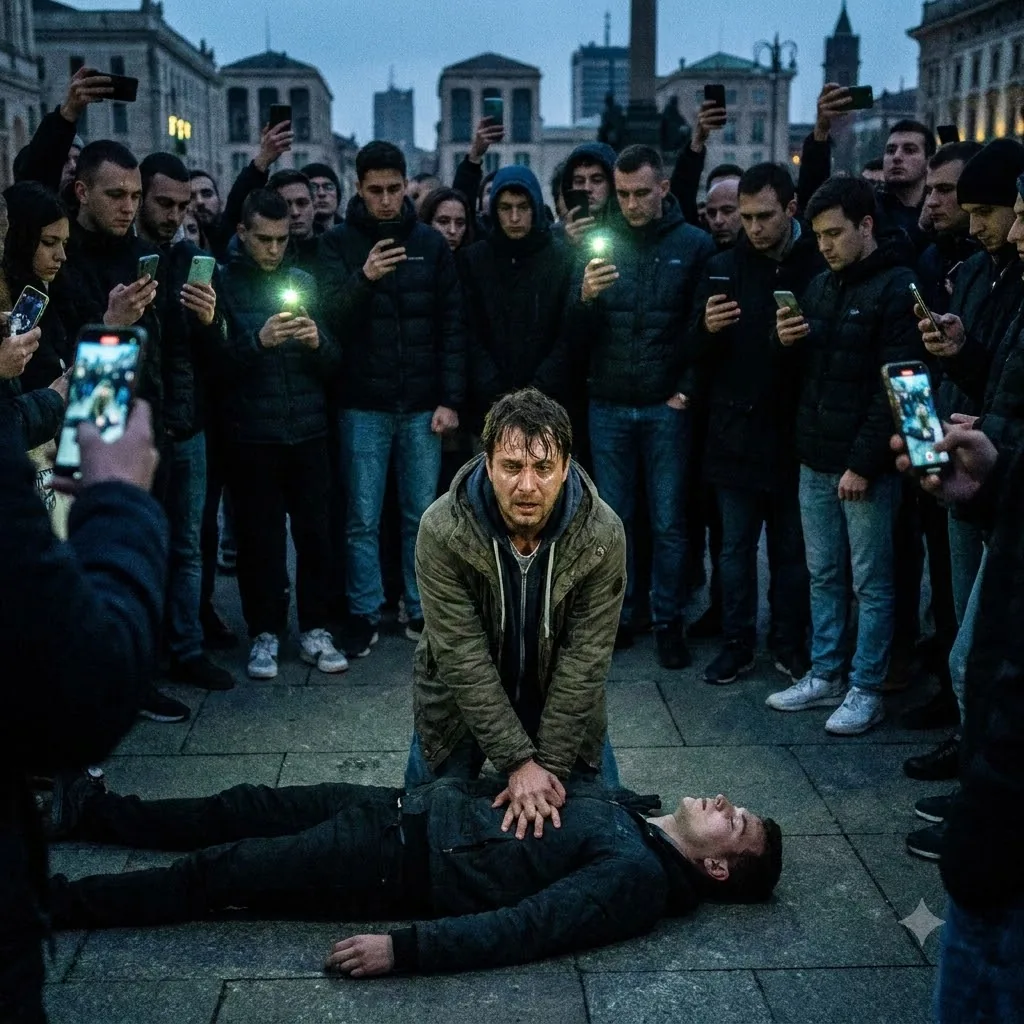
Mateo drove the heel of his palm into the center of Hector’s chest, the older man’s ribcage yielding with a sickening crunch against the market’s stained concrete. He locked his elbows and pushed again, trapped inside a suffocating circle of sixty unblinking camera lenses. A solid wall of pedestrians had formed around them in the plaza, but not a single person reached out to help, their faces hidden behind the glowing rectangles of their smartphones.
The air smelled of roasting corn and exhaust fumes from the nearby avenue, but all Mateo could focus on was the terrifying, passive silence of the onlookers. He shouted for someone to call for an ambulance, his voice tearing at the edges of his throat. He pushed down hard, counting out thirty compressions, sweat stinging his eyes and dripping onto Hector’s motionless shirt. The crowd merely shuffled tighter, closing the gap, their sneakers inching dangerously close to Hector’s outstretched hands. The silence from the voyeurs felt heavier than the stifling afternoon heat. All Mateo could hear was the frantic rhythm of his own breathing and the mechanical clicks of camera shutters capturing a dying man’s final moments.
He tilted Hector’s head back, checking the airway, begging internally for a sudden gasp of breath that did not come. He resumed compressions immediately, his triceps burning with the buildup of lactic acid. He locked eyes with a young woman standing barely three feet away, holding a phone wrapped in a bright pink case. He ordered her to find a market security guard immediately. She did not lower her device. She simply took a step to her left to avoid the glare of the overhead string lights reflecting off the plaza floor. Beside her, a man in a business casual button-down was softly narrating the scene to his followers, completely detached from the brutal reality unfolding at his feet.
Mateo felt a surge of violent frustration, but he could not stop pumping. Stopping meant Hector would die right here on the dirty stones. He did not know why Hector had been running so frantically through the stalls minutes ago, knocking over baskets of dried peppers and woven blankets before clutching his chest and collapsing. There had been a look of absolute terror in the older man’s wide eyes right before his legs gave out. Now, those same eyes were rolled back, and his lips were taking on a terrifying, dusky blue tint.
Mateo screamed for an AED. He demanded that someone, anyone in the wall of digital zombies, run to the main office and bring a defibrillator. He pointed at a teenager holding a skateboard under one arm and a phone in the other. He gave the boy a direct, forceful command to go get help. The teenager just stared blankly through his screen, keeping the framing steady on Mateo’s desperation.
The physical toll of continuous CPR was breaking Mateo down. His shoulders shook with every downward thrust. He was losing his rhythm, his energy reserves draining rapidly into the hot pavement. He knew the statistics of survival dropped by the second without an electric shock to reset the heart. The voyeurs leaned in closer, anticipating the end, their camera flashes strobing in the dimming evening light. The claustrophobia was absolute. Mateo felt completely isolated in a sea of people, drowning in their collective apathy.
Then, a violent shift disturbed the perfect circle of spectators.
Someone shoved the teenager with the skateboard violently out of the way. The boy stumbled backward with a shout, his phone clattering against the concrete. The crowd rippled, muttering in protest as a figure pushed aggressively through the dense wall of bodies. A man in a sharp, tailored charcoal suit stepped into the clearing.
Mateo kept pumping, his chest heaving, but his eyes locked onto the heavy yellow and black plastic case gripped tightly in the newcomer’s right hand. It was an automated external defibrillator. Relief crashed over Mateo so hard he nearly sobbed. He kept his hands moving, completing another set of compressions, waiting for the suited man to drop to his knees and power on the life-saving machine.
But the man in the suit remained standing. He towered over them, perfectly still, his polished leather shoes stopping inches from Hector’s head. He did not look like a medical professional or a plaza employee. His clothes were immaculate, entirely out of place in the dusty, chaotic artisan market. He stared down at Hector with an intense, unreadable expression, his features carved in hard, unsympathetic lines. He did not look at the crowd, and he did not acknowledge Mateo.
Mateo gasped out an order for him to open the case. The compressions were getting weaker. He needed the machine powered on right now. The suited man slowly crouched down, the fabric of his trousers pulling tight across his knees. He set the bright yellow AED case on the concrete. He placed it deliberately on the far side of Hector’s head, completely out of Mateo’s reach. Mateo yelled at him again to unlatch the lid and hand over the shock pads. The man in the suit ignored the frantic demand. He kept his eyes fixed on Hector’s blue, motionless face and reached a steady hand inside the breast pocket of his dark jacket.
Mateo drove the heel of his palm into the center of Hector’s chest, the older man’s ribcage yielding with a sickening crunch against the market’s stained concrete. He locked his elbows and pushed again, trapped inside a suffocating circle of sixty unblinking camera lenses. A solid wall of pedestrians had formed around them in the plaza, but not a single person reached out to help, their faces hidden behind the glowing rectangles of their smartphones.
The air smelled of roasting corn and exhaust fumes from the nearby avenue, but all Mateo could focus on was the terrifying, passive silence of the onlookers. He shouted for someone to call for an ambulance, his voice tearing at the edges of his throat. He pushed down hard, counting out thirty compressions, sweat stinging his eyes and dripping onto Hector’s motionless shirt. The crowd merely shuffled tighter, closing the gap, their sneakers inching dangerously close to Hector’s outstretched hands. The silence from the voyeurs felt heavier than the stifling afternoon heat. All Mateo could hear was the frantic rhythm of his own breathing and the mechanical clicks of camera shutters capturing a dying man’s final moments.
He tilted Hector’s head back, checking the airway, begging internally for a sudden gasp of breath that did not come. He resumed compressions immediately, his triceps burning with the buildup of lactic acid. He locked eyes with a young woman standing barely three feet away, holding a phone wrapped in a bright pink case. He ordered her to find a market security guard immediately. She did not lower her device. She simply took a step to her left to avoid the glare of the overhead string lights reflecting off the plaza floor. Beside her, a man in a business casual button-down was softly narrating the scene to his followers, completely detached from the brutal reality unfolding at his feet.
Mateo felt a surge of violent frustration, but he could not stop pumping. Stopping meant Hector would die right here on the dirty stones. He did not know why Hector had been running so frantically through the stalls minutes ago, knocking over baskets of dried peppers and woven blankets before clutching his chest and collapsing. There had been a look of absolute terror in the older man’s wide eyes right before his legs gave out. Now, those same eyes were rolled back, and his lips were taking on a terrifying, dusky blue tint.
Mateo screamed for an AED. He demanded that someone, anyone in the wall of digital zombies, run to the main office and bring a defibrillator. He pointed at a teenager holding a skateboard under one arm and a phone in the other. He gave the boy a direct, forceful command to go get help. The teenager just stared blankly through his screen, keeping the framing steady on Mateo’s desperation.
The physical toll of continuous CPR was breaking Mateo down. His shoulders shook with every downward thrust. He was losing his rhythm, his energy reserves draining rapidly into the hot pavement. He knew the statistics of survival dropped by the second without an electric shock to reset the heart. The voyeurs leaned in closer, anticipating the end, their camera flashes strobing in the dimming evening light. The claustrophobia was absolute. Mateo felt completely isolated in a sea of people, drowning in their collective apathy.
Then, a violent shift disturbed the perfect circle of spectators.
Someone shoved the teenager with the skateboard violently out of the way. The boy stumbled backward with a shout, his phone clattering against the concrete. The crowd rippled, muttering in protest as a figure pushed aggressively through the dense wall of bodies. A man in a sharp, tailored charcoal suit stepped into the clearing.
Mateo kept pumping, his chest heaving, but his eyes locked onto the heavy yellow and black plastic case gripped tightly in the newcomer’s right hand. It was an automated external defibrillator. Relief crashed over Mateo so hard he nearly sobbed. He kept his hands moving, completing another set of compressions, waiting for the suited man to drop to his knees and power on the life-saving machine.
But the man in the suit remained standing. He towered over them, perfectly still, his polished leather shoes stopping inches from Hector’s head. He did not look like a medical professional or a plaza employee. His clothes were immaculate, entirely out of place in the dusty, chaotic artisan market. He stared down at Hector with an intense, unreadable expression, his features carved in hard, unsympathetic lines. He did not look at the crowd, and he did not acknowledge Mateo.
Mateo gasped out an order for him to open the case. The compressions were getting weaker. He needed the machine powered on right now. The suited man slowly crouched down, the fabric of his trousers pulling tight across his knees. He set the bright yellow AED case on the concrete. He placed it deliberately on the far side of Hector’s head, completely out of Mateo’s reach. Mateo yelled at him again to unlatch the lid and hand over the shock pads. The man in the suit ignored the frantic demand. He kept his eyes fixed on Hector’s blue, motionless face and reached a steady hand inside the breast pocket of his dark jacket.